Orforglipron for Weight Loss: Results, Side Effects, and Current Status
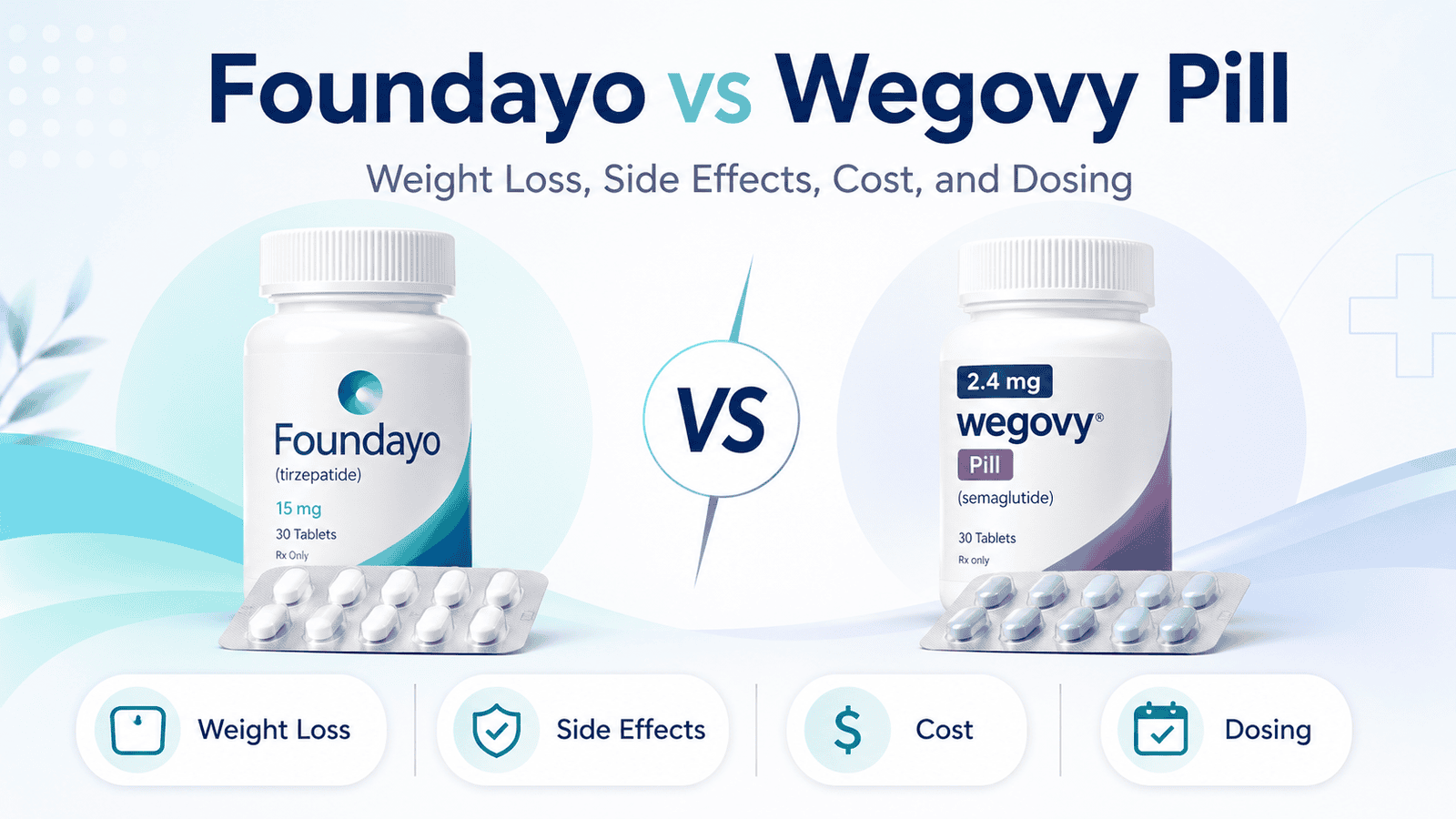
Orforglipron is an oral GLP-1 receptor agonist approved by the FDA under the brand name Foundayo for chronic weight management in adults with obesity, or adults with overweight and at least one weight-related condition. Unlike injectable GLP-1 drugs, it is a once-daily tablet that can be taken with or without food.
In the main 72-week weight-loss trial without diabetes, the highest approved dose showed about 11.1% mean body-weight reduction in the FDA label table, while Lilly reported 12.4% using the efficacy-estimand analysis. The main side effects are gastrointestinal, including nausea, constipation, diarrhea, and vomiting.
This article focuses on U.S. FDA status, weight-loss results, dosing from the prescribing label, side effects, and how orforglipron compares with injectable GLP-1 drugs.
Who this is for: Readers trying to understand orforglipron weight-loss results, safety, availability, and how this oral GLP-1 fits into the obesity-treatment landscape.
Who this is not for: Anyone looking for personal dosing advice, off-label use instructions, or a substitute for clinician-guided obesity treatment.
Reviewed by VerifiedSupps Editorial Team • Last reviewed: June 25, 2026
The answer-first view: orforglipron is now one of the most important oral obesity medications because it brings GLP-1 treatment into a daily pill format. It is not as powerful as the strongest injectable incretin drugs in headline weight-loss percentages, but it may be more practical for people who strongly prefer tablets over injections.
The careful interpretation is that orforglipron is still a prescription medication with real side effects, contraindications, and drug-interaction considerations. It should not be treated like a supplement, a casual appetite suppressant, or a “no-monitoring” weight-loss shortcut.
Orforglipron is also different from dual and triple agonist drugs such as tirzepatide, CT-388, VK2735, and retatrutide. Orforglipron targets the GLP-1 receptor; it is not a GLP-1/GIP or GLP-1/GIP/glucagon drug.
Key Takeaways
- Orforglipron is FDA-approved as Foundayo for chronic weight management in eligible adults.
- It is a once-daily oral GLP-1 receptor agonist taken with or without food.
- In the FDA label, the highest approved dose showed 11.1% mean weight loss at 72 weeks in adults without diabetes, compared with 2.1% for placebo.
- In adults with type 2 diabetes, the highest approved dose showed 9.6% mean weight loss at 72 weeks, compared with 2.5% for placebo.
- The most common side effects are gastrointestinal, especially nausea, constipation, diarrhea, and vomiting.
- Foundayo carries a boxed warning about thyroid C-cell tumor risk and is contraindicated in people with a personal or family history of medullary thyroid carcinoma or MEN 2.
Does orforglipron work for weight loss?
Yes, orforglipron has been shown to reduce body weight in large clinical trials. The effect is meaningful, but generally less dramatic than the highest weight-loss results reported with some injectable dual or triple incretin drugs.
Orforglipron is a small-molecule GLP-1 receptor agonist. That means it activates the GLP-1 pathway involved in appetite regulation, satiety, gastric emptying, and glucose control.
Mechanism
- Appetite: GLP-1 receptor activation can reduce hunger and increase fullness.
- Food intake: Weight loss is mainly expected through lower calorie intake, not direct “fat burning.”
- Glucose control: GLP-1 activity can support insulin secretion and reduce glucagon when glucose is elevated.
- Oral format: Orforglipron is a tablet, which may make GLP-1 therapy easier for some people than weekly injections.
The important distinction is that orforglipron is a GLP-1-only drug. It does not also activate GIP like tirzepatide or CT-388, and it does not activate glucagon like retatrutide. For comparison, see CT-388 vs tirzepatide and how retatrutide works.
How much weight loss did orforglipron show in trials?
In the FDA prescribing label, orforglipron produced dose-dependent weight loss at 72 weeks in adults with obesity or overweight, both with and without type 2 diabetes. Weight loss was larger in the trial without diabetes.
The main label table uses the approved Foundayo-equivalent doses: 5.5 mg, 9 mg, and 17.2 mg once daily. Lilly’s earlier trial reporting also described investigational dose equivalents and efficacy-estimand results, which is why some public articles cite slightly different percentages.
| Trial group | Placebo | Foundayo 5.5 mg | Foundayo 9 mg | Foundayo 17.2 mg |
|---|---|---|---|---|
| Trial 1: adults without type 2 diabetes | -2.1% | -7.4% | -8.3% | -11.1% |
| Trial 2: adults with type 2 diabetes | -2.5% | -5.1% | -7.0% | -9.6% |
Responder data also favored the higher dose. In adults without diabetes, 54.5% of people on 17.2 mg lost at least 10% of body weight, 35.9% lost at least 15%, and 18.4% lost at least 20%, compared with 13%, 6%, and 2.9% with placebo.
In adults with type 2 diabetes, 45.6% of people on 17.2 mg lost at least 10% of body weight, 25.9% lost at least 15%, and 10.8% lost at least 20%, compared with 9.2%, 3.1%, and 0.7% with placebo.
The clean takeaway: orforglipron works, but expectations should stay realistic. It may be a strong oral option for some patients, while injectable drugs may still produce greater average weight loss for others. For a broader pipeline view, compare retatrutide trial results, CT-388 results, and VK2735 oral GLP-1/GIP results.
What dose of orforglipron is used for weight loss?
The FDA-approved Foundayo label starts at 0.8 mg once daily, then gradually increases based on tolerability and response. The maximum approved dose is 17.2 mg once daily.
This dose-escalation approach is used to reduce gastrointestinal side effects. Patients should not adjust the dose without the prescribing clinician’s guidance.
| Step | Label dosing concept | Purpose |
|---|---|---|
| Start | 0.8 mg once daily for at least 30 days | Begin treatment and assess tolerance. |
| Escalate | 2.5 mg once daily for at least 30 days | Continue gradual adjustment. |
| First treatment dose | 5.5 mg once daily | Approved dose level used in weight-management trials. |
| Optional increases | 9 mg, then 14.5 mg, then 17.2 mg once daily after at least 30 days at each level | Increase only when clinically appropriate based on response and tolerability. |
| Maximum | 17.2 mg once daily | Highest approved dose. |
Foundayo can be taken with or without food, and the tablet should be swallowed whole rather than broken, crushed, or chewed. The label also says not to take more than one tablet per day.
Drug interactions matter. The label includes dose modifications and avoidance guidance for certain CYP3A4 inhibitors and inducers, and it recommends additional contraception precautions for people using oral contraceptives during initiation and dose escalation.
What are the side effects of orforglipron?
The most common orforglipron side effects are gastrointestinal. Nausea, constipation, diarrhea, and vomiting were reported more often with Foundayo than placebo, especially during dose escalation.
In the pooled weight-management trials, gastrointestinal adverse reactions occurred in 60% of people taking 5.5 mg, 68% taking 9 mg, and 69% taking 17.2 mg, compared with 37% taking placebo. Most reported GI reactions were mild or moderate.
| Adverse reaction | Placebo | Foundayo 5.5 mg | Foundayo 9 mg | Foundayo 17.2 mg |
|---|---|---|---|---|
| Nausea | 10% | 26% | 34% | 35% |
| Constipation | 9% | 20% | 27% | 24% |
| Diarrhea | 11% | 21% | 23% | 25% |
| Vomiting | 4% | 13% | 21% | 24% |
| Dyspepsia | 4% | 12% | 16% | 13% |
| Abdominal pain | 7% | 13% | 14% | 14% |
Across the pooled trials, 8% of Foundayo-treated patients permanently discontinued because of adverse reactions, compared with 3% of placebo-treated patients. Most discontinuations due to adverse reactions were related to gastrointestinal effects.
The label also warns about pancreatitis, severe gastrointestinal reactions, dehydration-related kidney injury, hypoglycemia risk when used with insulin or insulin secretagogues, hypersensitivity reactions, diabetic retinopathy complications in people with type 2 diabetes, acute gallbladder disease, and pulmonary aspiration risk during anesthesia or deep sedation.
Large weight loss can also include lean mass loss if nutrition and resistance training are not handled well. For related context, see muscle loss with incretin-based weight loss and how much protein you actually need.
Who should avoid orforglipron or be especially cautious?
Foundayo is contraindicated in people with a personal or family history of medullary thyroid carcinoma or Multiple Endocrine Neoplasia syndrome type 2. It is also contraindicated in people with a serious hypersensitivity reaction to orforglipron or any of the product’s ingredients.
Other groups may need extra caution, monitoring, or a different treatment option. This is where clinician guidance matters.
- Pregnancy: The label says Foundayo may cause fetal harm and should be discontinued when pregnancy is recognized.
- Severe gastroparesis: Foundayo is not recommended in patients with severe gastroparesis.
- Severe hepatic impairment: Foundayo is not recommended in patients with severe hepatic impairment.
- Pancreatitis history: People with pancreatitis concerns should discuss risk carefully with a clinician.
- Gallbladder disease: GLP-1 therapies and weight loss can be associated with gallbladder events.
- Diabetes medications: People using insulin or sulfonylureas may need hypoglycemia monitoring and medication adjustment.
- Oral contraceptives: The label advises non-oral contraception or added barrier contraception for 30 days after starting and 30 days after each dose increase.
- Planned procedures: Patients should tell healthcare providers they are taking Foundayo before surgery or procedures requiring anesthesia or deep sedation.
Foundayo should also not be used with other GLP-1 receptor agonist medicines. That matters for people who may be switching from injectable drugs rather than combining therapies on their own.
Is orforglipron approved and available now?
Yes, in the United States, orforglipron is FDA-approved as Foundayo for eligible adults with obesity or overweight with at least one weight-related comorbid condition. Approval does not mean it is appropriate for everyone, and access can still depend on prescription eligibility, insurance coverage, cost, pharmacy availability, and local country regulations.
The FDA approved Foundayo on April 1, 2026. The indication is use with a reduced-calorie diet and increased physical activity to reduce excess body weight and maintain weight reduction long term.
- U.S. status: FDA-approved as Foundayo.
- Route: Oral tablet.
- Frequency: Once daily.
- Food restrictions: Can be taken with or without food.
- Approved use: Chronic weight management in adults meeting label criteria.
- Outside the U.S.: Availability depends on local regulatory approvals and launch timing.
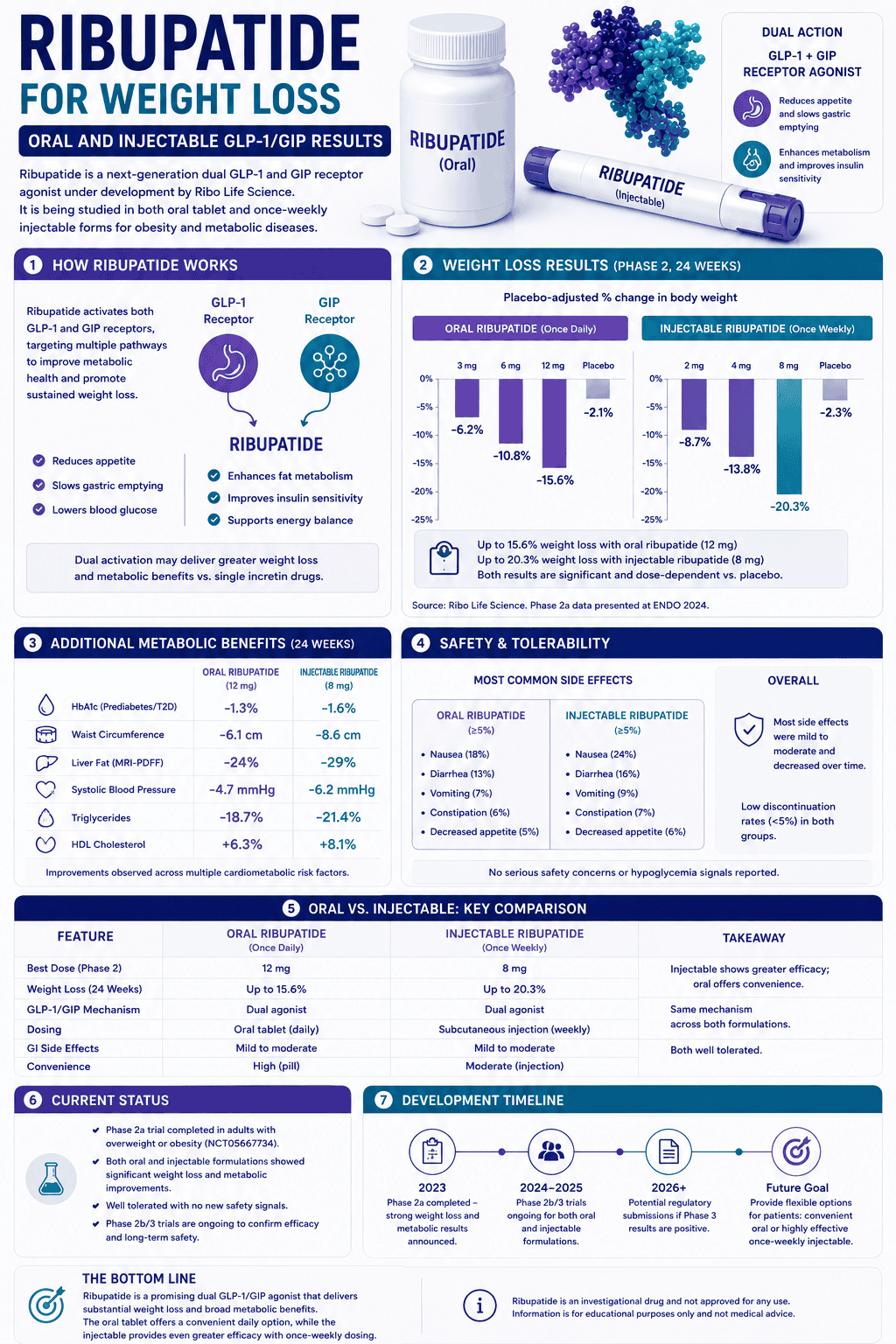
This is different from investigational obesity drugs that are still waiting on approval, such as retatrutide, VK2735, and ribupatide.
How does orforglipron compare with injectable GLP-1 drugs?
Orforglipron’s main advantage is convenience: it is a once-daily pill that does not require injections. Its main limitation is that the average weight loss appears lower than the strongest injectable incretin options.
That does not make it weak or unimportant. Many people may value an oral option if they dislike injections, have trouble accessing injectable supply, or prefer a simpler daily routine.
| Medication or candidate | Route | Mechanism | Practical interpretation |
|---|---|---|---|
| Orforglipron | Daily oral tablet | GLP-1 receptor agonist | Approved oral option with moderate-to-strong weight-loss efficacy. |
| Semaglutide | Weekly injection for obesity; oral form exists under different labels and constraints | GLP-1 receptor agonist | Established GLP-1 option with mature clinical evidence. |
| Tirzepatide | Weekly injection | GIP/GLP-1 receptor agonist | Generally stronger average weight-loss results, but injectable. |
| Retatrutide | Weekly injection in trials | GIP/GLP-1/glucagon triple agonist | Highly promising, but not approved as of this review. |
| CT-388 | Weekly injection in trials | GLP-1/GIP receptor agonist | Strong Phase 2 signal, but still investigational. |
The best choice is not always the drug with the highest average trial percentage. It depends on eligibility, side-effect tolerance, contraindications, cost, access, route preference, diabetes status, cardiovascular risk, and long-term adherence.
For broader comparison reading, see retatrutide vs semaglutide, retatrutide vs tirzepatide, and CT-388 vs tirzepatide.
References
- U.S. Food and Drug Administration. FDA Approves First New Molecular Entity Under National Priority Voucher Program. April 1, 2026.
This FDA announcement supports the current approval status of Foundayo, the FDA approval date, and the regulatory context for orforglipron’s approval.
- U.S. Food and Drug Administration. Foundayo Prescribing Information. Revised April 2026.
This label supports the approved indication, dosing schedule, contraindications, boxed warning, adverse reaction rates, drug interactions, and clinical-study results used in this article.
- Eli Lilly and Company. FDA Approves Lilly’s Foundayo™ (orforglipron). April 1, 2026.
This Lilly source supports the brand name, oral once-daily positioning, no food or water restriction language, and the company’s launch and access statements.
- Wharton S, et al. Orforglipron, an Oral Small-Molecule GLP-1 Receptor Agonist, for Obesity. New England Journal of Medicine. 2025.
This Phase 3 publication supports the 72-week ATTAIN-1 evidence base, including body-weight reduction, responder rates, cardiometabolic changes, and tolerability in adults with obesity or overweight without diabetes.
- Eli Lilly and Company. Complete ATTAIN-1 Results Published in The New England Journal of Medicine. September 16, 2025.
This source supports Lilly’s reported efficacy-estimand result of 12.4% mean weight loss at the highest dose and the broader ATTAIN-1 summary.
- Wharton S, et al. Daily Oral GLP-1 Receptor Agonist Orforglipron for Adults with Obesity. New England Journal of Medicine. 2023.
This earlier Phase 2 trial supports the development background for orforglipron and shows that meaningful weight loss was observed before the Phase 3 program.
- Eli Lilly and Company. ATTAIN-MAINTAIN Trial Results. December 18, 2025.
This source supports the weight-maintenance context after switching from injectable incretin therapy to oral orforglipron in a Phase 3 trial.
- Lilly. Foundayo Coverage and Savings Information.
This source supports current U.S. access and self-pay information, while individual coverage and pricing can vary and may change over time.
FAQ
Is orforglipron approved for weight loss?
Yes. Orforglipron is FDA-approved under the brand name Foundayo for chronic weight management in eligible adults with obesity, or adults with overweight and at least one weight-related condition.
Is orforglipron the same as Foundayo?
Yes. Orforglipron is the drug name, and Foundayo is the FDA-approved brand name in the United States.
Is orforglipron an injection?
No. Orforglipron is an oral tablet taken once daily. It is different from injectable GLP-1 drugs such as semaglutide and tirzepatide injections.
How much weight can you lose with orforglipron?
In the FDA label table, adults without diabetes taking the highest approved dose lost an average of 11.1% of body weight at 72 weeks, compared with 2.1% for placebo. Individual results can vary widely.
What are the most common orforglipron side effects?
The most common side effects are nausea, constipation, diarrhea, vomiting, dyspepsia, abdominal pain, headache, abdominal distension, fatigue, burping, reflux, flatulence, and hair loss.
Can you take orforglipron with food?
Yes. The FDA label says Foundayo can be taken orally once daily with or without food. Tablets should be swallowed whole and not broken, crushed, or chewed.
Is orforglipron better than Ozempic or Wegovy?
Not necessarily. Orforglipron’s main advantage is oral convenience. Injectable semaglutide products have their own evidence base, dosing, labels, and clinical use patterns. The better option depends on the person, the indication, tolerability, access, and clinician judgment.
Can orforglipron be combined with another GLP-1?
The Foundayo label says concomitant use with another GLP-1 receptor agonist is not recommended. People switching therapies should do so only under clinician guidance.
Medical Disclaimer
This article is for educational purposes only and does not provide medical advice, diagnosis, or treatment. Orforglipron, sold as Foundayo in the United States, is a prescription medication that should be used only under the care of a licensed clinician. It may cause side effects and is not appropriate for everyone, including people with certain thyroid cancer risk factors, MEN 2, severe gastroparesis, severe hepatic impairment, pregnancy, or relevant medication interactions. Anyone considering obesity treatment should speak with a qualified healthcare professional about approved options, contraindications, monitoring, nutrition, muscle preservation, and long-term weight-management planning.