By VerifiedSupps Editorial Team
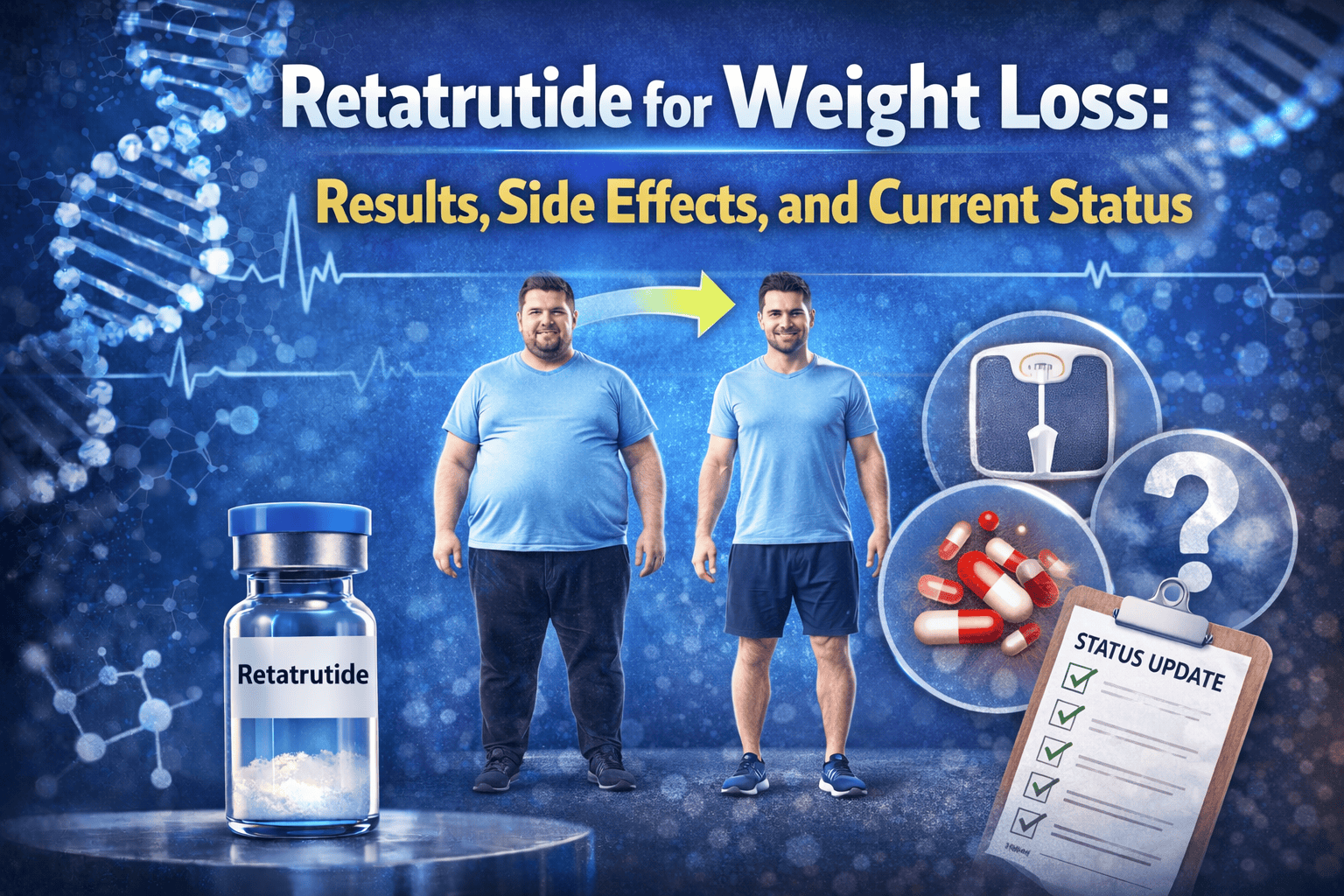
Retatrutide: Weight Loss Results, Side Effects, and Current Status
Retatrutide looks like one of the strongest obesity medicines in development so far. The best published obesity dataset still comes from phase 2, where the highest dose reached 24.2% average weight loss at 48 weeks, and the biggest newer public phase 3 result so far came from TRIUMPH-4, where 12 mg reached 28.7% at 68 weeks.
That is the exciting part. The stabilizing part is this: retatrutide is still investigational, still not approved, and some of the headline phase 3 wins are still topline results rather than the final fully published peer-reviewed evidence package.
This page focuses on what the strongest current weight-loss results actually are, which side effects matter most, and where retatrutide really sits right now in the approval and trial process.
Key terms: retatrutide, triple agonist, GIP, GLP-1, glucagon, obesity, phase 2, phase 3, weight loss, tirzepatide comparison
Quick Take
Retatrutide’s weight-loss signal is strong enough to take seriously. The main caution is not whether it looks promising. It is that the strongest current story is still a mix of published phase 2 evidence, newer phase 3 headlines, and an unfinished approval and outcomes timeline.
TL;DR decision
Retatrutide looks real, not imaginary. But it is still best read as a very promising late-stage obesity drug, not as a finished public-use therapy with every major question already settled.
Evidence standard: human trials, dose ranges, guideline-level sources when available
Who this is for: people trying to understand how strong retatrutide’s weight-loss data really are, how the side effects compare with the upside, and what “current status” actually means today
Who this is not for: anyone looking for fake sourcing advice, gray-market use, or reassurance that a product sold online as retatrutide is legitimate
Reviewed by: VerifiedSupps Editorial Team
Last reviewed: April 17, 2026
Parent Hub
VerifiedSupps Articles
Use the broader article hub if you want a calmer framework for comparing new metabolic therapies against older, more established options.
Quick answer table: what should you believe about retatrutide right now?
This is the fastest way to keep the strongest claims attached to the strongest evidence tier.
| If you want to know… | Best current answer | Strongest source level | What that means |
|---|---|---|---|
| Is the weight-loss signal real? | Yes | Published phase 2 obesity trial | This is not vapor. The clinical signal is already meaningful. |
| What is the biggest public weight-loss number so far? | 28.7% at 68 weeks | Phase 3 topline in obesity + knee osteoarthritis | Very strong, but still not the same as a full publication. |
| What side effects matter most? | Mainly GI effects | Published phase 2 + official phase 3 releases | Think nausea, diarrhea, vomiting, constipation, especially during escalation. |
| Can you get it like a normal approved drug today? | No | Official Lilly status page | Retatrutide is still investigational and trial-only. |
Best next step (today): Treat the phase 2 obesity trial as the strongest published foundation, then layer newer phase 3 headlines on top without pretending they are already the final word.
Does retatrutide actually work for weight loss?
Yes. The current evidence strongly suggests that it does. The more useful question now is not whether it works at all, but how much confidence we should place in the size of the effect, the tolerability at higher doses, and the still-open long-term questions.
Retatrutide is getting so much attention because it is not just another GLP-1 drug. It is a once-weekly triple agonist that activates GIP, GLP-1, and glucagon receptors, and the combination appears to deliver unusually large weight-loss signals in clinical trials.
Mechanism
- GLP-1 and GIP activity help drive appetite and food-intake effects that are already familiar from newer obesity drugs.
- Glucagon-receptor activity is one reason researchers think retatrutide may push weight loss further than simpler incretin setups.
- The broader mechanism makes the efficacy story plausible, but it also means side-effect and long-term-outcomes questions still deserve real respect.
What would change my recommendation: full peer-reviewed phase 3 obesity publications, longer-term maintenance data, and a direct head-to-head answer versus tirzepatide.
How much weight loss has retatrutide shown so far?
A lot. But the smartest way to read the numbers is to keep the evidence tiers separate. The strongest fully published obesity data still come from phase 2. The biggest newer number is a phase 3 topline result.
Published phase 2
24.2%
Average weight loss at 48 weeks at the highest dose
Phase 3 topline
28.7%
Average weight loss at 68 weeks in TRIUMPH-4
Phase 3 diabetes
16.8%
Average weight loss at 40 weeks in TRANSCEND-T2D-1
The phase 2 obesity trial matters because it is still the best fully published obesity dataset and because Lilly said participants had not yet reached a weight plateau by the time the study ended. That helped explain why later phase 3 expectations became so high.
The phase 3 toplines matter because they suggest the phase 2 signal was not a fluke. But until more of those data are fully published, the most disciplined summary is “strong and getting stronger,” not “fully settled.”
What side effects matter most with retatrutide?
The main side-effect story is gastrointestinal, especially during dose escalation. That is the cleanest thing to understand first. If retatrutide becomes a widely used obesity medicine, tolerability during titration will be one of the biggest real-world issues.
The main recurring pattern
Nausea, diarrhea, constipation, vomiting, and decreased appetite are the recurring side effects across studies and official phase 3 topline releases.
Phase 2 described these as generally mild to moderate and mostly concentrated in the escalation period.
The less talked-about signals
Dose-dependent heart-rate increases showed up in phase 2 and later declined after peaking. Sensory symptoms such as dysesthesia also appeared in phase 3, especially at higher doses.
These are not the dominant story, but they are part of the real safety picture.
| Trial snapshot | Most important side-effect takeaway |
|---|---|
| Phase 2 obesity | GI effects were the main issue, usually mild to moderate, with a heart-rate signal that peaked mid-study and then eased. |
| TRIUMPH-4 | At 12 mg, nausea occurred in 43.2%, diarrhea in 33.1%, constipation in 25.0%, vomiting in 20.9%, and discontinuation due to adverse events in 18.2%. |
| TRANSCEND-T2D-1 | The same GI pattern showed up again, and discontinuation due to adverse events reached 5.1% at 12 mg. |
What is the current status of retatrutide?
Retatrutide is still investigational. It is not approved, and Lilly says it is legally available only to participants in Lilly-sponsored clinical trials. That is the single most important current-status point.
The second important point is that retatrutide is no longer just a phase 2 curiosity. Lilly’s March 2026 FAQ says two phase 3 trials have successfully completed so far: TRIUMPH-4 in obesity or overweight with knee osteoarthritis and TRANSCEND-T2D-1 in type 2 diabetes.
The broader program is still active across obesity, type 2 diabetes, knee osteoarthritis pain, moderate-to-severe obstructive sleep apnea, chronic low back pain, cardiovascular and renal outcomes, and metabolic dysfunction-associated steatotic liver disease. So the current status is not “waiting around.” It is active late-stage development.
The final stabilizing point is that some important details are still on the way. Lilly Medical said detailed TRANSCEND-T2D-1 results were planned for presentation at the American Diabetes Association Scientific Sessions in June 2026 and for later peer-reviewed publication. That is a good example of why current status and finished evidence are not the same thing.
Is retatrutide better than tirzepatide yet?
We do not know yet. This is one of the most important unanswered questions, and it is exactly why people should slow down before treating retatrutide like a crowned winner.
A head-to-head phase 3 study comparing retatrutide with tirzepatide in adults with obesity is ongoing. Until that result lands, the most disciplined answer is that retatrutide has very strong efficacy signals, but direct superiority over tirzepatide remains unproven.
The same logic applies to durability and outcomes. Maintenance and cardiovascular-outcomes studies are also ongoing. That means there is still a meaningful gap between “looks extremely promising” and “we already know exactly where it belongs long term.”
This is the difference between being impressed and being finished. Retatrutide has earned the first. It has not yet earned the second.
What should you do if you are considering retatrutide right now?
Read it like a serious late-stage drug, not like a supplement trend. The most helpful mindset right now is neither cynicism nor hype. It is accurate patience.
Common mistakes
- Treating topline phase 3 headlines like the final complete answer.
- Comparing weight-loss percentages across very different populations as if they are identical trials.
- Assuming anything sold online as retatrutide is real because the molecule itself is in legitimate development.
- Ignoring available approved therapies while waiting for an investigational medicine that still has open questions.
Clean test protocol
| Inputs | Your actual obesity or diabetes context, what approved options you have already considered, whether you are reading published data or just headlines, and whether the source is legitimate |
|---|---|
| Duration | Reassess when more full phase 3 publications arrive or if approval status changes. Until then, treat today’s picture as strong but unfinished. |
| 3 metrics | Whether full publications confirm the toplines, whether tolerability remains acceptable in broader use, and whether head-to-head and maintenance data meaningfully sharpen the drug’s place in therapy |
| Stop conditions | Any online seller pitching “real” retatrutide now, any blurred explanation of approval status, or any attempt to treat an investigational obesity drug like a normal retail supplement |
How to tell it’s working
If retatrutide eventually becomes part of routine care, the real signs of success will be sustained clinically meaningful weight loss, improved metabolic markers, and tolerability that holds up beyond carefully managed trial escalation. Right now, the better test is whether your interpretation of the data stays more disciplined than the headlines.
Red flags / seek care
If you are using any unverified product claimed to be retatrutide and develop persistent vomiting, severe dehydration, chest pain, fainting, strong palpitations, trouble breathing, or a major allergic-type reaction, stop and seek medical care immediately. Fake-source risk is part of the safety picture, not a minor side note.
Selected Professional References
These are the most useful sources for the current retatrutide picture: published efficacy, newer phase 3 toplines, side-effect patterns, approval status, and the major questions still in play.
What to Know About Retatrutide
The cleanest official source for mechanism, approval status, trial-only availability, and the broader phase 3 program.
Used for: current status, ongoing indications, and “not approved” reality
Triple–Hormone-Receptor Agonist Retatrutide for Obesity
Still the most important published obesity paper because it anchors the efficacy and tolerability story in peer-reviewed form.
Used for: 24-week and 48-week weight loss and phase 2 side-effect pattern
Lilly Phase 2 Retatrutide Results Published in NEJM
Useful because it gives a clean public summary of the phase 2 obesity results and the “no plateau yet” context.
Used for: strong published obesity signal and cardiometabolic context
TRIUMPH-4: Weight Loss and Knee Osteoarthritis Results
The strongest public phase 3 weight-loss number so far, with the important caveat that full publication is still pending.
Used for: 28.7% at 68 weeks and current phase 3 adverse-event rates
TRANSCEND-T2D-1: First Phase 3 Diabetes Results
Important because it shows how retatrutide performs in the harder type 2 diabetes setting, not just obesity-only populations.
Used for: 16.8% at 40 weeks, A1C reduction, and phase 3 tolerability in diabetes
Future Retatrutide Program Results
Useful for the current timing context around detailed TRANSCEND-T2D-1 results and upcoming publication.
Used for: what is still pending in the public evidence package
Retatrutide Compared With Tirzepatide in Obesity
One of the most important still-open questions, because this is the trial that may define where retatrutide actually belongs.
Used for: why “better than tirzepatide?” is still unanswered
TRIUMPH-OUTCOMES
The long-term outcomes question matters because weight loss alone is not the only thing clinicians will care about.
Used for: cardiovascular and renal outcomes still being studied
TRIUMPH-8 Maintenance Trial
A reminder that durable weight-loss maintenance is still an active research question, not a given.
Used for: why the durability story is still being built
Go Deeper (VerifiedSupps Guides)
These are better next reads if your real goal is metabolic health, lean-mass protection, or making better fat-loss decisions without relying on headlines alone.
How to Choose Supplements Without Guesswork
The best next read if you want a calmer filter before treating every new metabolic therapy headline like a finished answer.
How Much Protein Do You Actually Need?
Helpful if your real concern is protecting lean mass while body weight is coming down.
Berberine Benefits
A better next read if your focus is glucose and metabolic support through a more established non-peptide lane.
Omega-3 Complete Guide
Useful if your bigger goal is cardiometabolic support while the outcomes story on retatrutide continues to mature.
Final Takeaway
Retatrutide looks like a serious obesity drug, not a speculative story with nothing behind it. The weight-loss numbers are already strong enough to matter. The caution is that the strongest published obesity evidence is still phase 2, while some of the most dramatic newer results are phase 3 toplines and the biggest practical questions still sit ahead: direct comparison with tirzepatide, durability of maintenance, and long-term outcomes. The cleanest way to read retatrutide right now is “very promising, still investigational, and not finished yet.”
FAQ
Does retatrutide actually work for weight loss?
Yes. The current evidence strongly suggests that it does. The strongest published obesity dataset is still the phase 2 trial, while newer phase 3 public readouts look even stronger but are not yet all fully published in peer-reviewed form.
How much weight loss has retatrutide shown so far?
In the published phase 2 obesity trial, the highest dose reached 24.2% average weight loss at 48 weeks. In the first successful public phase 3 obesity-plus-knee-osteoarthritis readout, the 12 mg dose reached 28.7% at 68 weeks. In the first phase 3 diabetes readout, the top dose reached 16.8% at 40 weeks.
What side effects matter most with retatrutide?
The main side effects so far are gastrointestinal, including nausea, diarrhea, constipation, vomiting, and decreased appetite, especially during dose escalation. Heart-rate increases and dysesthesia have also been reported.
Is retatrutide approved yet?
No. Retatrutide is still investigational and is not approved for public use.
Can you get retatrutide right now?
Legitimate access is currently through Lilly-sponsored clinical trials. It should not be treated like a routine publicly available medicine yet.
Why is retatrutide getting so much attention?
Because the weight-loss results so far are unusually strong and the mechanism is broader than standard GLP-1-only medicines, while newer phase 3 toplines suggest the phase 2 signal was not a fluke.
Is retatrutide better than tirzepatide?
That is still an open question. A head-to-head obesity trial is ongoing, so the answer is not settled yet.
What is the current phase of retatrutide development?
Retatrutide is currently in phase 3 development, and two phase 3 trials have already publicly read out.
What still is not known about retatrutide?
Important unanswered questions include long-term cardiovascular and renal outcomes, durability of weight-loss maintenance, fuller peer-reviewed phase 3 obesity publications, and direct comparison with tirzepatide.
What is the safest way to think about retatrutide right now?
Treat retatrutide as very promising but still incomplete. The weight-loss signal is strong, but the approval and long-term-evidence story is still being built.
VerifiedSupps Medical Disclaimer
This content is for educational purposes only and is not medical advice. Retatrutide is an investigational medicine, not an approved public-use therapy. It should not be treated as a substitute for medical evaluation, evidence-based obesity care, or approved treatment options. Be especially cautious with any product sold online as retatrutide outside a legitimate clinical-trial setting. Seek medical care for persistent vomiting, severe dehydration, chest pain, shortness of breath, severe palpitations, or any strong reaction after taking an unverified product.