Akkermansia Supplement: Benefits, Weight Loss, Gut Health, and Side Effects
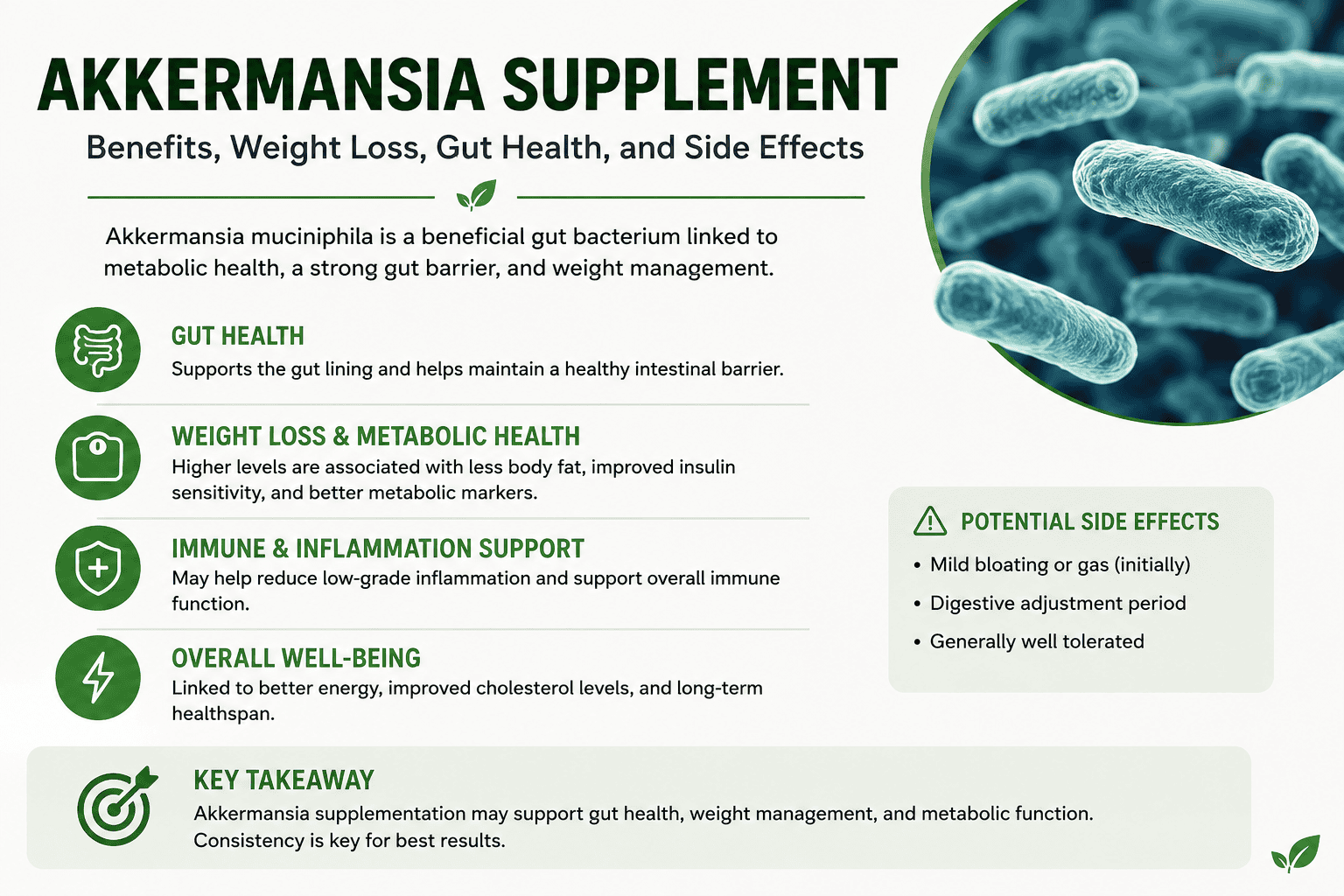
Akkermansia supplements have become one of the more interesting developments in the microbiome space because Akkermansia muciniphila is not a typical probiotic. It naturally lives in the mucus layer of the intestine and has been linked to gut-barrier function, metabolic health, insulin sensitivity, and body-weight regulation.
The evidence is promising, but the marketing often runs ahead of the science. Human trials do not show Akkermansia causing GLP-1-drug-level weight loss. What they do show is more nuanced: pasteurized Akkermansia has improved several metabolic markers in a small randomized trial, and a larger 2026 randomized trial found that it helped people regain less weight after a successful low-calorie diet.
For gut health, the biological case is strong, but much of the evidence for mucus-barrier support, microbial cross-feeding, and inflammation control still comes from mechanistic and animal research rather than large clinical trials.
Who this is for: Adults considering an Akkermansia supplement for metabolic health, weight management, or general gut support who want to understand what the human evidence actually shows.
Who this is not for: Anyone expecting a probiotic to replace diet, exercise, obesity treatment, diabetes care, or evaluation of persistent gastrointestinal symptoms.
Reviewed by VerifiedSupps Editorial Team • Last reviewed: August 25, 2026
The answer-first view: Akkermansia is one of the few microbiome supplements with randomized human evidence behind it, and the case for pasteurized Akkermansia muciniphila has become stronger in 2026. But it should be viewed as a potentially useful metabolic and gut-health supplement—not as a powerful standalone weight-loss treatment.
The most compelling new study followed 90 adults with overweight or obesity who first lost at least 8% of their body weight on a low-energy diet. During the following 24 weeks, participants receiving 30 billion pasteurized A. muciniphila cells per day regained about 1.2 kg, compared with 3.2 kg in the placebo group. No serious treatment-related adverse events were reported.
That is meaningful, but it is also important to understand what the trial did not show. Akkermansia did not cause the initial major weight loss—the participants had already lost weight through an approximately 800-calorie diet before supplementation began.
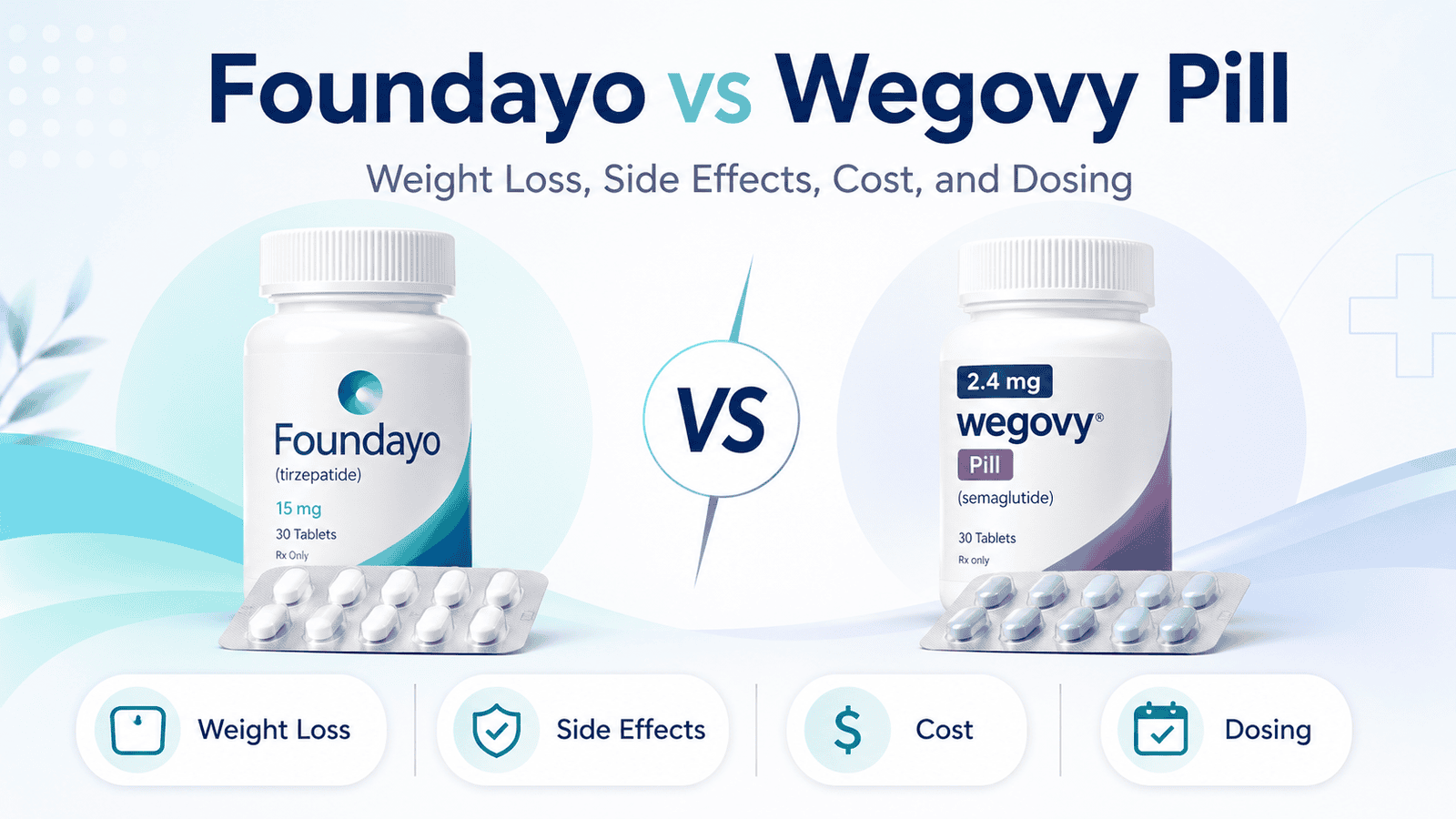
If your main goal is understanding the gut microbiome more broadly, see our gut health guide. If you are comparing supplements with actual prescription weight-loss treatments, our Foundayo vs Wegovy pill comparison shows how different the magnitude of weight loss can be.
Key Takeaways
- Akkermansia muciniphila is a naturally occurring gut bacterium that lives close to the intestinal mucus layer.
- Human evidence is strongest for pasteurized Akkermansia rather than generic probiotic blends claiming to “boost Akkermansia.”
- A 2019 randomized pilot trial found improvements in insulin sensitivity, fasting insulin, and total cholesterol with pasteurized Akkermansia.
- A 2026 randomized trial found less weight regain after dieting in people taking 30 billion pasteurized cells per day.
- Akkermansia is not proven to produce large standalone weight loss comparable with GLP-1 medications.
- Potential gut-health benefits involve the mucus layer, intestinal barrier, short-chain fatty acids, immune signaling, and interactions with other beneficial bacteria.
- Clinical trials so far suggest good short-term tolerability, but long-term safety data are still limited.
- The exact strain, whether it is live or pasteurized, and the number of cells matter when comparing supplements.
What is Akkermansia muciniphila, and why is it sold as a supplement?
Akkermansia muciniphila is a bacterium naturally found in the human gastrointestinal tract. Unlike many familiar probiotics that primarily live in the intestinal contents, Akkermansia is closely associated with the mucus layer covering the intestinal lining.
Its name reflects one of its defining characteristics: it can use mucin—the major structural component of intestinal mucus—as a nutrient source.
That may sound counterproductive. If mucus protects the intestine, why would a bacterium that consumes mucus be considered beneficial?
The relationship appears to be more complex than simple mucus destruction. Under healthy conditions, Akkermansia participates in mucus turnover and produces metabolites that can interact with intestinal cells and other microbes. Research suggests these interactions may support epithelial integrity, immune signaling, and metabolic regulation. Akkermansia can also generate metabolites such as acetate and propionate and provide substrates that other beneficial organisms can use.
Observational research has repeatedly found lower Akkermansia abundance in some people with obesity, insulin resistance, type 2 diabetes, and other metabolic disorders. But an association does not prove that low Akkermansia caused those conditions—or that simply taking more bacteria will reverse them.
Why Akkermansia is different from a typical probiotic
- Location: It specializes in the mucus layer near the intestinal epithelium.
- Metabolism: It can use mucin-derived compounds as nutrients.
- Metabolic research: Much of the interest centers on obesity, insulin sensitivity, and metabolic health rather than simply digestion.
- Pasteurized forms can remain active: Several potential benefits appear to come from bacterial components rather than from the organism needing to remain alive.
- It is still an emerging category: Human evidence is much smaller than the decades of research available for traditional probiotic organisms.
This last point is especially important. Akkermansia may eventually become an important microbiome intervention, but the number of rigorous human supplementation studies is still relatively small.
What are the actual benefits of an Akkermansia supplement?
The best-supported potential benefits are currently related to metabolic health rather than dramatic improvements in digestion. Human trials have reported signals involving insulin sensitivity, fasting insulin, cholesterol, inflammatory markers, and weight maintenance.
The landmark human trial was published in Nature Medicine in 2019. Forty adults with overweight or obesity and insulin resistance were enrolled, with 32 completing the study. Participants received placebo, 10 billion live Akkermansia cells per day, or 10 billion pasteurized cells per day for three months.
Compared with placebo, the pasteurized group showed:
| Outcome | Result with pasteurized Akkermansia | Interpretation |
|---|---|---|
| Insulin sensitivity | Improved by about 28.6% | One of the strongest metabolic signals in the pilot study |
| Insulin levels | Reduced by about 34.1% | Suggests improved metabolic efficiency |
| Total cholesterol | Reduced by about 8.7% | Potential cardiovascular-metabolic benefit |
| Body weight | About 2.27 kg lower relative to placebo | Trend did not meet conventional statistical significance |
| Inflammatory/liver markers | Several markers improved | Interesting but needs confirmation in larger trials |
The improvement in insulin sensitivity, insulin, and cholesterol was statistically significant. The weight difference was not: the reported P value was 0.091, above the conventional 0.05 threshold. That distinction matters because supplement marketing often presents the weight result without mentioning the uncertainty.
The study also found that the overall structure of the gut microbiome did not dramatically change. That suggests Akkermansia may exert effects through specific host-microbe interactions rather than simply reshaping the entire microbiome.
These findings are intriguing, but the trial was small and exploratory. It should be treated as proof of concept rather than definitive evidence that everyone taking an Akkermansia supplement will see a 29% improvement in insulin sensitivity.
For comparison, another supplement with a larger body of metabolic research is covered in our berberine benefits guide.
Does Akkermansia help with weight loss?
Possibly—but the strongest current evidence is for weight-loss maintenance, not for causing major initial weight loss.
A 2026 controlled randomized trial in Nature Medicine substantially strengthened the human evidence. Ninety adults with overweight or obesity first completed an eight-week low-energy diet. Only participants who had lost at least 8% of their body weight entered the supplementation phase.
For the next 24 weeks, participants received either placebo or 30 billion pasteurized Akkermansia muciniphila MucT cells per day.
| 2026 weight-maintenance trial | Pasteurized Akkermansia | Placebo |
|---|---|---|
| Initial diet-induced weight loss required | At least 8% | At least 8% |
| Supplementation period | 24 weeks | 24 weeks |
| Weight regained | 1.2 ± 0.7 kg | 3.2 ± 0.4 kg |
| Between-group result | Significantly less weight regain with Akkermansia, P = 0.012 | |
The Akkermansia group also had a greater net weight reduction from the original baseline through the end of the maintenance phase. People with lower Akkermansia abundance at the start of maintenance appeared to show stronger cardiometabolic responses, raising the possibility that future microbiome treatments could eventually become more personalized.
This does not mean Akkermansia caused an 8% or greater weight loss. The low-energy diet caused the initial weight reduction. The supplement appeared to help people retain more of that loss afterward.
That puts Akkermansia in a very different category from prescription obesity medications. Drugs such as semaglutide, tirzepatide, and oral GLP-1 therapies directly suppress appetite strongly enough to generate double-digit average percentage weight loss in some trials. Akkermansia does not currently have evidence anywhere near that magnitude.
The more realistic question is whether Akkermansia could modestly improve the metabolic environment that makes maintaining weight loss easier. As of 2026, there is now legitimate human evidence supporting that possibility.
It is also worth noting that some investigators on the 2026 study reported advisory, company, patent, or ownership relationships connected with The Akkermansia Company. That does not invalidate a randomized controlled trial, but it is relevant context when interpreting an emerging commercial ingredient.
How does Akkermansia support gut health and the intestinal barrier?
Akkermansia may support gut health through its unusually close relationship with the intestinal mucus layer, but this is also the area where it is easiest to overstate the human evidence.
The intestinal barrier is more than a wall. It includes mucus, epithelial cells, tight junctions, immune cells, microbial metabolites, and the broader microbial community. Akkermansia appears capable of interacting with several parts of this system.
Potential mechanisms include:
- Mucus turnover: Akkermansia uses mucin as a nutrient source, which may stimulate normal mucus renewal under healthy conditions.
- Short-chain fatty acids: Its metabolism produces compounds including acetate and propionate that can affect intestinal and metabolic signaling.
- Microbial cross-feeding: Products generated from mucin degradation can support other organisms, including bacteria involved in butyrate production.
- Epithelial signaling: Components of Akkermansia can interact with receptors on intestinal cells and potentially influence tight-junction and immune responses.
- Metabolic endotoxemia: A healthier intestinal barrier could theoretically reduce movement of bacterial products such as lipopolysaccharide into circulation.
- Immune regulation: Akkermansia-related signaling appears capable of influencing inflammatory pathways, although much of this evidence remains preclinical.
Research into the bacterial outer-membrane protein Amuc_1100 is particularly interesting. Experimental work suggests this heat-stable protein may contribute to some of the effects seen after pasteurization, including intestinal-barrier and metabolic signaling. That may help explain why killing the bacterium does not necessarily eliminate its biological activity.
However, the idea that “more Akkermansia is always better” is too simplistic.
A 2025 review specifically examined the double-edged nature of mucin degradation. In healthy microbial ecosystems, Akkermansia may support mucus turnover and homeostasis. In low-fiber diets or severely disrupted microbial environments, excessive mucus degradation could theoretically become harmful. Associations with Akkermansia also differ across inflammatory and infectious diseases.
This is one reason a stool microbiome report showing “low Akkermansia” should not automatically be interpreted as a disease diagnosis or proof that someone needs supplementation.
For a broader framework on digestion, fiber, fermented foods, probiotics, and the microbiome, see our complete gut health guide.
Is pasteurized Akkermansia better than live Akkermansia?
For metabolic and weight-management purposes, pasteurized Akkermansia currently has the stronger direct human evidence.
The 2019 trial tested both live and pasteurized Akkermansia at 10 billion cells per day. Both were tolerated, but many of the clearest metabolic improvements—including insulin sensitivity and cholesterol—were observed with the pasteurized preparation.
The newer 2026 weight-maintenance trial also used pasteurized A. muciniphila MucT, at 30 billion cells per day.
| Feature | Live Akkermansia | Pasteurized Akkermansia |
|---|---|---|
| Viable organism | Yes | No or essentially non-viable |
| Often called | Next-generation probiotic | Postbiotic or pasteurized microbial preparation |
| 2019 human trial | Studied | Studied; stronger metabolic signals |
| 2026 weight-maintenance RCT | Not tested | Yes |
| Storage/manufacturing | More demanding | Generally easier to stabilize |
| Evidence-based choice for metabolic goals | Promising | Currently stronger |
Pasteurization may preserve structural proteins and other bacterial components that interact with the intestinal lining even though the organism itself is no longer alive.
Regulators have also specifically evaluated pasteurized forms. EFSA concluded that a defined pasteurized A. muciniphila preparation was safe up to 3.4 × 10¹⁰ cells per day for the originally assessed adult population, and the European Union authorized that pasteurized preparation as a novel food for supplements under specified conditions.
That does not mean every product containing the word “Akkermansia” is equivalent. Different strains, manufacturing methods, doses, live-cell counts, pasteurization processes, and combination formulas may behave differently.
What Akkermansia dose has been studied, and what should you look for in a supplement?
Human studies have commonly used doses in the range of 10 billion to 30 billion cells per day, but there is not yet a universally established optimal dose for every goal.
| Study or regulatory context | Form | Amount |
|---|---|---|
| 2019 metabolic pilot study | Live or pasteurized | 10 billion cells/day |
| 2024 HB05P human trial | Pasteurized HB05 | 10 billion cells/day |
| 2026 weight-maintenance trial | Pasteurized MucT | 30 billion cells/day |
| Original EFSA adult safety assessment | Defined pasteurized preparation | Up to 34 billion cells/day |
A 2024 randomized trial of pasteurized HB05P used 10 billion cells per day for 12 weeks in 100 adults aged 60 and older. Although the study focused on muscle function rather than weight loss, no notable supplement-related safety issue emerged.
When comparing products, more cells are not automatically better. Look for:
- The exact organism: The label should clearly state Akkermansia muciniphila, not just “microbiome support.”
- The strain: Human evidence is strain- and preparation-specific.
- Live vs pasteurized: Know which one you are purchasing.
- Cell count: A label should disclose a meaningful daily amount rather than relying on a proprietary blend.
- Quality testing: Look for contaminant, identity, and manufacturing-quality testing.
- Realistic claims: Avoid products promising rapid fat loss, “Ozempic-like” effects, or cures for metabolic disease.
- Added ingredients: Some formulas include prebiotics, polyphenols, or other probiotics, making it difficult to know which ingredient is responsible for an effect.
The FDA’s New Dietary Ingredient database now includes submissions involving specific pasteurized Akkermansia preparations, but an NDI notification is not the same thing as FDA approval of Akkermansia as a drug or FDA confirmation that a weight-loss claim works.
Our guide to choosing supplements without guesswork covers the same label-quality principles in more detail.
What are the side effects of Akkermansia, and who should be cautious?
Akkermansia has been generally well tolerated in the human trials published so far. The 2019 study reported that both live and pasteurized supplementation were safe and well tolerated over three months. The 2026 weight-maintenance trial reported no serious adverse events related to treatment.
In the 2024 HB05P trial, four of 100 participants reported mild or moderate adverse events—one in the Akkermansia group and three in the placebo group—and investigators judged none of them related to the supplement.
That is reassuring, but Akkermansia supplements are still relatively new. We do not have decades of large-scale use or extensive long-term randomized safety data.
Potential issues to keep in mind include:
- Digestive symptoms: Gas, bloating, stool changes, or abdominal discomfort are possible with microbiome-directed supplements, although these have not emerged as a consistent major Akkermansia-specific safety signal.
- Active gastrointestinal disease: People with inflammatory bowel disease, serious intestinal disease, or significant disruption of the gut barrier should discuss supplementation with a clinician rather than assuming more Akkermansia is beneficial.
- Pregnancy and breastfeeding: Safety evidence remains inadequate. EFSA’s more recent review concluded that safety in pregnant and lactating women had not been established.
- Immunocompromised patients: Extra caution is reasonable with any live microorganism supplement when immune function is significantly impaired.
- Children: Regulatory limits and evidence differ by age, and adult supplement doses should not automatically be applied to children.
- Unknown long-term effects: Studies lasting years rather than weeks or months are still needed.
There is also a broader scientific caution. Akkermansia is a mucin-degrading organism. In a healthy, fiber-rich microbial ecosystem that may be part of normal mucus renewal. Under certain disrupted conditions, however, excessive mucin degradation could theoretically contribute to barrier problems. Current evidence suggests the effect is context-dependent rather than universally beneficial or harmful.
The sensible approach is therefore not to chase the highest possible Akkermansia level. The goal should be a healthy overall intestinal environment.
For most healthy adults interested in metabolic support, a well-characterized pasteurized product that matches doses used in human trials is a more evidence-aligned choice than an extremely high-dose or poorly defined formula.
References
-
Mount S, Canfora EE, Jocken JW, et al. Pasteurized Akkermansia muciniphila MucT for weight loss maintenance in people with overweight and obesity: a controlled randomized trial. Nature Medicine. 2026.
A randomized controlled trial showing reduced weight regain following diet-induced weight loss with daily pasteurized Akkermansia supplementation.
-
Depommier C, Everard A, Druart C, et al. Supplementation with Akkermansia muciniphila in overweight and obese human volunteers: a proof-of-concept exploratory study. Nature Medicine. 2019.
The first major randomized human supplementation study, evaluating live and pasteurized Akkermansia for safety and metabolic outcomes.
-
ClinicalTrials.gov. Akkermansia and Weight Maintenance. NCT05417360.
Trial registry for the 2026 randomized weight-maintenance study.
-
NCBI BioProject PRJNA1441242. Pasteurized Akkermansia muciniphila MucT weight-maintenance study.
Provides study information including the 30-billion-cell daily intervention used during the weight-maintenance phase.
-
European Food Safety Authority. Safety of pasteurised Akkermansia muciniphila as a novel food. EFSA Journal. 2021.
EFSA safety assessment establishing a safe level of 3.4 × 10¹⁰ cells per day for the originally assessed adult population under specified conditions.
-
European Commission. Commission Implementing Regulation (EU) 2022/168.
European Union authorization and specifications for pasteurized Akkermansia muciniphila as a novel food.
-
EFSA Panel on Nutrition, Novel Foods and Food Allergens. Safety of an extension of use of pasteurised Akkermansia muciniphila. 2025.
Updated safety assessment including adolescents and noting that safety during pregnancy and lactation remains unestablished.
-
Kang CH, Jung ES, Jung SJ, et al. Pasteurized Akkermansia muciniphila HB05 improves muscle strength and function: a randomized, double-blind, placebo-controlled clinical trial. Nutrients. 2024.
A 12-week human trial using 10 billion pasteurized HB05 cells per day that also provides additional short-term safety information.
-
Tingler AM, Engevik MA. Breaking down barriers: is intestinal mucus degradation by Akkermansia muciniphila beneficial or harmful? Infection and Immunity. 2025.
A balanced review of Akkermansia, mucin degradation, intestinal barrier biology, and situations in which its effects may be context-dependent.
-
U.S. Food and Drug Administration. Submitted 75-Day Premarket Notifications for New Dietary Ingredients.
FDA database documenting New Dietary Ingredient submissions, including specific pasteurized Akkermansia preparations.
FAQ
What does an Akkermansia supplement do?
Akkermansia supplements are designed to provide Akkermansia muciniphila or pasteurized components of the bacterium. Human research suggests potential effects on insulin sensitivity, cholesterol, metabolic health, and weight-loss maintenance. Gut-barrier and immune benefits are biologically plausible but still need more direct human confirmation.
Does Akkermansia actually cause weight loss?
The evidence for direct weight loss is modest. A small 2019 study showed a nonsignificant trend toward lower body weight. More importantly, a 2026 randomized trial found that pasteurized Akkermansia reduced weight regain after participants had already lost at least 8% of their weight through a low-energy diet.
Is Akkermansia like Ozempic or a GLP-1 weight-loss drug?
No. Akkermansia is a microbiome supplement, not a GLP-1 receptor agonist. Although gut bacteria may influence natural metabolic and incretin signaling, Akkermansia has not produced anything close to the average weight loss seen with prescription GLP-1 or GIP/GLP-1 medications.
Is pasteurized Akkermansia better than live Akkermansia?
For metabolic health and weight maintenance, pasteurized Akkermansia currently has the stronger direct human evidence. The important 2019 and 2026 studies both produced notable results with pasteurized preparations.
How much Akkermansia should you take?
Human trials have commonly used approximately 10 billion to 30 billion cells per day. There is not yet a universally established optimal dose, and different strains and preparations should not automatically be considered interchangeable.
Can you take Akkermansia every day?
Daily administration has been used in human trials lasting roughly three to six months and has generally been well tolerated. Longer-term safety data remain more limited.
What are the side effects of Akkermansia supplements?
Human studies have not identified a consistent major side-effect pattern. Digestive changes such as gas, bloating, or stool changes are possible with microbiome supplements, but serious treatment-related adverse events have not emerged in the major Akkermansia trials so far.
Should people with IBS or IBD take Akkermansia?
There is not enough evidence to recommend Akkermansia as a treatment for IBS or IBD. Because Akkermansia interacts directly with the intestinal mucus layer and its effects may depend on the existing gut environment, people with active or significant gastrointestinal disease should discuss supplementation with a qualified clinician.
Can you increase Akkermansia naturally?
Diet appears capable of influencing Akkermansia abundance, although individual responses vary. Diets rich in diverse plant fibers and polyphenol-containing foods are generally more supportive of a healthy microbiome than relying on a single bacterial supplement. The goal should be overall microbial ecosystem health rather than maximizing one organism.
Medical Disclaimer
This article is for educational purposes only and does not provide medical advice, diagnosis, or treatment. Akkermansia supplements are not substitutes for medical treatment of obesity, diabetes, gastrointestinal disease, or other health conditions. Human research is promising but remains limited compared with established medications and nutritional interventions. Pregnant or breastfeeding individuals, children, people who are immunocompromised, and anyone with inflammatory bowel disease, significant gastrointestinal disease, or other serious medical conditions should discuss microbiome supplements with a qualified healthcare professional before use. Supplement quality, strains, doses, and formulations can differ substantially between products.