Magnesium · Forms · Sleep · Stress · Digestion
Magnesium Isn’t One Supplement. It’s a Category.
You’ve probably seen it:
- One person says magnesium “changed my sleep.”
- Another says “I felt nothing.”
- Someone else says it “messed up my stomach.”
Quiet truth: Magnesium isn’t one thing. The form you choose determines how it behaves in your body.
That’s why two people can take “magnesium” and get completely different results.
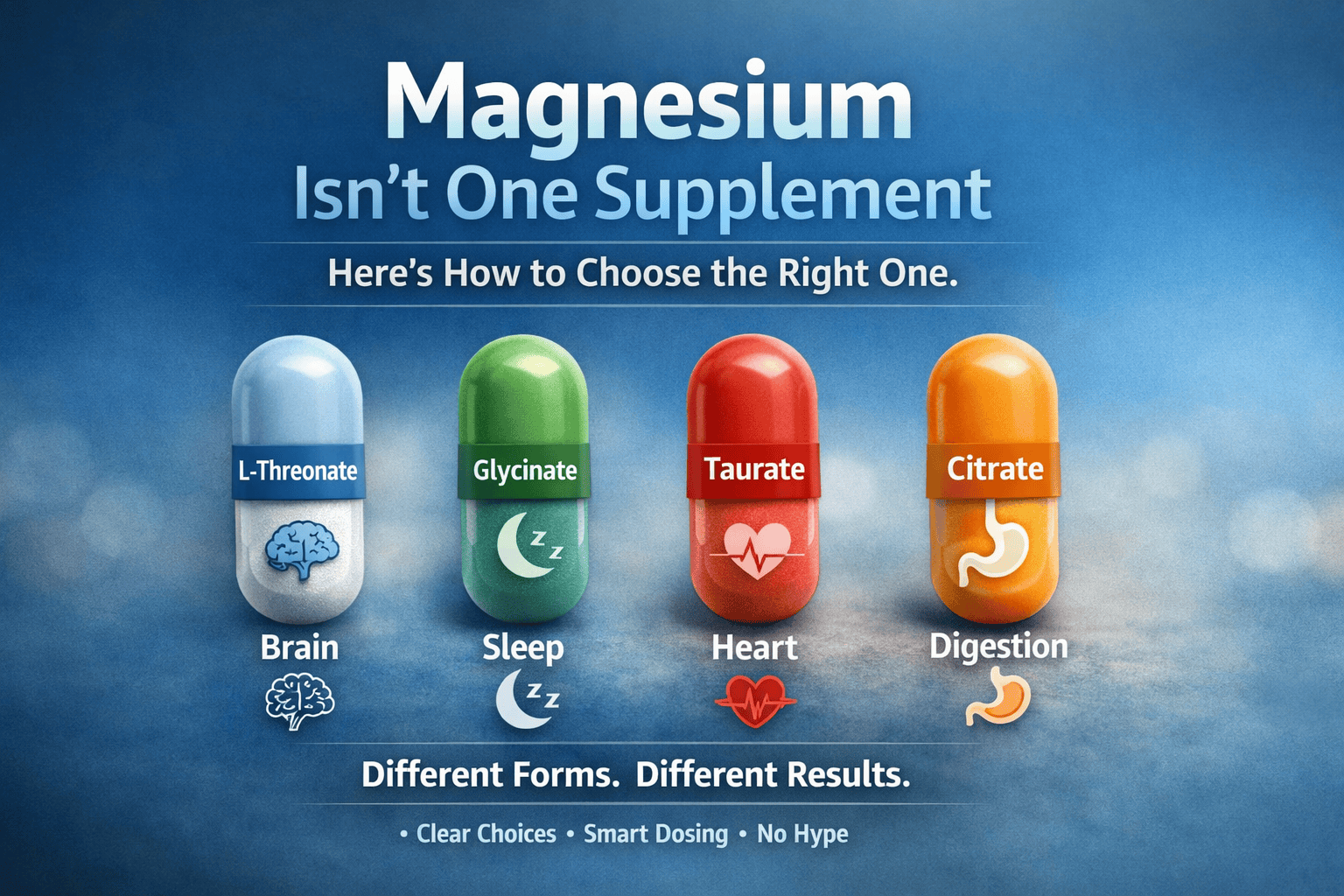
The 10-Second Sorting Rule
If you remember nothing else, remember this:
🧠
Brain / calm focus
Magnesium L-threonate
🌙
Stress / sleep / nervous system
Magnesium glycinate
❤️
Heart / physical stress
Magnesium taurate
🧻
Digestion / constipation
Magnesium citrate
Same mineral. Different destinations.
Why “Magnesium Didn’t Work”
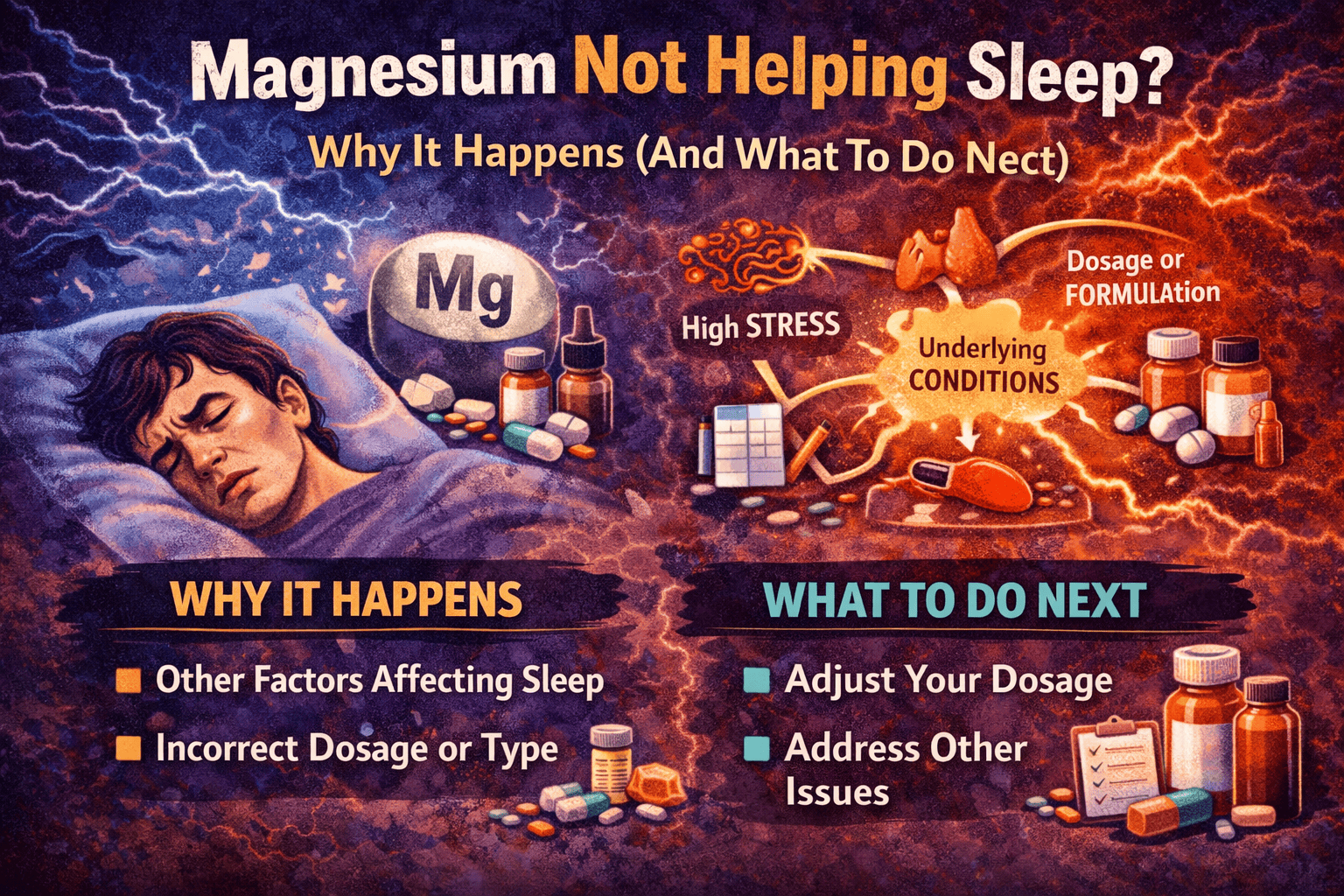
Most “it did nothing” stories come down to one of these:
- Wrong form for the goal (you picked a tool that wasn’t designed for the job)
- Dose too low to notice anything meaningful
- Expecting a stimulant-like feeling
Magnesium doesn’t usually announce itself. It’s more like removing friction:
- sleep comes easier
- your nervous system feels less “on edge”
- your body feels like it recovers better
That’s why it can be easy to miss… until you stop taking it.
Magnesium Doesn’t Need to Be Complicated
It does need to match you. Here’s a calm way to choose:
1) If your brain won’t shut off at night
Start with magnesium glycinate. It’s the “most people do well with this” option for stress and sleep.
2) If you want focus and mental sharpness
Look at magnesium L-threonate. It’s commonly chosen for the “mind side” of magnesium.
3) If your goal is more cardiovascular support
Magnesium taurate is often picked for heart-related goals because taurine itself is a calming amino acid.
4) If you mainly want “regularity”
Magnesium citrate is popular for digestion. It’s also the most likely to loosen stools.
How Much Should You Take?
Most people do well in the 200–400 mg elemental magnesium range per day.
Your “sweet spot” depends on: diet, stress, caffeine intake, training, and digestion.
Important: If magnesium causes GI issues, it’s often a form mismatch more than “magnesium intolerance.”
What We Don’t Do Here: “One Best Magnesium”
VerifiedSupps doesn’t push urgency or trendy picks. We push fit.
The best magnesium is the one that:
- matches your goal
- doesn’t create a new problem
- becomes a quiet part of your routine
Quick Recommendations (Decision-First)
Safe first choice
Magnesium glycinate
Mental performance support
Magnesium L-threonate
Digestion/regularity
Magnesium citrate
Heart support goal
Magnesium taurate
Simple, clean, and targeted.
Go Deeper (VerifiedSupps Guides)
If you want the next most relevant read, start with the guide that matches your goal.
🧩
Magnesium Forms Explained
Glycinate, threonate, taurate, citrate — when each makes sense.
⚖️
Magnesium Dosage Guide
Elemental magnesium explained + practical ranges.
🕒
Best Time to Take Magnesium
Morning vs night — how timing changes the experience.
🛡️
Magnesium Side Effects & Safety
Tolerability, interactions, and what to watch for.
🦵
Magnesium for Muscle Cramps
When cramps are a magnesium issue — and when they’re not.
Tip: If you’re unsure where to start, read Forms first, then Dosage.
Frequently Asked Questions
Which magnesium is best for sleep?
Magnesium glycinate is the most common “sleep and stress” pick because it tends to be gentle and calming for many people.
Which magnesium is best for anxiety or stress?
Many people start with glycinate. If you want something more brain-targeted, L-threonate is commonly considered.
Which magnesium is best for constipation?
Magnesium citrate is widely used for digestion and regularity, but it’s also the most likely to loosen stools.
How long does magnesium take to work?
Some people notice sleep changes within a few days. For others, it’s subtle and takes a couple of weeks. Magnesium often feels like less friction, not a dramatic “kick.”
Can I take magnesium every day?
Many people do. The key is choosing the right form and dose that your body tolerates well.
What’s the best time to take magnesium?
For sleep or stress support, many people take it in the evening. The best schedule is the one you’ll actually follow consistently.
What does “elemental magnesium” mean?
Labels list the compound (e.g., magnesium glycinate) and the amount of elemental magnesium you actually get. When people say “200–400 mg,” they mean elemental.
Can magnesium interact with medications?
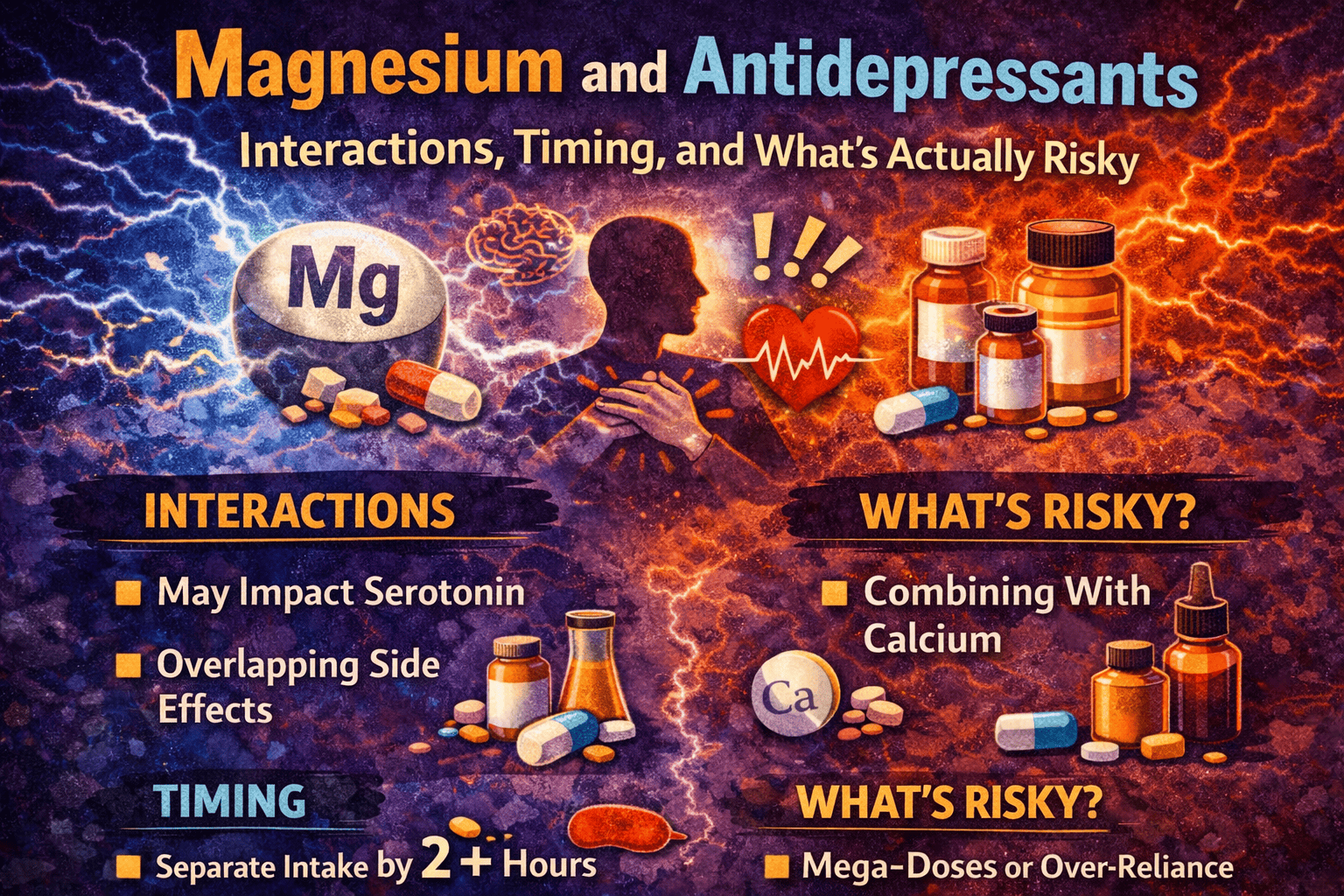
Yes. Magnesium can interfere with absorption of some medications. If you take prescription meds, ask your clinician/pharmacist and consider spacing doses.
VerifiedSupps Medical Disclaimer
This content is for informational and educational purposes only and is not medical advice. It is not intended to diagnose, treat, cure, or prevent any disease.
Always consult a qualified healthcare professional before starting any supplement — especially if you are pregnant, nursing, have a medical condition, or take prescription medications.
If you experience adverse effects, stop use and seek medical advice.