Magnesium for Muscle Cramps: What Science Actually Says
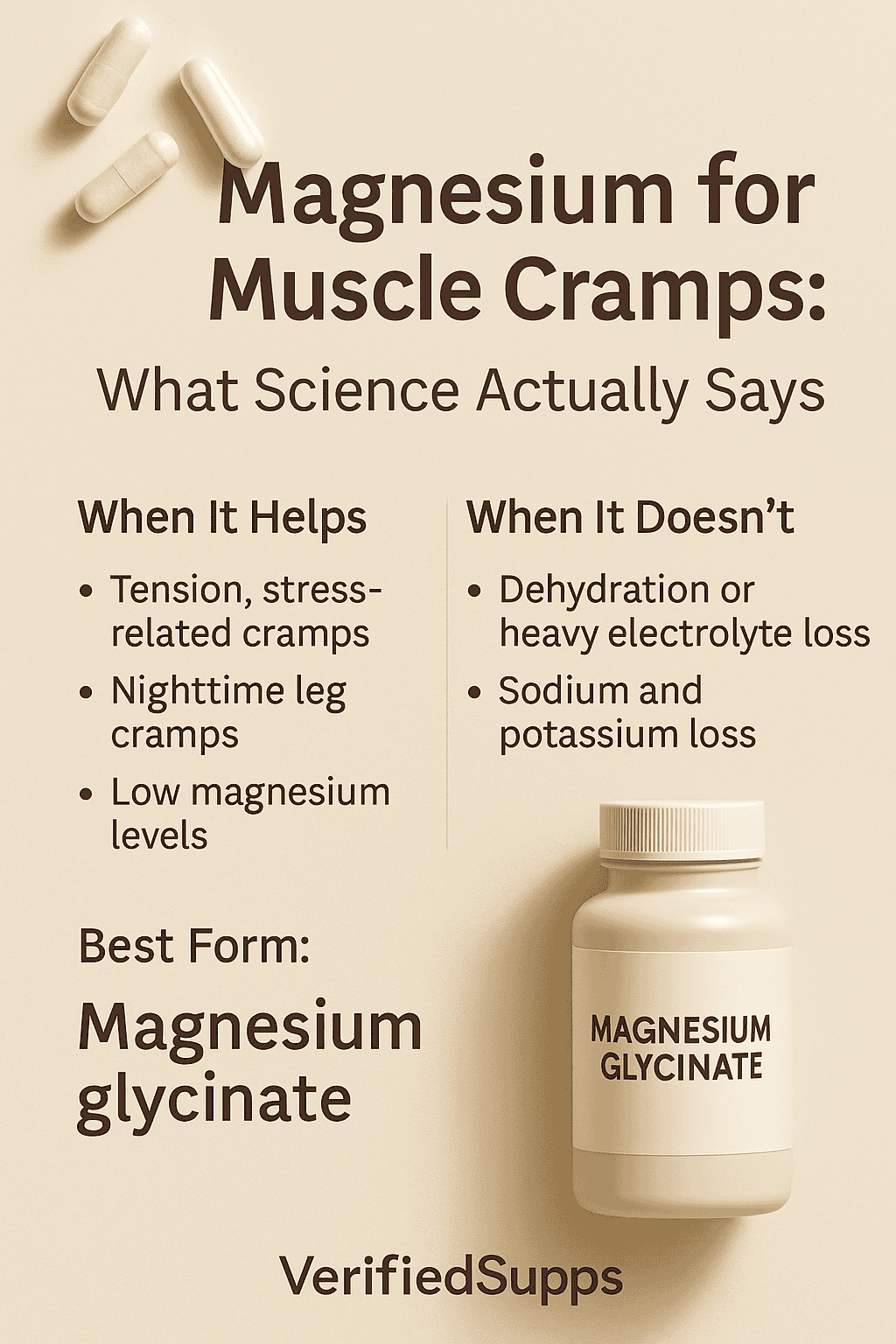
Direct answer: magnesium can help muscle cramps when your cramp pattern is tied to baseline tension, poor wind-down/sleep, twitchiness, or low magnesium intake. It’s usually less helpful for heat/sweat cramps where sodium + fluids (and sometimes potassium) are the main drivers.
Intent/scope: this page focuses on magnesium-fit cramps (night/tension patterns) and how to test magnesium cleanly; for sweat/heat cramps, treat sodium + hydration as the first lever.
Does magnesium help muscle cramps?
Sometimes. Magnesium is most likely to help when cramps are part of a tension/sleep/twitching pattern—not when cramps are mainly from heat/sweat fluid loss.
- Magnesium: supports relaxation threshold and reduces “over-excitability”
- Sodium: stabilizes fluid + nerve signaling (sweat loss patterns)
- Potassium: supports intracellular electrical balance (output/heavy-leg patterns)
| Cramp pattern | What it often signals | Where magnesium fits | Best next step (today) |
|---|---|---|---|
| Night cramps + tight calves + restless sleep | Baseline tension + poor wind-down | Often helpful | Evening magnesium routine (10–14 days) |
| Cramps in heat / heavy sweating | Sodium + fluid loss | Supportive, not primary | Sodium + fluids first; add magnesium later |
| Twitches + “wired” stress days | Nervous system strain | Often helpful | Lower dose daily, consistent |
| New cramps after a big training jump | Load + fatigue + recovery gap | May help the “edges” | Sleep + recovery plan + minerals |
- Kidney disease or reduced eGFR (supplement caution)
- Diuretics/BP meds that affect electrolytes
- New/persistent palpitations or chest symptoms (evaluate first)
- Severe weakness, confusion, fainting/near-fainting (urgent)
- Persistent vomiting/diarrhea or suspected heat illness (medical guidance)
What causes leg cramps at night?
Night cramps often reflect a “release problem”: tight muscles, higher baseline tension, and poor recovery. Magnesium is a rational first lever when night cramps track with restless sleep, twitching, or stress sensitivity.
- Big training load jumps or long standing days
- Sleep debt (more excitability, less recovery)
- Dehydration patterns (especially with alcohol or heat)
- Medications/medical issues (diuretics, thyroid, neuropathy, circulation)
What causes muscle cramps during exercise?
Exercise cramps are often multi-factor. In hot/sweaty conditions, sodium loss and hydration stability become bigger drivers. In high-intensity or fatigued states, neuromuscular fatigue can contribute. Magnesium may help recovery, but it’s not always the primary fix mid-session.
Which magnesium is best for muscle cramps?
For most people, magnesium glycinate is the best first try: it’s relaxation-leaning and usually gentle on digestion. Taurate may fit daytime tension; threonate may fit cognitive “overdrive” with poor sleep depth. Citrate is more gut-active and is rarely the best first choice for cramps.
- Glycinate: calm + sleep + muscle “release”
- Taurate: steadier daytime calm and tension support
- L-threonate: cognitive load + sleep depth goals (lower elemental per serving is normal)
- Citrate: bowel-leaning (helpful if constipation is the real issue)
How much magnesium should I take for cramps?
A common effective range is 200–350 mg elemental magnesium per day, adjusted to tolerance. Start low, then increase slowly. Loose stools usually mean the dose is too high for your tolerance or the form is too gut-active.
- Start: 100–150 mg elemental/day (especially if sensitive)
- Common routine: 200–300 mg elemental/day
- If going higher: split dosing instead of one large dose
When should I take magnesium for cramps?
If cramps are at night, evening dosing is usually best. If you’re aiming at daytime tension, morning or split dosing can feel steadier.
- Night cramps: 1–2 hours before bed
- Day tightness: morning or split dose
- If GI sensitive: take with food
How long does magnesium take to work for cramps?
Some people notice changes within days, but a fair test is 10–14 days of consistent intake. Magnesium tends to work as “less friction,” not an immediate dramatic effect.
- Days 1–3: early sleep/wind-down feel for some
- Week 1–2: fewer tight nights, fewer twitchy days
- Week 2+: steadier “less crampy” trend if the pattern fits
Why am I still getting cramps after taking magnesium?
Most “magnesium didn’t work” cases are: wrong cramp pattern (it’s sweat/heat loss), inconsistent use, the wrong form, or underdosing elemental magnesium.
- Heat/sweat cramps treated with magnesium only (missing sodium + fluids)
- Using citrate/oxide → GI issues → stopping
- Not checking elemental magnesium on the label
- Taking it “sometimes” instead of daily for 10–14 days
- Ignoring training spikes and sleep debt
- New severe weakness, confusion, fainting/near-fainting
- Chest pain, new/persistent palpitations, shortness of breath
- One-sided swelling/redness/warmth with calf pain
- Persistent vomiting/diarrhea or suspected heat illness
- Kidney disease or electrolyte-altering meds with worsening symptoms
- Inputs held constant: training schedule, caffeine timing, water intake, meal timing
- Duration: 10–14 days
- 3 metrics: cramp episodes (count), severity (0–10), sleep quality or workout output (0–10)
- Stop conditions: chest pain, fainting/near-fainting, confusion, severe weakness, severe palpitations
- Night cramps: fewer episodes and lower severity within 10–14 days
- Twitch/tension days: fewer twitches and lower baseline tightness
- What not to expect: a big “hit” right away
- If no change: re-check sodium/fluids (heat), potassium foods, sleep debt, training spikes
Selected Professional References
Go Deeper (VerifiedSupps Guides)
Final Takeaway
Magnesium helps cramps best when cramps are part of a tension/sleep pattern. If your cramps are heat/sweat driven, prioritize sodium + fluids and potassium foods first. Run one lever at a time for 10–14 days and judge by fewer cramps and a lower “tight baseline,” not by dramatic sensations.