Magnesium Forms Overview: Glycinate vs Threonate vs Taurate vs Citrate
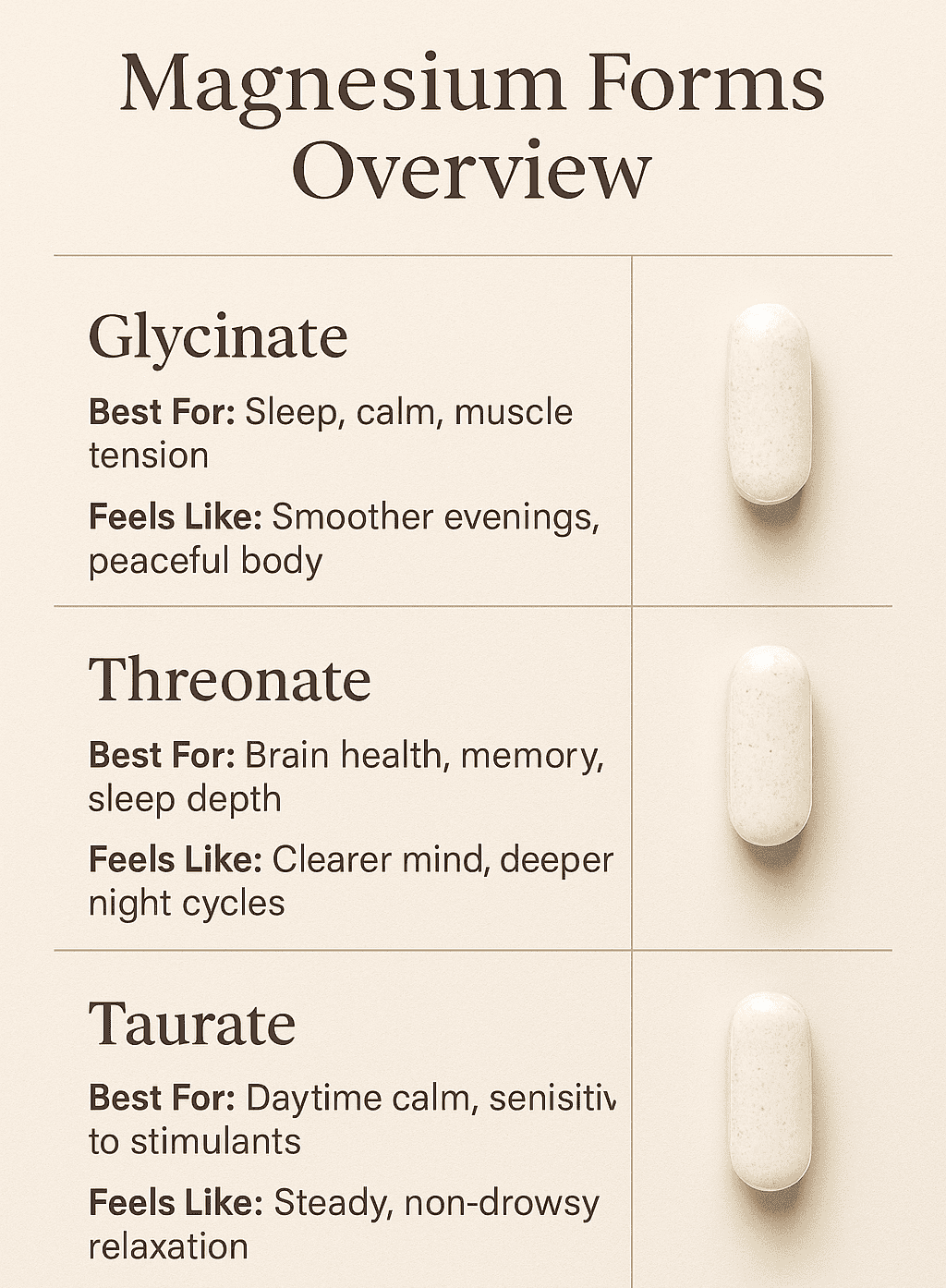
Direct answer: there isn’t one “best magnesium.” Pick the form that matches your goal: glycinate (sleep/body calm), L-threonate (brain-leaning calm/clarity), taurate (daytime steadiness), citrate (digestion/regularity).
Intent/scope: this page helps you choose a form based on intent (sleep vs cognition vs digestion). It is not a replacement for clinician guidance in kidney disease, pregnancy, or complex medication regimens.
Quick Take
- Sleep + body tension: start with glycinate (usually gentlest).
- Mind won’t shut off: threonate is the brain-leaning specialist.
- Daytime steadiness: taurate often feels “clean” (less sleepy).
- Constipation: citrate is a gut tool (also the most likely to loosen stools).
| Intent (what you want) | Best first pick | Typical feel | Best next step (today) |
|---|---|---|---|
| Sleep + muscle tension | Glycinate | Smoother wind-down | Evening dose, 10–14 nights, track sleep (0–10) |
| Brain calm / memory / mental wind-down | L-threonate | “Brain quiet,” subtle | Split dosing; don’t expect high elemental per serving |
| Daytime steadiness / caffeine edge | Taurate | Clean, non-drowsy | Start low; AM or early afternoon |
| Constipation / regularity | Citrate | Gut-active | Low dose first; stop if diarrhea/dehydration risk |
Which magnesium form is best for sleep?
For most people, glycinate is the best first pick for sleep because it’s calm-leaning and usually gentle. If your sleep issue is more “mind won’t shut off,” threonate is the main alternative.
- Glycine pairing: often felt as smoother wind-down
- Timing: evening dosing is most common for sleep goals
- Consistency: judge it over 10–14 nights, not one dose
Which magnesium form is best for anxiety or stress?
If you want daytime steadiness, taurate is often the cleanest. If you want evening calm + sleep, glycinate is usually the better first move.
What is magnesium L-threonate used for?
Threonate is commonly chosen for brain-leaning support (mental clarity, less “mental noise,” learning/memory goals). It’s often subtler than glycinate and typically provides less elemental magnesium per serving.
What is magnesium taurate used for?
Taurate is often used for daytime calm and “steady baseline” support. Many people describe it as less sleepy than glycinate.
What is magnesium citrate used for and why does it cause diarrhea?
Citrate is a digestion/regularity tool. It’s more gut-active, which is why it can cause loose stools—especially at higher doses or when taken casually for “calm.”
Why magnesium isn’t working for you
Most issues come down to wrong form, wrong timing, or not dosing by elemental magnesium.
- Picking citrate/oxide for sleep and getting GI blowback
- Underdosing because you followed “compound mg”
- Changing multiple variables at once
- Giving up before 10–14 days of consistent intake
- Inputs: stable caffeine timing, stable bedtime, stable water intake
- Duration: 10–14 days
- 3 metrics: sleep quality (0–10), tension/twitch frequency, GI tolerance
- Stop conditions: severe palpitations, fainting/near-fainting, confusion, severe weakness
- Less “grabby” tension and easier wind-down
- More stable sleep over 10–14 nights
- Fewer twitches/cramps
- What not to expect: a stimulant-like “feel it instantly” sensation
- Chest pain, fainting, severe weakness, confusion
- Persistent palpitations or shortness of breath
- Severe dehydration (vomiting/diarrhea)
- Kidney disease or reduced kidney function
Selected Professional References
Go Deeper (VerifiedSupps Guides)
Final Takeaway
Pick magnesium by job: glycinate for sleep/body calm, threonate for brain-leaning support, taurate for daytime steadiness, citrate for digestion. Dose by elemental magnesium, not compound weight, and judge results over 10–14 days with stable inputs.
FAQ
Which magnesium form is best overall?
Glycinate is the most common “best first pick” because it’s usually gentle and calm-leaning.
Why does magnesium citrate cause diarrhea?
Citrate is more gut-active and can draw water into the intestines, especially at higher doses.
Is magnesium threonate better for the brain?
It’s the most “brain-leaning” form in common use, but it’s usually subtler and not designed to maximize total elemental magnesium intake.
Is magnesium taurate good for anxiety?
Many people use taurate for daytime steadiness and “clean calm,” especially with caffeine.
Can I take more than one magnesium form?
Yes, but start with one form first. Combine only if each form has a clear job and you can track outcomes.
Who should be cautious with magnesium supplements?
People with kidney disease, significant heart rhythm issues, or certain medication use should consult a clinician before supplementing.