By VerifiedSupps Editorial Team
Can Magnesium Cause Heart Palpitations? When It Helps, When It Worsens, and Fixes
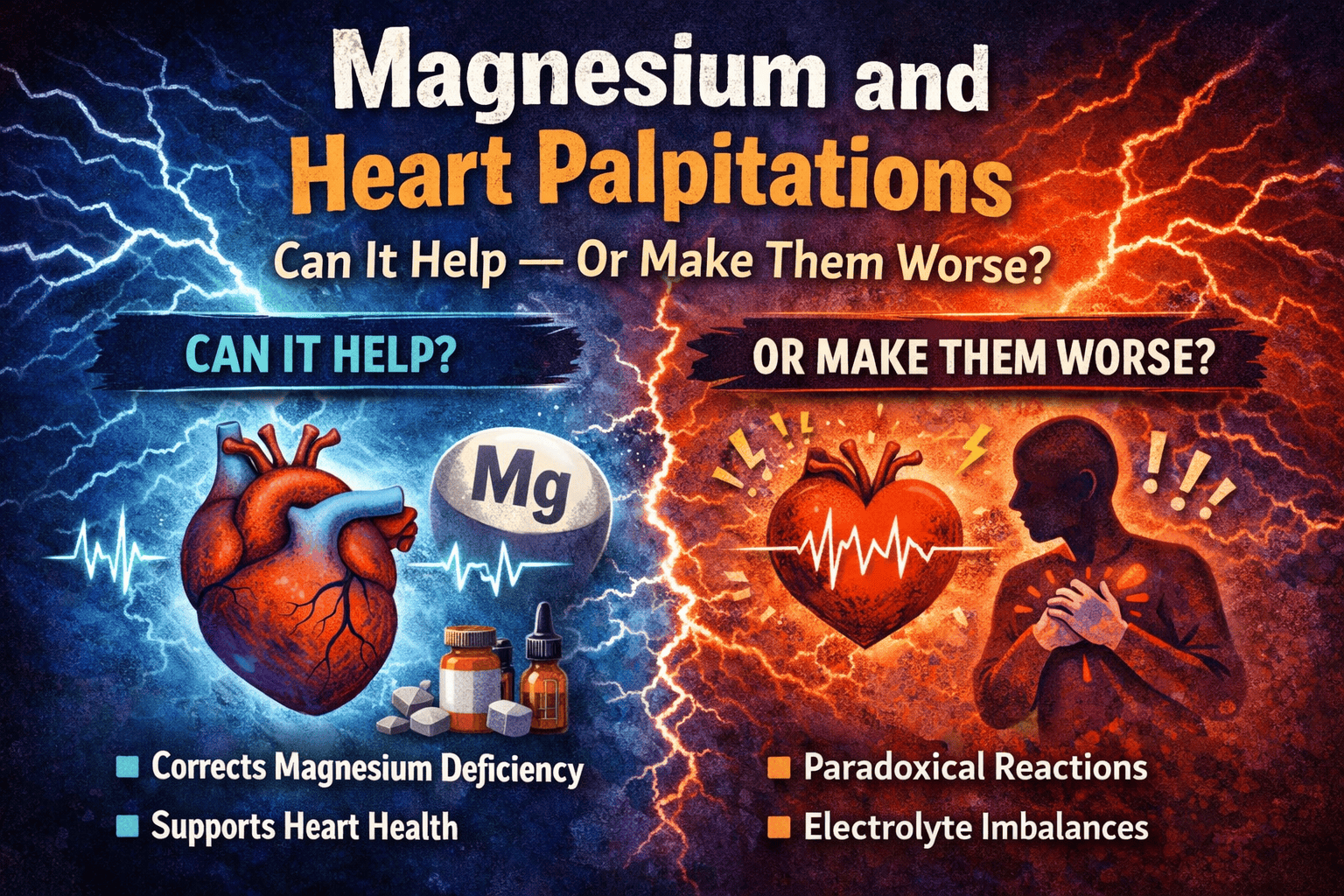
Palpitations are a symptom, not a diagnosis. Magnesium can help when the real driver is low magnesium status, stress-heavy physiology, or broader electrolyte strain. But magnesium can also seem to make palpitations worse when the dose is too high, the timing is wrong, or loose stool and dehydration enter the picture.
That is why the cleanest approach is not “magnesium good” or “magnesium bad.” It is pattern-matching. If palpitations got worse after starting magnesium, you want to test dose, timing, GI effects, stimulants, and sleep variables before jumping to dramatic conclusions.
This page is focused on the real-world question: when magnesium may help palpitations, when it may indirectly worsen them, how to test it safely, and when the issue should be treated as medical rather than supplement-level.
Key terms: magnesium, heart palpitations, PVCs, skipped beats, diarrhea, dehydration, timing, dose, magnesium taurate
Quick Take
If magnesium seems to worsen palpitations, the most common explanation is not dangerous magnesium overload. It is usually dose too high, bedtime timing, diarrhea-driven dehydration, or an anxiety and body-awareness loop. The cleanest fix path is usually pause, reset, restart lower, and remove confounders.
TL;DR decision
Magnesium can help palpitations in the right context, but if symptoms clearly got worse after starting it, treat the first move as troubleshooting, not doubling down. Restart lower, earlier, and cleaner—or get medical help if the pattern feels more serious than a supplement side effect.
Evidence standard: human trials, dose ranges, guideline-level sources when available
Who this is for: people whose palpitations started or changed after magnesium, or who suspect electrolyte involvement
Who this is not for: anyone with chest pain, fainting, severe shortness of breath, sustained rapid rhythm, or kidney disease without clinician guidance
Author: VerifiedSupps Editorial Team
Reviewed by: VerifiedSupps Editorial Team
Published: 2026-03-12
Updated: 2026-03-12
Last reviewed: 2026-03-12
Parent Hub
Electrolytes, Anxiety, and Heart Palpitations
Use the main hub if your palpitations feel tied to hydration, sodium, potassium, stress, or sleep. This page stays tightly focused on magnesium as the variable in question.
Magnesium and palpitations decision table
Match your pattern to the most likely explanation before you assume magnesium is either fixing everything or breaking everything.
| Your pattern | Most likely driver | Best first fix | Stop and get help if… |
|---|---|---|---|
| Palpitations show up the same day after dosing | Dose too high, timing too late, or anxiety amplification | Pause, then restart low with dinner | Chest pain, fainting, severe shortness of breath |
| Loose stool plus palpitations | Dehydration and electrolyte drift | Rehydrate, use food sodium and potassium, lower dose or change form | Severe dehydration signs |
| Night palpitations or waking with pounding heartbeat | Sleep fragmentation, late dosing, or stress loop | Move magnesium to dinner and clean up late stimulants | New sustained irregular rhythm |
| PVCs or skipped beats with stress or caffeine | Sympathetic tone, triggers, and sometimes low Mg or K | Stabilize caffeine and sleep, then test magnesium conservatively | Syncope, chest pain, severe shortness of breath |
Best next step (today): If magnesium clearly worsened palpitations, stop trying to power through it and switch to a clean reset-and-retest approach.
Can magnesium cause heart palpitations?
In most healthy adults, normal magnesium supplementation is unlikely to directly create a dangerous rhythm. What it can do is worsen the situation indirectly through diarrhea, dehydration, poor timing, or stronger body-awareness signals that feed anxiety.
Mechanism
- High starting doses can create more noticeable body sensations than many people expect.
- GI effects can shift hydration and electrolytes in a way that makes palpitations more likely.
- Stress and heartbeat awareness can turn a mild body signal into a full anxiety loop.
Why do palpitations get worse after taking magnesium?
The usual reasons are surprisingly practical: starting too high, taking it too late, stacking it with caffeine or other stimulants, or getting loose stool and then feeling the dehydration consequences. The body often makes more sense here than the label does.
Most common pattern
Loose stool, poor sleep, or a sudden “I can feel my heartbeat” spiral is a more common explanation than anything dramatic about magnesium itself.
Does magnesium help PVCs or skipped beats?
Sometimes it can, especially when magnesium status is low or overall electrolyte strain is part of the picture. But PVCs also commonly track with stress, caffeine, poor sleep, dehydration, and trigger stacking, so magnesium is not the whole story by default.
Practical framing
If PVCs worsen right after magnesium, think dose, timing, or GI effects first. If they track with stress and stimulants, reduce those drivers before assuming a supplement should solve them.
What is the best magnesium for heart palpitations?
“Best” usually means “best tolerated.” There is no magical palpitations form that overrides bad dosing or poor timing. If magnesium helps, it is usually because your system needed magnesium, not because a brand-new form changed everything.
| If your issue is… | Often the better fit is lower dose plus a form you tolerate well. |
|---|---|
| Night palpitations | Dinner timing is often more important than chasing a fancy form. |
| “Heart comfort” goal | Some people prefer taurate, but dose and tolerance still matter more than marketing language. |
How much magnesium should you take for palpitations?
Start low if you are palpitations-prone. Jumping straight to 300 to 400 mg elemental magnesium is a common way to create GI effects and body awareness that muddy the whole experiment. A conservative dose is a better diagnostic tool.
Starter range
100 to 150 mg elemental daily with food.
More standard range
150 to 250 mg if fully tolerated for several days.
Upper conservative range
250 to 350 mg only if tolerated and safe for your situation.
What is the best time to take magnesium for palpitations?
Dinner or early evening is often the safest timing because it reduces bedtime disruption and late-night GI activity. If palpitations are already worse at night, bedtime dosing is often the wrong experiment.
Palpitations after magnesium: troubleshooting and how to tell it is working
You will usually get clarity faster by treating this like a controlled test instead of a random reaction. The biggest failure is changing magnesium, caffeine, sleep aids, and hydration habits all at once, then blaming whichever variable feels scariest.
Common mistakes
- Starting too high and creating GI effects or body-noise immediately.
- Taking it at bedtime when night awakenings are already part of the problem.
- Ignoring diarrhea even though dehydration is a direct palpitations trigger.
- Keeping stimulants, alcohol, THC, or sleep-aid changes in the mix while testing magnesium.
Clean test protocol
| Inputs | If symptoms clearly worsened after magnesium, pause 48 to 72 hours, then restart low with dinner and keep caffeine, alcohol, and sleep aids stable. |
|---|---|
| Duration | Use a 7 to 14 day window before deciding whether the lower-dose re-test is cleaner. |
| 3 metrics | 1) palpitations frequency, 2) GI tolerance and hydration feel, 3) sleep awakenings or nighttime heartbeat awareness. |
| Stop conditions | Stop and get help for chest pain, fainting, severe shortness of breath, severe weakness, or a new sustained rapid or irregular rhythm. |
How to tell it is working
Success usually means fewer episodes, lower intensity, less body-noise after dosing, and fewer trigger sensations without diarrhea or sleep disruption. The right win is a calmer pattern, not a perfect rhythm on day one.
Red flags / seek care
Treat chest pain, fainting, severe shortness of breath, severe weakness, or a sustained fast or irregular rhythm as urgent. Those are not supplement-debugging problems.
Selected Professional References
These are the main external sources behind the safety, dehydration, deficiency, and clinical-context framing.
Magnesium fact sheet
Useful for safety limits, deficiency risk factors, kidney caution, and medication interaction categories.
Used for: safety and deficiency context
Heart palpitations overview
Helpful for common causes and when palpitations need urgent evaluation.
Used for: red flags and symptom context
Dehydration overview
Helpful for understanding the diarrhea and dehydration pathway that can worsen palpitations.
Used for: GI and hydration context
Hypomagnesemia overview
Helpful for deficiency patterns, risk factors, and why symptoms can overlap with broader electrolyte problems.
Used for: low-magnesium clinical context
Go Deeper (VerifiedSupps Guides)
These next-step guides help you figure out whether the real issue is magnesium, potassium, dose math, or the GI side of the equation.
Magnesium vs potassium
Use this if palpitations may actually be a potassium or broader electrolyte issue instead of magnesium alone.
Magnesium diarrhea: why it happens
Use this if loose stool is the obvious turning point that made palpitations worse.
Magnesium dosage guide
Use this if elemental magnesium math and safer titration are the main question.
Magnesium taurate guide
Use this if you are specifically looking at taurate for “heart comfort” and want a calmer reality check.
Final Takeaway
Magnesium can help palpitations when low magnesium or broader electrolyte strain is part of the driver. If it seems to make things worse, the most likely culprits are dose, timing, or GI and hydration effects. The cleanest move is usually not panic and not persistence. It is pause, restart lower, and test it properly.
FAQ
Can magnesium cause heart palpitations?
It can seem to, usually through dose, timing, GI effects, dehydration, or anxiety amplification rather than true magnesium toxicity in healthy adults.
Can magnesium help heart palpitations?
Sometimes, especially when magnesium status is low or electrolyte strain is part of the pattern.
Why do palpitations get worse after magnesium?
The most common reasons are too much too fast, diarrhea and dehydration, bedtime timing, or a stress and body-awareness loop.
How do I stop palpitations after taking magnesium?
Pause for 48 to 72 hours if the connection is clear, rehydrate if GI effects happened, then restart lower with dinner and fewer confounders.
Does magnesium taurate help palpitations?
Some people prefer it, but better tolerance and smarter dose timing usually matter more than the form alone.
How much magnesium should I take for palpitations?
A conservative starting point is often 100 to 150 mg elemental magnesium daily with food, then only increase if tolerance is clean.
Can diarrhea from magnesium cause palpitations?
Yes. Diarrhea can lead to dehydration and electrolyte drift, which can make palpitations feel worse.
When are palpitations an emergency?
Chest pain, fainting, severe shortness of breath, or a sustained fast or irregular rhythm that does not settle should be treated as urgent.
VerifiedSupps Medical Disclaimer
This content is for educational purposes only and is not medical advice. Palpitations can have many causes, including potentially serious heart rhythm problems. Seek urgent medical care for chest pain, fainting, severe shortness of breath, sustained rapid or irregular heartbeat, or symptoms that feel dangerous. Consult a qualified clinician before starting, stopping, or changing magnesium if you have kidney disease, cardiovascular disease, low blood pressure, electrolyte disorders, or take prescription medications.