Can Electrolytes Cause Anxiety or Heart Palpitations?
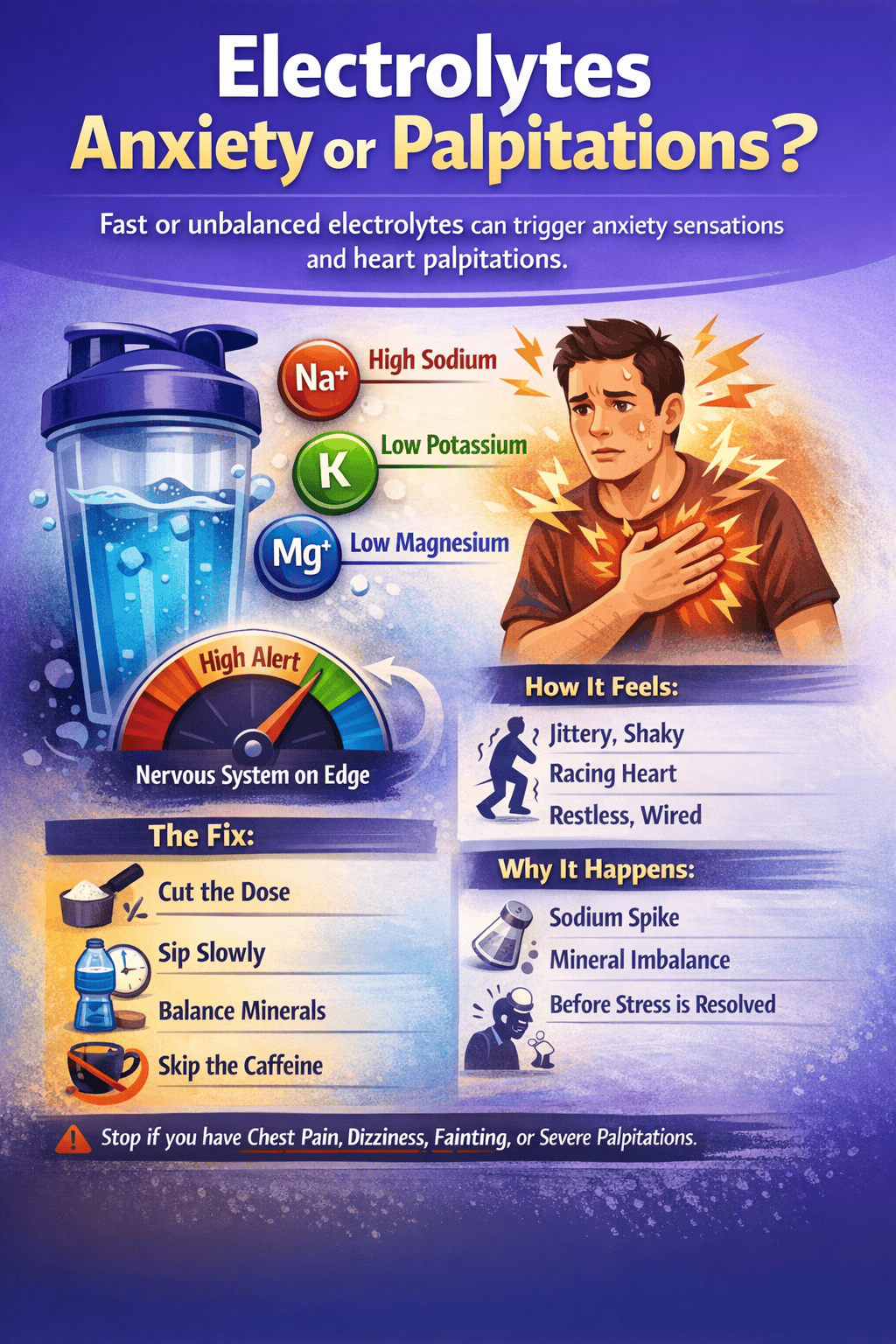
Yes—electrolytes can trigger anxiety-like sensations or palpitations in some people, especially when the sodium load is high and fast, the mix is unbalanced, or you’re already running on low sleep and high caffeine. Most of the time the fix is not “never again.” It’s dose, delivery speed, and balance.
Quick take
- Most common culprit: a fast sodium spike (especially on an empty stomach) plus low potassium/magnesium intake.
- Fastest fix: cut the dose to 1/4–1/2, sip over 30–90 minutes, and don’t stack with caffeine at first.
- Red flags override everything: chest pain/pressure, fainting/near-fainting, severe shortness of breath, or a new sustained irregular rhythm.
Evidence standard: human trials, dose ranges, guideline-level sources when available
For: people who feel anxious, shaky, or notice palpitations after starting electrolytes
Not for: kidney disease, significant heart rhythm history, or red-flag symptoms without clinician guidance
Last reviewed: March 4, 2026
Parent Hub
Electrolytes Explained: sodium, potassium, magnesium, and how balance actually works
This page is about “electrolytes made me feel weird.” The hub is the full framework.
Can electrolytes cause anxiety or heart palpitations?
Yes—especially if you changed the dose quickly. Most people are not describing a sudden new anxiety disorder; they’re describing a body-state shift (jittery, buzzing, hyper-aware heartbeat, restlessness) that feels like anxiety. This page “owns” that intent: symptoms after starting electrolytes, not “signs you need more electrolytes.”
| If you feel… | Most likely driver | Best first fix |
|---|---|---|
| Jittery / “wired” | Fast sodium hit + caffeine/stimulant stacking | Cut dose to 1/4–1/2; sip slowly; separate from caffeine |
| Pounding heartbeat | Sympathetic tone + “heartbeat awareness” | Smaller dose with food; slow delivery; stabilize sleep and caffeine |
| Palpitations + dizziness | Dehydration, low food intake, or too aggressive rehydration | Pause; hydrate with food; restart low and slow |
| Restless / can’t relax | Dose too high for baseline need; imbalance (sodium high, potassium low) | Reduce sodium load; ensure food potassium; avoid “slam” dosing |
What would change my recommendation?
- You have kidney disease or take potassium-sparing meds (ACE inhibitors/ARBs, spironolactone) where potassium handling is altered.
- You have known arrhythmia history, frequent fainting, or new sustained irregular rhythm.
- You have uncontrolled high blood pressure and are using very sodium-heavy mixes.
- Your symptoms include chest pain/pressure, severe shortness of breath, fainting/near-fainting.
- You’re using diuretics or have endocrine conditions affecting sodium/potassium balance (clinician-led dosing is safer).
Why do electrolytes make me feel anxious?
Because “anxiety” can be a body-state. Electrolytes influence nerve firing, muscle contraction, and fluid balance. If the change is sudden, you can feel it as jitteriness, restlessness, or heartbeat awareness—even when your mind feels calm.
- Sodium can feel stimulating when delivered fast.
- Potassium helps restore intracellular electrical stability; low intake can make spikes feel harsher.
- Magnesium often acts as a “stability” mineral; low magnesium status can amplify nervous system reactivity.
Can too much sodium cause palpitations or a “wired” feeling?
It can—especially when sodium arrives as a fast bolus (one strong serving, quickly, often fasted). The issue is often delivery, not sodium “being bad.” Many mixes are “salt + flavor” with minimal potassium/magnesium, so the experience can feel sharp.
Low-noise fix: take a smaller dose, sip over time, and pair with food. If you feel better, it was a spike problem—not a permanent intolerance.
Can low potassium or low magnesium cause palpitations?
Yes—low potassium or low magnesium status can contribute to palpitations in some contexts. The common real-world scenario is not “one drink caused deficiency,” but a baseline pattern: sweaty training, low-food intake, diuretics, or chronic stress plus inconsistent mineral intake.
- If you’re low-carb/fasting: sodium needs and symptoms can swing quickly, and potassium intake can drift down.
- If you’re cramping + lightheaded: it’s often hydration + sodium + potassium balance, not just “more electrolytes.”
- If you’re on medications: potassium and sodium handling may be altered (clinician guidance matters).
How to stop electrolyte anxiety and palpitations fast
Most people improve by changing the dose and delivery. Think: smaller, slower, steadier.
- Step down the dose: start at 1/4 serving for 2–3 days (then 1/2 if stable).
- Sip, don’t slam: spread across 30–90 minutes.
- Use food as a buffer: taking with a meal reduces “spike” sensations.
- Separate from stimulants: keep caffeine and pre-workout away during troubleshooting.
- Re-check your baseline: low sleep + high stress makes everything feel louder.
How long does it take to feel normal after stopping electrolytes?
If electrolytes are the trigger, many people feel better the same day or within 24–72 hours after stopping or reducing dose—especially when the cause was a sodium spike or stimulant stacking. Persistent symptoms suggest another driver (illness, sleep debt, anxiety cycle, medication effects).
Quick rule: repeatable timing after electrolyte dosing is the strongest clue. If it’s not repeatable, treat electrolytes as a suspect, not a conclusion.
Troubleshooting: common mistakes and how to tell it’s working
If you want clarity, stop changing variables. Most “electrolytes give me anxiety” stories are really “electrolytes + caffeine + stress + fasted dosing.”
Common mistakes
- High dose, fasted, fast delivery (most likely to feel “wired”).
- Stacking with caffeine/pre-workout (sympathetic tone skyrockets).
- Sodium-heavy mix with low potassium intake (imbalance feels harsh).
- Chasing symptoms hourly (increases body scanning and anxiety loops).
Clean test protocol (7–14 days)
- Week 1: 1/4–1/2 serving, with food, sipped over time.
- Hold caffeine stable: same cutoff time each day.
- Track one marker: “wired feeling” (0–10) and palpitations awareness (0–10).
- Only one change in week 2: dose OR timing (not both).
- If symptoms worsen: stop and consider clinician evaluation, especially with red flags.
How to tell it’s working
- Working looks like stability: fewer “spikes,” less jitter, fewer palpitations episodes.
- Realistic window: same-day improvements for spike problems; 3–7 days to see a stable pattern.
- What not to expect: a constant “energized” feeling—if you feel revved, you may be overdosing.
- Success definition: electrolytes help cramps/hydration without triggering anxiety sensations.
When should you see a doctor for palpitations?
If you have palpitations with chest pain/pressure, fainting/near-fainting, severe shortness of breath, new neurological symptoms, or a new sustained irregular rhythm, treat it as urgent. If palpitations are persistent, frequent, worsening, or you have kidney disease or heart rhythm history, get evaluated rather than self-tuning supplements.
Bottom line: electrolytes can amplify symptoms, but they should never replace proper evaluation when red flags exist.
Selected Professional References
NIH ODS: Sodium (Health Professional)
Evidence-based sodium context, recommended limits, and health considerations.
ods.od.nih.gov
NIH ODS: Potassium (Health Professional)
Potassium’s role in blood pressure and physiology, plus safety cautions for kidney disease.
ods.od.nih.gov
MedlinePlus: Palpitations (Medical Encyclopedia)
Common causes and when palpitations need urgent evaluation.
medlineplus.gov
MedlinePlus: Dehydration
Why fluid shifts can cause dizziness, palpitations, and anxiety-like sensations.
medlineplus.gov
National Kidney Foundation: Potassium and kidney disease
Why potassium dosing becomes clinical when kidney function is impaired.
kidney.org
Go Deeper (VerifiedSupps Guides)
Signs you need more electrolytes
How deficiency feels versus overload (and common look-alikes).
Sodium dosage guide
Practical ranges and how to avoid “spike” dosing.
Potassium dosage guide
Why balance matters and when potassium becomes clinician territory.
Sodium and hydration
Why sodium can help hydration—and why delivery speed matters.
Final takeaway
Electrolytes can absolutely trigger anxiety-like sensations or palpitations when the dose is aggressive, the sodium load hits too fast, or the mix is unbalanced. The calm fix is usually the correct fix: smaller dose, slower delivery, food as a buffer, and no stimulant stacking during troubleshooting. If red flags exist, treat it as medical—not a supplement puzzle.
FAQ
Can electrolytes cause anxiety?
They can cause anxiety-like sensations (jitter, restlessness, body scanning), especially after a fast sodium spike or stimulant stacking.
Can electrolytes cause heart palpitations?
They can increase heartbeat awareness or trigger palpitations in susceptible people when dosing is aggressive or dehydration is involved.
Can too much sodium make you feel wired?
Yes, especially when taken fasted and quickly. Most people do better with smaller, slower dosing and food.
Can low potassium cause palpitations?
Low potassium status can contribute to palpitations in some contexts, especially with sweating, low intake, or certain medications.
How long does it take to feel normal after stopping electrolytes?
If the issue was a spike, many feel better the same day or within 24–72 hours after stopping or reducing dose.
Should I take electrolytes with caffeine?
If you’re troubleshooting symptoms, keep them separate. Once stable, some people tolerate combining, but it’s not the best first test.
Is it safe to take electrolytes every day?
Often yes in appropriate doses, but safety depends on your health status, diet, kidney function, and medications.
When should I go to urgent care for palpitations?
Chest pain/pressure, fainting/near-fainting, severe shortness of breath, or a new sustained irregular rhythm should be treated as urgent.
VerifiedSupps Medical Disclaimer
This content is for educational purposes only and is not medical advice. Electrolyte supplements can affect blood pressure, heart rhythm sensations, and fluid balance. Seek urgent medical care for chest pain/pressure, fainting/near-fainting, severe shortness of breath, or a new sustained irregular heartbeat. Consult a qualified healthcare professional before changing electrolyte intake if you have cardiovascular disease, kidney disease, high blood pressure, or take medications that affect electrolytes or fluid balance.