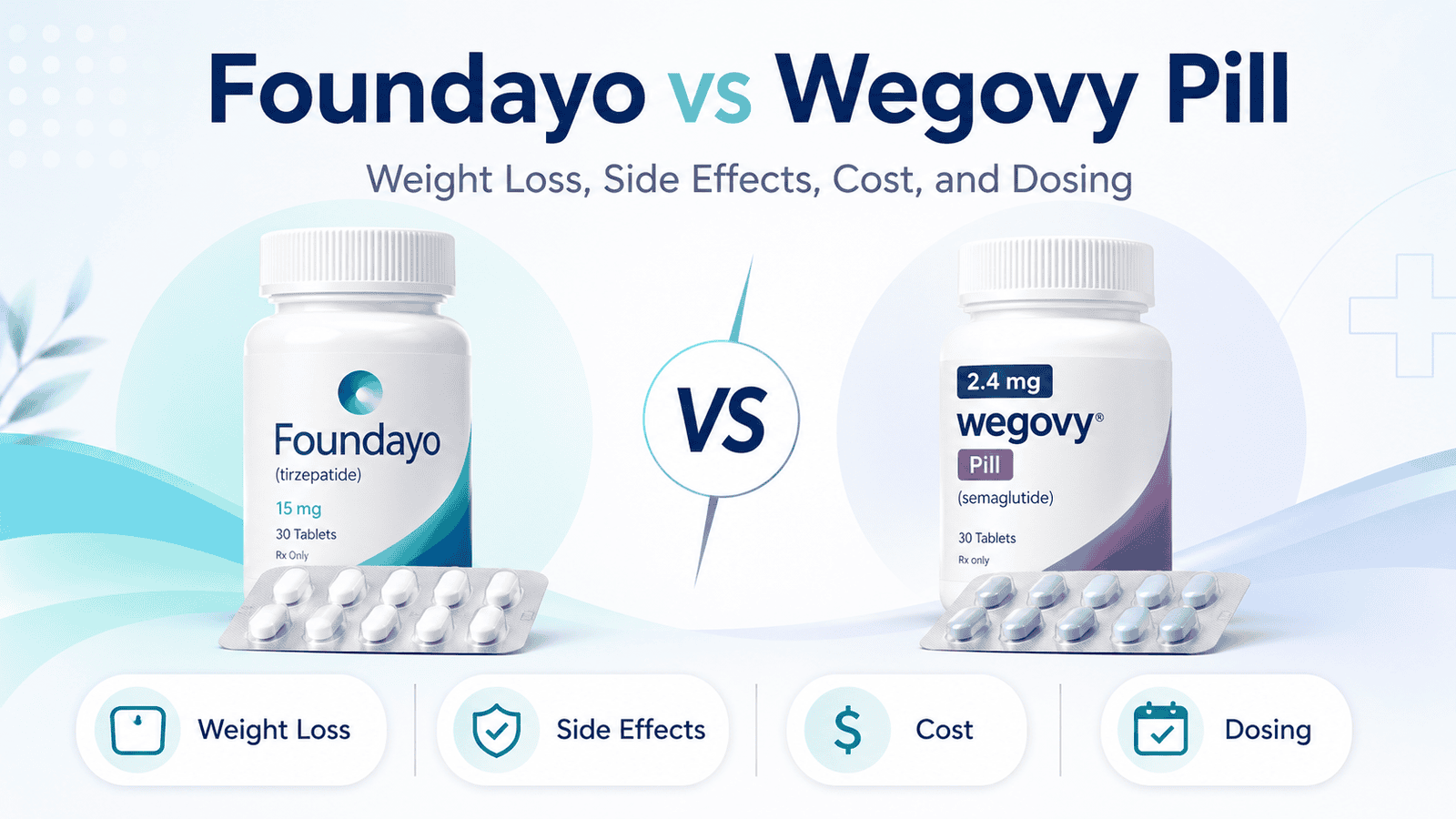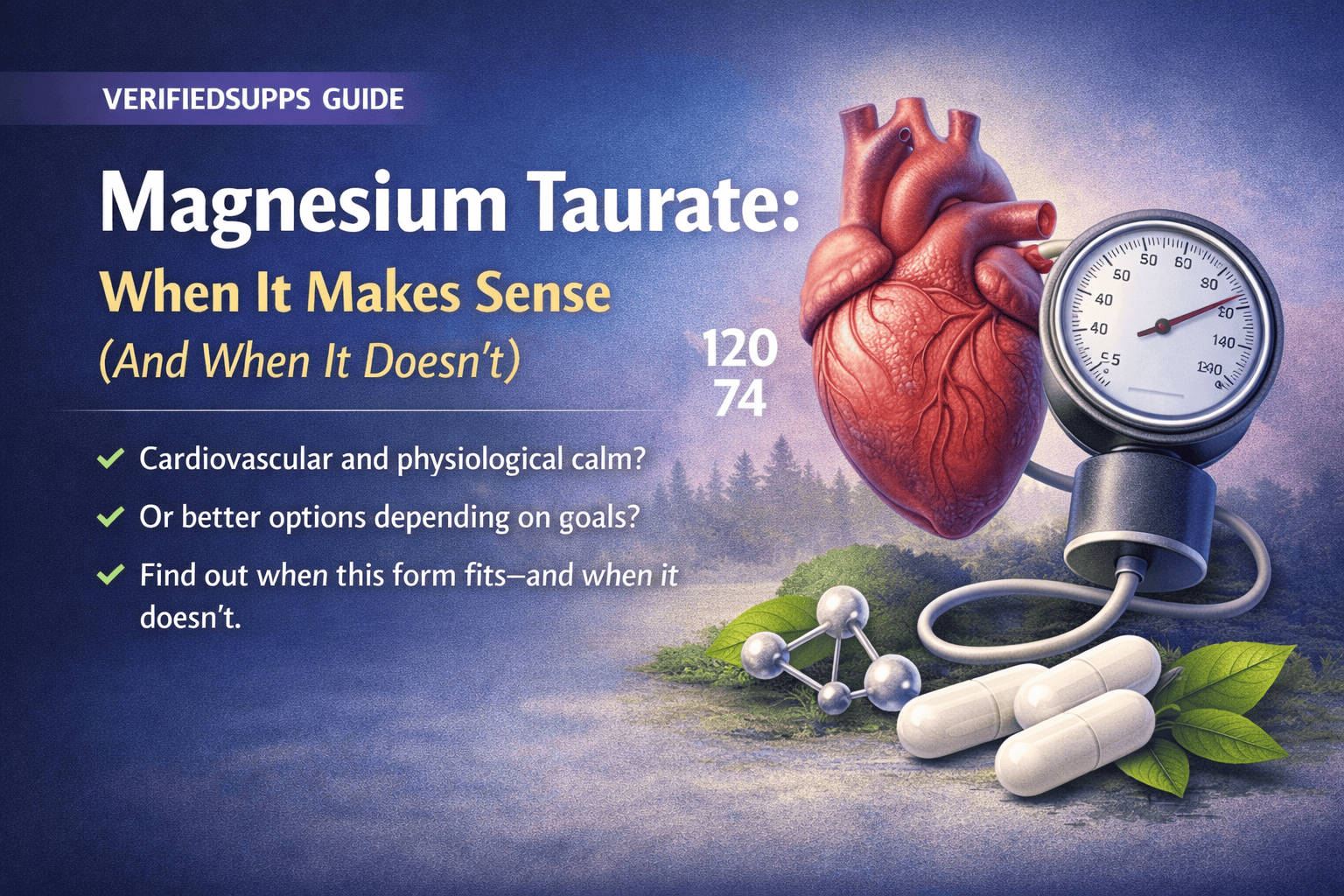
Magnesium Taurate: When It Makes Sense (And When It Doesn’t)
Direct answer: magnesium taurate tends to make the most sense when your goal is physical steadiness—a calmer “body baseline,” cardiovascular/vascular tone support, and stress that shows up as tension in the body. It’s usually not the best first pick if you want a clear sleepy feeling or a big, immediate mental calm effect.
Think of taurate as a physiology-first magnesium: often subtle, often steady, and most noticeable when the bottleneck is in the body—not the mind.
What is magnesium taurate?
Magnesium taurate is magnesium bound to taurine, an amino acid involved in cardiovascular and cellular functions. Taurine isn’t a stimulant—its “energy drink” association is marketing context, not a physiological rule. In practice, taurate is often described as physically calming and steady rather than sedating.
| Your intent | Taurate fit | Best first move | Common mistake |
|---|---|---|---|
| Physical calm (tension baseline, tight chest feeling) | Often good | Split dosing + consistent timing for 7–14 days | Expecting immediate sedation |
| Blood pressure/vascular tone support (as a wellness adjunct) | Sometimes | Treat as supportive; don’t replace medical care | Using it to self-treat high BP |
| Sleep onset (“make me sleepy”) | Often mixed | Prioritize timing + sleep routine first | Blaming taurate when caffeine is the driver |
| GI-sensitive (avoid loose stool) | Often better tolerated | Take with food; smaller servings | Overshooting elemental totals |
- Kidney disease or reduced eGFR: magnesium supplementation should be clinician-guided.
- Blood pressure medications or very low baseline BP: monitor dizziness and don’t overcorrect.
- Concerning palpitations or chest pain: treat as a medical evaluation issue first.
- Thyroid meds/antibiotics/bisphosphonates: spacing from minerals matters.
- High caffeine or poor sleep schedule: those can overpower any magnesium form.
What is magnesium taurate good for?
Taurate is most commonly chosen for body-based calm—physical tension, a steadier baseline, and cardiovascular/vascular tone intent. It’s also a common pick for people who want magnesium benefits but prefer to avoid digestion-focused forms.
Is magnesium taurate good for heart palpitations or blood pressure?
Taurine (the compound paired with magnesium in taurate) has research interest in cardiovascular health, and magnesium itself plays roles in cardiovascular physiology. But palpitations and blood pressure problems are not “DIY supplement diagnoses.” Treat taurate as supportive—never as a replacement for evaluation or treatment.
Is magnesium taurate good for sleep or anxiety?
Taurate can support a calmer baseline if your “anxiety” is mostly physical (tension, chest tightness, wired body). If your problem is racing thoughts or sleep onset, the better first lever is often timing, consistency, and the right metric—not necessarily a different form.
How much magnesium taurate should I take?
The number that matters is elemental magnesium, not the total capsule weight. A tolerance-first approach is safest: start low, hold steady, and increase only if you’re getting measurable benefit and no side effects.
- Start low and hold for 3–4 days.
- Split doses if your goal is steadiness across the day.
- Take with food if it improves tolerance.
- Increase slowly only if your metrics improve and GI stays calm.
What is the best time to take magnesium taurate?
Because taurate is typically not sedating, timing is flexible. Many people use it earlier in the day or split across day and evening to support a steadier baseline. Consistency matters more than the clock.
Magnesium taurate troubleshooting: how to tell it’s working
Taurate “works” when the body baseline becomes steadier: less tension, fewer spikes of chest tightness, or improved stress tolerance—without sedation or GI disruption. Most confusion comes from tracking the wrong metric (sleepiness) or changing too many variables.
- Expecting a sleepy feeling as proof it “works”
- Not adding up total elemental magnesium across products
- Changing dose and timing repeatedly
- Using it “as needed” and never creating stable inputs
- Pick 2 metrics: baseline tension (0–10) and “chest tightness episodes” (count or 0–10 severity).
- Keep timing stable (same time daily; split if needed).
- Keep caffeine stable (don’t move the goalposts).
- No new supplements during the window.
- Adjust one variable after day 7 if the trend is unclear (dose OR timing).
- Steadier baseline: tension score trends down over 7–14 days.
- Fewer spikes: fewer chest tightness episodes or lower severity.
- Better resilience: stress hits feel smaller, recovery feels faster.
- What not to expect: an obvious sedative “hit.”
- Chest pain, fainting/near-fainting, or concerning palpitations
- Persistent diarrhea/dehydration symptoms
- Known kidney disease without clinician guidance
- Any reaction that feels clearly wrong for your body
Selected Professional References
- NIH Office of Dietary Supplements: Magnesium (Health Professional Fact Sheet)
- Tzang CC et al. Insights into the cardiovascular benefits of taurine. 2024. (PubMed)
- McCarty MF. A rationale for magnesium taurate. 1996. (PubMed)
- Katakawa M et al. Taurine and magnesium supplementation and endothelial markers. 2016. (PubMed)
Go Deeper (VerifiedSupps Guides)
Final Takeaway
Magnesium taurate is a solid fit when your goal is physical steadiness and body-based stress support—often subtle, often repeatable. If you want a strong “sleepy” effect, it may feel like the wrong tool. Run a clean 7–14 day test, track steadiness metrics, and keep the decision calm.