Magnesium Made My Anxiety Worse: Why It Happens and What to Do
This happens to some people—and it’s usually fixable. Most “magnesium made my anxiety worse” stories come down to dose, timing, form, or stacking (melatonin, THC/alcohol, antihistamines, late caffeine), not toxicity. A body signal (GI discomfort, dizziness, “heart feels loud,” vivid dreams) can become anxiety if your brain interprets it as danger.
Quick take
- Most common fix: pause, restart lower, take with dinner, and remove stacking for a week.
- If anxiety starts with the gut: treat it as GI first (food, dose down, switch away from GI-active forms).
- If you feel unsafe or symptoms are severe: stop and seek clinician support.
Evidence standard: human trials, dose ranges, guideline-level sources when available
For: people whose anxiety worsened after starting magnesium and want a clean troubleshooting path
Not for: severe anxiety with safety concerns, or anyone with kidney disease without clinician guidance
Last reviewed: March 4, 2026
Parent Hub
Magnesium for Sleep vs Anxiety: why the same supplement can feel calming or activating
If you want the broader “context lens” beyond fixes, use the hub.
Can magnesium make anxiety worse?
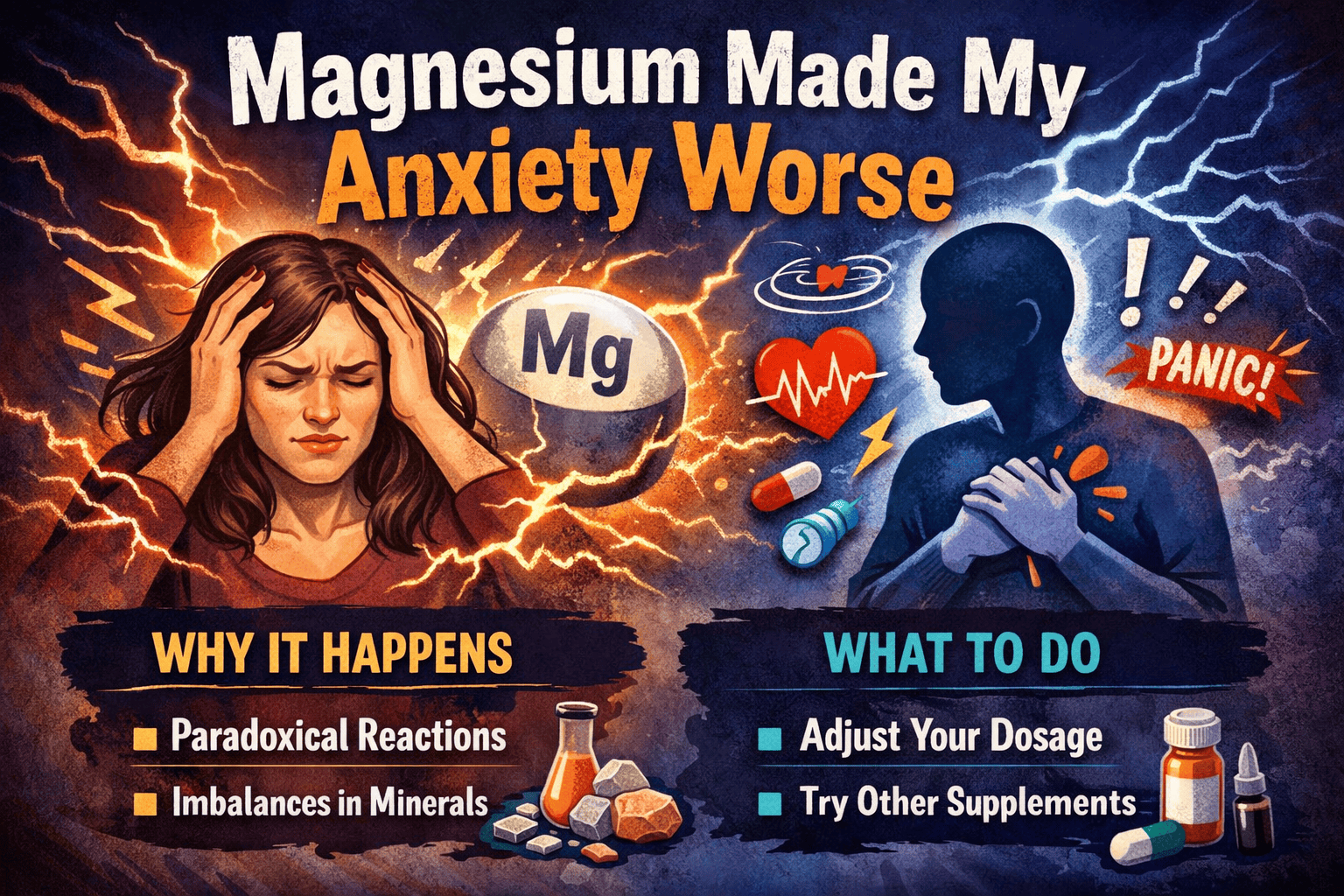
Yes, in some people. And most of the time it’s not “magnesium is bad for anxiety.” It’s a tolerance + interpretation problem: magnesium creates a body signal (GI discomfort, dizziness, sleep disruption, palpitations), and your nervous system labels it as threat. This page is about anxiety worsening after magnesium, not general anxiety management.
Symptom decoder: what’s actually triggering the anxiety
| What you notice | Most likely driver | Best first fix | When to stop |
|---|---|---|---|
| Nausea / urgency then anxiety | GI-active form or dose too high | Take with dinner, reduce dose, switch form if needed | Blood in stool, dehydration |
| Lightheaded then anxious | Dose intolerance or dehydration | Pause, restart low with food, hydrate | Fainting/near-fainting |
| Vivid dreams → next-day anxiety | Bedtime dosing and sleep disruption | Move to dinner, reduce dose, remove sleep-aid stacking | Severe insomnia or distress |
| “Heart feels loud” or palpitations | Body awareness + stress loop, or dehydration | Stabilize caffeine, hydrate, keep magnesium low and earlier | Chest pain, fainting, severe SOB |
If you remove the trigger sensation, the anxiety loop often fades quickly.
What would change my recommendation?
- Known or suspected kidney disease (magnesium can accumulate with impaired clearance).
- Recent changes in SSRIs/SNRIs/Wellbutrin, melatonin, caffeine, alcohol/THC, or sleep schedule (these can dominate symptoms).
- Severe diarrhea, dehydration signs, or frequent palpitations (treat hydration/electrolytes as priority).
- Any safety concerns (panic with chest pain, fainting, severe shortness of breath, suicidal thoughts).
- You’re using magnesium as a laxative/antacid or combining multiple magnesium products.
Why does magnesium make my anxiety worse?
Because anxiety is sensitive to body signals. Magnesium can change GI motility, sleep depth, and perceived calm. If that change feels unfamiliar—especially under stress—your brain may interpret it as danger.
- GI discomfort can feel like anxiety (nausea, urgency, “something’s wrong”).
- Lightheadedness can trigger panic (especially if you’re already on edge).
- Sleep disruption (vivid dreams/awakenings) can spike next-day anxiety.
- Stacking (melatonin, THC/alcohol, antihistamines, late caffeine) makes all of this louder.
Magnesium anxiety worse after taking it: what to do
If the timing is repeatable (you feel worse within hours of dosing), treat it like a clean trial—not a debate in your head.
Action order (fast)
- Pause 48–72 hours and see if symptoms settle.
- Restart low (100–150 mg elemental) with dinner for 5–7 nights.
- Remove stacking (melatonin, THC/alcohol, sedating antihistamines; stabilize caffeine cutoff).
- If diarrhea occurs, stop and rehydrate before retrying.
- If the pattern repeats twice under the same controlled conditions, stop and move on.
Magnesium glycinate made my anxiety worse
This is a common search. Most of the time, it’s not “glycinate is bad.” It’s dose too high, taken too late, or stacking. Try dinner timing and a lower dose before switching forms.
If anxiety started with grogginess
Move earlier and reduce the single dose. Grogginess often triggers next-day anxiety.
If anxiety started with GI discomfort
Take with food, lower dose, and avoid GI-active forms if your gut is already sensitive.
How much magnesium is too much for anxiety?
“Too much” usually means too much for your tolerance—enough to cause GI upset, dizziness, or sleep disruption that triggers anxiety. For anxiety-prone people, start low and titrate slowly.
Conservative dosing ladder (anxiety-sensitive)
- Starter: 100–150 mg elemental daily with dinner.
- Standard: 150–250 mg only if fully tolerated for several days.
- Upper conservative: 250–350 mg only if clearly tolerated and clinician-safe for you.
Best time to take magnesium for anxiety
For anxiety-sensitive people, dinner or early evening is often the best window. Bedtime-only dosing increases the chance of vivid dreams, awakenings, and next-day “off” feelings—common anxiety triggers.
- If anxiety is worse at night: move magnesium earlier first.
- If you wake at 2–4am: avoid late caffeine/alcohol/THC and stabilize your stack.
- If you’re GI-sensitive: food-first dosing beats perfect timing.
How long does anxiety from magnesium last?
If magnesium is the trigger, many people feel better within 24–72 hours after stopping. If symptoms persist beyond that window, another driver is likely involved (sleep debt, stress spike, illness, stimulant changes, medication adjustments).
Practical rule: repeatable timing after dosing is the strongest clue. If it’s not repeatable, treat magnesium as a coincidence until proven otherwise with a clean re-test.
Magnesium anxiety not going away: troubleshooting and how to tell it’s working
If you want clarity, run a clean test. Most people accidentally run a “messy trial” (dose, timing, melatonin, caffeine, alcohol all changing), then conclude magnesium is the villain.
Common mistakes
- Starting too high (more GI and “body noise”).
- Bedtime dosing (dreams/awakenings amplify anxiety loops).
- Stacking (melatonin, THC/alcohol, antihistamines, sedating herbs).
- Changing three variables (dose + timing + form) in the same week.
Clean test protocol (7–14 days)
- Pause 48–72 hours if symptoms are significant.
- Restart low (100–150 mg elemental) with dinner, same time nightly.
- Hold the stack constant (no new sleep aids; stable caffeine cutoff and alcohol/THC pattern).
- Hold for 7 nights before judging.
- Only one change after 7 nights (timing OR dose OR form), then hold again.
How to tell it’s working
- Track: anxiety intensity (0–10), GI comfort, sleep awakenings, and palpitations awareness.
- Time window: tolerance signals show up within days; baseline calming (if it happens) is best judged over 7–14 days.
- What not to expect: instant mood transformation if the primary driver is sleep debt, stimulants, or life stress.
- Success definition: fewer trigger sensations and a steadier baseline without new side effects.
Selected Professional References
NIH ODS: Magnesium (Health Professional)
Upper limit context (GI effects), safety notes, deficiency risk factors, and medication interaction categories.
ods.od.nih.gov
NIMH: Anxiety disorders overview
Helpful context for distinguishing anxiety symptoms from medical emergencies and understanding panic loops.
nimh.nih.gov
MedlinePlus: Dehydration
Why diarrhea or low fluids can cause dizziness, palpitations, and anxiety-like sensations.
medlineplus.gov
PMC: Magnesium supplementation and anxiety (systematic review)
Context: magnesium is often studied as supportive for anxiety symptoms; evidence quality varies by population.
pmc.ncbi.nlm.nih.gov
NCBI Bookshelf: Hypermagnesemia (safety context)
Why true magnesium toxicity is uncommon and usually tied to kidney impairment or extreme intake.
ncbi.nlm.nih.gov
Go Deeper (VerifiedSupps Guides)
Magnesium makes me feel weird
Dizzy, groggy, spacey, anxious: causes and fixes by signal.
Can magnesium cause panic attacks?
Trigger sensations, nighttime loops, and a safe re-test protocol.
Magnesium and heart palpitations
Electrolytes, dehydration, PVCs, and when to seek care.
Magnesium timing: morning vs night
Dinner vs bedtime logic for dreams, grogginess, and night anxiety.
Final takeaway
If magnesium made your anxiety worse, assume a fixable cause first: dose too high, bedtime timing, GI effects, or stacking. Pause, restart low with dinner, stabilize caffeine and sleep aids, and retest cleanly. If symptoms are severe or you feel unsafe, stop and seek clinician support.
FAQ
Can magnesium make anxiety worse?
Yes in some people, usually via dose/timing/form/stacking or a trigger-sensation anxiety loop.
Why does magnesium make my anxiety worse?
Most often GI discomfort, dizziness/lightheadedness, sleep disruption, or heightened heartbeat awareness interpreted as danger.
How long does anxiety from magnesium last?
If magnesium is the trigger, many people feel better within 24–72 hours after stopping.
Magnesium anxiety worse after taking it: what should I do?
Pause 48–72 hours, then restart low-dose with dinner and avoid stacking for a week.
Does magnesium glycinate make anxiety worse?
It can if dose is too high or timing is too late. Try dinner timing and a lower dose before switching forms.
How much magnesium is too much for anxiety?
There’s no single number. Start 100–150 mg elemental and titrate slowly only if tolerated.
What’s the best time to take magnesium for anxiety?
Dinner or early evening is often best for sensitive users. Bedtime dosing can backfire.
When should I get help?
If anxiety is severe, panic is recurring, you feel unsafe, or symptoms include chest pain, fainting, severe shortness of breath, or suicidal thoughts.
VerifiedSupps Medical Disclaimer
This content is for educational purposes only and is not medical advice. Do not stop or change prescription psychiatric medications without medical guidance. Consult a qualified healthcare professional before starting, stopping, or changing magnesium if you have kidney disease, cardiovascular disease, low blood pressure, electrolyte disorders, or take multiple medications. Seek urgent medical care for chest pain/pressure, fainting/near-fainting, severe shortness of breath, severe confusion/agitation, or if you feel unsafe.