Signs You Need More Electrolytes

Electrolytes · Hydration · Muscle & Nerve Function
Signs Guide

Signs You Need More Electrolytes

Your body uses electrolytes — mainly sodium, potassium, and magnesium — to send electrical signals, contract and relax muscles, maintain hydration, and regulate energy. When these minerals drift even slightly below your personal “sweet spot,” you often feel it as small, annoying patterns: weaker workouts, random cramps, headaches, irritability, or a thirst that doesn’t quite go away.

Quick Take
If you’re feeling fatigue, cramps, headaches, dizziness, irritability, weakness, or unquenchable thirst, you may need more electrolytes. During heat/exercise, sodium + potassium matter most. During stress/tension, magnesium often matters more.
Key idea: water is the vehicle — electrolytes are the steering wheel.
💧
The Complete Electrolytes Guide
If hydration feels inconsistent, cramps show up with heat/exercise, or water alone doesn’t help — this is the best starting point.
Open the electrolytes hub

1) Why electrolytes drop (even if you drink water)

Water can dilute the problem

Electrolytes help control water movement into and out of cells. When they’re low, drinking lots of plain water can sometimes make you feel worse — not because water is “bad,” but because it can dilute sodium and shift fluid balance without restoring minerals.

Common reasons electrolytes run low:
  • Heat or sweating
  • Exercise or long walks
  • Low-carb dieting (more sodium + water loss)
  • Stress (higher magnesium demand)
  • Caffeine (mild diuretic effect for some)
  • Lots of plain water without minerals
  • Alcohol (dehydration + mineral loss)

2) Common signs you need more electrolytes

Usually a pattern — not one dramatic symptom
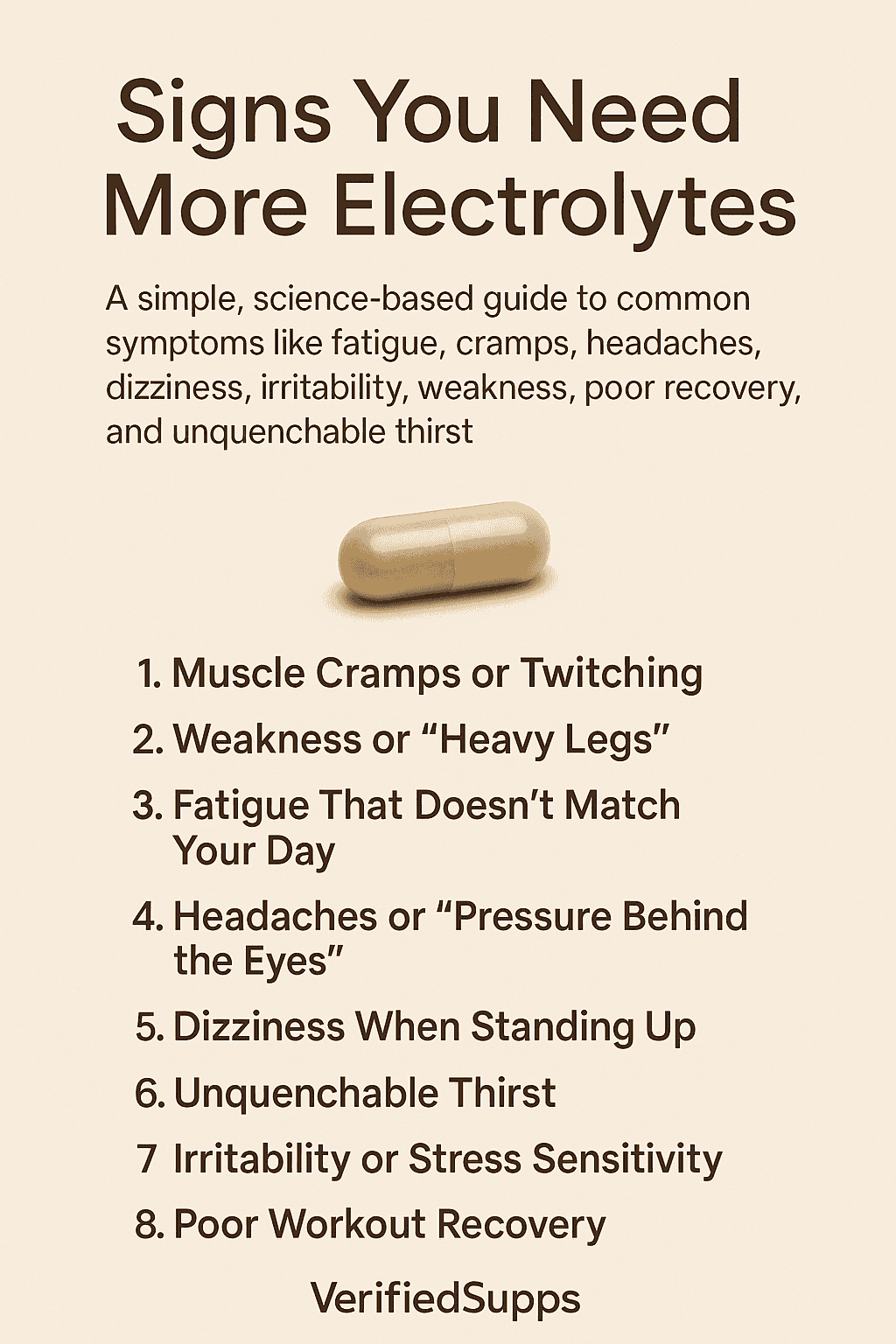
1) Muscle cramps or twitching
Classic sign — especially with heat, long workouts, or overnight. Potassium helps “fire,” magnesium helps “release,” sodium supports signaling.
2) Weakness or “heavy legs”
Often linked to low potassium/sodium after sweating or cardio.
3) Fatigue that doesn’t match your day
Low electrolytes can feel like body fatigue even when your mind is alert.
4) Headaches or “pressure behind the eyes”
Common with dehydration + low sodium (water alone doesn’t fix it).
5) Dizziness when standing
Often tied to sodium/potassium influencing blood pressure regulation.
6) Unquenchable thirst
Water may not be moving into cells properly without minerals.
7) Irritability or stress sensitivity
Often a quiet magnesium signal (nervous system, not just muscles).
8) Poor workout recovery
When electrolytes are low, muscles can stay tense and sore longer than expected.
If water makes you feel worse: it’s often a sodium dilution problem — not a “you’re drinking wrong” problem.

3) Which electrolyte are you likely low in?

A simple “feel” guide
More magnesium-like
  • Tight muscles, tension
  • Irritability, stress sensitivity
  • Twitching, eyelid spasms
  • Night cramps
More potassium-like
  • Weakness, heavy legs
  • Cramps during heat/cardio
  • Exercise fatigue
More sodium-like
  • Headaches
  • Dizziness standing up
  • Water doesn’t hydrate
  • Heat cramps
Overlap is normal. Many people are a “two electrolyte” situation — especially with stress + sweating.

4) How to restore electrolytes (simple and realistic)

No aggressive protocol needed
Step 1: Potassium
Often the most common gap. Food-first or gentle support.
Potassium support
Step 2: Sodium
Most relevant with sweat, heat, and “water doesn’t help.”
Hydration mix
Step 3: Magnesium
Best when stress/tension drives symptoms and cramps.
Use a gentle form and start low.

Final takeaway

Look for the pattern, then match the mineral

If you’re cramping, fatigued, thirsty, dizzy, or getting headaches — electrolytes may be the missing piece. Sodium + potassium usually matter most with heat/sweat. Magnesium often matters most when stress and tension are involved.
Frequently Asked Questions

Which electrolyte deficiency causes the most cramps?
Magnesium often drives tension-related cramps. Potassium and sodium matter more for sweat or heat-related cramps.
Can I take magnesium and potassium together?
Yes — they support opposite phases of muscle contraction and relaxation. Many people benefit from both.
What if water makes me feel worse?
Lots of plain water can dilute sodium and worsen symptoms. Adding electrolytes helps water move into cells effectively.
What is the fastest way to fix electrolytes?
For tension/night cramps: magnesium. For sweat/heat cramps: sodium + potassium. For headaches/dizziness: sodium (carefully) + hydration.
VerifiedSupps Medical Disclaimer
This guide is for education only and is not medical advice. Electrolyte needs vary by age, health, medication use, and activity level. Seek professional guidance if you experience severe cramps, heart rhythm changes, persistent weakness, or dehydration symptoms.

Related Articles

Health

Magnesium and Antidepressants: Interactions, Timing, and Safety

Magnesium · Antidepressants · Timing · Risks Can You Take Magnesium With Antidepressants? Timing, Interactions, and Risks Direct answer: In most people, yes. Magnesium doesn’t usually “interact” directly with SSRIs the way some drugs do. Most concerns are about side effects overlap (sedation, GI effects) and timing/spacing—often because of other medications you take alongside an

Read More »
Health

Magnesium Not Helping Sleep? Causes + Fixes (Form, Dose, Timing)

Magnesium · Sleep · Insomnia Logic Magnesium Not Helping Sleep: Why It Happens and What To Do Direct answer: it’s common for magnesium to “do nothing” for sleep. Magnesium helps sleep indirectly by lowering arousal and tension—not like a sedative. If your insomnia is driven by circadian timing, sleep-disordered breathing, stimulants, pain/reflux, or an anxiety

Read More »
Calm & Focus

Can Magnesium Cause Panic Attacks? Causes, Fixes, and When to Stop

Magnesium · Panic Attacks · Anxiety Can Magnesium Cause Panic Attacks? Why It Happens + What to Do Direct answer: It can in some people, usually due to dose, timing, form, or stacking—not toxicity. It can feel like panic even if it’s just a body signal (GI discomfort, lightheadedness, “heart feels loud”) that your brain

Read More »