Omega-3 · Supplements · Clarity
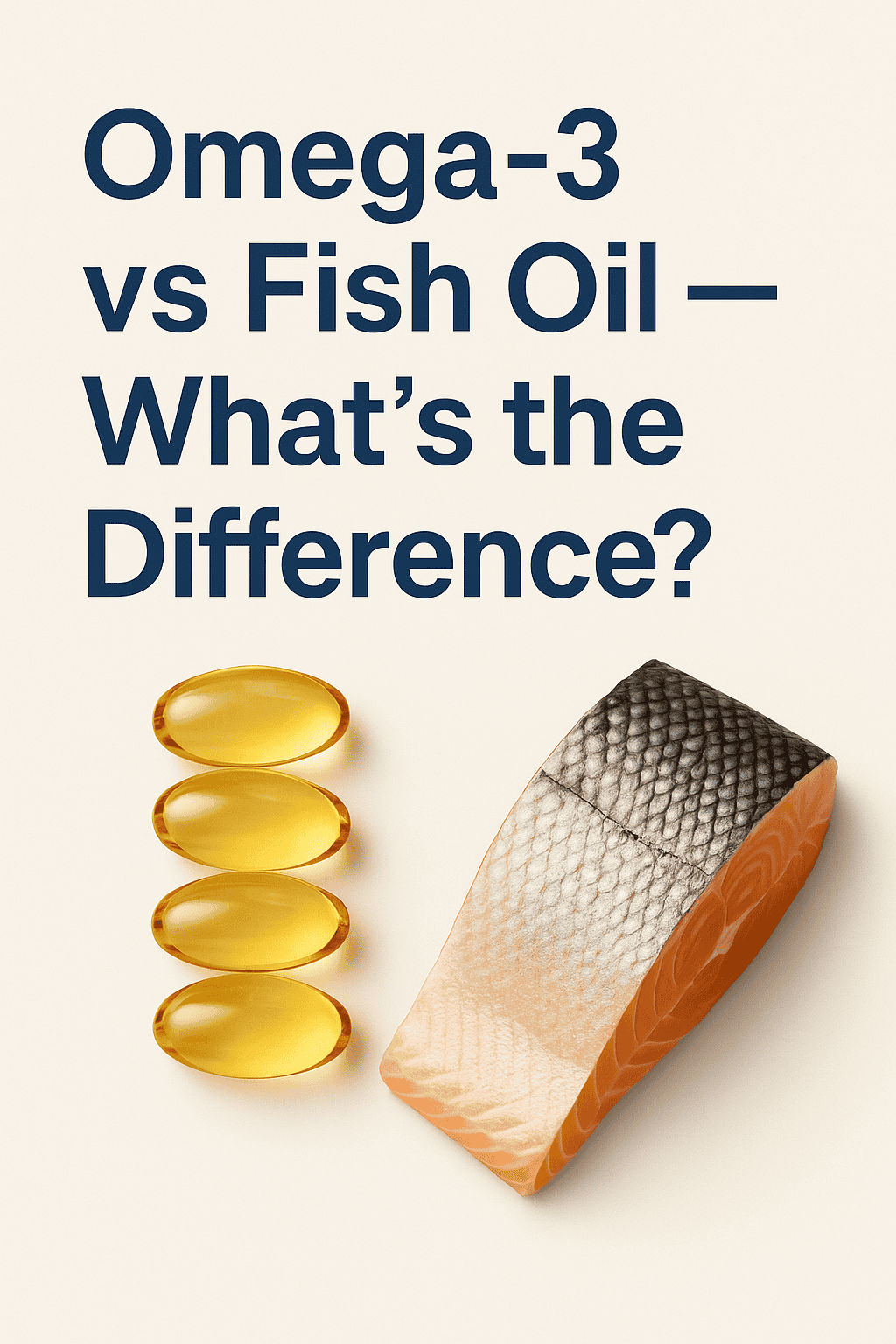
Omega-3 vs Fish Oil — What’s the Difference?
If you’ve ever wondered whether “omega-3” and “fish oil” mean the same thing, you’re not imagining the confusion. Many labels use the terms interchangeably — but there’s an important difference that affects quality, absorption, and how much EPA + DHA you actually get.
Short version:
Fish oil is the source. Omega-3s (EPA + DHA) are the active ingredients. A good fish oil provides high, clearly labeled EPA and DHA — the forms your body actually uses.
Parent Hub: Want the full omega-3 map (science, benefits, dosing, timing, forms, safety)? Start here: Omega-3 Complete Guide .
This post is the “terminology clarity” lens — the hub is the whole system.
1️⃣ Quick Answer: Omega-3 Is the Goal, Fish Oil Is the Container
Fish oil is the raw oil extracted from fatty fish. Omega-3s (EPA and DHA) are the specific fatty acids inside that oil that deliver the benefits.
So the real question is: How much EPA + DHA am I actually getting per serving?
Two bottles can both say “1,000 mg fish oil,” yet one may contain twice the EPA + DHA. That’s why learning this distinction is a huge upgrade.
2️⃣ What Fish Oil Actually Is
Fish oil is an umbrella term for oils extracted from fatty fish such as anchovies, sardines, or mackerel. It naturally contains a mixture of:
- EPA (eicosapentaenoic acid)
- DHA (docosahexaenoic acid)
- other fats and triglycerides
- small amounts of fat-soluble nutrients
Key point: the EPA + DHA content varies wildly from brand to brand. “Fish oil” alone doesn’t tell you how strong the product is.
3️⃣ What “Omega-3” Refers To
“Omega-3” refers to the active fatty acids found in fish oil. In supplements, the two that matter most are:
- EPA — often emphasized for mood, inflammation balance, and recovery
- DHA — structural support for brain, eyes, and long-term cell membranes
When someone asks “Should I take omega-3?” they’re really asking: “Should I take a supplement that provides meaningful EPA + DHA?”
4️⃣ Why People Confuse Omega-3 With Fish Oil
Labels usually highlight the fish oil amount in big print: “1,200 mg fish oil per softgel!”
But the active amount (EPA + DHA) is often small print on the back. Example:
- 1,200 mg fish oil
- EPA 360 mg
- DHA 240 mg
Real dose: 360 + 240 = 600 mg EPA + DHA.
That’s the number that determines whether the product is “strong” or “weak.”
5️⃣ Form Matters Too: rTG vs Ethyl Ester
The chemical form of fish oil can influence how reliably your body absorbs the omega-3s inside it:
- rTG (re-esterified triglyceride) — closer to natural form, often more efficient absorption
- EE (ethyl ester) — more processed, can be more variable for some people
Practical takeaway: form can change how “strong” a product feels, even at similar EPA + DHA numbers.
6️⃣ What Omega-3s Actually Support
EPA + DHA are commonly discussed for supporting:
- brain health and cognitive clarity
- inflammation balance and recovery
- skin hydration and barrier function
- eye comfort and visual function
- long-term cellular resilience
Quiet truth: omega-3 benefits are gradual. The “real” benefit is consistency, not intensity.
7️⃣ So Which Is Better: Omega-3 or Fish Oil?
Neither term is “better.” One is the source, one is the active ingredient. The right question is:
How much EPA + DHA does this product give me per serving?
High-quality fish oil products make this clear (EPA + DHA listed plainly). Lower-quality products hide behind “fish oil mg” while delivering very little active omega-3.
Gentle Product Examples (Optional)
No pressure — just two calm starting points if you want clarity + consistency.
🔬 Premium Pick
High-purity fish oil with strong EPA + DHA per capsule and clean labeling.
View at Nootropics Depot🚚 Convenience Pick
A practical everyday omega-3 option that’s easy to reorder and pair with meals.
Shop on AmazonGo Deeper (VerifiedSupps Guides)
Kept tight (3–5 internal links total). These are the most useful next steps.
Final Takeaway: Look for EPA + DHA, Not Just “Fish Oil”
Omega-3 and fish oil aren’t competitors. Fish oil is the source; EPA + DHA are the active components. Once you focus on EPA + DHA per serving (and form), choosing becomes dramatically easier.
The real difference is clarity: high-quality products tell you exactly how much EPA + DHA you’re getting.
Frequently Asked Questions
Short, calm answers to common omega-3 vs fish oil questions.
Is omega-3 the same as fish oil?
Not exactly. Fish oil is the source. Omega-3 (EPA + DHA) is the active ingredient. Always evaluate products by EPA + DHA per serving.
Is a higher “fish oil mg” number better?
Not necessarily. A product can contain 1,000 mg fish oil but only 250–300 mg EPA + DHA. EPA + DHA determines the strength.
Do I need the triglyceride (rTG) form?
You don’t need it, but rTG fish oils often absorb more efficiently than ethyl esters. Both can work when taken with food — consistency matters most.
How much EPA + DHA should I aim for?
Many adults do well with 1,000–2,000 mg total EPA + DHA per day. The exact number depends on goals. Use the dose guide to set your target.