By VerifiedSupps Editorial Team
Benefits of Omega-3: What It Actually Supports
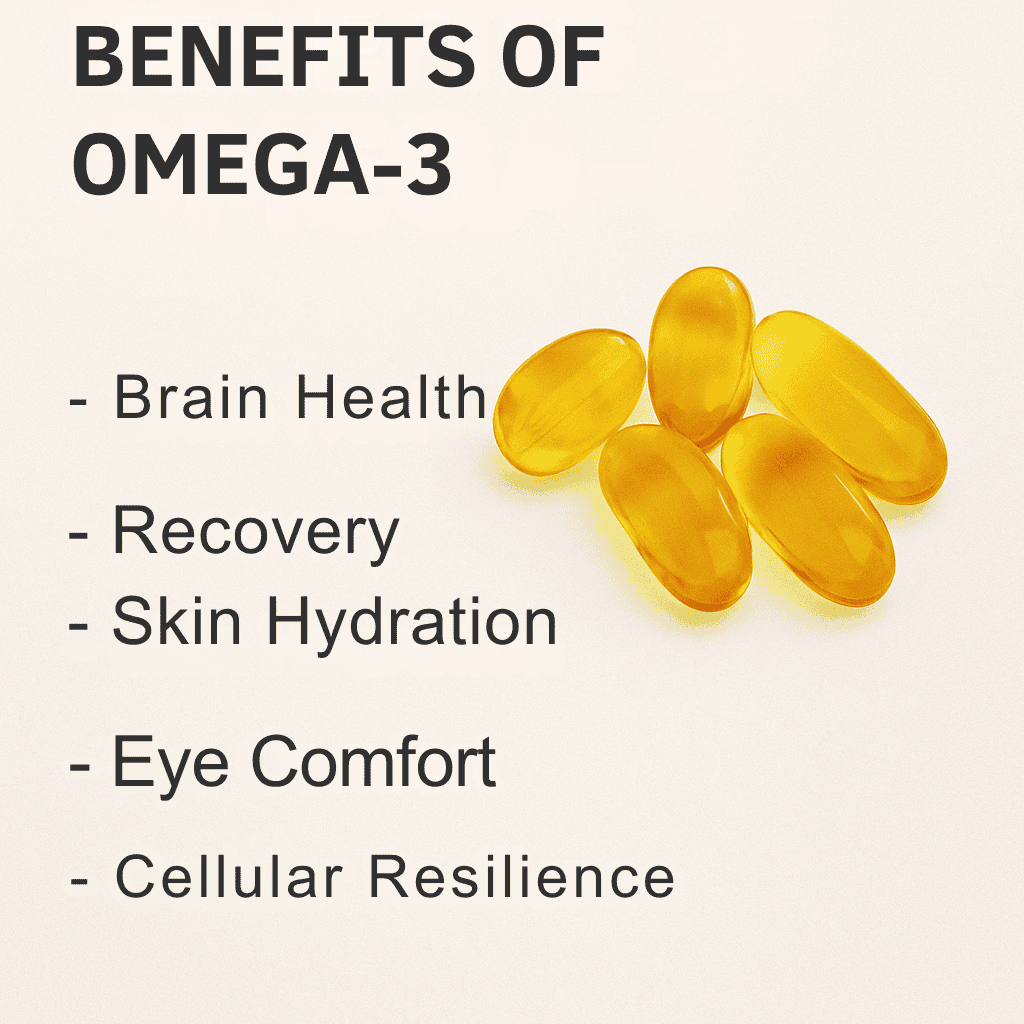
Omega-3 benefits are usually quieter than people expect. EPA and DHA do not usually feel like a sudden “boost.” If they help, the pattern is more often steadier recovery, more comfortable skin and eyes, calmer inflammation balance, and a smoother mental baseline over time.
That is also why omega-3 is easy to judge unfairly. If the real EPA plus DHA dose is low, the routine is inconsistent, or the expectation is “I should feel this today,” it is easy to conclude it does nothing when the real issue is the setup.
This page focuses on what omega-3 commonly supports overall. For mood-only use, exact dosing math, or product-form comparisons, the more specific follow-up guides are the better fit.
Key terms: omega-3, EPA, DHA, recovery, inflammation balance, mood support, skin comfort, dry eyes, fish oil benefits
Quick Take
The most consistent omega-3 benefits people notice are steadier recovery, more comfortable skin or eyes, and a less edgy baseline over time. The most common reason someone says “I felt nothing” is still low real EPA plus DHA, inconsistent use, or judging the routine too early.
TL;DR decision
Think of omega-3 as systems support, not stimulation. If your intake is low and your dose is real, the payoff is usually “less friction” across mood, recovery, skin, and comfort over weeks.
Evidence standard: human trials and systematic reviews when available, dose ranges, and guideline-level sources for safety
Who this is for: people who want a realistic benefits list and a cleaner way to tell whether omega-3 is helping
Who this is not for: anyone expecting omega-3 to replace medical care for diagnosed physical or mental health conditions
Author: VerifiedSupps Editorial Team
Reviewed by: VerifiedSupps Editorial Team
Published: 2026-03-12
Updated: 2026-03-12
Last reviewed: 2026-03-12
Parent Hub
Omega-3 Complete Guide
Use the main hub if you want the full omega-3 picture: dosage, timing, forms, absorption, safety, and how EPA plus DHA fit together. This page stays focused on benefits and how to notice them.
Omega-3 benefits decoder
This gives you the clearest “what should I actually expect?” view before you buy into hype or dismiss the whole category.
| If your goal is… | What omega-3 usually supports | What to track | Typical timeline |
|---|---|---|---|
| Smoother recovery and less “cranky” movement | Inflammation balance and recovery signaling | Soreness duration, stiffness, training bounce-back | 2–8 weeks |
| More stable mood and stress resilience | Brain membrane function and signaling support | Reactivity, steadiness, “edge” over time | 2–6 weeks |
| Better skin or eye comfort | Structural lipid support and barrier comfort | Dryness, screen comfort, seasonal changes | 4–12 weeks |
| Heart or triglyceride focus | Often discussed in more specific dose and lab-guided contexts | Lab trends with clinician guidance | Case-specific |
Best next step (today): Match your expectation to the benefit bucket you actually care about instead of waiting for a dramatic “feel.”
What does omega-3 actually do in the body?
EPA and DHA become part of cell membranes and help shape signaling related to inflammation balance, tissue resilience, and brain function. That is why omega-3 usually behaves like a baseline support nutrient rather than something you “feel” sharply the day you take it.
Mechanism
- EPA and DHA are structural fats, not stimulant ingredients.
- They influence signaling pathways tied to stress, recovery, and tissue comfort.
- That is why the benefits usually feel like steadier baseline function rather than sudden intensity.
What are the benefits of omega-3 for brain and mood?
For many people, the brain and mood side of omega-3 feels like a steadier mental baseline: less edge, less emotional overreaction, and better resilience when stress rises. EPA tends to get more attention in mood-focused discussions, while DHA still matters as part of overall brain structure support.
Clean expectation
Omega-3 can support mood steadiness, but it is not a replacement for therapy, diagnosis, or medication when those are needed.
Does omega-3 help with inflammation balance and recovery?
This is one of the most common real-world reasons people stay on omega-3. For active people, the benefit is often less lingering soreness, smoother recovery rhythm, and a body that feels a little less “cranky” after hard training.
What that often looks like
Less drag after hard sessions, better bounce-back, and more comfortable daily movement over time.
What are omega-3 benefits for skin and hair?
Omega-3 supports lipid structures involved in barrier comfort. When intake has been low, some people notice less dryness, less tight-feeling skin, and a generally more comfortable baseline during dry seasons or under environmental stress.
Timeline expectation
Skin and hair-related changes usually take weeks to months, not days.
Does omega-3 help dry eyes and vision comfort?
Omega-3 is often discussed in eye-comfort contexts, especially when screen time is high and baseline dryness is part of the problem. If it helps, the change is usually a more comfortable day-to-day baseline rather than an obvious immediate shift.
Keep the whole context in mind
Screen breaks, sleep, hydration, and environment still matter. Omega-3 is one layer, not the entire answer.
How long does it take to notice omega-3 benefits?
Many people notice subtle changes within 2 to 6 weeks for mood steadiness or recovery feel, with clearer skin, eye, and deeper baseline changes often needing longer. The key is consistency. Omega-3 rewards steady intake more than clever timing.
Why omega-3 is not working for you
Most “no benefit” stories come from underdosing EPA plus DHA, inconsistent use, or expecting an immediate feeling. Omega-3 is a baseline builder, so the test has to be long enough and clean enough to mean anything.
Common mistakes
- Choosing products with low real EPA plus DHA per serving.
- Taking it every few days instead of daily.
- Taking it without meals when tolerance is worse that way.
- Changing multiple lifestyle variables at the same time and then trying to judge one supplement.
Clean test protocol
| Inputs | Pick one omega-3 product with clearly listed EPA and DHA, then take it with the same meal daily. |
|---|---|
| Duration | Use it consistently for 6 weeks before deciding whether the setup was fair. |
| 3 metrics | 1) recovery feel, 2) mood steadiness or reactivity, 3) skin or eye comfort if that is part of your goal. |
| Stop conditions | Stop or get guidance if side effects, bleeding concerns, surgery planning, or medication interactions make the routine inappropriate. |
How to tell it is working
You are usually looking for less lingering soreness, a calmer baseline, better bounce-back after hard days, and more comfort in skin or eyes over time. The right signal is usually subtle but repeatable.
Red flags / seek care
Omega-3 is not a substitute for urgent care when depression is severe, suicidal thoughts are present, mania is suspected, or anxiety is significantly impairing daily life.
Selected Professional References
These are the main external sources behind the broad benefit categories, safety context, and background dosing logic.
Omega-3 fatty acids fact sheet
Helpful for general omega-3 background, common use cases, and safety framing.
Used for: broad omega-3 context
Fish and omega-3 overview
Helpful for food-intake context and the big-picture place of omega-3 in general health.
Used for: intake context
Fish oil overview
Helpful for side effects, interaction caution, and general supplement-use safety.
Used for: safety context
Omega-3 and exercise recovery reviews
Helpful for the recovery and soreness side of the omega-3 benefits discussion.
Used for: recovery context
Go Deeper (VerifiedSupps Guides)
If you want the next step, these are the most useful follow-ups after the broad benefits overview.
How much omega-3 per day?
Use this if the next question is dose targets and label math.
EPA vs DHA
Use this if you want a cleaner view of which fatty acid matters most for which goal.
TG vs ethyl ester
Use this if absorption and product-form differences are the confusing part.
How to tell if fish oil is working
Use this if you want a cleaner tracking framework and better expectations.
Final Takeaway
Omega-3 benefits are real, but they are not flashy. Think of EPA plus DHA as long-term support for steadier recovery, skin and eye comfort, and a smoother baseline over time. Use a dose you can actually maintain, take it with meals, and judge the trend — not the first day.
FAQ
What are the main benefits of omega-3?
The most common benefit buckets are steadier recovery, skin and eye comfort, and a smoother mental baseline over time.
How long does it take to feel omega-3 benefits?
Often 2 to 6 weeks for subtle baseline changes, with clearer trends over a few months for deeper support goals.
Does omega-3 help with joints?
Omega-3 is often used for inflammation balance and recovery feel. It is not a replacement for medical care for joint disease or injury.
Does omega-3 help skin?
Some people notice better comfort and less dryness over time, especially if intake was low to begin with.
Does omega-3 help brain fog?
It can support a steadier baseline, but it usually does not feel like a sudden sharpness boost.
Does omega-3 help dry eyes?
It may support eye comfort for some people over time, especially when dryness is part of a bigger low-omega-3 pattern.
Who should be cautious with omega-3 supplements?
People using anticoagulants or antiplatelet drugs, those with bleeding disorders, and anyone with surgery planned should talk with a clinician first.
What is the biggest reason omega-3 seems not to work?
Usually it is low real EPA plus DHA, poor consistency, or expecting a result too fast.
VerifiedSupps Medical Disclaimer
This content is for educational purposes only and does not constitute medical advice. Supplements can interact with medications and may be inappropriate for certain conditions. Always consult a qualified healthcare professional before starting omega-3 supplements, especially if you take blood thinners or antiplatelet medications, have a bleeding disorder, have surgery planned, or are pregnant or breastfeeding.