Omega-3 for Athlete Recovery: What It Actually Supports
Hard training creates microscopic stress across muscles, joints, and connective tissues. Recovery isn’t just rest — it’s the process your body uses to rebuild, calm inflammation, and restore readiness for the next session. Omega-3s quietly support those systems by helping regulate signaling pathways, supporting cell membranes, and smoothing the recovery curve over time.
1) Quick overview: why athletes use Omega-3
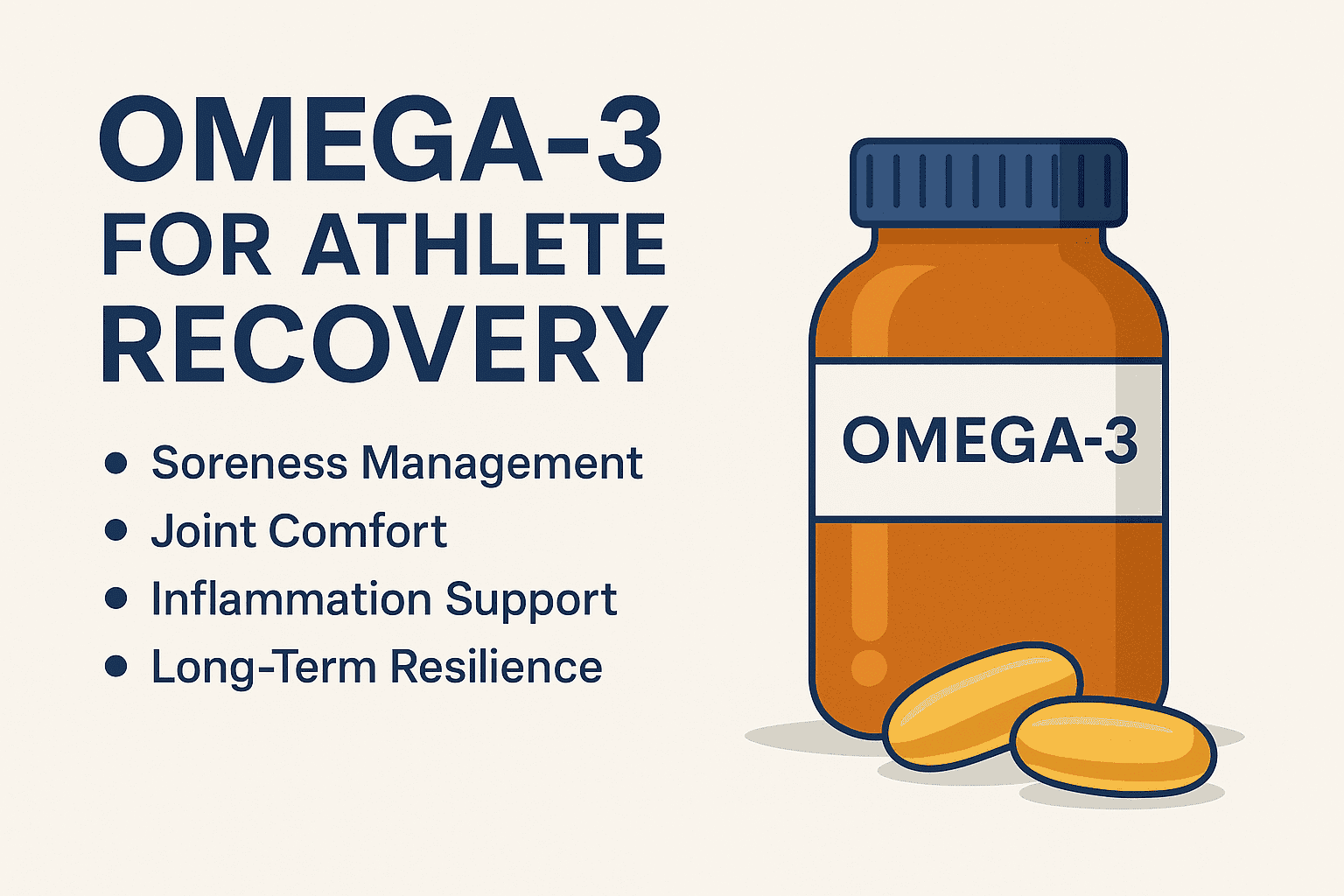
- Supports recovery after intense sessions
- Helps maintain joint comfort during training blocks
- Supports normal inflammation resolution pathways
- Helps maintain movement fluidity over time
- May support mood and focus during heavy cycles
2) How Omega-3 supports recovery (calm science)
Intense training increases the body’s need to manage inflammation, repair micro-damage, and maintain tissue fluidity. EPA and DHA support:
- Inflammation balance: supporting recovery without excessive stiffness
- Cell membrane flexibility: helping tissues stay responsive and mobile
- Muscle repair efficiency: supporting the conditions needed for rebuilding
- Joint comfort: helping maintain movement quality
Omega-3s aren’t a quick fix — they reinforce systems your body already uses to recover.
3) Soreness: why some athletes feel “less beat up”
DOMS is normal — especially during volume increases or new movements. Omega-3s support pathways that help the body return to baseline.
- Feeling “less wrecked” the day after heavy training
- Better readiness for back-to-back sessions
- Soreness that resolves more smoothly
4) Joint support for high-impact or high-volume training
Joints take a beating from running, lifting, jumping, and rotational sports. Omega-3s support joint comfort by nourishing membrane structure within joint tissues — which can improve the “feel” of movement.
- Less morning stiffness after heavy days
- More comfortable warm-ups
- Better tolerance to repeated loading
Like most recovery supports, this tends to show up gradually alongside strength, mobility, and sleep.
5) Mental fatigue: the overlooked side of recovery
Heavy training taxes focus, motivation, and emotional resilience. EPA + DHA support brain communication pathways, helping maintain:
- More stable training-day mood
- Better emotional regulation under load
- Smoother focus during long sessions
6) How much Omega-3 do athletes typically use?
Individual needs vary, but many athletes and highly active people use:
- 1,500–2,000 mg EPA + DHA daily for consistent training
- 2,000–3,000 mg during high-volume or competition blocks
7) Best time to take Omega-3 for recovery
Timing isn’t critical — daily consistency is. Many athletes prefer taking omega-3 with a meal (often the largest meal) for smoother digestion.
- Breakfast — supports daytime mood & focus
- Post-training meals — pairs with recovery routines
- Dinner — often easiest for digestion and consistency
Gentle product examples for athletes (optional)
If you want reliable options that fit training and recovery routines, these two provide a clean starting point.
High EPA + DHA per capsule — ideal for athletes who want maximum potency and consistent recovery support.
View at Nootropics Depot →Good for athletes who want a simple, accessible option to support daily EPA + DHA intake without complicating routine.
Shop on Amazon →Go Deeper (VerifiedSupps Guides)
These guides tie recovery, dosing, and daily consistency together — so you can build a routine that lasts.
Final takeaway: omega-3 makes training more sustainable
Omega-3s won’t make you faster or stronger on their own — but they support the recovery systems that allow you to train hard consistently. Over time, that can mean smoother soreness, better joint comfort, and steadier mental resilience during demanding blocks.