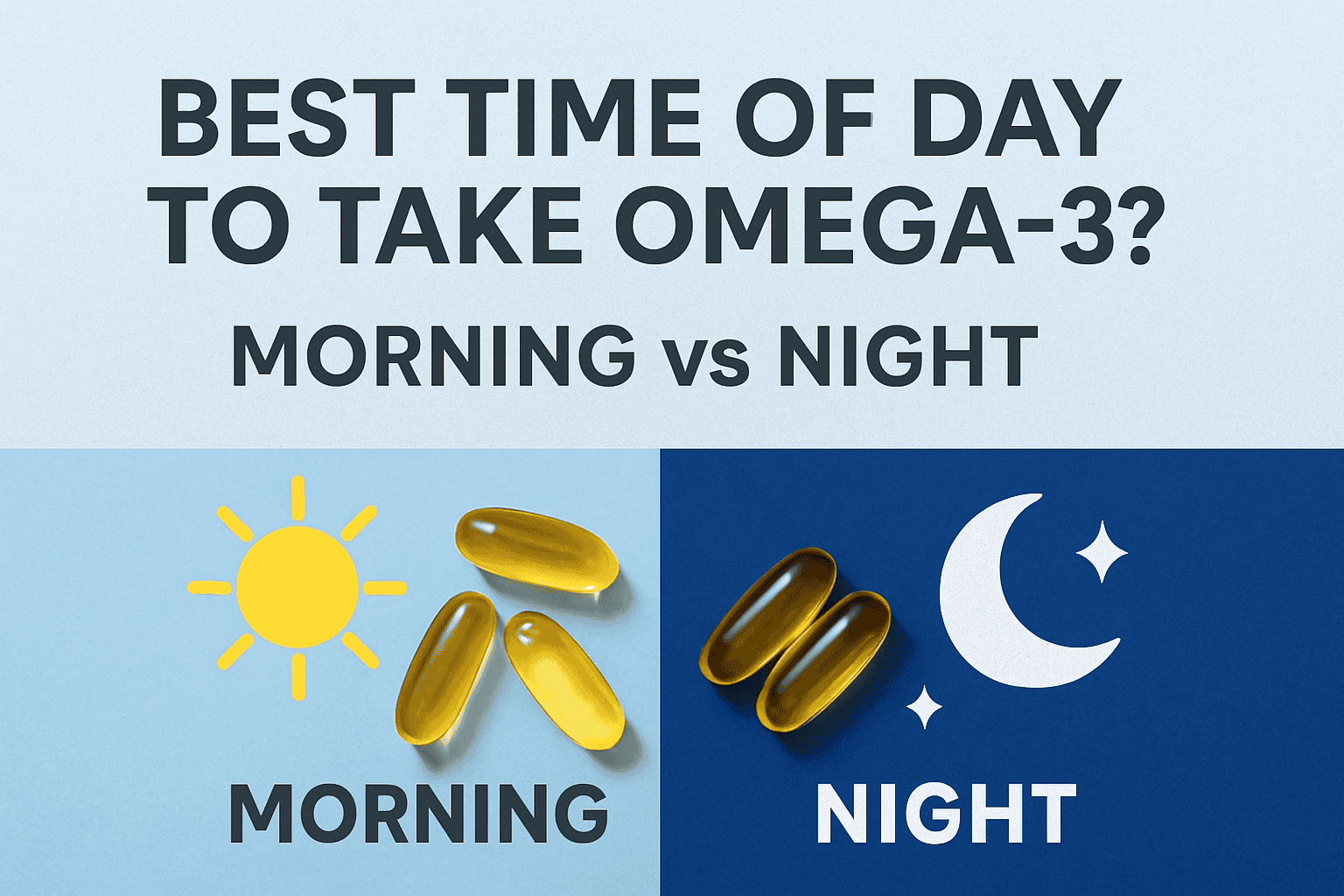
Best Time of Day to Take Omega-3: Morning vs Night?
The best time to take omega-3 is the time you can be consistent—ideally with a meal that contains some fat. Morning, midday, and night can all work. The “winning” schedule is the one that gives you reliable absorption and fewer missed days.
This guide makes timing simple: meal timing, split dosing, burps, and how to tell you’re actually on track.
Quick Take
- Best default: take omega-3 with your most consistent meal (breakfast or dinner).
- If you get burps: take mid-meal, split the dose, or move to dinner.
- If you forget: tie it to one meal only (not “whenever”).
- Timing matters less than: consistent EPA + DHA intake over weeks.
Evidence standard: human research on omega-3 absorption (meal effects) plus guideline-level safety sources.
This is for you if: you want the simplest routine with the best odds of absorption and adherence.
Not for you if: you’re on anticoagulants/antiplatelets and want to self-increase omega-3 dosing without clinician guidance.
Last reviewed: March 2, 2026
Parent Hub: Want the complete omega-3 picture (benefits, dosage, forms, safety) in one place?
Open: Omega-3 Complete Guide (VerifiedSupps)
Omega-3 timing decoder (fast)
Pick the option you’ll follow on your busiest days.
| Your situation | Best time to take omega-3 | Why it works | One key rule |
|---|---|---|---|
| You already have a breakfast routine | Morning (with breakfast) | Habit is easy; fewer missed days | Take with food (fat helps) |
| Dinner is your biggest meal | Evening (with dinner) | Often best tolerance and absorption | Mid-meal beats empty stomach |
| Fishy burps / GI sensitivity | Dinner, split dosing | Smaller doses + larger meal reduce burps | Split dose if needed |
| You keep forgetting | One meal only (no “random” dosing) | Consistency creates results | Attach to a daily anchor |
If two options seem “equal,” choose the one you’ll miss the least.
What is the best time of day to take omega-3?
The best time is the time you can be consistent—ideally with a meal. For most people, that means breakfast or dinner. Your long-term average EPA + DHA intake matters far more than the clock.
What would change my recommendation?
- Fishy burps: move to dinner and take mid-meal; consider splitting doses.
- GI sensitivity: split dosing often beats one large dose.
- Very low meal fat: pick the meal with the most fat for better absorption.
- Bleeding risk / anticoagulants: timing is less important than clinician-guided dosing and safety.
Should I take fish oil in the morning or at night?
Neither is universally “better.” Morning wins if it’s the routine you never miss. Night wins if dinner is your biggest meal or if you get fewer burps when you take it later.
Decision rule: choose the schedule that produces fewer misses and better comfort.
Should you take omega-3 with food or on an empty stomach?
For most people, omega-3 works best with food—especially with some fat. This usually improves absorption and reduces fishy aftertaste or burps.
- Better absorption odds
- Fewer burps for many people
- Easier habit anchoring (breakfast or dinner)
Should I split my omega-3 dose?
Split dosing is optional. It’s most useful if you take multiple capsules and have burps or GI sensitivity. If one dose is easier and comfortable, that’s fine too.
One dose: simplest, easiest to remember.
Split dose: gentler digestion; fewer burps for some.
How long does omega-3 take to work?
Omega-3 is usually gradual. Many people notice subtle changes (skin comfort, recovery feel, steadier mood) in 2–6 weeks with consistent intake, with deeper changes over a few months.
Expectation check: it usually won’t feel like caffeine. It’s more “less friction” over time.
Why omega-3 causes fishy burps or feels like it’s not working
Fishy burps and “no results” are usually about timing with meals, inconsistent dosing, or underdosing EPA + DHA. Fix the basics and results are often noticeably smoother.
Common mistakes
- Taking omega-3 on an empty stomach
- Taking it “randomly” instead of daily
- Buying low EPA+DHA products and assuming the dose is high
- Expecting an immediate mood/energy “kick”
How to tell it’s working
- Tolerance: fewer burps when taken mid-meal or split dosing
- Recovery/stiffness: less “creaky” feel or easier bounce-back (weeks)
- Mood steadiness: fewer dips/reactivity rather than “instant happiness”
- Optional confirmation: omega-3 index testing (clinician-guided is ideal)
A clean 4-week test
- Pick one meal (breakfast or dinner) and take omega-3 with it daily.
- If burps happen, move it to dinner and take mid-meal; split if needed.
- Track 2–3 signals (burps/tolerance, recovery feel, mood steadiness) for four weeks.
Go Deeper (VerifiedSupps Guides)
The clean next steps if you want to dial in dose, form, and results.
Final Takeaway
Morning vs night is less important than consistency and taking omega-3 with food. Choose the meal you miss the least, adjust timing if burps happen, and judge outcomes over weeks—not single days.
FAQ
Is it better to take omega-3 in the morning or at night?
Neither is universally better. Choose the time you’ll be most consistent and can take it with food.
Should I take fish oil with food?
Most people do best with food, especially if they get burps or stomach discomfort.
Can I take omega-3 on an empty stomach?
You can, but absorption and tolerance are often worse. Food usually improves both.
Does omega-3 timing affect sleep?
Usually no. If bedtime dosing causes burps or discomfort, move it earlier.
Should I split my fish oil dose?
Split dosing can help if you take multiple capsules and have GI issues. Otherwise, one dose is fine.
How long until I notice benefits?
Often weeks. Omega-3 is usually a baseline builder rather than an immediate “feel it” supplement.
Who should be cautious with omega-3 supplements?
People on blood thinners/antiplatelets, those with bleeding disorders, or anyone with surgery planned should consult a clinician.