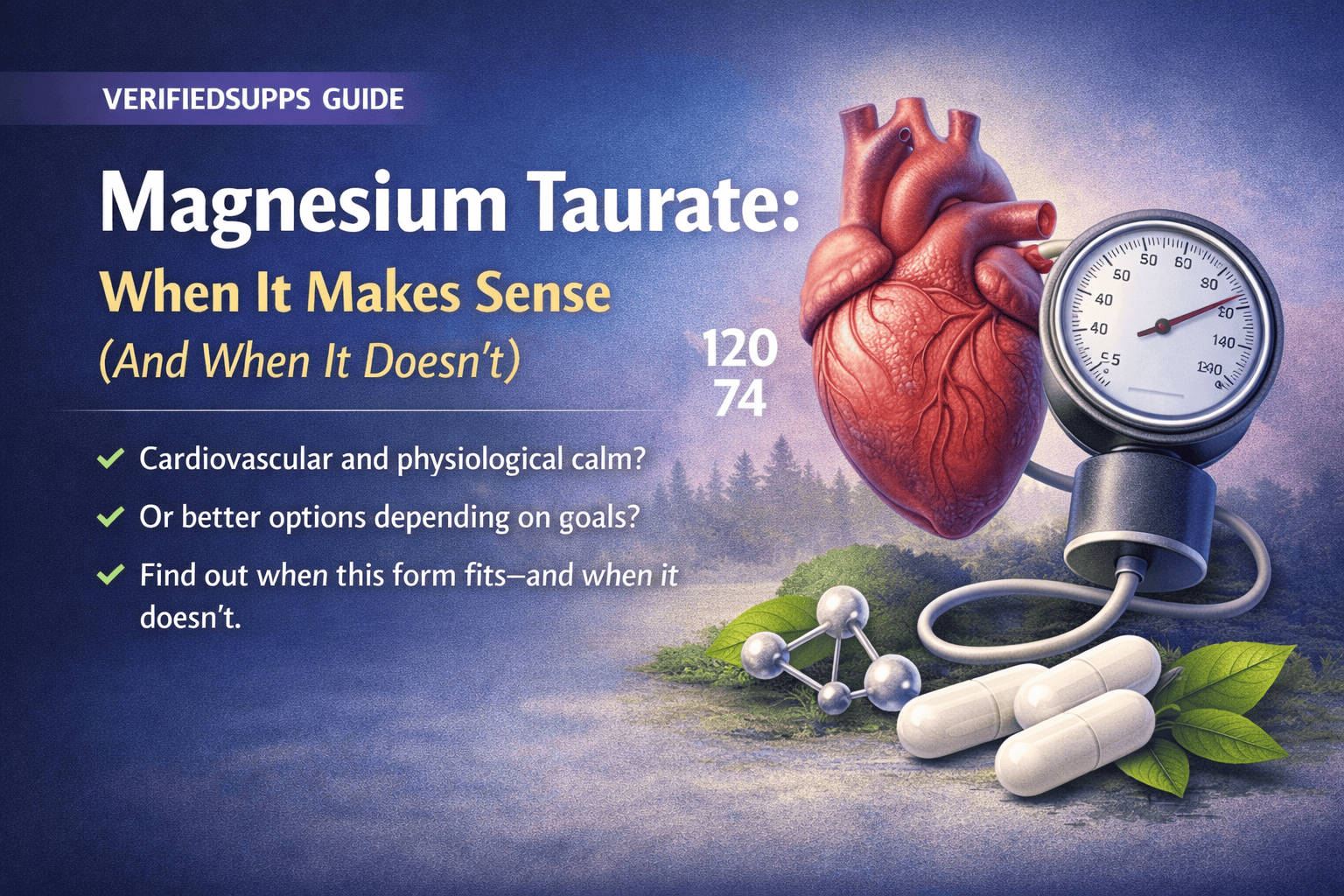
Magnesium Taurate: When It Makes Sense (And When It Doesn’t)
Magnesium taurate is often overlooked — not because it’s ineffective, but because it doesn’t fit the usual “sleep supplement” narrative. This guide explains where it shines, where it doesn’t, and who it’s actually for.
What Magnesium Taurate Actually Is
Magnesium taurate is magnesium bound to taurine, a sulfur-containing amino acid that plays a role in cardiovascular function and nervous system regulation.
Taurine is not a stimulant. Despite its association with energy drinks, it’s primarily involved in cellular calm, electrolyte balance, and membrane stability.
When magnesium is paired with taurine, the effect tends to feel physically calming rather than sedating or mentally heavy.
Who Magnesium Taurate Is a Good Fit For
Magnesium taurate may be a strong option if your main goal is:
- cardiovascular support, including heart rhythm and vascular tone
- physical calm rather than sleepiness
- stress that shows up in the body (tight chest, tension, elevated baseline arousal)
- magnesium support without digestive effects
When Magnesium Taurate May Not Be the Best Choice
Magnesium taurate may not be ideal if:
- your primary goal is sleep onset (glycinate is often a better match)
- you want cognitive or memory support (threonate is more targeted)
- you expect a noticeable mental calming effect
How Magnesium Taurate Typically Feels
This form is subtle. People who respond well often describe:
- less physical tension
- a calmer baseline heart or chest sensation
- improved tolerance to stress without sedation
How Much Magnesium Taurate Should You Take?
A common range is similar to other forms: 200–400 mg of elemental magnesium per day.
Best Time to Take Magnesium Taurate
Magnesium taurate is often taken:
- earlier in the day
- with food
- consistently rather than “as needed”
Go Deeper (VerifiedSupps Guides)
These guides expand on comparisons, dosing, timing, and safety.
Final Takeaway
Magnesium taurate isn’t about sedation or quick relief. It’s about steady physical calm and cardiovascular support.
If stress shows up in your body more than your thoughts, this form may make more sense than you expect.