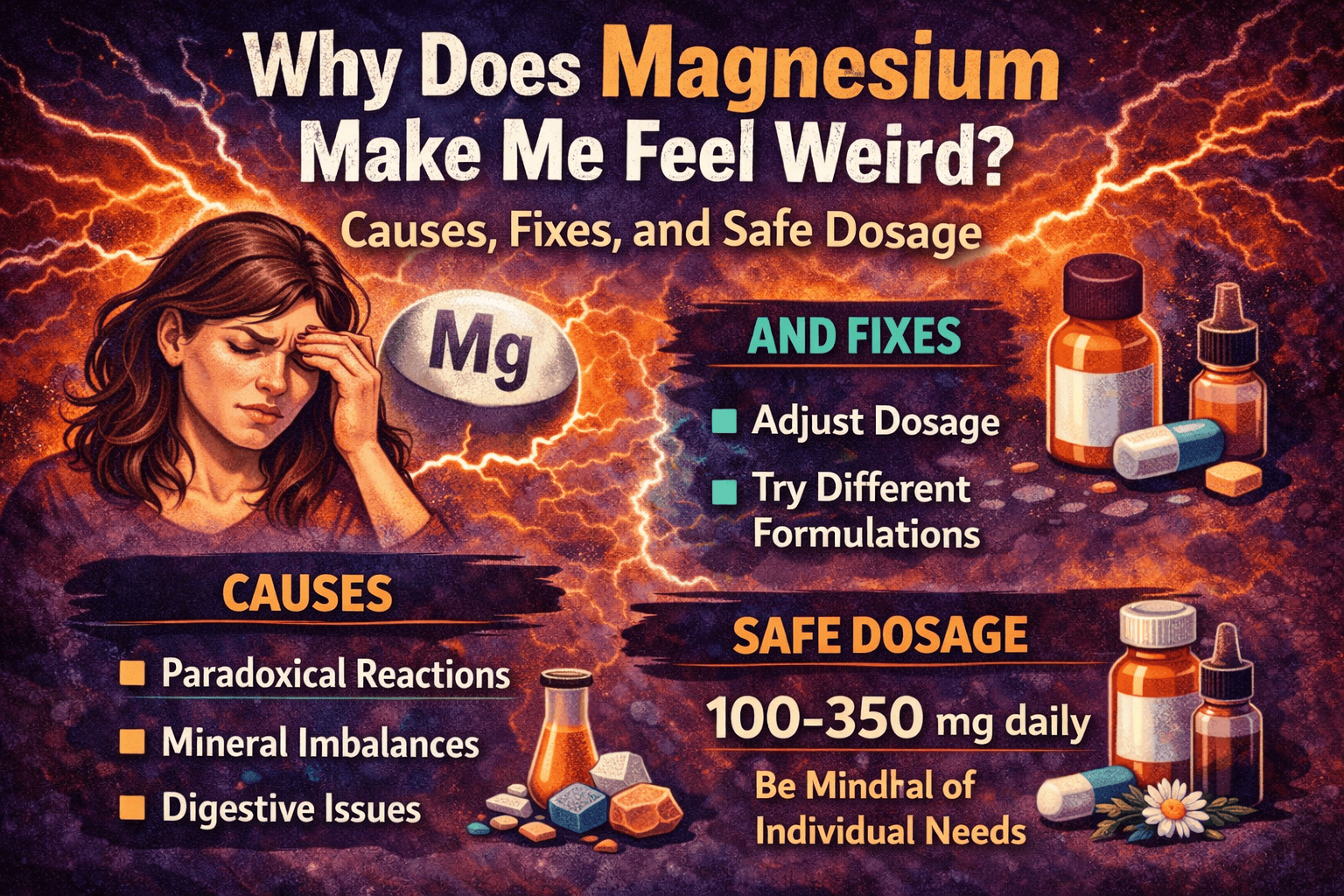
Why Does Magnesium Make Me Feel Weird? Causes and Fixes
Most “magnesium feels weird” reactions are dose, timing, form, or stacking—not toxicity. “Weird” can mean dizzy, groggy, spacey, anxious, “heart feels loud,” nausea/urgent bathroom, or vivid dreams. The fastest fix is usually: lower the dose → move it earlier → simplify the stack.
Quick take
- If the “weird” feeling starts in the gut: fix the gut first (dose down, take with food, switch away from GI-active forms).
- If it’s groggy/spacey: move magnesium to dinner or early evening (bedtime dosing is a common culprit).
- If it’s anxious/panic-like: treat it as a trigger-sensation problem (dizziness, GI, sleep disruption) and run a clean trial.
Evidence standard: human trials, dose ranges, guideline-level sources when available
For: people who feel “off” after magnesium and want a decision-first fix path
Not for: chest pain, fainting/near-fainting, severe shortness of breath, or sustained irregular heartbeat
Last reviewed: March 4, 2026
Parent Hub
Magnesium Side Effects and Safety: red flags, tolerance, and who should be cautious
If you’re unsure whether your symptoms are “normal tolerance” or a stop signal, start here.
Why does magnesium make me feel weird?
Most often, the “weird” feeling is tolerance + interpretation: magnesium changes GI motility, sleep depth, or perceived calm, and your body reads that as “off.” This page owns the intent: magnesium makes me feel weird (dizzy, spacey, anxious, heart-feels-loud, nausea). If your main issue is a single specific symptom like persistent diarrhea or vivid dreams, use the deeper guides below (this page stays focused on the “weird” umbrella).
Symptom decoder: what “weird” usually means and the fastest fix
| What you feel | Most common cause | Fastest fix | When to pause |
|---|---|---|---|
| Dizzy / lightheaded | Dose too high, fasted dosing, diarrhea/dehydration | Lower dose, take with dinner, hydrate | Fainting/near-fainting, chest pain |
| Groggy / spacey | Late timing, dose too high, stacking sleep aids | Move to dinner, reduce dose, simplify stack | Severe confusion or profound weakness |
| Anxious / “panic-ish” | Trigger sensations (GI, dizziness, sleep disruption) + stress interpretation | Pause 48–72h, restart low with food, move earlier | Severe symptoms or feeling unsafe |
| Nausea / urgency | GI-active form, dose too high, taken fasted | Take with food, lower dose, switch form | Blood in stool, dehydration symptoms |
| Vivid dreams / weird sleep | Bedtime dosing, dose too high, stacking | Move earlier, reduce dose, remove stack noise | Severe insomnia, worsening mental health |
If your symptom reliably happens within a few hours of dosing and disappears when you stop, that’s a tolerance pattern you can usually fix.
What would change my recommendation?
- Known or suspected kidney disease (magnesium can accumulate with impaired clearance).
- You’re using multiple magnesium products or magnesium-containing laxatives/antacids.
- You recently changed diuretics, PPIs, thyroid meds, or other meds that influence electrolytes or absorption.
- You have chest pain, fainting/near-fainting, severe shortness of breath, or sustained irregular heartbeat.
- Your “weird” feeling started with severe diarrhea or dehydration symptoms (treat hydration as the priority).
Is it normal to feel weird after taking magnesium?
It can be—especially in the first few doses or when taken right before bed. A “normal” tolerance pattern is mild, predictable, and improves when you adjust timing or dose.
Usually normal
- Mild GI changes that improve with food
- Slight sleepiness when taken in the evening
- Symptoms fade when dose is reduced
Not a “push through it” situation
- Fainting/near-fainting or chest pain
- Severe weakness/confusion
- Sustained irregular heartbeat
Magnesium makes me feel dizzy or lightheaded
Dizziness is most commonly dose-related, worse when magnesium is taken fasted, and more likely if diarrhea/dehydration happened. The simplest fix is often: lower the dose, take with dinner, and hydrate.
- If you also had diarrhea: treat hydration and electrolytes as the priority.
- If you’re on BP meds: be extra cautious with any supplement that changes perceived relaxation or dizziness.
- If you ever faint: stop and get medical evaluation.
Magnesium makes me feel anxious or panicky
This is usually a trigger-sensation loop, not magnesium “causing anxiety” directly. GI discomfort, lightheadedness, and sleep disruption can feel like threat—especially if you’re already stressed or sleep-deprived.
High-yield moves
- Take with food and reduce dose (remove the trigger sensation).
- Move it earlier (bedtime dosing can backfire).
- Stop stacking sleep aids while you test magnesium.
Which magnesium form has the least side effects?
There’s no universal winner. The “least side effects” form is the one that doesn’t trigger GI movement, dizziness, or sleep disruption in your body at a conservative dose and sane timing.
| If your “weird” feeling is… | Often points to | First adjustment |
|---|---|---|
| GI upset | GI-active form or dose too high | Take with food, reduce dose, switch away from GI-active forms |
| Grogginess | Late timing or stacking | Move to dinner, simplify sleep aids |
| Vivid dreams | Bedtime dosing or dose too high | Move earlier and step down dose |
| Anxiety-like sensations | Trigger sensations (GI/dizzy/sleep disruption) | Fix the trigger first; don’t chase a new form immediately |
Best time to take magnesium to avoid side effects
For many people, dinner or early evening is the most tolerant window. Bedtime-only dosing increases the chance of vivid dreams, awakenings, and next-day grogginess—especially if the dose is high.
- If you’re groggy: move earlier.
- If you’re nauseous: take with food.
- If you’re waking at night: suspect timing + GI effects + stacking.
How much magnesium is too much?
“Too much” is often “too much for your tolerance,” especially in a single bedtime dose. GI symptoms are the most common limiter, and tolerance varies person to person.
Conservative dosing ladder (for “weird” reactors)
| Tier | Elemental magnesium | Best fit |
|---|---|---|
| Starter | 100–150 mg | Anxiety/dream sensitive, first re-try |
| Standard | 150–250 mg | Most users if tolerated |
| Upper conservative | 250–350 mg | Only if clearly tolerated |
Key idea: take the smallest dose that helps without creating trigger sensations.
How to stop feeling weird from magnesium and tell if it’s working
Most people never get clarity because they run a messy trial (dose changes, bedtime timing, and new sleep aids all at once). A clean test gives you a real answer.
Common mistakes
- One big bedtime dose (most likely to cause dreams/grogginess/GI at night).
- Fasted dosing (increases nausea/dizziness in sensitive people).
- Stacking (melatonin, antihistamines, alcohol/THC, sedating herbs).
- Changing three variables (dose + timing + form) in the same week.
Clean test protocol (7–14 days)
- Pause 48–72 hours if symptoms are significant.
- Restart low (100–150 mg elemental) with dinner.
- Hold the stack constant (no new sleep aids; stable caffeine cutoff).
- Hold for 7 nights before judging.
- Only one change after 7 nights (timing OR dose OR form), then hold again.
How to tell it’s working
- Track: GI comfort, dizziness, dream intensity, next-day grogginess, and a simple calm/tension score (0–10).
- Time window: tolerance changes show up within days; steadier sleep readiness often needs 1–2 weeks.
- What not to expect: a stimulant-like feeling or a dramatic overnight transformation.
- Success definition: the trigger sensations stop appearing (or become mild enough that they no longer feel “weird”).
Selected Professional References
NIH ODS: Magnesium (Health Professional)
Upper limit context (GI effects), safety notes, deficiency, and medication categories that affect magnesium.
ods.od.nih.gov
NCCIH: Magnesium supplements (side effects and safety)
Notes on common side effects and why high intakes can be risky in certain situations.
nccih.nih.gov
MedlinePlus: Dehydration
Helpful when magnesium causes diarrhea and you feel weak, dizzy, or “off.”
medlineplus.gov
NCBI Bookshelf: Hypermagnesemia (clinical overview)
Safety context: toxicity is uncommon and usually tied to kidney function or extreme intake.
ncbi.nlm.nih.gov
Go Deeper (VerifiedSupps Guides)
Magnesium dosage guide
Elemental dose math, safe tiers, and how to titrate without side effects.
Magnesium timing: morning vs night
Why bedtime dosing backfires for some and how to pick your best window.
Magnesium forms explained
Glycinate vs threonate vs taurate vs citrate: what changes in real life.
Magnesium diarrhea: why it happens
How GI effects create dizziness/anxiety sensations and how to prevent them.
Final takeaway
If magnesium makes you feel weird, assume a fixable cause first: dose too high, timing too late, GI effects, or stacking. Pause if needed, restart low with dinner, and run a clean 7–14 day test with one change at a time. Treat chest pain, fainting, severe shortness of breath, sustained irregular heartbeat, or severe weakness/confusion as medical-first signals.
FAQ
Why does magnesium make me feel weird?
Usually dose, timing, form, or stacking. Most “weird” reactions are tolerance patterns, not toxicity.
Is it normal to feel weird after taking magnesium?
It can be, especially early on or with bedtime dosing. Adjust timing and dose first.
How long does the weird feeling from magnesium last?
If magnesium is the trigger, many people feel back to baseline within 24–72 hours after stopping.
Should I stop magnesium if I feel weird?
If symptoms are significant, pause 48–72 hours, then restart low with food and earlier timing. Seek care for red flags.
Can magnesium make you dizzy or lightheaded?
Yes—often from dose too high, fasted dosing, or dehydration if diarrhea occurred.
Can magnesium make anxiety worse?
It can in a subset, usually via trigger sensations (GI, dizziness, sleep disruption) that feel like threat.
What’s the best time to take magnesium to avoid side effects?
Dinner or early evening is often best. Bedtime-only dosing is more likely to backfire for sensitive people.
Which magnesium form has the least side effects?
The form that doesn’t trigger GI movement, dizziness, or sleep disruption for you at a conservative dose and timing.
VerifiedSupps Medical Disclaimer
This content is for educational purposes only and is not medical advice. Supplements can interact with medications and health conditions. Consult a qualified clinician before starting, stopping, or changing magnesium if you have kidney disease, cardiovascular disease, low blood pressure, electrolyte disorders, or take medications that affect electrolytes. Seek urgent medical care for chest pain, fainting/near-fainting, severe shortness of breath, new neurological symptoms, sustained irregular heartbeat, or severe weakness/confusion.