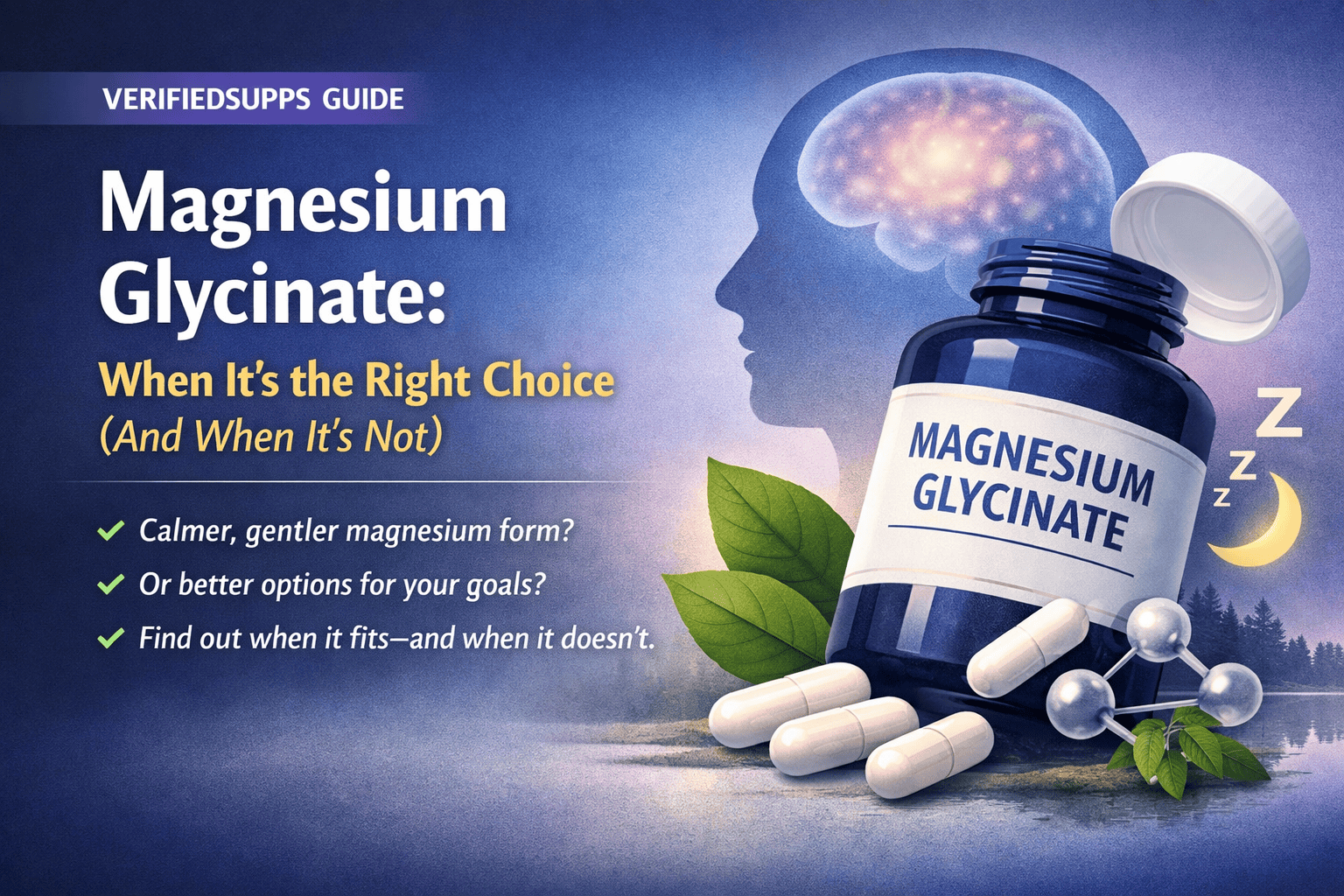
Magnesium Glycinate: When It’s the Right Choice (And When It’s Not)

VerifiedSupps Guide
Magnesium Glycinate

Magnesium Glycinate: When It’s the Right Choice (And When It’s Not)

Magnesium glycinate is popular for a reason: it’s often calming, gentle, and easy to tolerate. But “popular” isn’t the same as “right for you.” This guide helps you decide — clearly and without hype.

🧭
Start here (optional)
This article is specifically about magnesium glycinate. If you want the broader overview of magnesium forms and how to choose between them, read the main decision guide first.
Magnesium Isn’t One Supplement — How to Choose

What Magnesium Glycinate Actually Is

Magnesium glycinate is magnesium bound to glycine, a naturally occurring amino acid. In practical terms, this pairing tends to feel smooth and steady, not sharp or stimulating.

Glycine is commonly associated with:
  • calmer nervous system signaling
  • support for sleep quality
  • muscle relaxation without “wired” energy
That’s why this form is often described as “gentle” — not because it’s weak, but because it doesn’t force the system.

Who Magnesium Glycinate Is a Good Fit For

Magnesium glycinate tends to be a strong choice when your goal is:

  • sleep support without feeling sedated
  • stress or anxiety support that feels subtle (not numbing)
  • muscle relaxation with minimal digestive disruption
  • a safe first option if you’re new to magnesium
Many people describe the effect as: “things feel less loud.” No spike. No crash. Just less friction.

When Magnesium Glycinate May Not Be the Best Choice

This form isn’t universal. Consider a different magnesium form if:

  • you specifically want a laxative effect (citrate is usually better)
  • your main goal is cognitive performance or memory support (threonate is more targeted)
  • you expect magnesium to feel like a sleep medication
Magnesium glycinate supports regulation — it doesn’t override biology. That’s what makes it dependable.

How Magnesium Glycinate Typically Feels

This part matters. Magnesium glycinate usually feels:

  • quiet
  • background-level
  • more noticeable after a few days, not minutes

Most people notice it indirectly:

  • falling asleep a bit easier
  • waking up less tense
  • less muscle tightness at the end of the day
That subtlety is a feature, not a flaw.

How Much Magnesium Glycinate Should You Take?

A common range for many adults is 200–400 mg of elemental magnesium per day. The key phrase is elemental.

Quick label tip
Labels often list the compound (like “magnesium glycinate”) and the amount of elemental magnesium you actually receive. When you hear “200–400 mg,” it usually refers to the elemental amount.
Two practical guidelines
  • Start lower, then adjust gradually based on response.
  • If digestion feels off, it’s often a dose issue — not a “glycinate problem.”

Best Time to Take Magnesium Glycinate

Many people prefer magnesium glycinate:

  • in the evening
  • with or after a meal
  • about 1–2 hours before bed if sleep is the main goal
Consistency matters more than perfect timing. The best schedule is the one you’ll actually follow.

Final Takeaway

Magnesium glycinate isn’t flashy. It doesn’t force results. It works best when your goal is to remove friction — from stress, sleep issues, or physical tension.

If that’s what you’re after, it’s often the cleanest, lowest-risk place to start.
VerifiedSupps Medical Disclaimer
This content is for informational and educational purposes only and does not constitute medical advice. It is not intended to diagnose, treat, cure, or prevent any disease. Always consult a qualified healthcare professional before starting any supplement — especially if you are pregnant, nursing, have a medical condition, or take prescription medications. If you experience adverse effects, stop use and seek medical advice.

Related Articles

Health

Magnesium and Antidepressants: Interactions, Timing, and Safety

Magnesium · Antidepressants · Timing · Risks Can You Take Magnesium With Antidepressants? Timing, Interactions, and Risks Direct answer: In most people, yes. Magnesium doesn’t usually “interact” directly with SSRIs the way some drugs do. Most concerns are about side effects overlap (sedation, GI effects) and timing/spacing—often because of other medications you take alongside an

Read More »
Health

Magnesium Not Helping Sleep? Causes + Fixes (Form, Dose, Timing)

Magnesium · Sleep · Insomnia Logic Magnesium Not Helping Sleep: Why It Happens and What To Do Direct answer: it’s common for magnesium to “do nothing” for sleep. Magnesium helps sleep indirectly by lowering arousal and tension—not like a sedative. If your insomnia is driven by circadian timing, sleep-disordered breathing, stimulants, pain/reflux, or an anxiety

Read More »
Calm & Focus

Can Magnesium Cause Panic Attacks? Causes, Fixes, and When to Stop

Magnesium · Panic Attacks · Anxiety Can Magnesium Cause Panic Attacks? Why It Happens + What to Do Direct answer: It can in some people, usually due to dose, timing, form, or stacking—not toxicity. It can feel like panic even if it’s just a body signal (GI discomfort, lightheadedness, “heart feels loud”) that your brain

Read More »