Magnesium for Muscle Cramps: What Science Actually Says
Muscle cramps feel simple — until they hit at the wrong time: at night, mid-workout, or when your stress is already high. Magnesium is one of the most talked-about remedies. But cramps have multiple causes, and magnesium helps most when it’s solving the right kind of problem. This guide keeps it calm, simple, and science-grounded so you know when magnesium helps, which form fits best, and what to expect.
1) Why magnesium helps with certain types of cramps
Muscles contract using calcium. They relax with magnesium. When magnesium runs low — or when stress burns through more magnesium than usual — muscles can stay slightly “on,” increasing baseline tension and the likelihood of cramping.
- Normal muscle relaxation after contraction
- Nerve firing stability (fewer “misfires” that can trigger cramps)
- Electrolyte movement in and out of muscle cells
- Sleep depth, which can affect nighttime cramping
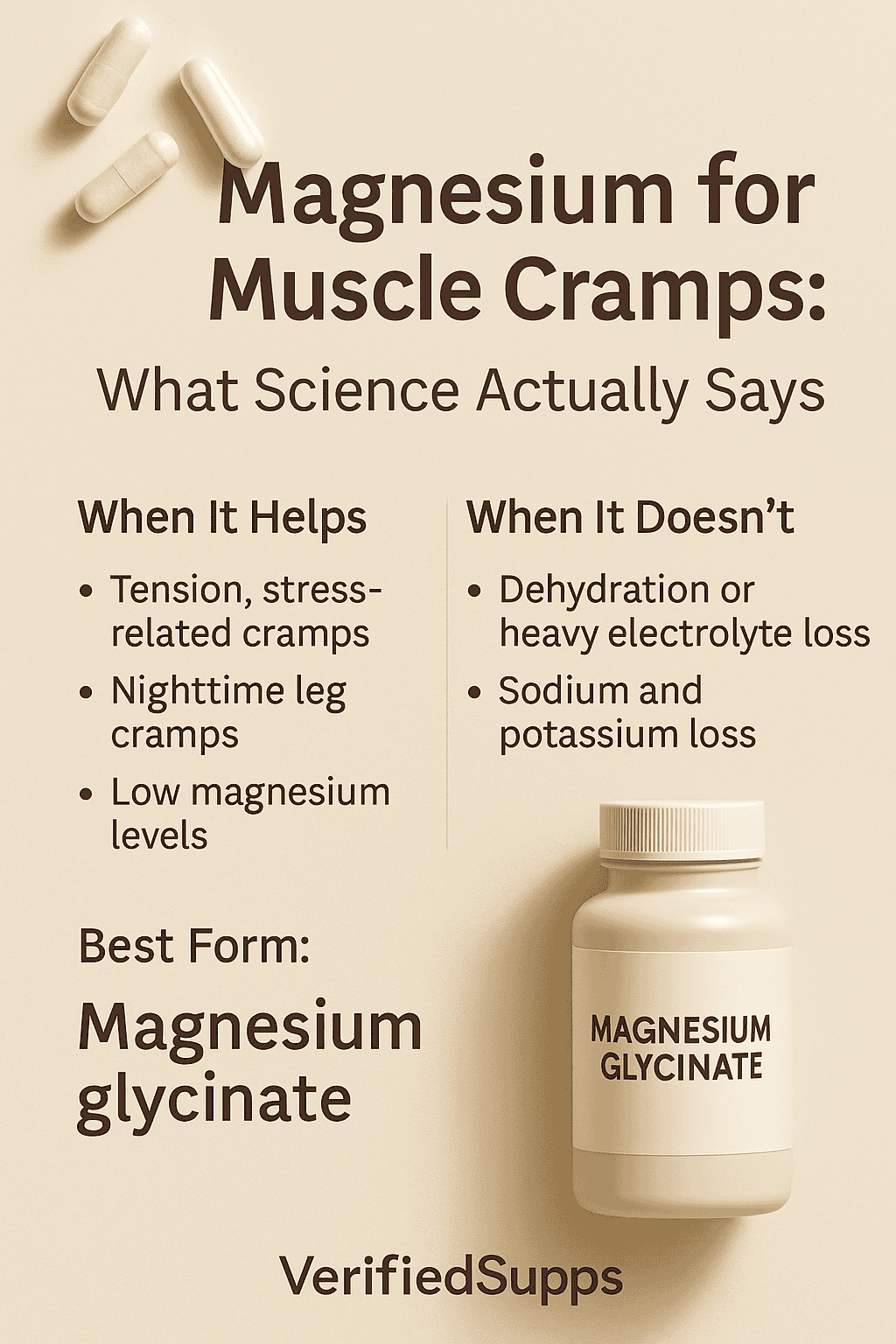
2) When magnesium actually helps (science-based)
- Nighttime leg cramps connected to tension or poor sleep
- Stress-related tightness (neck, calves, jaw, shoulders)
- Twitches or “fluttering” muscles
- Caffeine-related tension (higher demand + higher loss)
- Tight calves after exercise (more neuromuscular tension than dehydration)
3) When magnesium alone usually doesn’t fix cramps
Not all cramps come from low magnesium. Cramps related to electrolyte loss, dehydration, or heat often involve sodium and potassium more than magnesium.
- Heavy sweating (electrolyte loss)
- Training in heat (sodium/potassium depletion)
- Long endurance exercise
- Dehydration
4) Best magnesium forms for muscle cramps
- Magnesium glycinate → best overall for cramps, tension, sleep, recovery
- Magnesium taurate → daytime tension and stress-related tightness
- Magnesium L-threonate → nighttime cramps that track with stress or racing thoughts
5) How much magnesium helps for cramps?
6) Best time of day for cramps
7) When cramps may not be magnesium-related
Most everyday cramps are harmless and related to tension, stress, training load, or minor electrolyte imbalance. But persistent or severe cramps should be evaluated if you also have:
- Significant swelling
- Visible muscle deformity
- Severe or sudden pain
- Worsening weakness
- A history of conditions affecting nerves or circulation
8) Magnesium options often used for cramps (optional)
Go Deeper (VerifiedSupps Guides)
Final takeaway
If your cramps track with tension, poor sleep, stress, or twitches, magnesium is often a practical, gentle fix. If cramps mainly show up with heat, heavy sweating, or long endurance sessions, look at sodium and potassium too — magnesium supports relaxation, but it may not be the primary lever.