Can Electrolytes Cause Anxiety or Heart Palpitations?

Electrolytes · Anxiety Sensations · Palpitations

Can Electrolytes Cause Anxiety or Heart Palpitations?

If you started electrolytes and suddenly feel anxious, shaky, “wired,” or hyper-aware of your heartbeat — it can be unsettling. And it’s also explainable.

Electrolytes aren’t just “hydration helpers.” They are part of the electrical system that runs your nerves, muscles, and heartbeat. So when you change the dose or balance quickly, your body can respond quickly.

What’s happening Most common mistakes How to fix it When to get checked
Quick Take
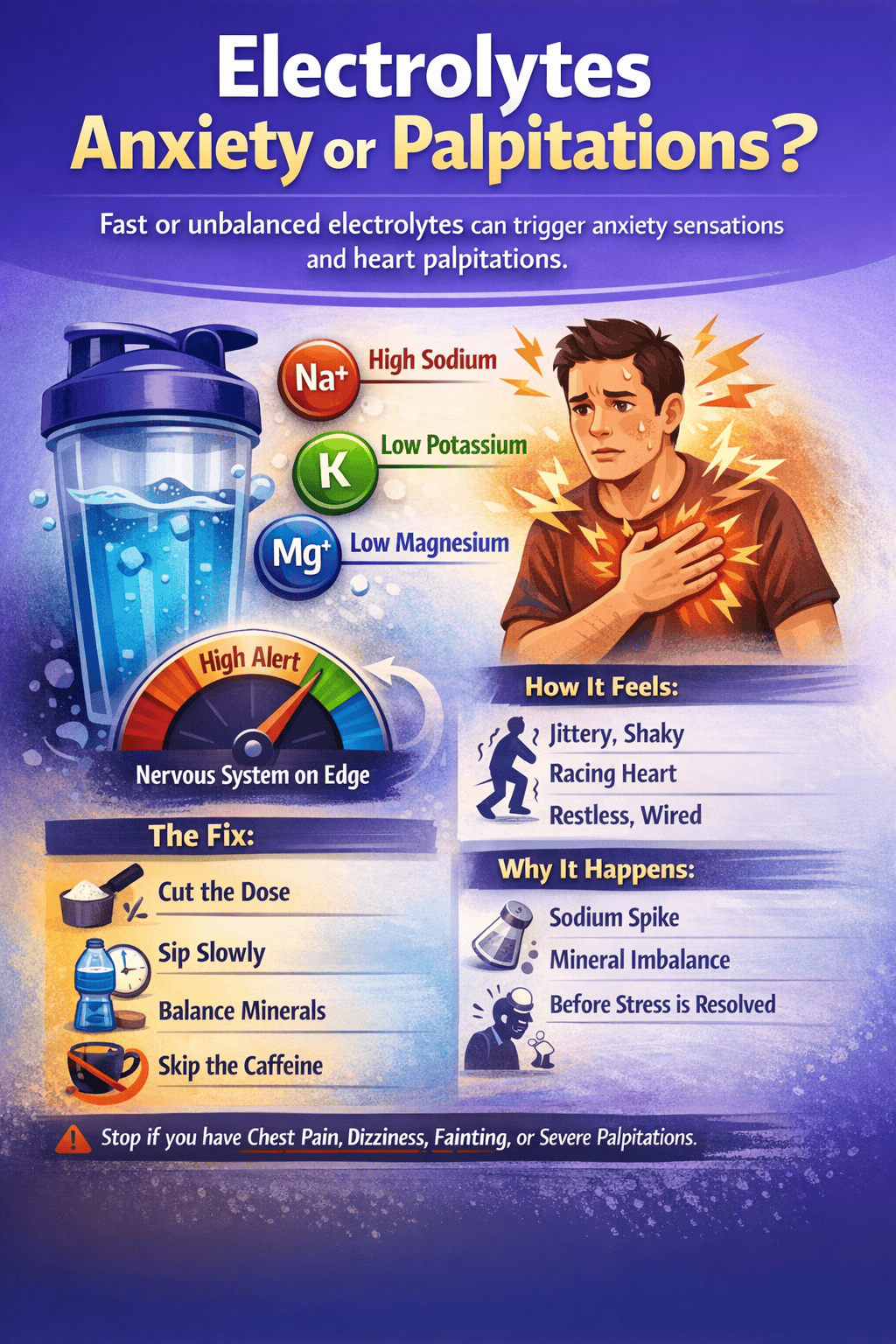
Yes — electrolytes can trigger anxiety-like sensations or palpitations when the dose is high, the sodium load hits too fast, the mix is unbalanced, or your nervous system is already “on edge.” In most cases, the fix is not to quit forever, but to adjust the dose, timing, and mineral balance so your body gets stability instead of spikes.
📘
Electrolytes Complete Guide
The clean, simple framework: sodium, potassium, magnesium, and how to balance them.

First: What People Mean by “Anxiety” After Electrolytes

Most people aren’t describing a sudden new anxiety disorder. They’re describing a body sensation that feels like anxiety:

  • Jittery or “buzzing” energy
  • Restlessness, difficulty relaxing
  • A noticeable or pounding heartbeat
  • Tight chest without sharp pain
  • A sense of being “amped up” for no clear reason

That matters because the troubleshooting is different. This is usually about physiology and dosing, not psychology.

Why Electrolytes Can Change How Your Heart Feels

Your heart rhythm and contraction strength are driven by electrical gradients. Electrolytes help create those gradients.

A simple way to think about it:

  • Sodium supports nerve signaling and fluid balance and can feel “stimulating” if the load is big and fast.
  • Potassium helps relax and reset electrical activity inside cells (including cardiac cells).
  • Magnesium acts like a stabilizer for nerve and muscle activity and supports a calmer baseline.

So if you push one hard (often sodium) without supporting the others, you can feel that imbalance as “anxiety” or palpitations.

The Most Common Culprit: A Sodium Spike

Many electrolyte mixes are effectively “salt + flavor” with a small amount of other minerals. If you take a strong serving quickly (especially on an empty stomach), you can create a noticeable shift in:

  • fluid distribution
  • blood volume perception
  • sympathetic nervous system tone (your “go mode”)

That doesn’t automatically mean the electrolyte drink is unsafe. It means the delivery may be too aggressive for your current baseline.

🧭
A quick reality check
If you were already running on low sleep, high caffeine, hard training, or stress… electrolytes can be the thing that makes you notice the “wired” state you were already close to.

Who’s More Likely to Feel This

These sensations are more common if you fall into one of these buckets:

  • Caffeine sensitive or stacking electrolytes with stimulants
  • Fasting / low carb (your sodium needs can swing quickly)
  • Very sweaty training and aggressive rehydration
  • High baseline stress, poor sleep, or “revved” nervous system
  • Using a sodium-heavy mix with minimal potassium or magnesium

This isn’t about being “weak.” It’s about having a narrower tolerance for sudden shifts.

The Fix: A Calm, Step-Down Protocol

Most people fix this by changing how they take electrolytes, not by swearing them off.

Step 1: Cut the dose in half (or more)
If you used one serving, try one-half serving. If you were already sensitive, start at one-quarter serving. Your goal is “no spike.”
Step 2: Sip, don’t slam
Spread the serving across 30–90 minutes. Fast delivery creates fast sensations. Slow delivery is usually smooth.
Step 3: Avoid stacking with caffeine (at first)
If you’re troubleshooting symptoms, don’t mix variables. Keep caffeine separate so you can feel what’s actually happening.
Step 4: Balance the mineral picture
A sodium-heavy mix can feel harsh if potassium and magnesium intake are low. The goal is balance, not maximal sodium.

When You Should Stop and Get Checked

This is important and worth being calm and direct about:

  • Chest pain, pressure, or radiating pain
  • Dizziness, fainting, or near-fainting
  • Shortness of breath that feels new or concerning
  • Palpitations that are persistent, frequent, or worsening
  • A history of heart rhythm disorders or kidney disease

If any of those are present, do not “self-tune” with supplements. Get medical evaluation.

A Practical Way to Re-Introduce Electrolytes

If you want a clean, low-drama approach, use this progression:

  • Days 1–3: one-quarter serving, sipped slowly
  • Days 4–7: one-half serving, still sipped slowly
  • Week 2: increase only if you feel stable and the electrolyte need is clear

You’re training your system to accept the change smoothly. Stability is the goal.

Go Deeper (VerifiedSupps Guides)

Final Takeaway

Electrolytes can absolutely create anxiety-like sensations or palpitations in some people — not because they’re “bad,” but because the nervous system responds to rapid mineral shifts.

If you want electrolytes to feel supportive, aim for stability: smaller dose, slower delivery, and better balance. Your body usually rewards the calm approach.
Frequently Asked Questions

Can electrolytes directly cause heart palpitations?
They can increase heartbeat awareness or trigger palpitations if dosing is aggressive or minerals are imbalanced. Persistent or severe symptoms should be medically evaluated.
Why do electrolytes make me feel anxious even if my mind feels calm?
Because you may be feeling a body-state shift (sympathetic activation, fluid change, mineral balance), not psychological anxiety.
Is it better to take electrolytes with food?
Often yes. Food can blunt the intensity of a fast sodium hit and makes troubleshooting easier.
How quickly should symptoms improve after lowering the dose?
Many people notice improvement the same day. If symptoms persist for days or worsen, pause electrolytes and consider medical guidance.
Should I avoid electrolytes if I have high blood pressure or kidney issues?
You should be cautious and consult a clinician. Sodium and potassium handling can be altered in these cases, and dosing is not a DIY situation.
VerifiedSupps Medical Disclaimer
This content is for educational purposes only and does not constitute medical advice. Supplements can affect individuals differently. If you experience chest pain, severe palpitations, dizziness, fainting, shortness of breath, or ongoing/worsening symptoms, seek urgent medical attention. Always consult a qualified healthcare professional before making changes to your supplement regimen, especially if you have cardiovascular conditions, kidney disease, or take medications that affect fluid or electrolyte balance.

Related Articles

Health

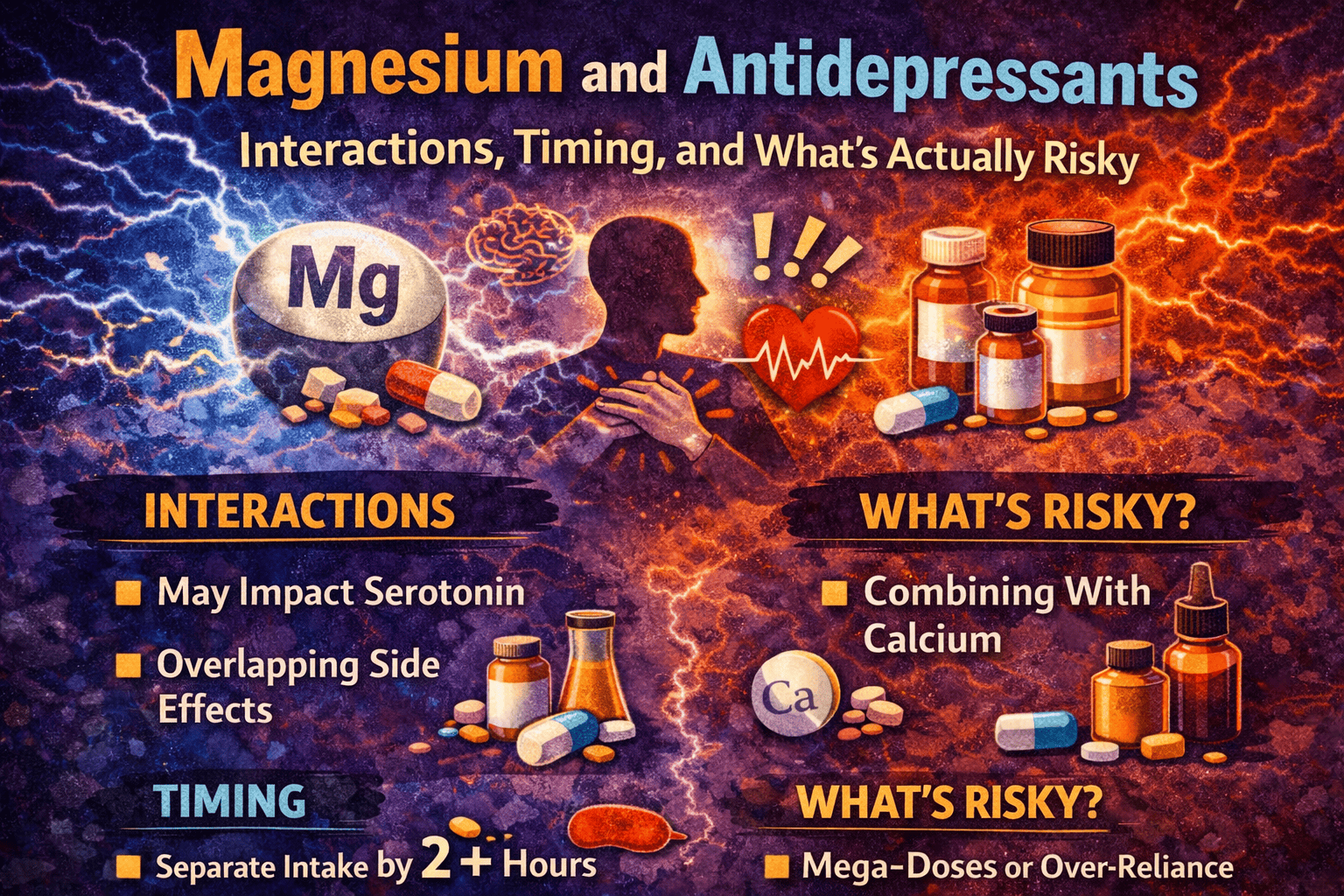
Magnesium and Antidepressants: Interactions, Timing, and Safety

Magnesium · Antidepressants · Timing · Risks Can You Take Magnesium With Antidepressants? Timing, Interactions, and Risks Direct answer: In most people, yes. Magnesium doesn’t usually “interact” directly with SSRIs the way some drugs do. Most concerns are about side effects overlap (sedation, GI effects) and timing/spacing—often because of other medications you take alongside an

Read More »
Health

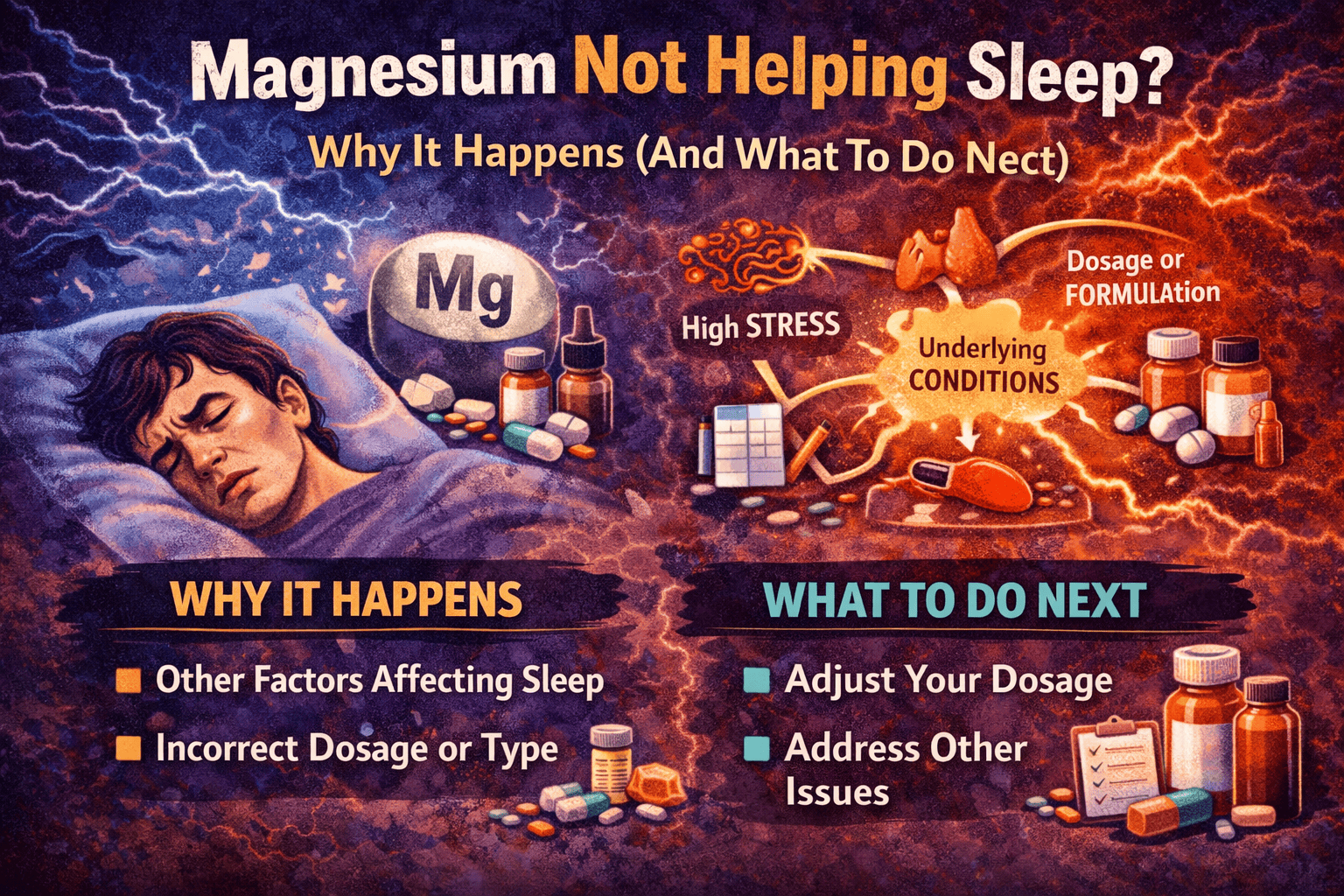
Magnesium Not Helping Sleep? Causes + Fixes (Form, Dose, Timing)

Magnesium · Sleep · Insomnia Logic Magnesium Not Helping Sleep: Why It Happens and What To Do Direct answer: it’s common for magnesium to “do nothing” for sleep. Magnesium helps sleep indirectly by lowering arousal and tension—not like a sedative. If your insomnia is driven by circadian timing, sleep-disordered breathing, stimulants, pain/reflux, or an anxiety

Read More »
Calm & Focus

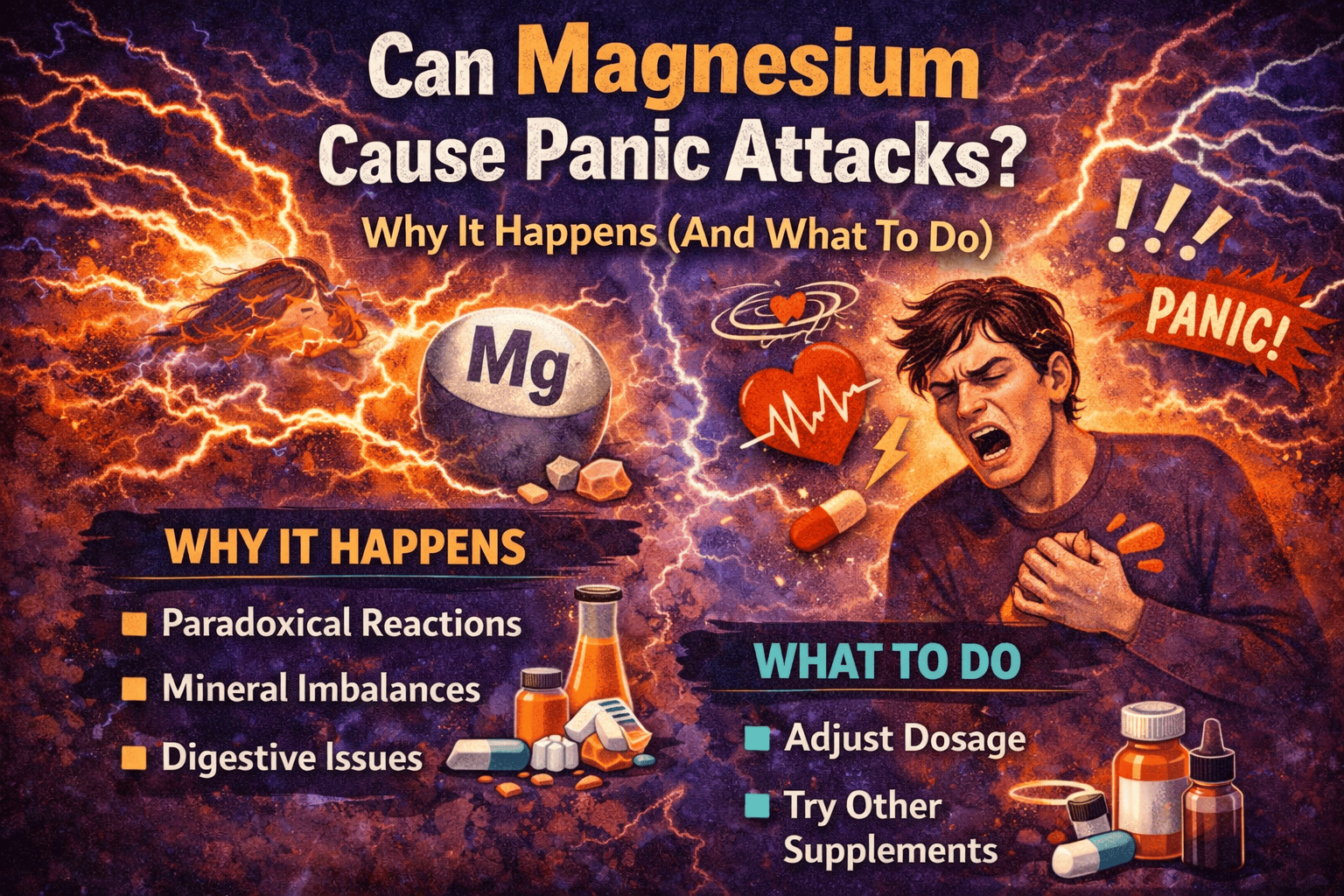
Can Magnesium Cause Panic Attacks? Causes, Fixes, and When to Stop

Magnesium · Panic Attacks · Anxiety Can Magnesium Cause Panic Attacks? Why It Happens + What to Do Direct answer: It can in some people, usually due to dose, timing, form, or stacking—not toxicity. It can feel like panic even if it’s just a body signal (GI discomfort, lightheadedness, “heart feels loud”) that your brain

Read More »