Magnesium · Deficiency · Stress · Sleep · Recovery
Symptoms Guide
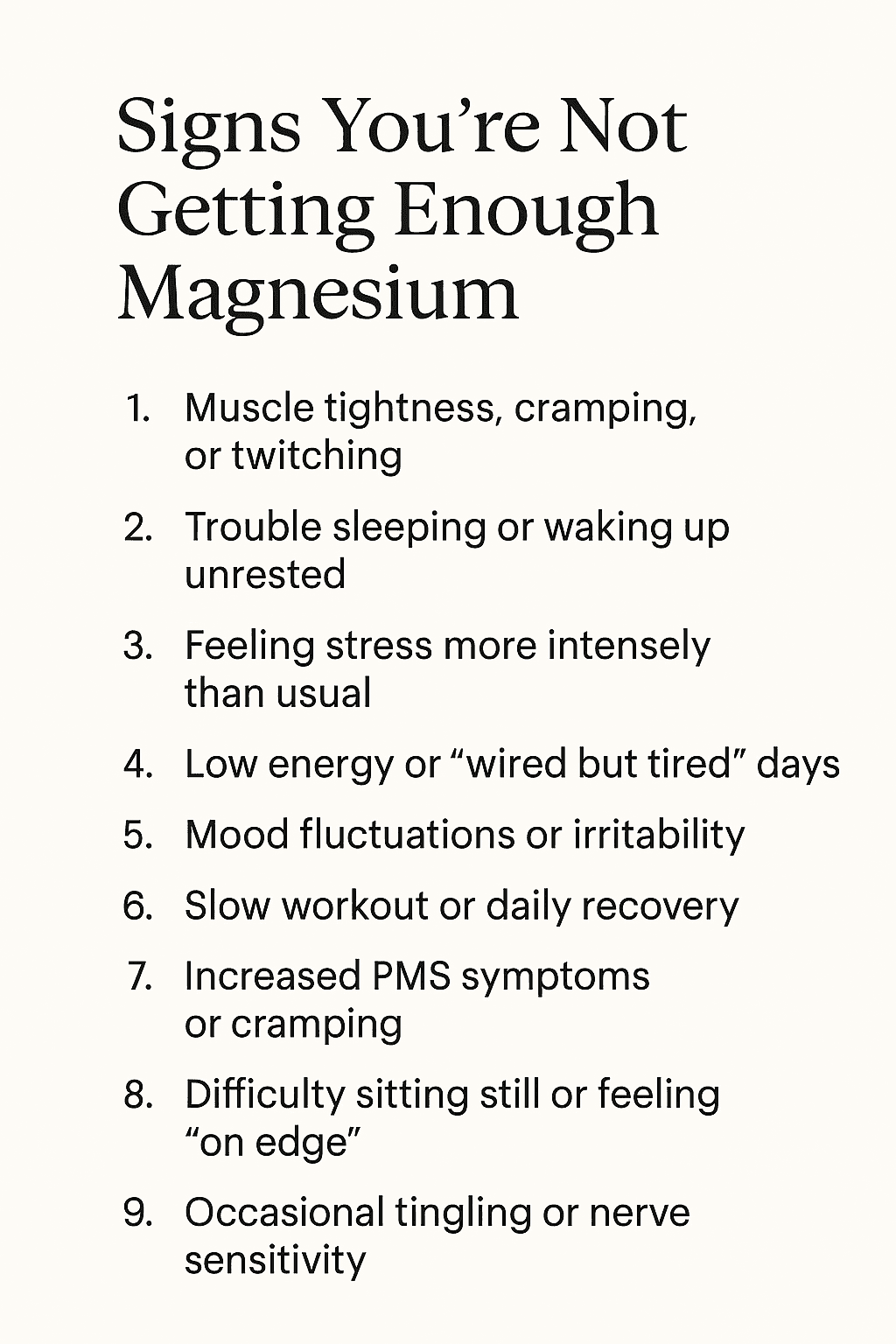
Signs You’re Not Getting Enough Magnesium
Magnesium doesn’t shout when you’re low. It whispers — through tense muscles, restless sleep, stress that sits a little too close to the surface, or a mind that won’t fully settle. Because magnesium supports hundreds of processes, even mild insufficiency can change how your body and mind feel.
⚡
Quick Take
The most common signs of low magnesium are muscle tightness, trouble sleeping, heightened stress sensitivity,
eyelid or muscle twitches, fatigue, and poor recovery. If several of these sound familiar, magnesium may be quietly asking for attention.
Important: symptoms aren’t a diagnosis. Think “pattern,” not “proof.”
🧭
The Complete Magnesium Guide
The master hub: benefits, dosage, timing, forms, safety, cramps, sleep, anxiety — organized in one calm, practical overview.
Open the master guide →
1) Why low magnesium is more common than you think
Modern life increases demand — and reduces intake
Modern diets often deliver less magnesium than they used to. Stress increases magnesium needs. Sleep disruption increases turnover. And caffeine (a daily staple for many) can increase excretion.
Diet gap
Less magnesium-dense food, more refined intake
Stress load
Higher demand + higher loss
Sleep disruption
More turnover, less recovery
Stimulants
Caffeine may increase excretion
You don’t need to be “clinically deficient” to feel a difference. Mild insufficiency can still change sleep depth, muscle feel, and stress reactivity.
2) The most common signs you’re not getting enough magnesium
Look for clusters, not single symptoms
💪
Muscle tightness, cramping, or twitching
Magnesium supports muscle relaxation at the cellular level. Low intake can show up as “held tension” (neck, calves, jaw) or eyelid twitches.
🌙
Trouble sleeping or waking unrested
Magnesium supports wind-down signaling. Low intake can make it harder to fall asleep, stay asleep, or feel restored.
⚠️
Feeling stress more intensely than usual
When magnesium is low, the nervous system can sit closer to “ready to react,” making irritability and overwhelm easier to trigger.
🔋
Low energy or “wired but tired” days
Magnesium plays a role in energy metabolism. Low intake can look like fatigue that caffeine doesn’t fully fix.
🎭
Mood fluctuations or irritability
Magnesium supports neurotransmitter balance. Low levels can make mood feel less steady under stress.
🏋️
Slow workout or daily recovery
Magnesium supports muscle relaxation and electrolyte balance. Low intake can make recovery feel slower or less consistent.
🩸
Increased PMS symptoms or cramping
Magnesium supports smooth muscle relaxation and stress signaling, which may matter more during that window.
🧠
Restlessness, feeling “on edge,” or nerve sensitivity
Low magnesium can make the nervous system feel closer to activation mode. Some people also notice occasional tingling or heightened sensitivity.
A good way to use this list: circle the 2–4 that show up most often for you. That “cluster” is the signal.
3) Who’s most likely to benefit from more magnesium?
Common overlap groups
- High stress or anxiety
- Caffeine or pre-workout users
- Poor or inconsistent sleep
- Muscle tightness or twitching
- Athletes or active individuals
- Low vegetable/mineral intake
- People who feel “wired but tired”
Supplementing doesn’t replace a balanced diet — it often fills a gap that modern routines create.
4) The best magnesium forms for these symptoms
Match the form to the “signal”
- Glycinate → calm, sleep, muscle tension
- L-Threonate → brain clarity, sleep depth
- Taurate → daytime calm, stress sensitivity
- Citrate → digestion support & budget
5) Gentle, reliable magnesium options (optional)
No pressure — just clear examples
🌙
Best for Calm & Sleep
Nootropics Depot Magnesium Glycinate
Calming, gentle, and ideal when tension or restless evenings are the main signs.
View at Nootropics Depot →
☀️
Best for Daytime Stress
Magnesium Taurate
Clean, steady calm without drowsiness — often helpful for irritability and stress reactivity.
View on Amazon →
🧠
Best for Brain & Sleep Depth
Magnesium L-Threonate
Supports memory, cognitive clarity, and deeper sleep architecture for people who feel stress “in the mind.”
View on Amazon →
Go Deeper (VerifiedSupps Guides)
Practical next steps
Final takeaway
Magnesium deficiency looks like friction
If magnesium is low, the body often feels “tighter,” sleep feels less restorative, and stress feels louder. If several of these signs are consistently present, increasing magnesium intake (through food or supplements) is a reasonable, gentle first step.
Calm approach: start low, go steady, and judge it by sleep quality, muscle feel, and stress reactivity over 10–14 days.
Frequently Asked Questions
How do I know if I need magnesium?
Common signs include muscle tightness, stress sensitivity, restless sleep, twitches, irritability, fatigue, and slow recovery.
The strongest signal is a cluster of symptoms that show up consistently.
Can magnesium help with anxiety or stress?
Magnesium supports nervous system regulation and may help reduce tension and stress reactivity for some people — especially when sleep and recovery are also part of the picture.
Does magnesium improve sleep?
Many people find magnesium supports wind-down and muscle relaxation. Common sleep-focused choices are glycinate and (for some) L-threonate.
How long until magnesium starts working?
Some people notice effects within a few days (especially for sleep and muscle relaxation). Others need 1–2 weeks of consistent intake.
Which form should I choose for my symptoms?
Glycinate is best for calm and sleep; threonate for brain and memory; taurate for daytime calm; citrate for digestion.
Your goal (sleep vs daytime steadiness vs gut support) determines the best fit.
VerifiedSupps Medical Disclaimer
This content is for educational purposes only and not medical advice. It is not meant to diagnose, treat, cure, or prevent any disease.
If you have health conditions, take medications, or experience persistent symptoms, speak with your healthcare provider before starting supplements.