Omega-3 · EPA & DHA · Deficiency Signs
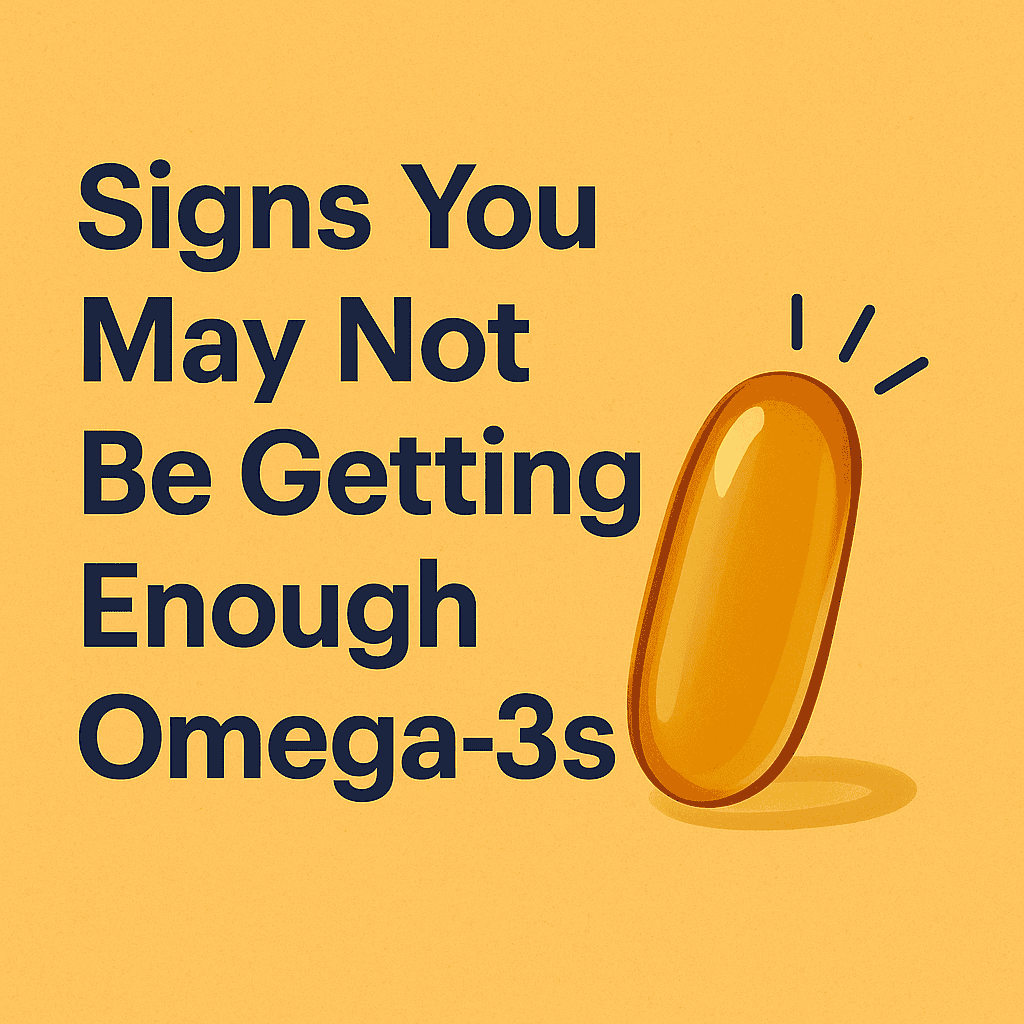
Signs You May Not Be Getting Enough Omega-3s
Omega-3s are woven into nearly every cell membrane in your body. When intake stays low for a long time, the effects don’t always show up as one clear symptom.
Instead, they often appear as small signals across mood, skin, eyes, recovery, and focus — the “frayed around the edges” feeling that’s easy to dismiss.
Short version:
If your diet is low in fatty fish and you notice persistent dryness, slower recovery, or less emotional “smoothness,” it may be a sign your omega-3 intake isn’t where it could be.
Parent Hub: Want the complete omega-3 picture (science, benefits, dosage, timing, forms, safety)? Start here: Omega-3 Complete Guide .
This post is the “signs” lens — the hub is the full map.
Quick Overview: Who Is Most Likely to Be Low?
You’re more likely to be under-consuming omega-3s if:
- you rarely eat fatty fish (salmon, sardines, mackerel, herring)
- your diet is heavy in processed foods and seed oils (high omega-6, low omega-3)
- you’ve gone months or years without a reliable EPA + DHA source
- you notice subtle, long-lasting changes in mood, skin, or recovery with no clear cause
This guide walks through the most commonly reported signals of low omega-3 status — and how to think about them calmly, without self-diagnosing.
Sign #1: Dry, Dull, or Easily Irritated Skin
Omega-3s are part of your skin barrier’s lipid structure. When intake is consistently low, some people notice:
- skin that feels drier than usual, even with moisturizers
- a rougher texture over time
- skin that feels more reactive to weather changes
Plain-English: this doesn’t prove “omega-3 deficiency,” but it fits the pattern of low intake over months/years — especially if other signs also show up.
Sign #2: More Fragile or Unsteady Mood
EPA and DHA support brain cell membrane function and signaling. Research has explored how lower omega-3 status may relate to mood regulation and stress resilience.
People sometimes describe:
- feeling more “on edge” or reactive than usual
- less ability to bounce back from everyday stressors
- more frequent low-energy or “flat” mood days
Important: omega-3s aren’t a treatment for mood disorders and don’t replace professional care. But chronically low intake can be one piece of the overall “mental energy” picture.
Sign #3: Dry or Tired-Feeling Eyes
DHA is concentrated in the retina. When omega-3 intake is low, some people experience:
- eyes that feel dry or “scratchy,” especially after screen time
- more frequent use of eye drops
- subtle eye fatigue at the end of the day
Screen habits, environment, and hydration matter too — omega-3 status is just one possible background factor.
Sign #4: Slower Exercise Recovery and Persistent Soreness
Omega-3s are involved in signaling balance related to training stress and recovery. When intake is low, active people may notice:
- soreness that lingers longer than it used to
- joints that feel more “cranky” after heavier sessions
- more difficulty bouncing back between workouts
Reality check: omega-3s don’t replace sleep, programming, or nutrition — but low intake can add friction to recovery.
Sign #5: Stiffness and “Creaky” Mornings
Low omega-3 intake has been studied in the context of joint comfort and inflammation signaling balance. Some people describe:
- feeling stiffer when getting out of bed
- more sensitivity after high-processed-food days
- needing longer to feel warmed up
This doesn’t mean omega-3s “fix” joint conditions — but low intake can add friction to how the body handles everyday stressors.
Sign #6: Brain Fog and Harder Time Staying Present
DHA is a structural component of brain cell membranes, and omega-3 status can influence how efficiently those cells communicate. When intake is low, some people report:
- more frequent foggy periods
- needing more caffeine to feel sharp
- harder time staying locked into tasks or conversations
Context: sleep and stress matter a lot — omega-3 status is just one modifiable factor you can improve over time.
Sign #7: Diet Pattern, Not Just Symptoms
One of the most reliable “signs” of low omega-3 intake isn’t a symptom at all — it’s your food pattern.
- you almost never eat fatty fish
- most fats come from processed foods or deep-fried options
- there’s no reliable EPA + DHA source in your routine
Best confirmation: an omega-3 index test. Short of that, honest long-term diet review tells you a lot.
If more than a few of these feel familiar — especially with a low-fish diet — your omega-3 intake may be worth improving.
What to Do If These Signs Sound Like You
The goal isn’t to self-diagnose anything. It’s to notice patterns — then respond calmly.
- Step 1: Look honestly at your fish intake over the last few months.
- Step 2: Decide whether you prefer food-first, supplementation, or both.
- Step 3: If you supplement, choose a product with clear EPA + DHA labeling.
- Step 4: Stay consistent for 4–8 weeks before you judge effect.
- Step 5: If you have medical conditions or take medications, loop your clinician in.
Most important move: choose a realistic daily EPA + DHA target — then make it consistent.
Go Deeper (VerifiedSupps Guides)
Clean next steps — kept to the essentials.
Final Takeaway
No single symptom “proves” low omega-3 status. But if your food pattern is low in fatty fish and multiple signals feel familiar, it’s reasonable to consider bringing omega-3 intake into alignment.
The best approach is gentle: improve the pattern, choose a clear EPA + DHA source if it fits your life, and give it time to build.
Frequently Asked Questions
Short, calm answers to the most common omega-3 questions.
Can I know for sure if I’m low without a blood test?
Not with certainty. Symptom patterns and diet history can suggest low intake, but only blood testing (often called an omega-3 index) can directly confirm status.
How long does it take to notice changes?
Omega-3 benefits are usually gradual. Many people notice subtle shifts (mood smoothness, skin comfort, recovery feel) in 2–6 weeks with consistent intake, and steadier changes over a few months.
Can I just eat more fish instead of supplementing?
Yes. Fatty fish 2–3 times per week can cover a lot of EPA + DHA needs. Supplements mainly help when your routine makes consistent fish intake hard.
If I don’t feel anything, does that mean it isn’t working?
Not necessarily. Some effects are subtle and long-term because omega-3s support cell membranes and baseline resilience. Also, many people unintentionally underdose by focusing on “fish oil mg” instead of EPA + DHA.
Is plant omega-3 (ALA) enough?
Plant sources provide ALA, but conversion to EPA and DHA is relatively low for many people. If you don’t eat fish, algae oil is a common way to get DHA (and sometimes EPA) directly.
What’s the simplest way to start?
Pick one reliable EPA + DHA source, take it with food, and stay consistent for 4–8 weeks before judging results. Small, steady habits beat aggressive protocols.