Omega-3 · Mood · Stress Support
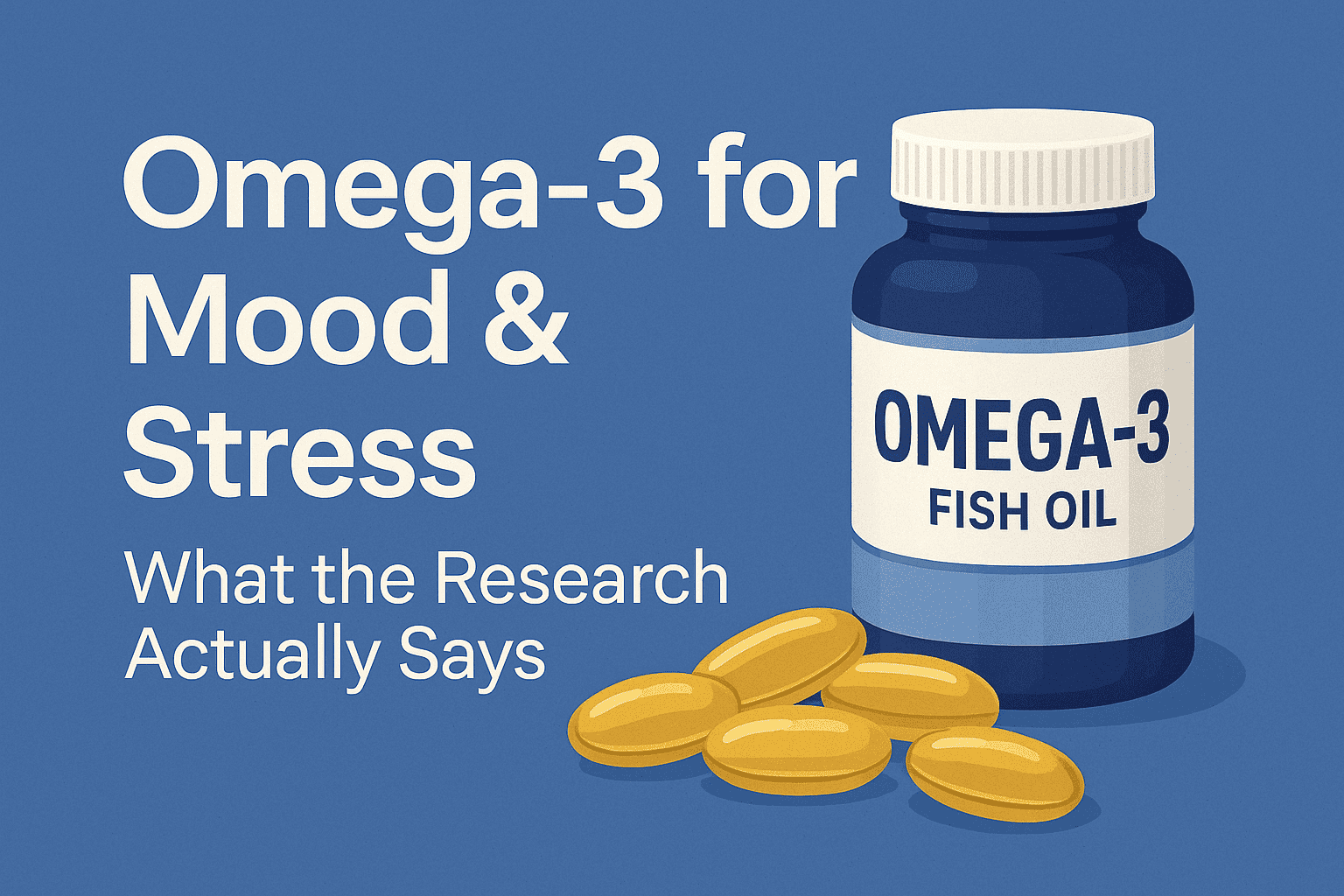
Omega-3 for Mood & Stress: What the Research Actually Says
Omega-3s play structural roles in the brain, supporting how cells communicate and how smoothly signals flow through emotional and stress-related pathways. The effects aren’t dramatic or instant — they’re quiet, steady, and often felt as a gradual shift toward greater emotional “evenness.”
Short version:
EPA and DHA support mood regulation and stress resilience by helping keep neuronal membranes flexible, supporting balanced signaling, and assisting the body in managing everyday stress. They’re not a treatment — but they can be an important nutritional foundation.
Parent Hub: Want the complete omega-3 picture (science, benefits, dosage, timing, forms, safety)? Start here: Omega-3 Complete Guide .
This post is the “mood & stress” lens — the hub is the full map.
1️⃣ Quick Overview: The Omega-3 → Mood Connection
Mood and stress aren’t controlled by one system. They’re influenced by sleep, workload, relationships, diet, inflammation status, and daily habits. Omega-3s support the structure and function underneath those systems.
People often describe:
- more stable day-to-day mood
- smoother emotional “edges” under stress
- less reactive or irritable feelings
- a steadier baseline during busy weeks
These are subtle shifts — the kind that build over weeks of consistent intake. If your diet is low in fatty fish, the change can feel more noticeable.
2️⃣ How Omega-3s Support Mood (Calm-Science Explanation)
Omega-3s help maintain neuron membrane fluidity — the flexibility that allows brain cells to communicate efficiently. When membrane function is supported:
- signals can travel more smoothly
- receptors can function more efficiently
- the brain can feel more resilient to daily stressors
DHA is more structural (brain/eyes). EPA is often emphasized for signaling balance and stress resilience support.
Simple takeaway: DHA helps build the “hardware.” EPA is often discussed as helping the “tone” of signaling. Most people benefit from both.
Mood support from omega-3s isn’t a sudden “lift.” It’s often about restoring pieces the brain uses to self-regulate.
3️⃣ Omega-3, Stress & Inflammation: The Hidden Link
Chronic stress and low-grade inflammation can reinforce each other. Omega-3s support pathways involved in inflammatory signaling balance — which can indirectly influence how resilient you feel under emotional load.
People sometimes describe:
- feeling less worn down by busy weeks
- a calmer baseline during stressful periods
- less “pressure buildup” across the day
Important: these aren’t “medical effects.” They’re nutritional support mechanisms that can make your existing stress-regulation systems run more smoothly.
4️⃣ How Low Omega-3 Intake Can Show Up in Mood
When omega-3 intake is low for a long time, people often report subtle patterns such as:
- more irritability or emotional “sharpness”
- less mental stamina during long days
- stronger stress response to normal events
- feeling more overwhelmed without an obvious cause
These patterns don’t diagnose anything — but they often cluster in people with low long-term omega-3 intake.
5️⃣ When to Take Omega-3 for Mood Support
The most important factor is consistency, not timing. But some people like anchoring omega-3 to the time of day they want “support” the most.
⭐ Morning
- sets a smoother baseline for the day
- fits with calm-focus routines
- pairs with breakfast for absorption
⭐ Evening
- larger meal can improve absorption
- often fewer burps for sensitive stomachs
- fits a wind-down routine
6️⃣ How Long Until You Feel Mood-Related Effects?
Most people notice changes gradually:
- 2–4 weeks: slight improvements in calm, less irritability
- 4–8 weeks: smoother emotional baseline
- 8–12 weeks: stronger resilience to daily stress
These timelines assume consistent daily EPA + DHA intake — which is why “routine” matters more than chasing quick feelings.
Think of omega-3s as part of your emotional infrastructure — quiet, supportive, and long-term.
Gentle, Optional Product Examples
No pressure — just two simple options that make consistency easier.
🔬 Premium Pick
A high-purity omega-3 option with strong EPA + DHA per capsule for consistent mood/stress support.
View at Nootropics Depot🚚 Convenience Pick
A practical omega-3 option that’s easy to reorder and take daily with breakfast or dinner.
Shop on AmazonGo Deeper (VerifiedSupps Guides)
Kept tight (3–5 internal links total). These are the most useful next steps.
Final Takeaway: Omega-3 Supports Your Emotional Foundation
Omega-3s don’t replace healthy habits or professional care — but they can support the foundational materials your brain uses to regulate mood and respond to stress more efficiently.
The real benefit comes from consistency: steady EPA + DHA intake over weeks and months.
Frequently Asked Questions
Short, calm answers about omega-3, mood, and stress.
Can omega-3 help with stress?
Omega-3s support pathways involved in stress response and emotional regulation. They’re not a treatment for stress disorders, but they may help create a steadier baseline over time.
Is EPA better than DHA for mood?
EPA is often emphasized in mood-related research, while DHA supports the structural integrity of brain cells. Most people benefit from both; EPA is commonly the “functional” focus in mood formulas.
How much omega-3 should I take for mood support?
Many adults aim for 1,000–2,000 mg of combined EPA + DHA per day. Needs vary. Consistency matters more than chasing a perfect number.
How long does it take to feel mood benefits?
Many people notice subtle changes within 2–6 weeks, with steadier baseline shifts around 8–12 weeks of consistent intake.
Morning or evening — does timing matter for mood?
Timing matters far less than consistency. Take it with food at the time you’re least likely to miss. Some people prefer morning for daytime steadiness; others prefer dinner for comfort and absorption.