Magnesium Glycinate vs Magnesium Threonate: Which One Should You Take?
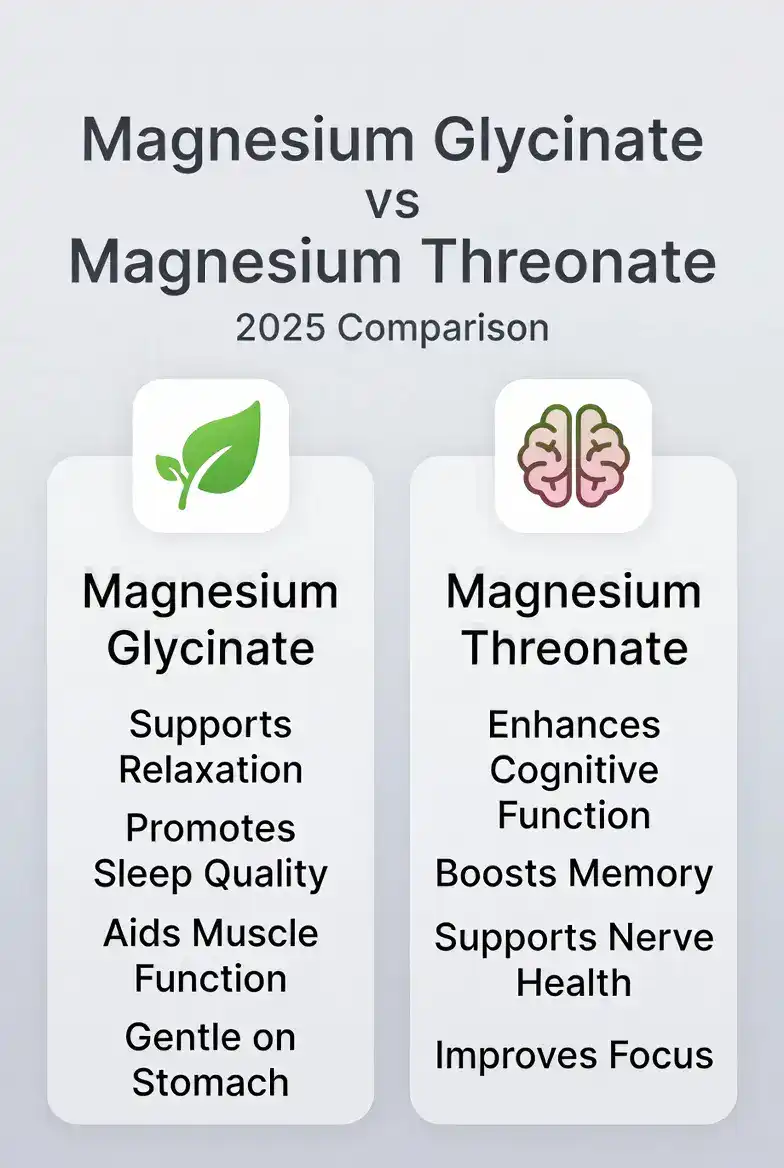
If your goal is sleep, relaxation, and reliable daily magnesium support, magnesium glycinate is usually the better first pick. If your goal is focus, brain fog, and cognitive support, magnesium threonate is the more targeted option—especially for people who already feel “magnesium helps me” but want a brain-leaning effect.
Quick Take: If you want the simplest decision that’s usually correct:
- Choose glycinate if sleep, anxiety edge, muscle relaxation, or “daily magnesium” is the goal.
- Choose threonate if focus, brain fog, mental clarity, or cognitive support is the main goal.
- If you want both: threonate earlier in the day, glycinate in the evening (watch total elemental magnesium).
Key constraint: threonate typically provides less elemental magnesium per serving, which is normal and not “low quality.”
Parent Hub: Magnesium Forms Guide
A full map of magnesium forms, what they’re best for, and how to choose without guessing.
Open the magnesium forms hub →
Magnesium glycinate vs threonate: which one should I choose?
Choose based on the “job” you want magnesium to do: body calm and sleep (glycinate) vs brain-leaning focus and clarity (threonate). The table below is the simplest way to pick without overthinking it.
| If your main goal is… | Best first pick | Why it fits | Common timing |
|---|---|---|---|
| Sleep and nervous system “downshift” | Glycinate | Often feels smoother and more relaxing; commonly well tolerated | Evening |
| Anxiety edge and muscle tension | Glycinate | Good whole-body support; less laxative risk than some forms | Evening (or split) |
| Focus, brain fog, mental clarity | Threonate | Designed for brain-targeted magnesium support | Morning / afternoon |
| “One magnesium that works for most people” | Glycinate | Reliable daily use-case; easier elemental magnesium dosing | Evening (or split) |
Quick reality check: if your goal is “fix a deficiency,” glycinate is often the more practical starting point because it’s easier to get meaningful elemental magnesium per serving.
Is magnesium glycinate better for sleep than magnesium threonate?
For most people, yes—glycinate is the more reliable choice for sleep because it tends to feel calming and is commonly used in evening routines. Threonate can support sleep indirectly (through mental quieting), but it’s less consistently “sleep-forward.”
Constraint: if your sleep problem is driven by pain, sleep apnea, or severe insomnia, magnesium can be supportive, but it won’t replace targeted care.
- Glycinate pattern: “body relaxes, sleep comes easier.”
- Threonate pattern: “mind feels cleaner,” sometimes better earlier in the day.
Is magnesium threonate better for focus and brain fog?
If your main goal is cognitive support, threonate is the form built for that job. It’s commonly chosen for “brain fog,” working memory, and focus because it’s designed to increase brain magnesium availability.
Constraint: the cognitive evidence base is smaller than the general magnesium literature. It can help some people noticeably, but it’s not a guaranteed “nootropic switch.”
- Best fit: cognitive “drag,” mental fatigue, focus endurance.
- Best timing: morning or early afternoon (many avoid taking it right before bed).
Which one absorbs better: magnesium glycinate or threonate?
This question is usually asked the wrong way. Both can be well tolerated and absorbed, but they’re “optimized” for different outcomes: glycinate is often used for whole-body magnesium support, while threonate is chosen for brain-targeted support.
Constraint: absorption in the gut is only one part of the story. Where magnesium ends up (and what you notice) depends on the form, dose, and your baseline magnesium status.
- Glycinate: practical for daily supplementation and reaching meaningful elemental magnesium.
- Threonate: practical for cognitive targeting, even though elemental magnesium per serving is lower.
How much magnesium glycinate should I take?
A common practical target is 200–400 mg of elemental magnesium per day, adjusted to tolerance and diet. Many people start lower and increase gradually.
Constraint: label math matters. “Magnesium glycinate 2,000 mg” is not the same as “200 mg elemental magnesium.” Always read the Supplement Facts line for elemental magnesium.
- If you’re sensitive: start at 100–200 mg elemental and increase slowly.
- If you get GI issues: split the dose (evening + later) or reduce.
- Safety note: higher supplemental magnesium can cause diarrhea in some people; kidney disease increases risk and requires clinician guidance.
How much magnesium threonate should I take?
Threonate dosing is usually listed as grams of the compound (magnesium L-threonate) rather than large elemental magnesium numbers. Many popular products provide roughly 100–150 mg elemental magnesium per full daily serving, even though the compound dose may look “large.”
Constraint: threonate is not designed to be a high-elemental-magnesium “deficiency correction” tool. It’s a targeted form, often used for cognitive goals.
- Read the label: confirm elemental magnesium per serving and dose accordingly.
- Timing: many people prefer morning/afternoon to avoid feeling too calm at night.
- If combining with glycinate: track total elemental magnesium across both products.
Can you take magnesium glycinate and threonate together?
Yes—some people use threonate earlier in the day for cognitive support and glycinate in the evening for sleep. This can be a clean “best of both worlds” setup when total elemental magnesium remains reasonable.
Constraint: combining forms doesn’t automatically mean better results. It’s most useful when you have two distinct goals (daytime cognition + nighttime sleep) and you tolerate magnesium well.
- Day: threonate (focus/clarity goal)
- Night: glycinate (sleep/relaxation goal)
- Guardrail: if you develop GI upset or feel “too calm,” reduce total dose or simplify to one form.
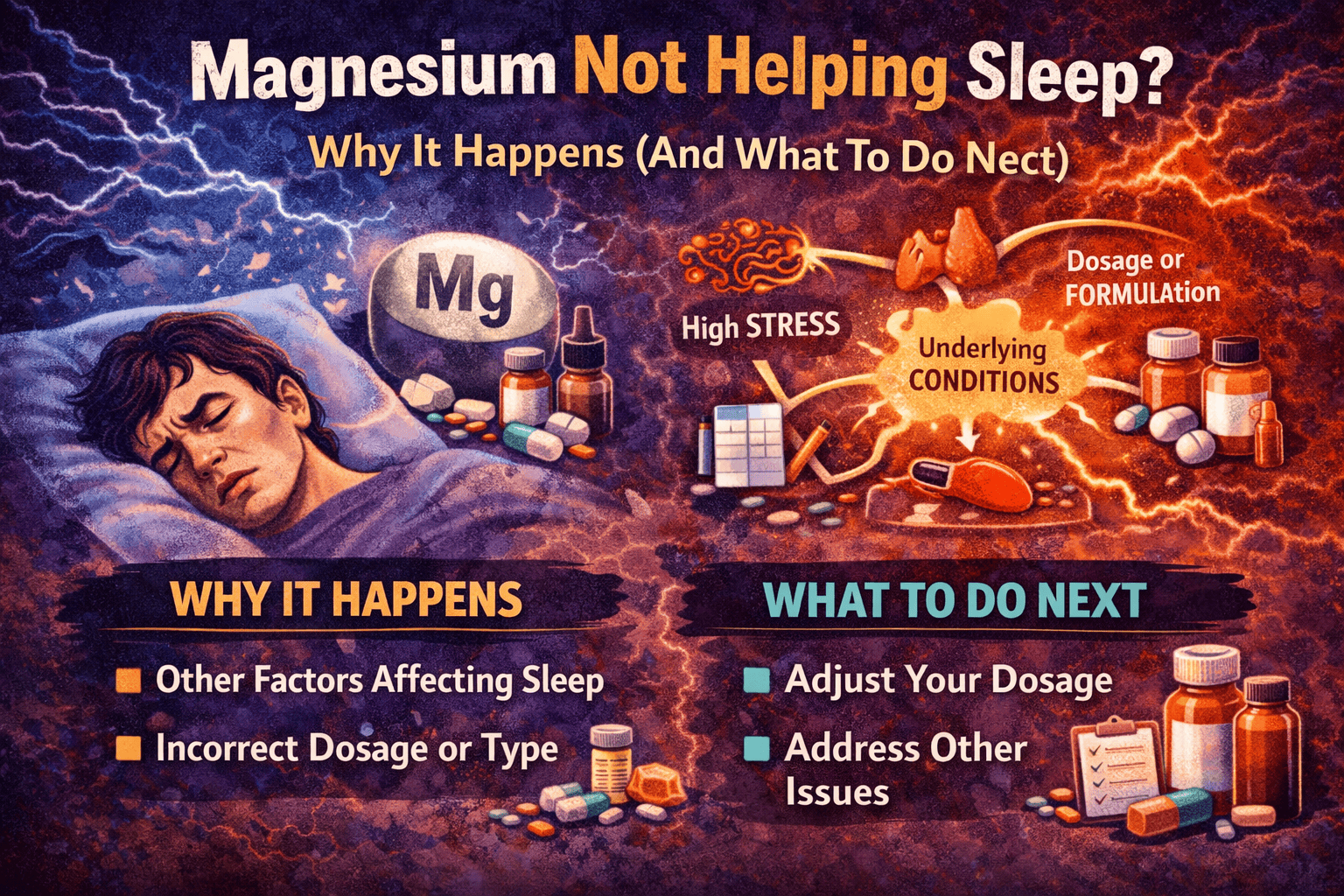
Why isn’t magnesium glycinate or threonate working for me?
Most “it didn’t work” outcomes come from label math, timing mismatch, or the wrong form for the goal—not because magnesium is useless.
- Elemental magnesium confusion: verify how much elemental magnesium you’re actually taking.
- Wrong job for the form: using threonate for constipation or deficiency correction is usually the wrong expectation; using glycinate for sharp cognitive effects can be hit-or-miss.
- Too much too fast: start lower, increase gradually, and watch GI tolerance.
- Timing mismatch: glycinate tends to shine at night; threonate often fits better earlier.
- Confounders: high caffeine, alcohol, and poor sleep can overwhelm subtle supplement effects.
- Medication spacing: magnesium can interfere with absorption of certain medications (common examples include some antibiotics and thyroid meds). If you take prescriptions, ask your clinician/pharmacist about spacing.
- Stop signals: severe weakness, persistent diarrhea, faintness, or concerning symptoms—pause and get medical guidance (especially with kidney disease).
Clean test: Run one form at a time for 14 days (stable dose, stable bedtime/caffeine), then judge by sleep quality or daytime clarity trends—not by a single day.
Selected Professional References
External links only. These support magnesium safety, dosing context, and threonate-specific cognitive research.
- NIH Office of Dietary Supplements: Magnesium (Health Professional Fact Sheet) — safety, diarrhea risk, dosing context, and UL discussion.
- NIH ODS: Magnesium (Consumer Fact Sheet) — RDAs and basic guidance.
- Harvard T.H. Chan: Magnesium (Nutrition Source) — practical overview and UL context.
- Frontiers in Nutrition: Magnesium L-threonate trial (cognition and sleep outcomes) — controlled trial examining cognitive measures.
- PubMed: Magnesium L-threonate (Magtein) cognitive trial — cognition endpoints and trial details.
- Review: Magnesium and cognitive health in adults — broader context for magnesium forms and cognition evidence.
Go Deeper (VerifiedSupps Guides)
If you want the deeper breakdowns behind this comparison, these are the most useful next reads.
Magnesium Glycinate Guide
Why glycinate feels smoother for sleep, anxiety edge, and recovery.
Magnesium Threonate Guide
What it does differently, who notices it, and what to expect.
Magnesium Dosage Guide
Elemental magnesium math, dosing ranges, and the biggest mistakes.
Magnesium Timing Guide
Morning vs night timing logic, including sleep and daytime focus goals.
Final Takeaway
If you want one magnesium that covers most real-life needs, glycinate is usually the best starting point. If your goal is specifically cognitive support—focus, clarity, brain fog—threonate is the targeted option.
If you combine them, do it with intention: threonate earlier, glycinate later, and keep your total elemental magnesium reasonable.
Choose the form based on the job. That’s how magnesium becomes obvious instead of confusing.
Frequently Asked Questions
Which is better for anxiety: magnesium glycinate or threonate?
Most people start with glycinate for anxiety edge because it tends to feel more calming and is commonly used at night. Threonate can help some people through “mental quieting,” but it’s less consistently anxiety-forward.
Which magnesium is best for brain fog?
Threonate is usually the first form people try for brain fog and cognitive clarity because it’s designed for brain-targeted magnesium support. It’s still not instant—evaluate it over weeks, not hours.
Why does magnesium threonate have so little elemental magnesium?
That’s normal. Threonate is a larger compound, so the elemental magnesium portion per gram is smaller. It’s designed for a different “delivery” goal than high-elemental supplementation.
Can magnesium glycinate cause diarrhea?
It’s less likely than some forms, but any supplemental magnesium can cause GI issues at higher doses or if you’re sensitive. Lower the dose, split it, and reassess. Kidney disease increases risk and needs clinician guidance.
Should I take magnesium threonate at night?
Some people do, but many prefer threonate earlier because it can feel mentally “clean” rather than sleepy. If your goal is sleep, glycinate is usually the more consistent night option.
How do I know if magnesium is working?
Judge by patterns: sleep depth, fewer cramps/twitches, less evening tension, steadier mood, or clearer thinking depending on the form. Track weekly, not hourly. If nothing changes, verify elemental dose and timing first.
Can I take magnesium with medications?
Magnesium can interfere with absorption of some medications and can matter for certain medical conditions. If you take prescriptions, ask a clinician or pharmacist about spacing and interactions rather than guessing.
Is magnesium glycinate or threonate better for daily use?
For most people, glycinate is the more practical daily magnesium because it’s easier to reach meaningful elemental magnesium intake and it’s commonly well tolerated. Threonate is best treated as a targeted cognitive tool rather than a one-size-fits-all daily magnesium.