How to Tell If Fish Oil Is Working (Signs, Timing, When to Adjust)

Omega-3 · Labs · Recovery · Mood

How to Tell If Your Fish Oil Is Actually Working (And When to Adjust It)

If you’ve been taking fish oil and you can’t tell if it’s doing anything… that’s normal.

Fish oil isn’t a “feel it in 30 minutes” supplement. It’s more like a slow re-tune of your baseline. So the right question becomes: what would “working” look like — for your goal?

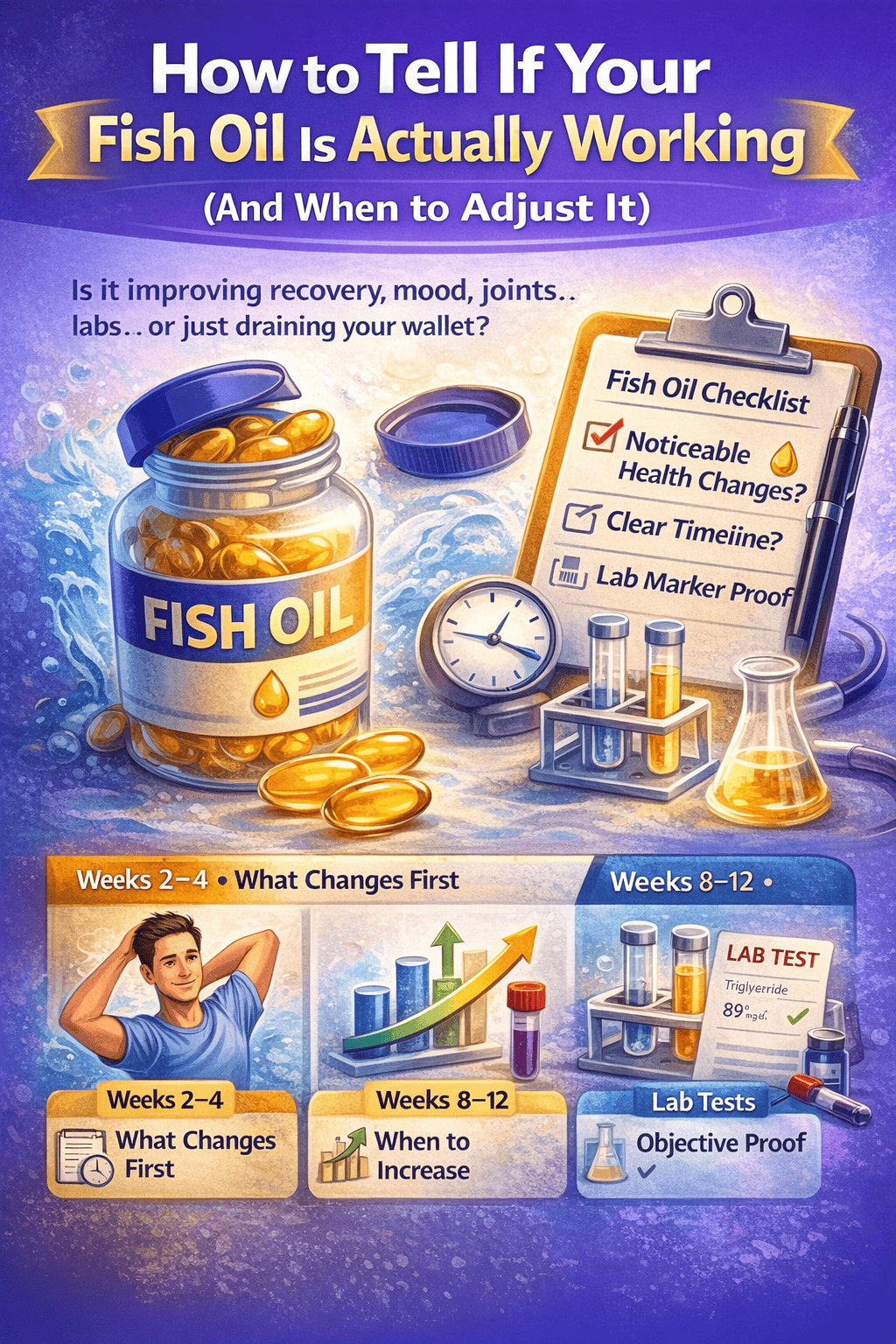
The timeline What changes first When to adjust Objective proof
Quick Take
Fish oil “works” by raising EPA and DHA inside your cell membranes over time. Most noticeable effects are subtle and show up in recovery, joint comfort, mood steadiness, or skin over 3–8 weeks. If nothing changes after 8–12 weeks at a meaningful dose (often ~1–2g combined EPA+DHA), it’s time to reassess dose, quality, absorption form, or whether you actually need it.
📘
Omega-3 Complete Guide
The full framework: EPA vs DHA, dosing, absorption, and what “good” actually looks like.

Step One: Decide What “Working” Means for You

Fish oil can support a lot of goals. But you can’t track everything at once. Pick one “lane” and watch for that signal.

  • Performance / recovery: soreness, joint comfort, training consistency
  • Mood / stress: steadier baseline, less emotional “whiplash,” easier recovery from stress
  • Skin: dryness and irritation trends
  • Labs: triglycerides (and optionally omega-3 index)

The biggest trap is expecting fish oil to feel like an instant effect. It’s more like “the background gets quieter.”

A Simple Timeline That Matches Reality

Here’s the honest version:

  • Days 1–7: usually nothing meaningful (except digestion changes)
  • Weeks 2–4: subtle “softening” signals can start (especially skin / soreness)
  • Weeks 4–8: clearer changes for recovery, joint comfort, mood steadiness
  • Weeks 8–12: time to judge whether your current plan is worth continuing

If you’re only two weeks in and unsure — you’re early. If you’re three months in and unsure — it’s time to adjust.

What Changes First (That People Actually Notice)

Early wins tend to be “small but real.” Things like:

  • Joints feel a little less cranky when you warm up
  • Soreness fades a little faster
  • Skin feels less dry or less reactive
  • Your stress response feels slightly less sharp

Not dramatic. Just cleaner. And that’s usually the point.

🧭
A tiny test that works
Pick one marker (like “morning stiffness” or “post-leg-day soreness”). Track it for 10 days. Most clarity comes from noticing trends, not waiting for a moment of certainty.

The Cleanest “Proof”: What to Check on Labs

If your goal includes metabolic health, fish oil’s most consistent lab signal is often triglycerides.

If you can test:

  • Fasting triglycerides: a practical, accessible marker
  • Omega-3 index: more direct (availability varies)

No lab can “rate” your mood. But labs can confirm you’re actually absorbing enough EPA/DHA to shift biology.

If Nothing Is Changing: The Three Most Common Reasons

If you’re 8–12 weeks in and you honestly can’t point to a single benefit, it’s usually one of these:

  • Dose mismatch: you’re not getting enough combined EPA+DHA to move the needle
  • Absorption mismatch: you’re taking it without food, or the form doesn’t sit well for you
  • Need mismatch: you already eat fatty fish regularly, so the “gap” isn’t big

Here’s the calm truth: sometimes fish oil isn’t failing — it’s just unnecessary for your current baseline.

When to Adjust Your Fish Oil

Adjustments should be small and intentional. Here’s a practical decision tree:

If you have mild benefits but want more
Increase slowly and re-evaluate after 4–6 weeks. One change at a time.
If you have digestion issues or fishy burps
Adjust timing (with a meal), split the dose, or reassess form and freshness.
If you have no benefits and no objective changes
Pause, reassess product quality and dose, and consider whether your diet already covers the need.

A Calm Adjustment Protocol

If you want a low-drama method, use this:

  • Keep everything else stable (diet, training, caffeine) for 2 weeks
  • Take fish oil with a real meal (not just coffee)
  • Track one marker (recovery, joints, mood steadiness, or skin)
  • Adjust once, then wait 4–6 weeks before changing again

Fish oil rewards patience. And punishes chaos.

Go Deeper (VerifiedSupps Guides)

Final Takeaway

Fish oil works best when you judge it the right way: slowly, with clear expectations, and with one primary goal in mind.

Give it enough time. Use a meaningful dose. Track one trend. And if nothing changes after a fair trial, you don’t need to force it — you can adjust intelligently, or move on without regret.
Frequently Asked Questions

How long does fish oil take to work?
Most noticeable effects are subtle and trend-based. Many people see early signs in 3–8 weeks. A fair “decision window” is 8–12 weeks.
What’s the most reliable sign it’s working?
Objective markers (like triglycerides or omega-3 index) are the cleanest proof. Subjective signals tend to be recovery, joint comfort, skin, or mood steadiness.
Should I take fish oil with food?
Often yes. Taking it with a meal can improve tolerance and may improve absorption for many people.
What if fish oil gives me fishy burps?
Try taking it with a larger meal, splitting the dose, or switching products/form. If it persists, it may be a tolerance or freshness issue.
When should I stop or talk to a clinician?
If you have bleeding risk, take anticoagulants, have upcoming surgery, or experience unusual symptoms, consult a qualified clinician before continuing or increasing dose.
VerifiedSupps Medical Disclaimer
This content is for educational purposes only and does not constitute medical advice. Supplements can affect individuals differently. Consult a qualified healthcare professional before starting, stopping, or changing supplements, especially if you are pregnant or breastfeeding, have cardiovascular disease, liver or kidney conditions, a bleeding disorder, or take medications (including anticoagulants/antiplatelets). Seek urgent medical care for severe or concerning symptoms.

Related Articles

Health

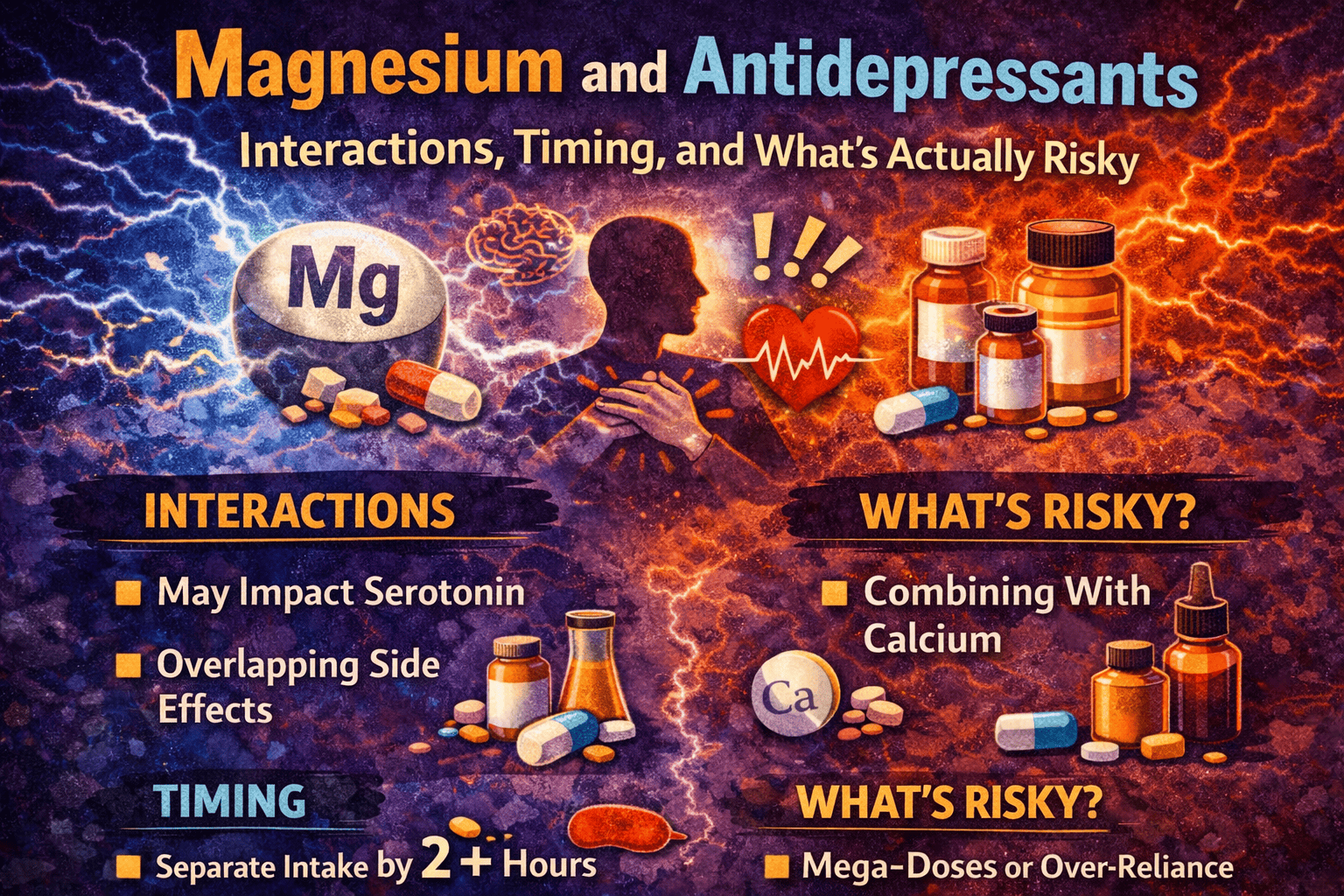
Magnesium and Antidepressants: Interactions, Timing, and Safety

Magnesium · Antidepressants · Timing · Risks Can You Take Magnesium With Antidepressants? Timing, Interactions, and Risks Direct answer: In most people, yes. Magnesium doesn’t usually “interact” directly with SSRIs the way some drugs do. Most concerns are about side effects overlap (sedation, GI effects) and timing/spacing—often because of other medications you take alongside an

Read More »
Health

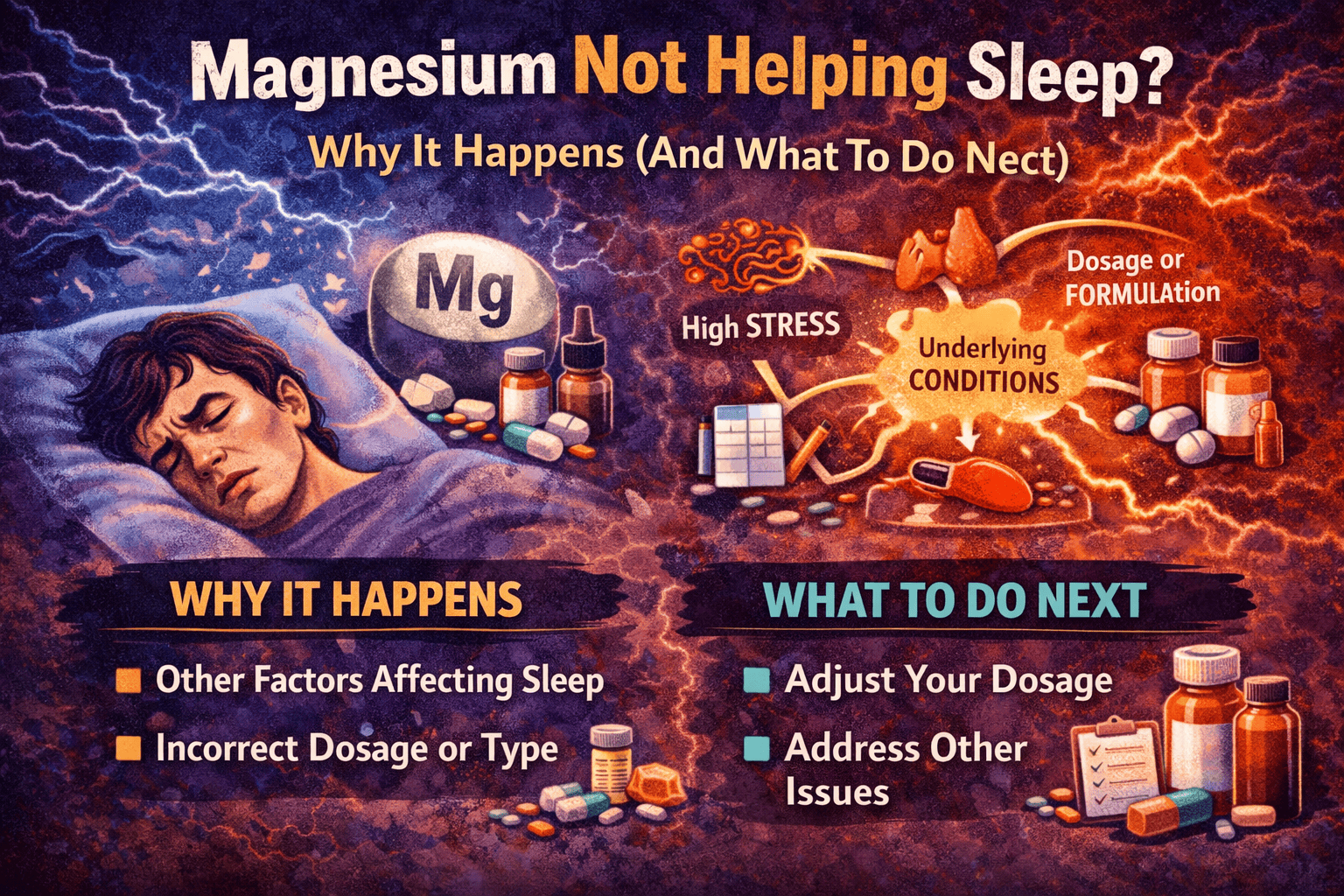
Magnesium Not Helping Sleep? Causes + Fixes (Form, Dose, Timing)

Magnesium · Sleep · Insomnia Logic Magnesium Not Helping Sleep: Why It Happens and What To Do Direct answer: it’s common for magnesium to “do nothing” for sleep. Magnesium helps sleep indirectly by lowering arousal and tension—not like a sedative. If your insomnia is driven by circadian timing, sleep-disordered breathing, stimulants, pain/reflux, or an anxiety

Read More »
Calm & Focus

Can Magnesium Cause Panic Attacks? Causes, Fixes, and When to Stop

Magnesium · Panic Attacks · Anxiety Can Magnesium Cause Panic Attacks? Why It Happens + What to Do Direct answer: It can in some people, usually due to dose, timing, form, or stacking—not toxicity. It can feel like panic even if it’s just a body signal (GI discomfort, lightheadedness, “heart feels loud”) that your brain

Read More »