Fish Oil Side Effects: What’s Normal (and How to Fix It)
Most fish oil side effects are tolerance issues (fishy burps, reflux, nausea, loose stools) and they’re usually fixable by changing dose, timing, and form. The goal here is simple: know what’s normal and annoying versus what’s a stop-and-check signal.
Quick take
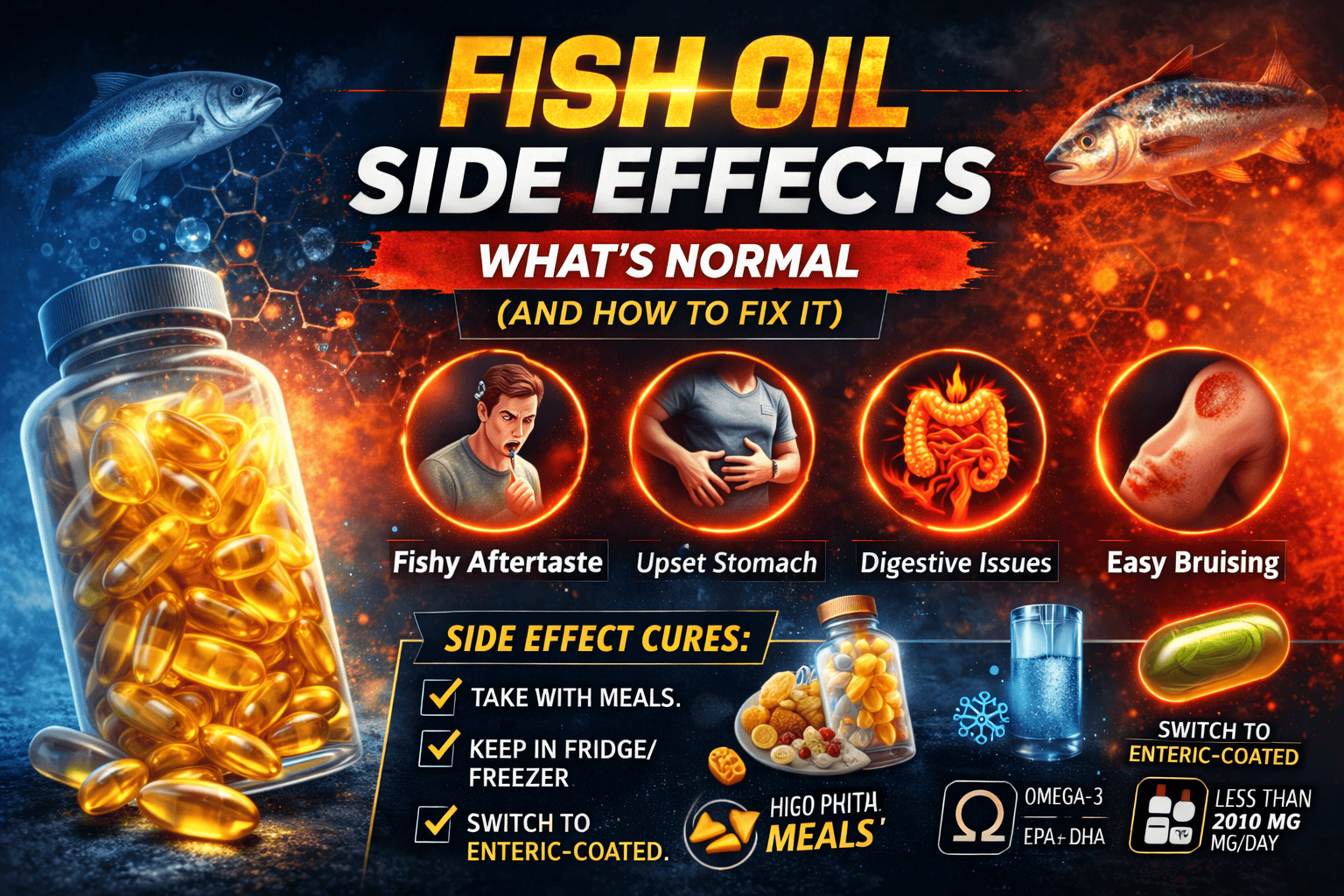
- Most common: fishy burps/reflux and mild GI upset.
- Fastest fix: take it mid-meal, split the dose, and step down until symptoms stop.
- Watch-outs: unusual bruising/bleeding, allergy symptoms, or new palpitations—especially with higher doses or certain meds.
Evidence standard: human trials, dose ranges, guideline-level sources when available
For: people using fish oil/omega-3 for triglycerides, recovery, skin, or general omega-3 support who want better tolerance
Not for: anyone with fish allergy or on complex anticoagulation without clinician guidance
Last reviewed: March 3, 2026
Parent Hub
Omega-3 Benefits Guide: what to expect (and what not to)
If you’re deciding whether omega-3 is worth taking, start here. This post is strictly side effects + fixes.
What are the most common fish oil side effects?
The most common fish oil side effects are fishy burps/reflux and GI symptoms (nausea, loose stools, stomach discomfort). This page “owns” the tolerance + safety intent: what’s normal, what’s not, and how to fix it fast (without guessing).
Symptom → likely cause → fastest fix → when to stop
| Symptom | Likely cause | Fastest fix | Stop / get advice if… |
|---|---|---|---|
| Fishy burps | Reflux + capsule timing; sometimes product quality | Take mid-meal, freeze capsules, split dose | Severe reflux, vomiting, chest pain |
| Heartburn / reflux | Oil floating upward; taken near bedtime | Take earlier, with a meal, avoid lying down soon after | Persistent chest burning or swallowing pain |
| Diarrhea / loose stool | Dose too high; fasted dosing; one big dose | Lower dose, split dose, take with food | Blood in stool, dehydration, persistent pain |
| Nausea | Fasted dosing; sensitive stomach; intolerance to dose | Take mid-meal, smaller dose, increase slowly | Severe vomiting, rash, swelling, wheezing |
| Easy bruising / nosebleeds | High dose; meds that affect bleeding | Reduce dose, avoid stacking, review meds | Black stools, heavy bleeding, surgery planned |
| New palpitations / irregular rhythm | Uncommon; discussed more with higher-dose omega-3 in some trials | Stop and reassess; consider clinician input | Chest pain, fainting, severe shortness of breath |
If symptoms resolve when you take fish oil with a meal and lower the dose, that’s usually a “normal” tolerance pattern. Bleeding signs, allergy symptoms, or new rhythm issues are different.
What would change my recommendation?
- You take warfarin, DOACs, antiplatelets, or you already bruise/bleed easily.
- You’re using high-dose omega-3 (multi-gram EPA/DHA daily), especially for triglycerides.
- You have a history of atrial fibrillation or palpitations that begin after starting fish oil.
- You have a fish/shellfish allergy or allergy-type symptoms appear.
- You have surgery planned or a bleeding disorder (timing and dose should be clinician-guided).
Fish oil burps: why do they happen and how do I stop them?
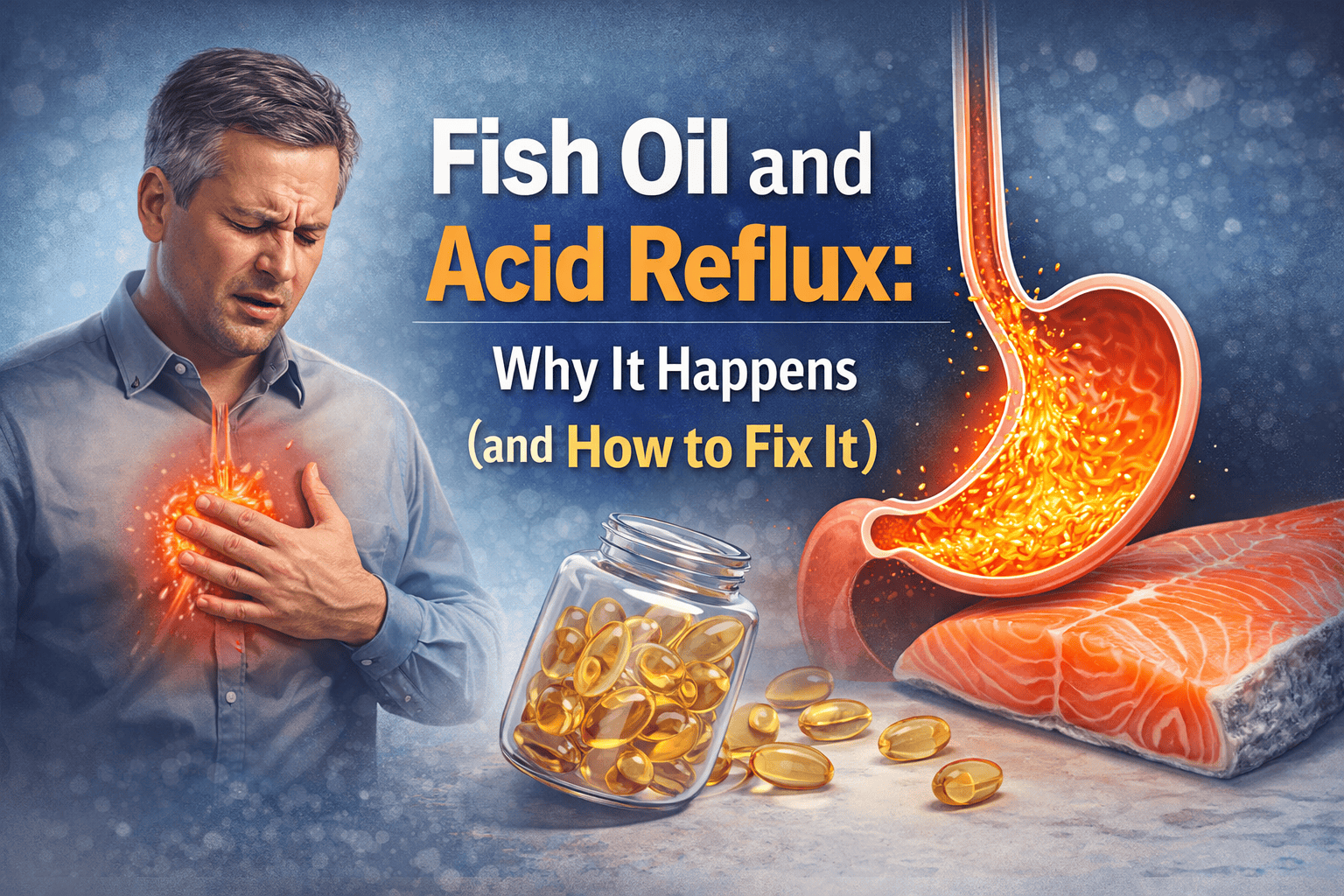
Fishy burps are usually reflux + capsule dissolution timing. Oil comes back up, you burp, and you taste it. It’s annoying, but rarely dangerous.
Fast fixes that work for most people
- Take it mid-meal (not before, not after).
- Freeze capsules to slow dissolution in the stomach.
- Split the dose (AM + PM) rather than one large dose.
- Avoid bedtime dosing if reflux is a problem.
When it’s not “just burps”
- Severe reflux that persists even with meals.
- Repeated nausea or vomiting after dosing.
- Allergy-type symptoms (hives, swelling, wheezing) after dosing.
Can fish oil cause diarrhea or nausea?
Yes—especially when the dose is high, taken on an empty stomach, or taken all at once. For most people, this is a dose-and-timing issue, not a “fish oil is toxic” issue.
Step-down plan that usually fixes it
- Reset low: cut your dose in half for 3–4 days.
- Meal anchor: take it with your most consistent, real meal.
- Split the dose: two smaller doses are often easier than one large dose.
- Increase slowly: only after several symptom-free days.
Stop and seek medical advice for severe abdominal pain, persistent vomiting, blood in stool, black/tarry stools, or signs of dehydration.
Does fish oil thin your blood or increase bleeding risk?
Omega-3s can affect platelet function, but overall evidence suggests no meaningful increase in bleeding risk for most people at typical doses. Risk becomes more relevant with blood thinners/antiplatelets, bleeding disorders, or high-dose purified EPA protocols.
Usually “normal”
- No pattern of new nosebleeds or gum bleeding
- Occasional minor bruises with clear cause
- Symptoms are mainly GI and improve with meals/dose splitting
Pause and assess
- Frequent nosebleeds or gum bleeding
- Large, unexplained bruises
- Black/tarry stools or blood in urine/stool
- Surgery planned (follow clinician instructions)
Can fish oil cause atrial fibrillation or heart palpitations?
For most people at standard supplement doses, rhythm symptoms are uncommon. But in RCT analyses focused on cardiovascular outcomes, marine omega-3 supplementation has been associated with an increased risk of atrial fibrillation, with stronger signals in trials using more than 1 g/day.
Practical guardrails
- If you have a history of AFib or frequent palpitations, keep doses conservative and discuss risks with your clinician.
- If palpitations start after a dose increase, stop and reassess rather than pushing through.
- Urgent symptoms (chest pain, fainting, severe shortness of breath) warrant urgent care.
How do I take fish oil without side effects?
Most tolerance problems improve when you stop treating fish oil like a shot. Use a meal anchor, a smaller dose, and two smaller doses if needed.
If you get burps/reflux
- Take mid-meal
- Freeze capsules
- Avoid taking right before lying down
If you get diarrhea/nausea
- Cut dose in half for a few days
- Split dose (AM/PM with meals)
- Increase slowly only after stable tolerance
If side effects persist despite doing everything “right,” consider that you may simply not tolerate that product well. Your next best move is usually a lower dose or a different formulation—not forcing a higher dose.
Fish oil side effects troubleshooting: clean test + how to tell it’s working
The fastest way to stop guessing is a short, controlled test: first stabilize tolerance, then decide if you’re getting benefits that justify continued use.
Common mistakes
- Fasted dosing (then blaming fish oil for nausea).
- One large daily dose instead of splitting.
- Changing multiple variables (dose, diet, new supplements) at the same time.
- Expecting a “feeling” as proof it works.
Clean test protocol (7–14 days)
- Stabilize meals: choose a consistent meal to anchor dosing.
- Start at a “no-symptom” dose: the smallest dose you tolerate comfortably with food.
- Split if needed: two smaller meal-anchored doses are fine.
- Make one increase only: after 3–4 symptom-free days, step up once and hold.
How to tell it’s working (what to track + realistic window + what not to expect)
- Best objective signal: triglycerides (lab trend) if that’s your goal; omega-3 index if you test it.
- Practical signals: skin dryness frequency, recovery consistency, or mood steadiness—tracked weekly.
- Timeline: tolerance changes show up in days; labs are typically weeks-to-months.
- Do not expect: a noticeable “kick,” instant inflammation disappearance, or dramatic overnight changes.
Selected Professional References
NIH Office of Dietary Supplements: Omega-3s (Health Professional)
Guideline-level dosing context, safety notes, and interactions (useful for side effect triage).
ods.od.nih.gov
NCCIH: Omega-3 Supplements (side effects + interactions)
Clear safety overview that directly lists common side effects like heartburn, nausea, and diarrhea.
nccih.nih.gov
Mayo Clinic: Fish oil (side effects + precautions)
Clinician-oriented summary of common side effects, who should be cautious, and medication interactions.
mayoclinic.org
PubMed: Marine omega-3s and atrial fibrillation risk (meta-analysis)
Human RCT-focused analysis: AF risk signal appears stronger in trials testing more than 1 g/day.
pubmed.ncbi.nlm.nih.gov
PMC: Bleeding risk with omega-3s (systematic review + meta-analysis)
Open-access evidence summary: overall bleeding risk not increased; high-dose purified EPA may modestly increase bleeding.
pmc.ncbi.nlm.nih.gov
Go Deeper (VerifiedSupps Guides)
Best time of day to take omega-3
Timing, meals, and the simplest way to reduce burps and reflux.
How much omega-3 per day?
Dose ranges by goal, plus safety guardrails.
Triglyceride vs ethyl ester fish oil
Absorption differences that can influence tolerance for some people.
How to tell if fish oil is working
What to track, realistic timelines, and better success signals.
Final takeaway
Most fish oil side effects are fixable tolerance issues. Anchor it to a meal, split the dose, and step down until symptoms stop—then increase slowly if you still need more. Treat bleeding signals, allergy symptoms, or new palpitations as higher-priority reasons to pause and get medical guidance.
FAQ
Is it normal to get fishy burps from fish oil?
Yes. It’s one of the most common side effects and usually improves with meal timing, freezing capsules, and splitting the dose.
Why does fish oil give me heartburn?
Oil can trigger reflux, especially if taken without food or close to bedtime. Take it mid-meal and avoid lying down soon after dosing.
Can fish oil cause diarrhea?
Yes, especially at higher doses or when taken all at once. Lower the dose, take with food, and split into two smaller doses.
Does fish oil thin your blood?
Omega-3s can affect platelet function. For most people at typical doses, major bleeding risk is low, but it matters more with blood thinners, bleeding disorders, or high-dose protocols.
Can fish oil cause heart palpitations?
It’s uncommon at standard doses, but atrial fibrillation risk has been reported more often in some high-dose omega-3 trial analyses. If palpitations start after initiating or increasing dose, stop and seek medical advice if persistent or severe.
How long do fish oil side effects last?
Tolerance side effects often improve within days once you take fish oil with meals and reduce/split the dose. If symptoms persist for 1–2 weeks despite fixes, reassess.
What’s the best way to avoid fish oil burps?
Take it mid-meal, freeze capsules, avoid large single doses, and avoid taking it right before lying down.
VerifiedSupps Medical Disclaimer
This content is for educational purposes only and is not medical advice. Supplements can interact with medications and health conditions. If you are pregnant, breastfeeding, have a medical condition (especially cardiovascular disease, arrhythmias, bleeding disorders, or liver/kidney disease), or take prescription medications (including anticoagulants or antiplatelets), talk with a qualified clinician before using fish oil. Seek urgent medical care for severe allergic reactions, significant bleeding, chest pain, fainting, or severe shortness of breath.