Electrolytes Explained: Sodium vs Potassium vs Magnesium (When Each Matters)

Electrolytes · Sodium · Potassium · Magnesium · Decision Guide

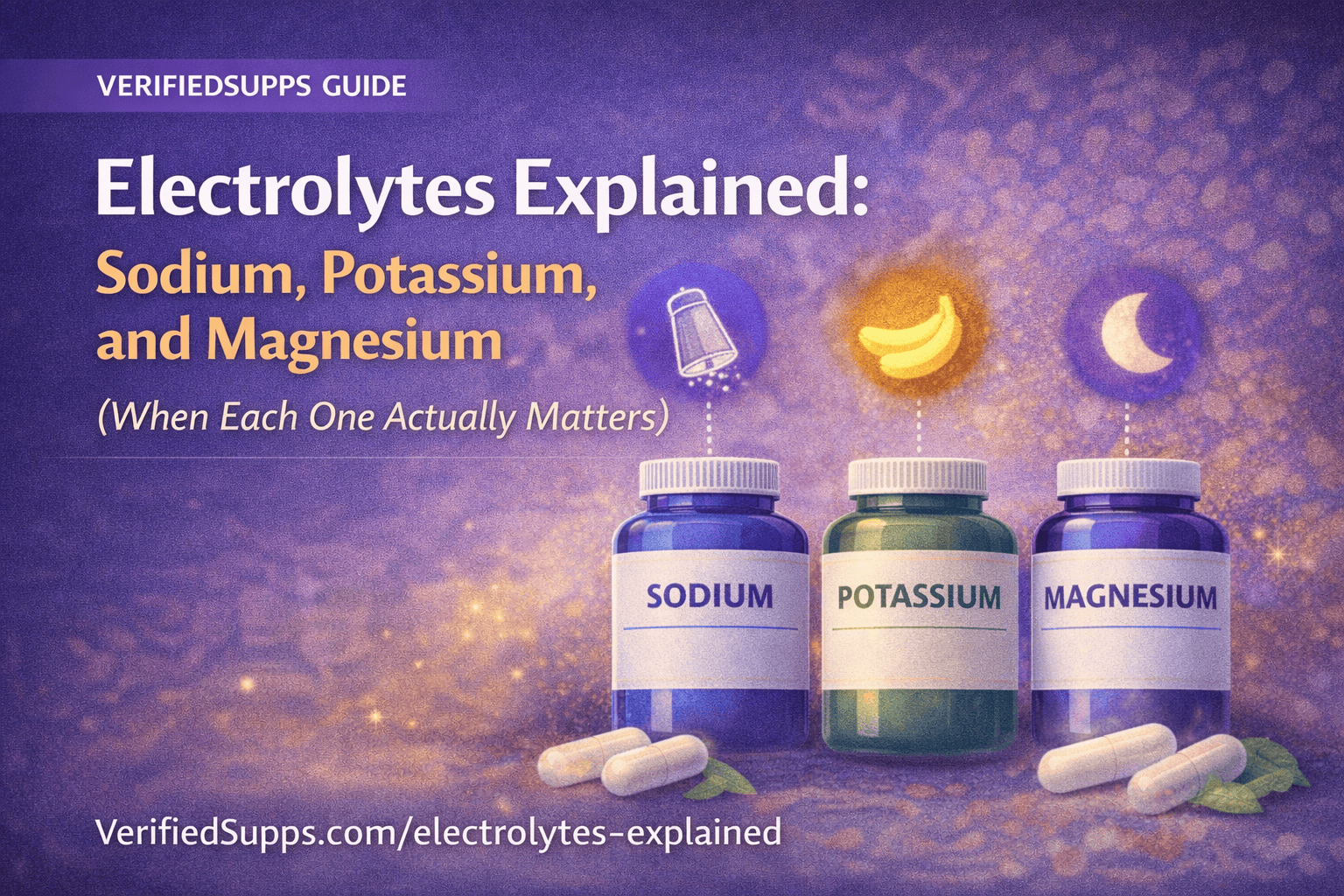
Electrolytes Explained: Sodium, Potassium, and Magnesium (When Each One Actually Matters)

Electrolytes are often treated like a single concept. In reality, sodium, potassium, and magnesium solve different problems — and confusing them is one of the fastest ways to feel worse instead of better.

Why it’s confusing
Sodium signal
Potassium signal
Magnesium signal
Quick Take
Sodium is mainly about volume and hydration stability. Potassium is mainly about cellular electrical balance. Magnesium is mainly about nervous system and muscle relaxation. The right choice depends on your dominant signal — not what’s trendy in electrolyte products.
📘
Parent hub: Electrolytes Complete Guide
If you want a full overview (hydration, sweat loss, common mistakes, and practical testing), start with the complete electrolytes guide. This page is the “what each one actually does” breakdown.
Why it’s confusing

Why Electrolyte Confusion Is So Common

Symptoms overlap, so people supplement the wrong thing

Many symptoms overlap across electrolyte issues: fatigue, cramps, dizziness, headaches, low energy. Because the symptoms look similar, people often supplement the wrong thing — or stack electrolytes blindly.

Electrolytes don’t work by volume. They work by balance.

Sodium

Sodium: When the Problem Is Volume, Not Calm

Hydration stability, blood volume, and pressure support

Sodium is most closely tied to:

Blood volume: how well you hold onto fluids.

Fluid balance: especially under sweat loss or high water intake.

Blood pressure stability: the “standing up without getting dizzy” piece.

Low sodium often shows up as:

Dizziness on standing: especially with low blood pressure tendencies.

Headaches: particularly around sweating or heavy water intake.

Fatigue that improves with fluids: a hydration-stability clue.

Sodium issues are common in people who drink large amounts of water, sweat heavily, or eat a very low-salt diet.

Key Decision
If your main symptom is dizziness + low blood pressure feelings, sodium/hydration usually deserves a closer look before magnesium. If your main symptom is tension + poor sleep, magnesium is more often the first place people start.
Potassium

Potassium: When Muscles and Nerves Feel Unstable

Cellular electrical balance and muscle function

Potassium plays a central role in:

Muscle contraction: performance, cramping tendencies, “heavy legs.”

Nerve signaling: electrical stability and responsiveness.

Cellular balance: helping cells maintain normal electrical gradients.

Low potassium often presents as:

Muscle cramps: especially during activity or after sweating.

Weakness: more “flat” output than tight tension.

Irregular heartbeat sensations: a symptom that deserves caution and context.

Potassium issues are often dietary — and commonly mistaken for magnesium deficiency.

Magnesium

Magnesium: When the Nervous System Won’t Settle

Relaxation, sleep quality, and muscle “downshifting”

Magnesium is commonly used for:

Nervous system regulation: calmer baseline, easier downshift.

Muscle relaxation: less tightness and twitching.

Stress response support: a steadier “reaction threshold.”

Low magnesium often feels like:

Poor sleep: difficulty winding down.

Tension or twitching: the body doesn’t fully relax.

Difficulty relaxing: feeling “on” even when tired.

Magnesium deficiencies are common — but choosing the wrong form creates confusion.

Stacking

Why “Electrolyte Stacking” Often Backfires

Bundled formulas can hide the real issue

Many electrolyte products combine sodium, potassium, and magnesium without considering individual needs. That can sound convenient, but it can also make results inconsistent.

Masks the real deficiency: you never learn which lever mattered.

Creates new imbalances: adding what you don’t need can shift the balance.

Leads to inconsistent results: different days need different ratios.

Electrolytes work best when targeted — not bundled indiscriminately.

How to choose

How to Tell Which Electrolyte You Actually Need

Start with the dominant symptom
Sodium signal
Low blood pressure, dizziness, dehydration feelings → sodium/hydration stability.
Potassium signal
Cramps, weakness, muscle instability → potassium may be the missing lever.
Magnesium signal
Stress, poor sleep, tension → magnesium may be the best first tool.
Balance signal
Symptoms fluctuate day to day → balance may matter more than one mineral.

Start with the dominant symptom. Add only what’s necessary. Keep changes clean enough to learn from.
Go Deeper (VerifiedSupps Guides)

These guides break down each electrolyte clearly and individually, so you can go from “I feel off” to a more precise next step.
Final Takeaway
Electrolytes aren’t interchangeable. Each one solves a different problem. When the match is right, symptoms improve quietly. When it’s wrong, confusion follows. Choose deliberately.

Frequently Asked Questions

Do I need an electrolyte supplement every day?
Not always. Needs change with sweat loss, diet, heat, and activity. Many people do best targeting electrolytes only when the context calls for it.
Can drinking a lot of water make electrolytes worse?
It can. High water intake without adequate sodium can dilute balance, especially if you’re also sweating or eating low salt.
Why do I get cramps even when I take magnesium?
Cramps can involve sodium and potassium as well as magnesium, along with training load and hydration. If magnesium alone doesn’t help, check the broader electrolyte picture.
Are electrolyte mixes always “balanced”?
Not necessarily. Many blends are generic and may not match your situation. Targeting the dominant signal is usually more reliable than one-size-fits-all formulas.
VerifiedSupps Medical Disclaimer
This content is for informational and educational purposes only and does not constitute medical advice. It is not intended to diagnose, treat, cure, or prevent any disease. Always consult a qualified healthcare professional before starting any supplement—especially if you are pregnant, nursing, have a medical condition, or take prescription medications.

Related Articles

Health

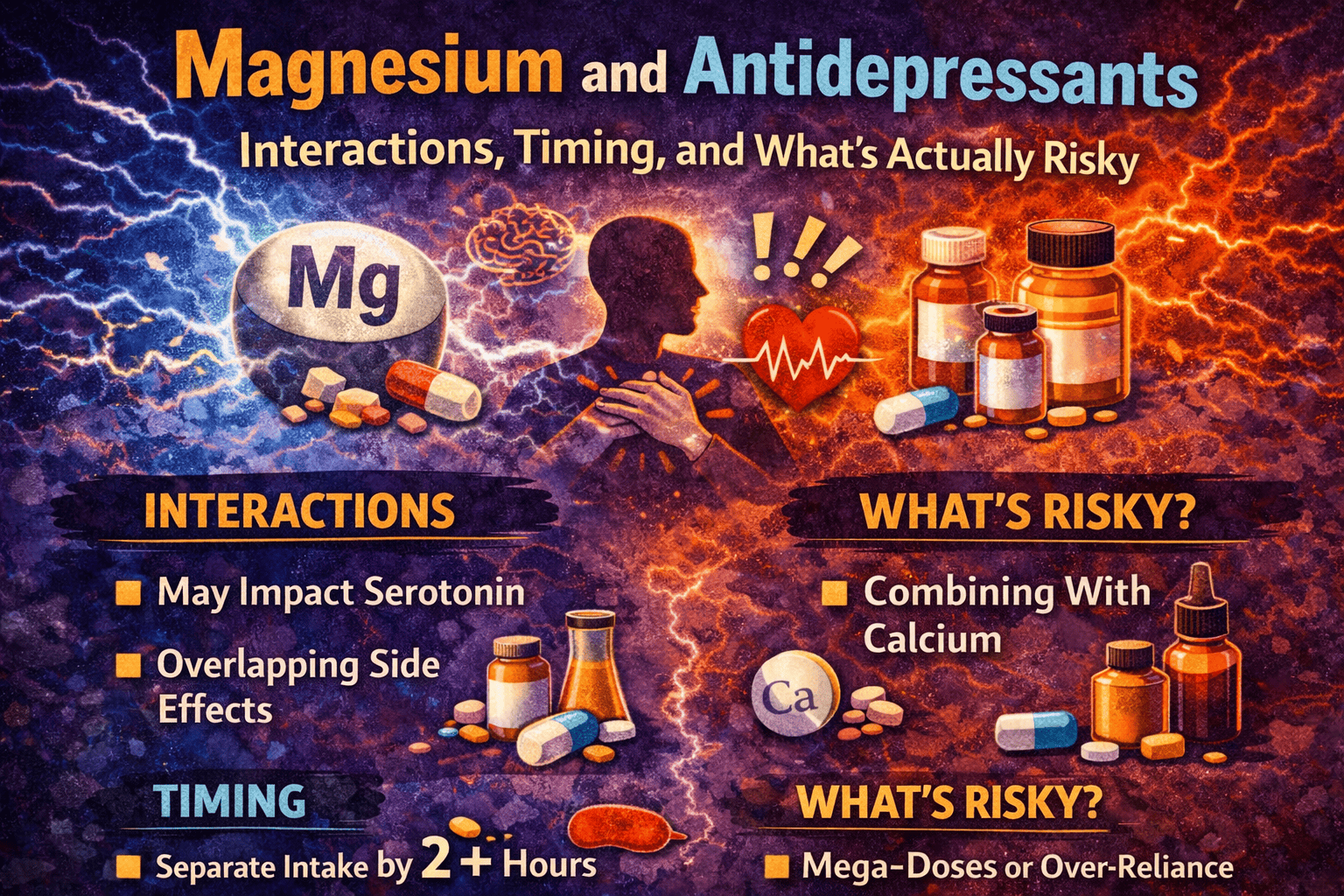
Magnesium and Antidepressants: Interactions, Timing, and Safety

Magnesium · Antidepressants · Timing · Risks Can You Take Magnesium With Antidepressants? Timing, Interactions, and Risks Direct answer: In most people, yes. Magnesium doesn’t usually “interact” directly with SSRIs the way some drugs do. Most concerns are about side effects overlap (sedation, GI effects) and timing/spacing—often because of other medications you take alongside an

Read More »
Health

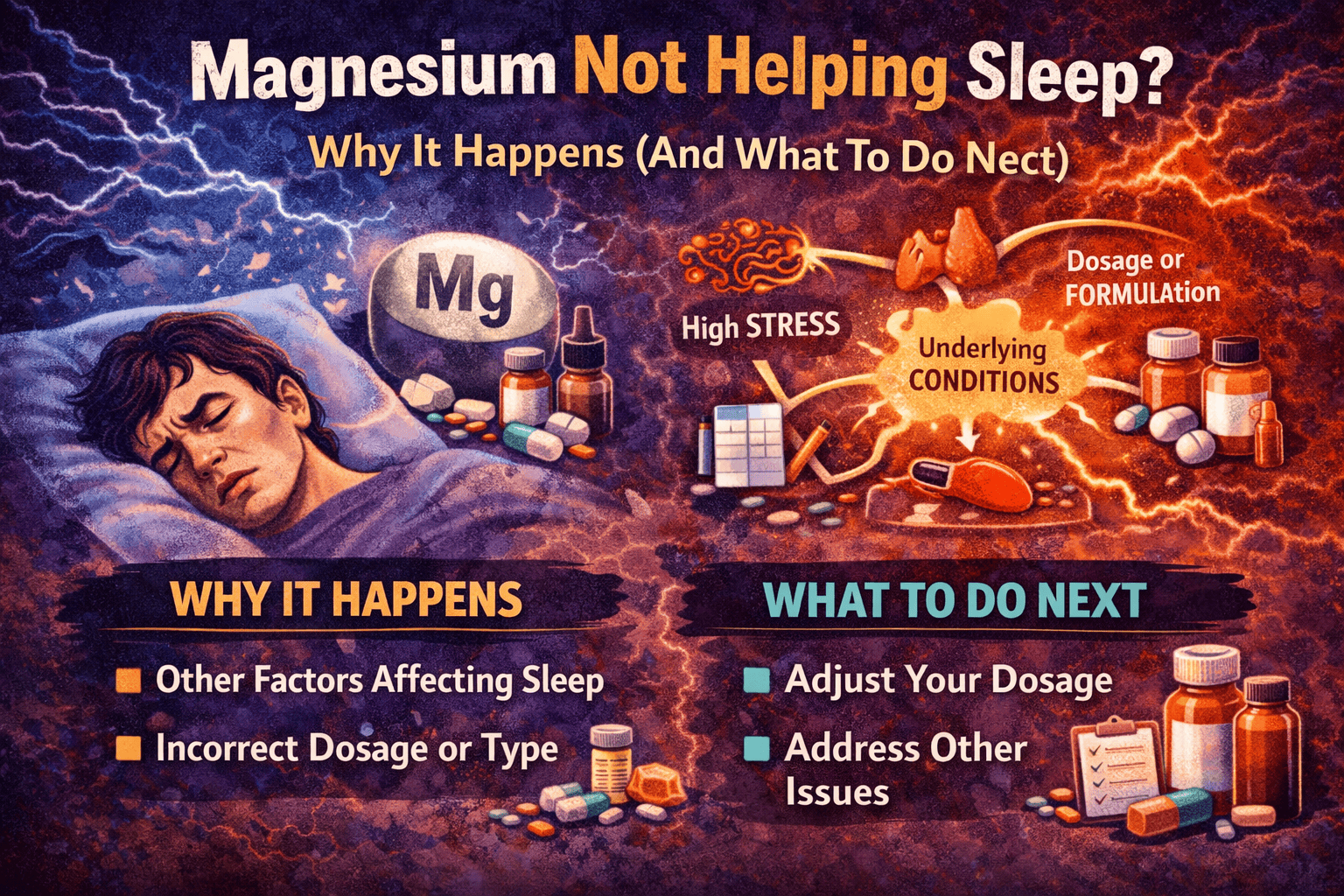
Magnesium Not Helping Sleep? Causes + Fixes (Form, Dose, Timing)

Magnesium · Sleep · Insomnia Logic Magnesium Not Helping Sleep: Why It Happens and What To Do Direct answer: it’s common for magnesium to “do nothing” for sleep. Magnesium helps sleep indirectly by lowering arousal and tension—not like a sedative. If your insomnia is driven by circadian timing, sleep-disordered breathing, stimulants, pain/reflux, or an anxiety

Read More »
Calm & Focus

Can Magnesium Cause Panic Attacks? Causes, Fixes, and When to Stop

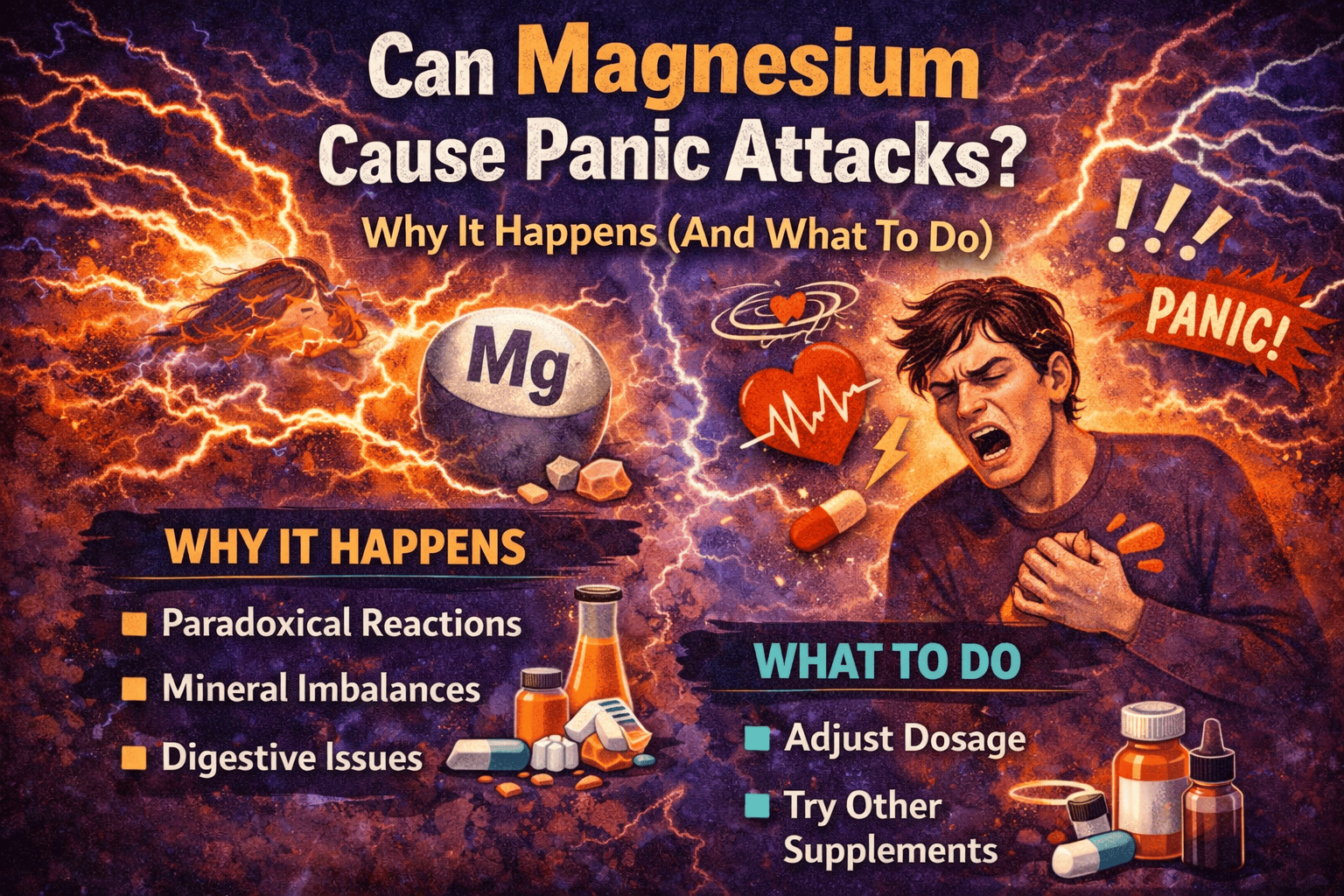
Magnesium · Panic Attacks · Anxiety Can Magnesium Cause Panic Attacks? Why It Happens + What to Do Direct answer: It can in some people, usually due to dose, timing, form, or stacking—not toxicity. It can feel like panic even if it’s just a body signal (GI discomfort, lightheadedness, “heart feels loud”) that your brain

Read More »