Can Electrolytes Cause Headaches? Causes + Fixes

Electrolyte Side Effects

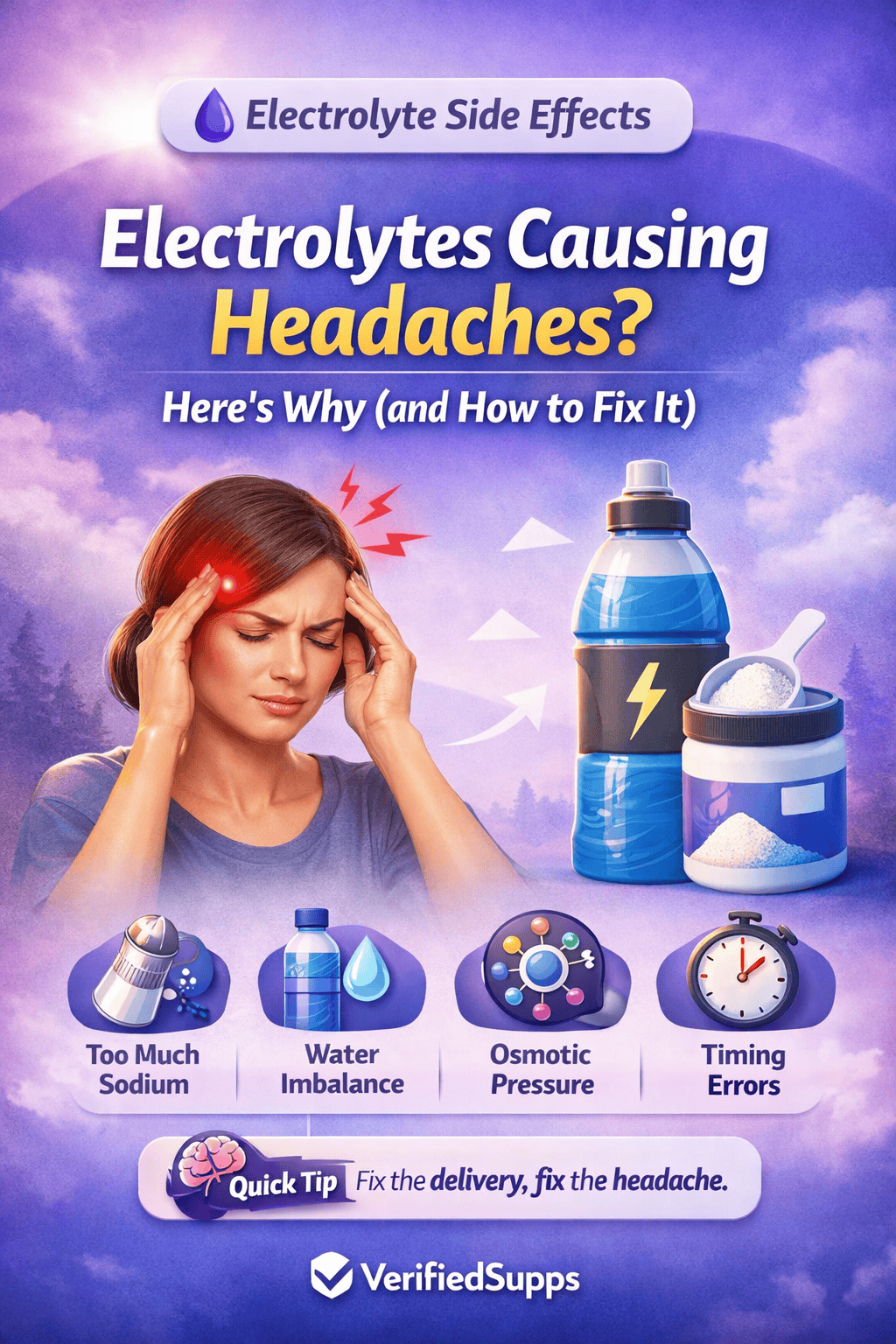
Electrolytes Causing Headaches? Here’s Why (and How to Fix It)

Electrolytes are often recommended to prevent headaches — especially during exercise, heat exposure, fasting, or low-carb diets. So when headaches show up after using electrolyte drinks or powders, it feels backward.

In most cases, electrolytes aren’t the problem. The delivery is.

Sodium concentration
Water mismatch
Osmotic pressure
Timing errors
🧠
Quick Take
Headaches after electrolytes usually come from high sodium concentration, electrolytes taken without enough water, or rapid intake. Fix the delivery, and the headaches usually resolve.
📘
Electrolytes Explained
What electrolytes do, when they help, and when they backfire.

Why Electrolytes Can Trigger Headaches

Electrolytes regulate fluid movement between your bloodstream, tissues, and brain. When intake is too concentrated or poorly timed, fluid shifts can occur. In headache-prone individuals, even small shifts in pressure can trigger head pain.

The Most Common Electrolyte Headache Triggers

  • High sodium intake without adequate water
  • Electrolyte drinks mixed too concentrated
  • Drinking electrolytes rapidly instead of sipping
  • Stacking multiple electrolyte products
  • Using electrolytes before correcting dehydration

Key distinction: Water hydrates you. Electrolytes help manage that hydration.

How to Fix Electrolyte-Related Headaches

  • Dilute electrolytes more than the label suggests
  • Sip slowly over 20–30 minutes
  • Hydrate with plain water first
  • Reduce sodium before removing electrolytes entirely
  • Avoid stacking powders, capsules, and salty drinks

Go Deeper (VerifiedSupps Guides)

Final Takeaway

Electrolytes causing headaches isn’t a paradox — it’s feedback. In most cases, the fix is dilution, slower intake, and prioritizing water. Fix the delivery before assuming electrolytes don’t work for you.
Frequently Asked Questions

Can electrolytes cause headaches?
Yes — especially when sodium intake is high and fluid intake is low.
Is sodium usually the cause?
Most of the time, yes. Rapid sodium intake can temporarily increase pressure.
Should I stop electrolytes if I get headaches?
Usually adjusting dilution and timing is enough.
Do electrolytes help migraines?
They can help dehydration-related headaches but aren’t a migraine treatment.
VerifiedSupps Medical Disclaimer
This content is for educational purposes only and does not constitute medical advice. Supplements can interact with medications and health conditions. If you experience persistent or severe headaches, consult a qualified healthcare professional.

Related Articles

Health

Magnesium and Antidepressants: Interactions, Timing, and Safety

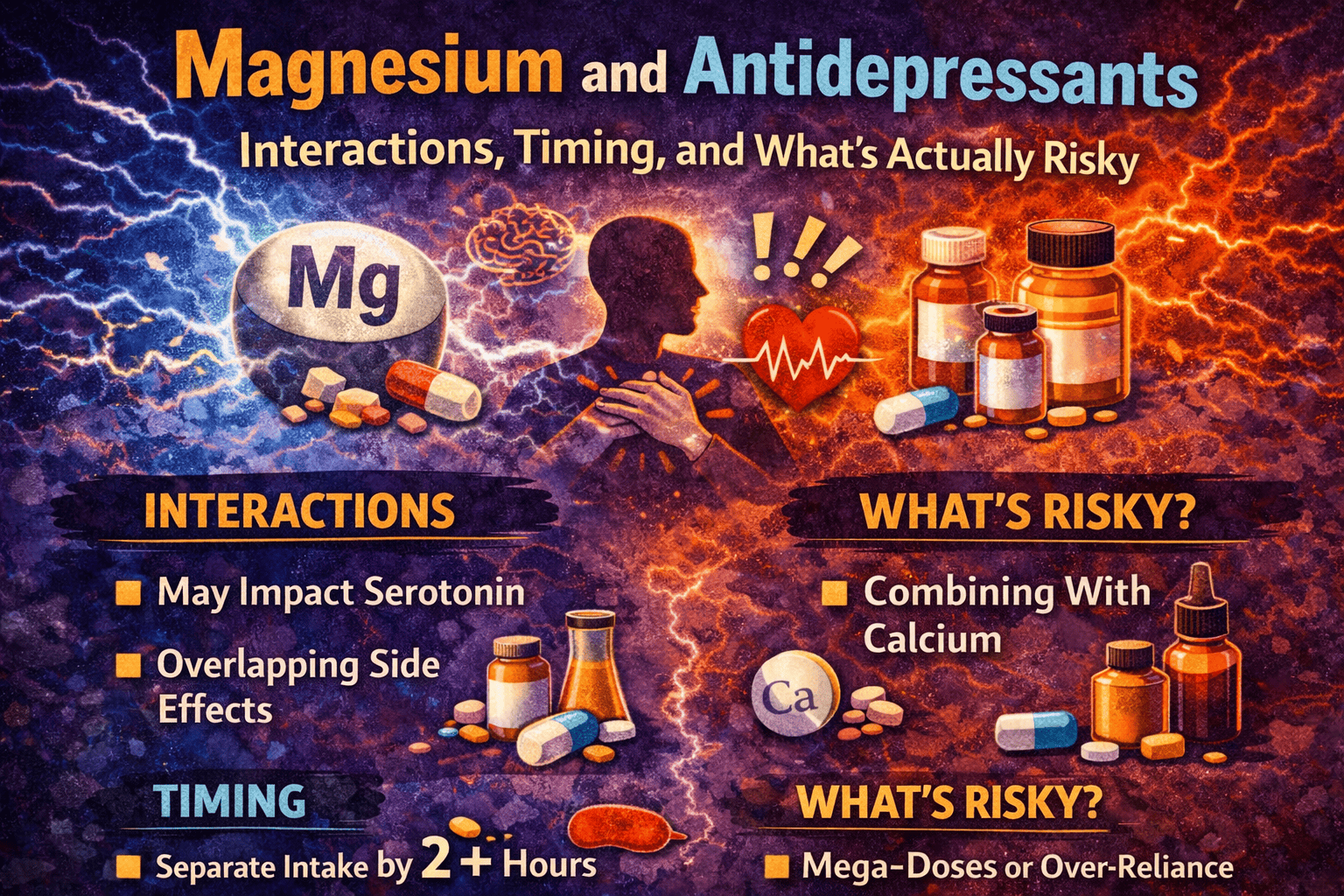
Magnesium · Antidepressants · Timing · Risks Can You Take Magnesium With Antidepressants? Timing, Interactions, and Risks Direct answer: In most people, yes. Magnesium doesn’t usually “interact” directly with SSRIs the way some drugs do. Most concerns are about side effects overlap (sedation, GI effects) and timing/spacing—often because of other medications you take alongside an

Read More »
Health

Magnesium Not Helping Sleep? Causes + Fixes (Form, Dose, Timing)

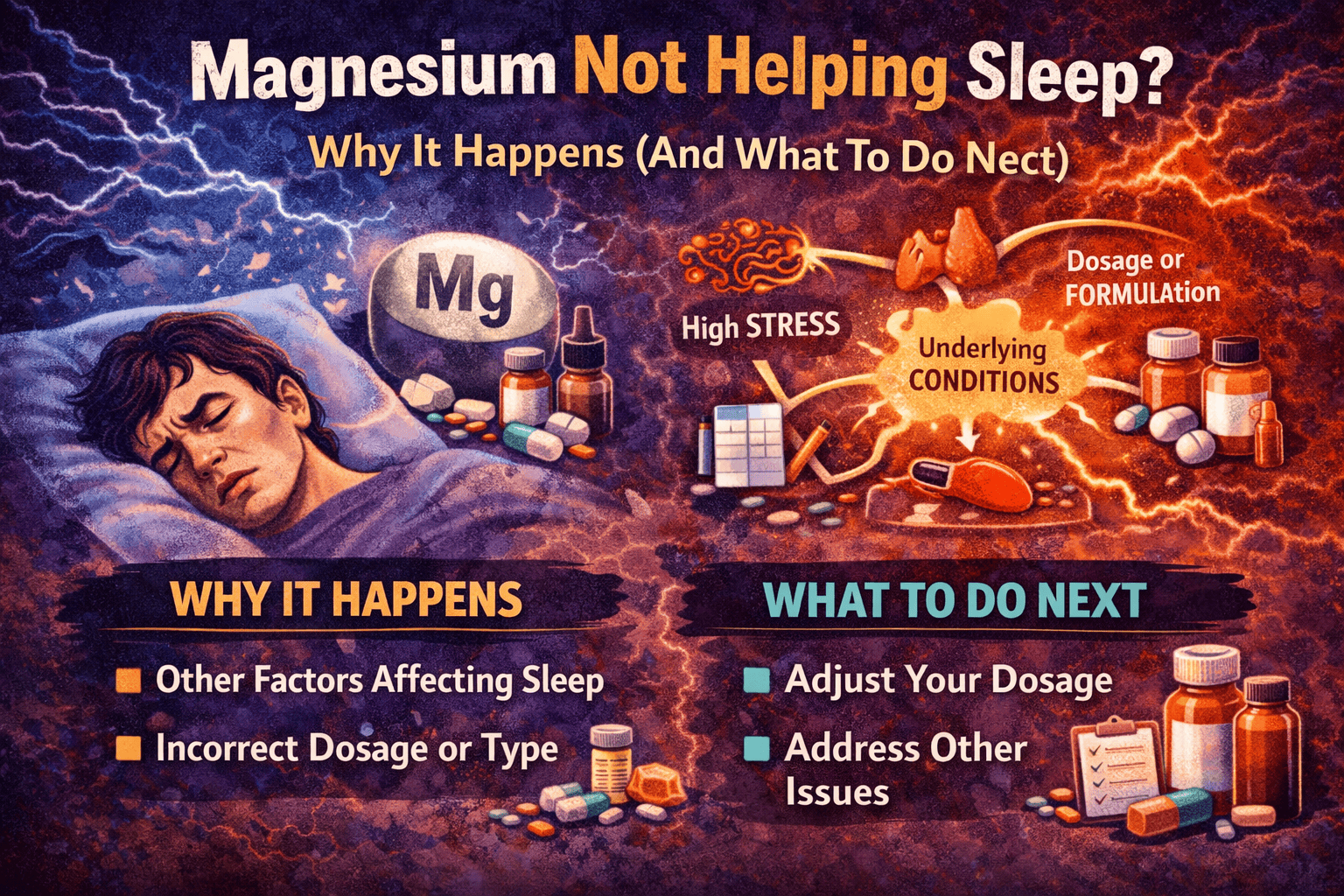
Magnesium · Sleep · Insomnia Logic Magnesium Not Helping Sleep: Why It Happens and What To Do Direct answer: it’s common for magnesium to “do nothing” for sleep. Magnesium helps sleep indirectly by lowering arousal and tension—not like a sedative. If your insomnia is driven by circadian timing, sleep-disordered breathing, stimulants, pain/reflux, or an anxiety

Read More »
Calm & Focus

Can Magnesium Cause Panic Attacks? Causes, Fixes, and When to Stop

Magnesium · Panic Attacks · Anxiety Can Magnesium Cause Panic Attacks? Why It Happens + What to Do Direct answer: It can in some people, usually due to dose, timing, form, or stacking—not toxicity. It can feel like panic even if it’s just a body signal (GI discomfort, lightheadedness, “heart feels loud”) that your brain

Read More »