Sodium vs Potassium — What’s the Difference & Which One Do You Need?

Electrolytes · Hydration · Sodium · Potassium
Comparison Guide

Sodium vs Potassium: What’s the Difference & Which One Do You Need?

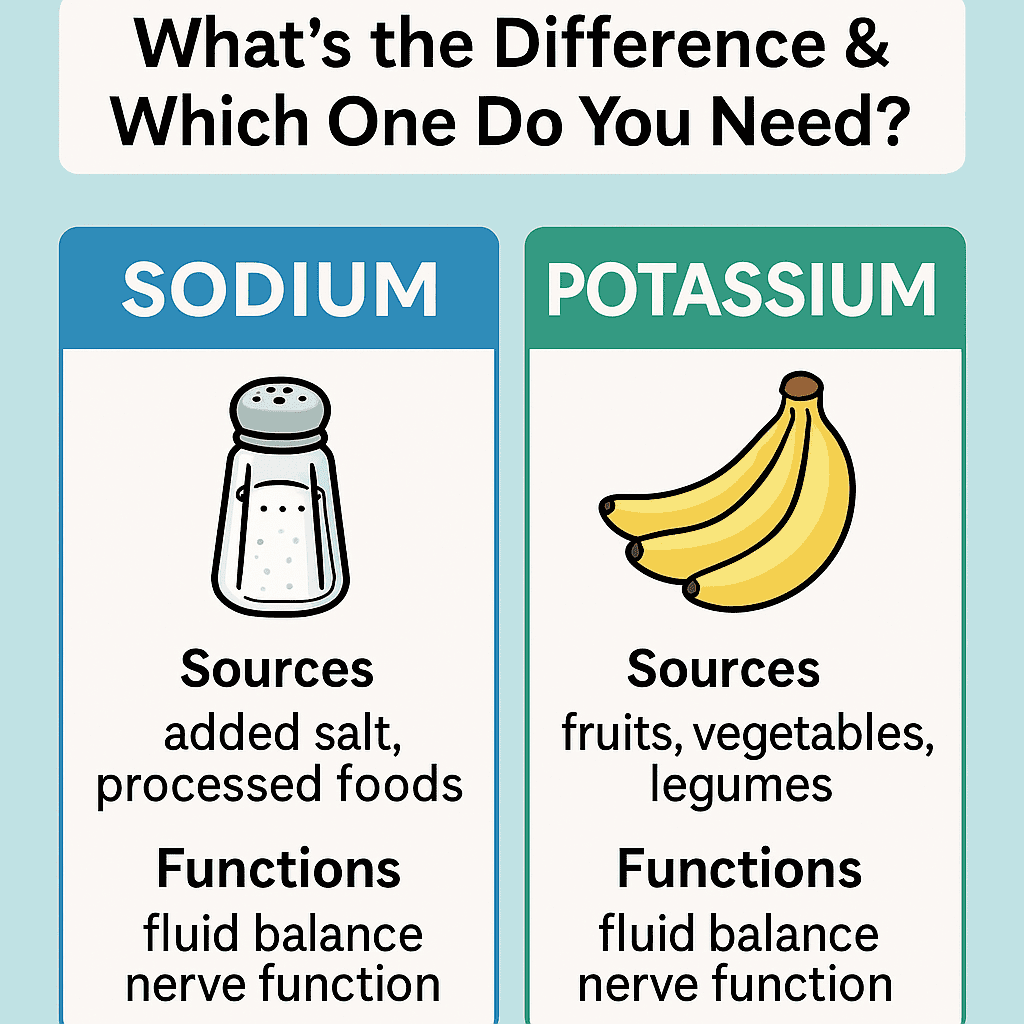
Direct answer: sodium and potassium do different jobs. Sodium mostly supports fluid volume and hydration stability (water outside cells). Potassium mostly supports cellular electrical balance and muscle output (water inside cells). Most people feel best when both are supported, but the “missing lever” depends on context.

If you feel “off” after sweating, heat, high water intake, or low-carb dieting, this page helps you pick the likely lever, test it cleanly, and avoid common mistakes.

dizziness headaches cramps heavy legs water dilution
Core difference Which do I need? Signs you need sodium Signs you need potassium How to test
Quick Take
Sodium helps you hold fluid and stay stable in heat/sweat. Potassium helps cells stay electrically stable and supports muscle output. If you’re drinking lots of water and feel worse, sodium is often the first lever to check.
Evidence standard: human trials, dose ranges, guideline-level sources when available
Who this is for: you feel “off” from hydration/heat/sweat and want to pick the right lever
Who this is not for: kidney disease, heart failure, dangerous palpitations, or sodium/potassium restrictions without clinician guidance
Last reviewed: 2026-03-04
Conflicts: none disclosed
💧
Parent hub: Electrolytes Complete Guide
The full system (sodium + potassium + magnesium), symptom patterns, and clean testing protocols.

What’s the difference between sodium and potassium?

They sit on opposite sides of cell membranes and drive fluid distribution and electrical signaling. Sodium is the main extracellular electrolyte (volume stability). Potassium is the main intracellular electrolyte (cellular electrical stability and muscle performance).

Micro-case: if your legs feel heavy and weak, potassium becomes more plausible; if you feel dizzy after drinking water, sodium becomes more plausible.
Key takeaway: sodium = volume stability; potassium = cellular stability. They’re partners, not competitors.

Do I need sodium or potassium?

Start with the dominant signal and the context that triggers it. If the trigger is heat/sweat + lots of water, sodium is often the first lever. If the trigger is weakness/cramps + low potassium foods, potassium is often the first lever (usually diet-first).

Micro-case: if symptoms change day-to-day based on heat and training, you may be dealing with balance—not “one mineral forever.”
Key takeaway: pick one lever to test first, then reassess.
Decision table: match your symptom pattern to the likely lever
Your dominant signalMost likely leverBest first moveCommon mistake
Dizziness on standing, headache after water, worse in heatSodiumPair sodium with fluids; test in the same heat/workout contextMore plain water
Heavy legs, weakness, early fatigue, cramps with low fruit/vegPotassium (diet-first)Increase dietary potassium; check meds firstHigh-dose supplements without context
Symptoms fluctuate with heat, water, and trainingBalance issueClean test one lever, then add the second if neededStacking everything at once
New palpitations or severe weaknessMedical evaluationGet guidance; don’t self-treat with electrolytesDIY potassium experiments
Rule: if symptoms are scary or new, don’t “experiment.” Get checked.
What would change my recommendation?
  • Kidney disease or reduced eGFR: potassium supplementation can be dangerous; sodium may also be restricted.
  • ACE inhibitors/ARBs or potassium-sparing diuretics: increase hyperkalemia risk.
  • Heart failure or clinician-directed sodium restriction: do not increase sodium without guidance.
  • Severe hypertension or sodium-sensitive BP: context changes the sodium strategy.
  • Vomiting/diarrhea/heat illness: higher stakes; treat hydration as medical when severe.

Signs you need more sodium

Sodium problems look like volume instability, especially in heat/sweat contexts or when water intake is high. Sodium is also the primary electrolyte lost in sweat.

Micro-case: if you stand up and feel dizzy more often on low-salt days, sodium/hydration is a strong candidate.
Key takeaway: sodium is the “hydration stability” lever.
Sodium-leaning pattern
  • Dizziness/lightheadedness on standing
  • Headaches after sweating or after lots of water
  • Frequent urination without hydration relief
  • Heat intolerance and “washed out” feeling after workouts

Signs you need more potassium

Potassium problems often look like electrical output issues: weakness, “heavy legs,” cramps with low output, and early fatigue. Potassium is best addressed food-first for most people.

Micro-case: if your diet has been low in fruits/vegetables and you feel flat during workouts, potassium intake is worth checking before blaming magnesium.
Key takeaway: potassium is the “cellular stability and output” lever.
Potassium-leaning pattern
  • Weakness more than tension
  • Heavy legs or early fatigue during activity
  • Cramps with sweating and low fueling
  • Constipation + fatigue can occur in low potassium states

Can drinking too much water mess up electrolytes?

It can—especially if sodium isn’t keeping up with water intake and sweat loss. That’s why “hydrating more” can sometimes worsen headaches, dizziness, and fatigue in heat or training contexts.

Micro-case: if more water makes you feel worse, stop thinking in water-only terms and start thinking in water + sodium balance.
Key takeaway: hydration is a balance problem, not a volume problem.

Electrolyte troubleshooting: how to tell it’s working

Electrolytes “work” when the trigger context becomes easier: less dizziness, fewer heat headaches, steadier output, fewer cramps. The biggest failure mode is stacking multiple changes and never learning the lever.

Micro-case: if you add sodium, potassium, magnesium, and a new hydration mix all at once, you’ll get a result but not an answer.
Key takeaway: test one lever first, then add the second if needed.
Common mistakes
  • Water-only hydration when sweating
  • Using high-dose potassium supplements without context
  • Ignoring food intake and relying on drinks only
  • Judging on one day instead of repeatable triggers
Clean test protocol (7–14 days)
  1. Pick one lever first: sodium (most common) or dietary potassium (food-first).
  2. Hold water intake stable (don’t “fix” hydration by doubling water mid-test).
  3. Test in a repeatable context (same workout time/heat exposure).
  4. Track 3 things: dizziness (0–10), headache (yes/no), output/energy (0–10).
  5. After day 7, add the second lever only if symptoms remain and safety context allows.
How to tell it’s working
  • Sodium win: less dizziness on standing; fewer heat/workout headaches within 2–7 days in the same context.
  • Potassium (diet) win: fewer cramps/weakness episodes over 1–2 weeks (stable training).
  • Balance win: symptoms become less volatile day-to-day.
  • What not to expect: perfect hydration if illness, anemia, or medication effects are primary drivers.
Stop conditions
  • Confusion, fainting/near-fainting, chest pain, severe weakness
  • Concerning palpitations or severe heat illness symptoms
  • Known kidney disease or heart failure without clinician guidance
  • Symptoms that escalate fast or feel dangerous

Selected Professional References

Go Deeper (VerifiedSupps Guides)

Final Takeaway

Sodium and potassium solve different problems. Sodium is the hydration-stability lever; potassium is the cellular-output lever. If you feel “off,” match the lever to the pattern, test one change at a time, and treat high-risk symptoms as medical—not DIY electrolyte projects.
Frequently Asked Questions

Is sodium or potassium more important?
Neither. Sodium supports volume stability; potassium supports cellular electrical balance and muscle output. Most people need both.
Why do athletes need more sodium?
Because sodium is lost through sweat and affects hydration efficiency and performance.
Can too much water lower electrolytes?
Yes. High water intake without electrolytes can dilute sodium and contribute to headaches, dizziness, fatigue, and frequent urination.
Is it safe to take potassium supplements?
It depends. Many people should go food-first. If you have kidney disease or take ACE inhibitors/ARBs or potassium-sparing diuretics, supplements can be risky.
Why do I get cramps even when I hydrate?
Cramps can involve sodium, potassium, magnesium, fueling, and training load. If water alone doesn’t help, think electrolytes and context.
When should I see a doctor instead of adjusting electrolytes?
If you have chest pain, fainting/near-fainting, severe weakness, confusion, severe palpitations, or symptoms that escalate quickly.
VerifiedSupps Medical Disclaimer
This content is for educational purposes only and does not constitute medical advice. Electrolyte needs vary by activity, climate, diet, medications, and health status. People with kidney disease, heart failure, cardiovascular conditions, severe hypertension, or those taking electrolyte-altering medications should consult a healthcare professional before supplementing sodium or potassium or making major dietary changes. Seek urgent medical care for fainting, severe confusion, chest pain, seizures, or severe heart rhythm symptoms.

Related Articles

Health

MOTS-c Peptide: Why Biohackers Are Suddenly Talking About It

Mitochondrial peptide explainer Exercise-mimetic hype check By VerifiedSupps Editorial Team MOTS-c: Why Biohackers Are Suddenly Talking About It MOTS-c is getting attention because it hits a very specific biohacker nerve: it is a mitochondrial-derived peptide with animal data suggesting better insulin sensitivity, protection against diet-induced obesity, and exercise-mimetic effects. That combination makes it sound like

Read More »
Health

GHK-Cu for Skin and Hair: Benefits, Evidence, and Safety

Skin + hair evidence review Copper peptide reality check By VerifiedSupps Editorial Team GHK-Cu for Skin and Hair: Hype, Evidence, and Safety GHK-Cu is not pure hype, but it is also not as settled as the marketing often makes it sound. For skin, there is enough human signal to say topical copper peptide looks promising

Read More »
Health

Tesamorelin for Belly Fat: Does It Actually Reduce Visceral Fat?

Visceral fat reality check By VerifiedSupps Editorial Team Tesamorelin for Belly Fat: Does It Actually Reduce Visceral Fat? Yes, tesamorelin can reduce visceral abdominal fat in the right patients. But that answer is narrower than most people expect. The best-established use is not general obesity or cosmetic lower-belly fat. It is excess abdominal fat in

Read More »