Omega-3 · Fish Oil · Routine
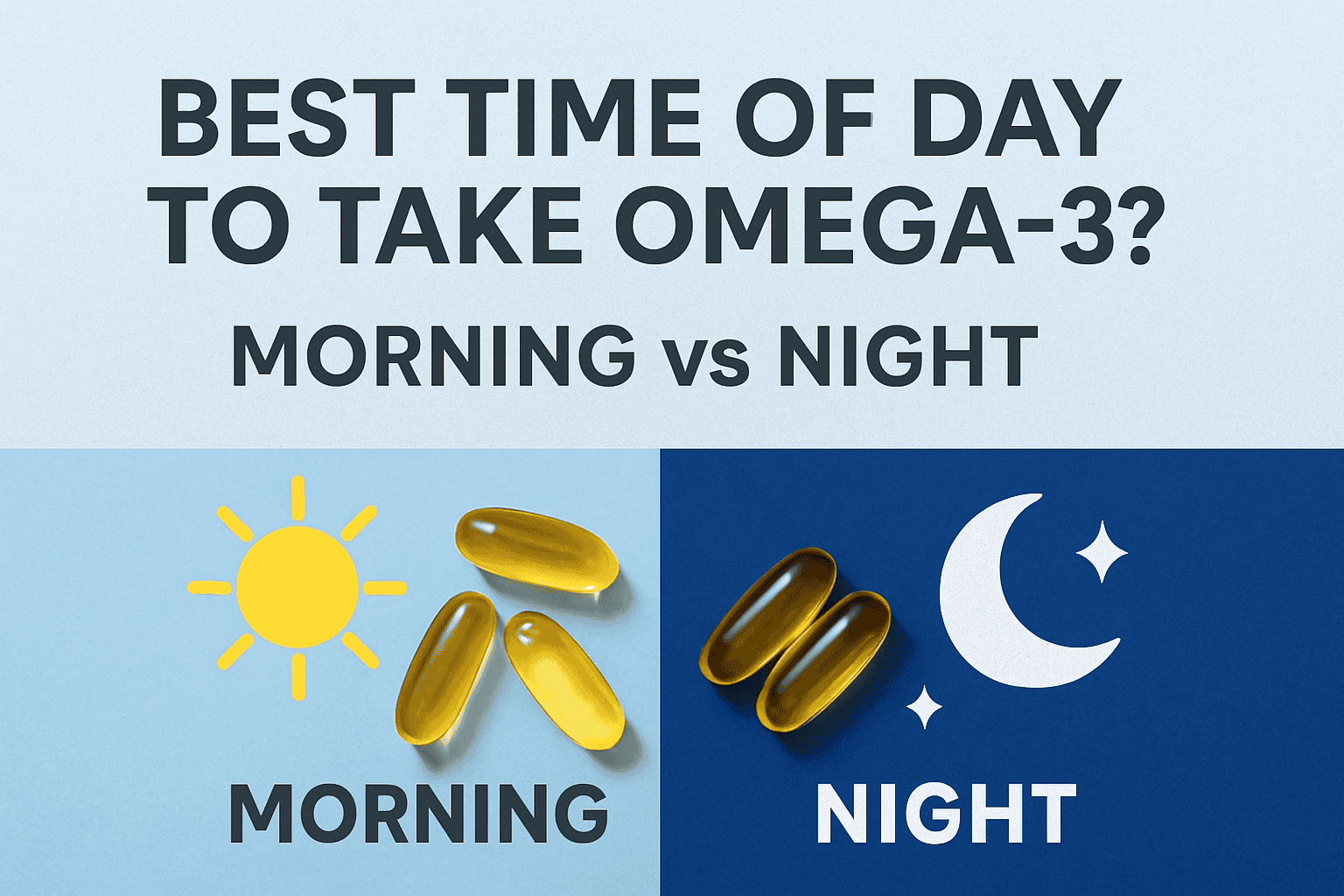
Best Time of Day to Take Omega-3 (Morning vs Night?)
If you’ve ever stared at a bottle of fish oil and wondered, “Should I take this in the morning or at night?” — you’re not alone. Most labels tell you how many capsules to take, but say almost nothing about timing.
Short version:
The best time to take omega-3 is whenever you can be consistent — ideally with a meal that contains some fat. Morning, midday, or night can all work.
Parent Hub: Want the complete omega-3 picture (benefits, dosage, timing, forms, safety)? Start here: Omega-3 Complete Guide .
This post is the “timing” lens — the hub is the full map.
1️⃣ Quick Answer: Timing Matters Less Than Consistency
For most people, the big levers are:
- Take omega-3 with food (especially with some fat) for better absorption.
- Pick a time you rarely miss — often breakfast or dinner.
- Stay consistent for weeks and months, not days.
Reality check: your body cares more about average EPA + DHA intake over time than whether you take it at 8 a.m. or 8 p.m.
If you’re not sure what daily amount you’re aiming for: How Much Omega-3 Per Day?
2️⃣ Morning vs Night: Is One Better?
From a research perspective, there’s no universal rule that morning or night is objectively superior. What changes is how timing interacts with your habits and your comfort.
⭐ Reasons to take omega-3 in the morning
- you already have a breakfast supplement routine
- you’re more likely to forget later
- you prefer “set the tone early” habits
⭐ Reasons to take omega-3 in the evening
- dinner is your largest meal (often more fat for absorption)
- you notice fewer fishy burps at night
- your mornings are crowded or rushed
Best rule: if one time slot leads to fewer misses and better comfort, that’s your best time.
3️⃣ Why Taking Omega-3 With Food Works Better
Omega-3s are fat-soluble. When you take fish oil with a meal that includes some fat, you typically:
- support more efficient digestion and absorption of EPA and DHA
- reduce the odds of fishy aftertaste or burps
- anchor the habit to a daily event (breakfast or dinner)
It doesn’t need to be a heavy meal — even modest fat (eggs, yogurt, olive oil, avocado, nut butter) can help.
If you want the absorption “form” layer: Triglyceride vs Ethyl Ester Fish Oil — Which Absorbs Better?
4️⃣ Split Dose or All at Once?
Many people wonder whether to take their full daily dose in one sitting or split it into two smaller doses.
One dose per day
Simpler and easier to remember. Great if your stomach tolerates it well.
Split dosing
Useful if higher doses upset your stomach or you want gentler digestion.
Bottom line: your body primarily “cares” about your average daily EPA + DHA over time. Choose the simplest routine you’ll actually keep.
5️⃣ Matching Timing to Your Goals (Calm, Focus, Recovery)
Timing won’t “change omega-3 into a stimulant,” but some people like aligning it with when their routine is strongest.
⭐ Calm focus and smoother mornings
- you prefer anchoring supplements to breakfast
- you like doing “mental support” early
- your evenings are inconsistent
⭐ Recovery and end-of-day support
- dinner is your largest meal
- night dosing is more comfortable
- you like consolidating supplements at the end of the day
These aren’t strict rules — they’re frameworks. Choose the schedule that reduces friction.
The real win is a routine you can follow on your busiest days — not a perfect schedule you only follow sometimes.
6️⃣ Special Cases: Sensitive Stomach, Shift Work, Forgetfulness
🥴 Sensitive stomach
- take it with your largest meal
- start lower and increase gradually
- consider a higher-purity product if you’ve had issues before
🌙 Shift work / rotating schedules
In this case, “morning vs night” doesn’t mean much. Anchor your dose to the meal you eat after waking — or the meal you’re least likely to skip.
⏰ If you keep forgetting
- put the bottle next to something you never skip (coffee maker, toothbrush, kettle)
- use a reminder for the first 2–3 weeks
- attach it to one meal only (instead of “whenever I remember”)
Gentle Product Examples (Optional)
No hype — just two calm examples if you want a reliable routine.
🔬 Premium Pick
A quality-focused omega-3 option designed for reliable absorption and strong EPA + DHA per serving.
View at Nootropics Depot🚚 Convenience Pick
A practical omega-3 option with easy reordering — good if you want something you can pair with breakfast or dinner consistently.
Shop on AmazonGo Deeper (VerifiedSupps Guides)
Kept tight (3–5 internal links total). These are the most useful next steps.
Final Takeaway
There’s no single magic hour for omega-3. The real power comes from taking it with food, hitting your daily EPA + DHA target, and staying consistent long enough to let it build.
The best time is the one you can repeat on your busiest days — not just your perfect ones.
Frequently Asked Questions
Short, calm answers to common timing questions.
Is morning or night better for omega-3?
Neither is universally better. The best time is when you’re most consistent and can take it with food. Breakfast or dinner usually work because those meals are harder to skip.
Can I take fish oil on an empty stomach?
You can, but absorption is usually lower and burps are more likely. Taking it with a meal that includes some fat is typically smoother.
Should I split my dose?
Split dosing is optional. It can help sensitive stomachs. If one daily dose is comfortable and easier to remember, that’s a great choice.
Does fish oil timing affect sleep?
For most people, timing doesn’t affect sleep. If bedtime dosing causes discomfort or burps, move it earlier with dinner or breakfast.
How long until I notice benefits?
Many people notice subtle changes within 2–6 weeks of consistent intake. Deeper changes in blood levels and tissues take longer — which is why routine matters more than the exact hour.