Best Magnesium for Anxiety: Choosing the Form That Actually Calms
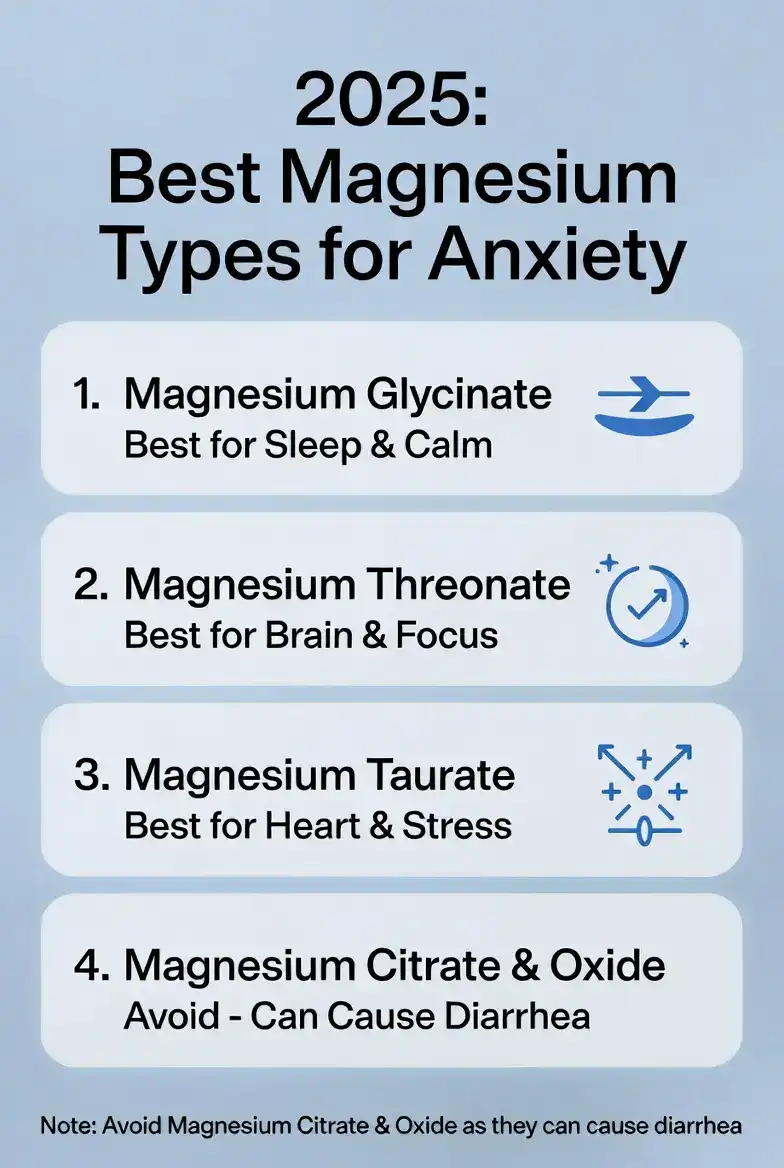
The best magnesium for anxiety is usually magnesium glycinate because it’s predictable, gentle, and tends to support a calmer body without making most people feel “off.” If your anxiety is mostly mental pressure and brain fog, magnesium threonate may fit better. If it shows up as palpitations or chest tightness, magnesium taurate is often the most logical match.
Magnesium isn’t a sedative or a cure-all. It’s a regulation mineral. When it helps, it often feels like your baseline “volume” drops a notch and your body stops overreacting to normal stress.
Quick Take
- Best overall: Magnesium glycinate (most consistent calming profile)
- Brain fog + mental tension: Magnesium threonate (often noticed most in cognition-heavy anxiety)
- Palpitations/chest-adrenaline feel: Magnesium taurate (best “body-first” fit)
- Usually least helpful for anxiety: Oxide (poor absorption), citrate (often more GI-active)
If you have kidney disease, significant heart rhythm symptoms, or new/severe anxiety, treat supplements as “adjunct,” not “plan A.” If symptoms feel urgent (chest pain, fainting, severe shortness of breath), seek medical care.
Parent Hub: If you want the big-picture framework (forms, absorption, dosage, timing, side effects, and who should avoid magnesium), use this as your anchor.
Open: How to Choose the Right Magnesium (VerifiedSupps)
Anxiety magnesium “decoder” (fast decision table)
Match the form to how anxiety shows up in your body. This is the fastest way to avoid the “magnesium did nothing” experience.
| If your anxiety feels like… | Most logical form | Typical approach | Avoid/Watch |
|---|---|---|---|
| Tension, tight shoulders, restless sleep, “body won’t downshift” | Glycinate | 200–400 mg elemental, evening; split dose if sensitive | High doses all at once; magnesium “blends” with hidden amounts |
| Racing thoughts, brain fog, “wired but tired” mental pressure | Threonate | Start low; often taken earlier in the day | Expecting an immediate “sedation” effect |
| Palpitations, chest “adrenaline,” stress spikes in the body | Taurate | 100–400 mg elemental, split AM/PM if needed | New/worsening chest pain or fainting (get evaluated) |
| “I mainly wanted digestion help” (not anxiety) | Citrate (situational) | Low dose; monitor stool changes | Diarrhea is common at higher doses |
A useful rule: anxiety relief is usually about steadiness, not strength. If your supplement approach is “big dose, fast outcome,” magnesium often disappoints.
What is the best magnesium for anxiety?
For most people, magnesium glycinate is the best starting point for anxiety because it’s well-tolerated and tends to support a calmer body state. Threonate can be a better fit when anxiety is primarily cognitive (rumination, brain fog). Taurate is often the most sensible choice when anxiety is felt in the chest (palpitations, “adrenaline” sensations).
Evidence for magnesium and anxiety is mixed, but it’s most plausible when magnesium intake/status is low, stress is chronic, sleep is disrupted, or muscle tension is part of the picture. Think of magnesium as restoring buffering capacity, not “turning off” emotions.
What would change the recommendation?
- Kidney disease (higher risk of magnesium accumulation): use only with clinician guidance.
- Medication timing conflicts (thyroid meds, certain antibiotics, bisphosphonates): magnesium often needs spacing.
- GI sensitivity: split doses and avoid forms that behave like laxatives in your body.
Does magnesium glycinate help anxiety?
Yes, it can—especially when anxiety includes physical tension, poor sleep quality, or a “stuck on” stress response. Glycinate is a common first choice because it’s generally gentle on the stomach and feels steady rather than stimulating.
What people usually notice (when it works) is subtle but meaningful: less muscle bracing, fewer stress spikes, improved sleep depth, and a calmer baseline the next day. It’s not designed to feel like a fast-acting anxiolytic.
How to use it cleanly
- Start low for 3–4 nights, then titrate up (especially if you’ve had GI issues with magnesium before).
- Split doses if you’re sensitive (for example, a smaller PM dose plus another earlier in the day).
- Prioritize consistency for 1–2 weeks before judging.
Is magnesium threonate better for anxiety and brain fog?
It can be when your anxiety is dominated by mental strain—rumination, cognitive fatigue, or that “head pressure” feeling where your mind won’t settle. Threonate is often chosen for its brain-oriented positioning, and some people subjectively notice it more in cognition than in muscle tension.
The practical takeaway: threonate is rarely the best “sleep-only” fix, but it can be a useful tool when calm needs to feel mentally clean (not sedated, not foggy).
Who tends to like it
- People who say, “My anxiety is mostly in my thoughts.”
- People who feel calmer physically but still mentally “stuck.”
- Those who don’t tolerate heavy bedtime supplements.
Does magnesium taurate help anxiety and heart palpitations?
It can help certain “body-first” anxiety profiles—especially when anxiety feels like adrenaline in the chest (palpitations, pounding heart, or stress surges). Taurate is commonly chosen when calming the nervous system and supporting cardiac steadiness are both priorities.
Important: palpitations can have many causes (sleep loss, dehydration/electrolytes, stimulants, thyroid issues, anemia, arrhythmias). If palpitations are new, severe, or paired with dizziness/fainting/chest pain, get evaluated rather than “supplementing through it.”
When taurinate-style choices make sense
- You’re stimulant-sensitive and feel symptoms in the chest.
- You’re trying to smooth sympathetic spikes (stress surges) without feeling sedated.
- You’re also monitoring hydration and overall electrolyte balance.
How much magnesium should you take for anxiety?
A common supplemental range for adults is 100–300 mg of elemental magnesium per day, and many people land around 200–400 mg elemental depending on diet, tolerance, and goals. More is not automatically better—GI tolerance is often the limiting factor.
Elemental magnesium: the label detail that matters
Labels can list the compound weight (like “2,000 mg magnesium glycinate”) and separately list the elemental magnesium (the amount your body can actually use). When dosing for anxiety, track elemental mg.
Safety anchors (simple)
- If loose stools appear, reduce dose or split it.
- If you have kidney disease, ask a clinician before supplementing.
- Space magnesium away from certain medications (your pharmacist can confirm spacing for your exact meds).
When is the best time to take magnesium for anxiety?
The best timing depends on your goal: take magnesium in the evening if anxiety disrupts sleep or shows up as nighttime tension. Take it earlier (or split doses) if anxiety is daytime-driven and you want steadier regulation across the day.
Practical timing patterns
- Night anxiety / insomnia: 60–120 minutes before bed.
- Daytime stress spikes: split dose (one earlier, one later).
- Stimulant sensitivity: avoid pairing magnesium with high caffeine if you’re testing “does this help?”
A clean test is better than a complicated stack. For one week, keep timing consistent and avoid changing three other variables at the same time.
Why isn’t magnesium helping my anxiety?
The most common reason magnesium “doesn’t work” is that the form, dose, timing, or expectations don’t match the job. When magnesium helps anxiety, it’s usually a steady improvement in regulation—not an immediate “shut off.”
Common mistakes (and fixes)
- You picked a GI-forward form: citrate may trigger diarrhea before it ever helps anxiety. Switch to a gentler option.
- Your elemental dose is too low: many people take “a capsule” without checking elemental mg.
- You took it once and judged: consistent use for 7–14 days is a more fair test for baseline calm.
- Stimulants are overpowering it: high caffeine, poor sleep, and dehydration can swamp subtle regulation changes.
- You’re already sufficient: if magnesium status is fine, the effect can be minimal.
- There’s a different primary driver: thyroid issues, iron deficiency, sleep apnea, panic disorder, medication effects—magnesium won’t fix the root cause alone.
A simple 7-day “clean test”
- Pick one form and one timing window.
- Track: sleep quality, muscle tension, stress reactivity, and GI tolerance.
- If nothing changes and tolerance is fine, adjust elemental dose modestly or switch form—one variable at a time.
What magnesium forms should you avoid for anxiety?
If your goal is calm and predictability, you usually want to avoid forms that are poorly absorbed or primarily laxative in real-world use. They can create noise (GI side effects) that makes it hard to tell whether magnesium is helping your nervous system at all.
- Magnesium oxide: often less bioavailable and commonly used for constipation/antacid purposes.
- Magnesium citrate: can be fine for some people, but frequently becomes “digestive first.”
- Proprietary blends with hidden elemental amounts: you can’t dose what you can’t see.
If your main symptom is anxiety, choose the form that you can take consistently without side effects. Consistency beats intensity here.
Selected Professional References
- NIH Office of Dietary Supplements: Magnesium (Health Professional Fact Sheet)
- Boyle NB, et al. Systematic review: magnesium supplementation and subjective anxiety/stress (PubMed)
- Rawji A, et al. Systematic review: supplemental magnesium and self-reported anxiety/sleep (PubMed)
- Harvard T.H. Chan: The Nutrition Source — Magnesium (including supplement UL discussion)
- MedlinePlus Drug Info: Magnesium oxide
Go Deeper (VerifiedSupps Guides)
Use these when you want the “right choice for the right person” version of magnesium—without guessing.
Magnesium Glycinate: When it’s right (and when it’s not)
The “best overall” pick—plus the situations where it disappoints.
Magnesium Threonate: Who actually notices it
Best-fit profiles for mental tension, cognition, and “wired but tired.”
Magnesium Taurate: When it makes sense
A clean guide for palpitations-style anxiety and “chest” symptoms.
Magnesium made my anxiety worse
The common causes (form, dose, timing) and what to do next.
Final Takeaway
Magnesium doesn’t “erase” anxiety. It supports regulation—sleep, muscle tone, nervous-system buffering, and stress reactivity. If you want the best odds of noticing a difference, start with glycinate, track elemental dose, keep timing consistent, and troubleshoot methodically rather than escalating randomly.
FAQ
How long does magnesium take to work for anxiety?
If it helps, many people notice subtle changes within 3–7 days (sleep and tension first), with clearer baseline calm over 1–2 weeks. Immediate “sedation” is not the typical response.
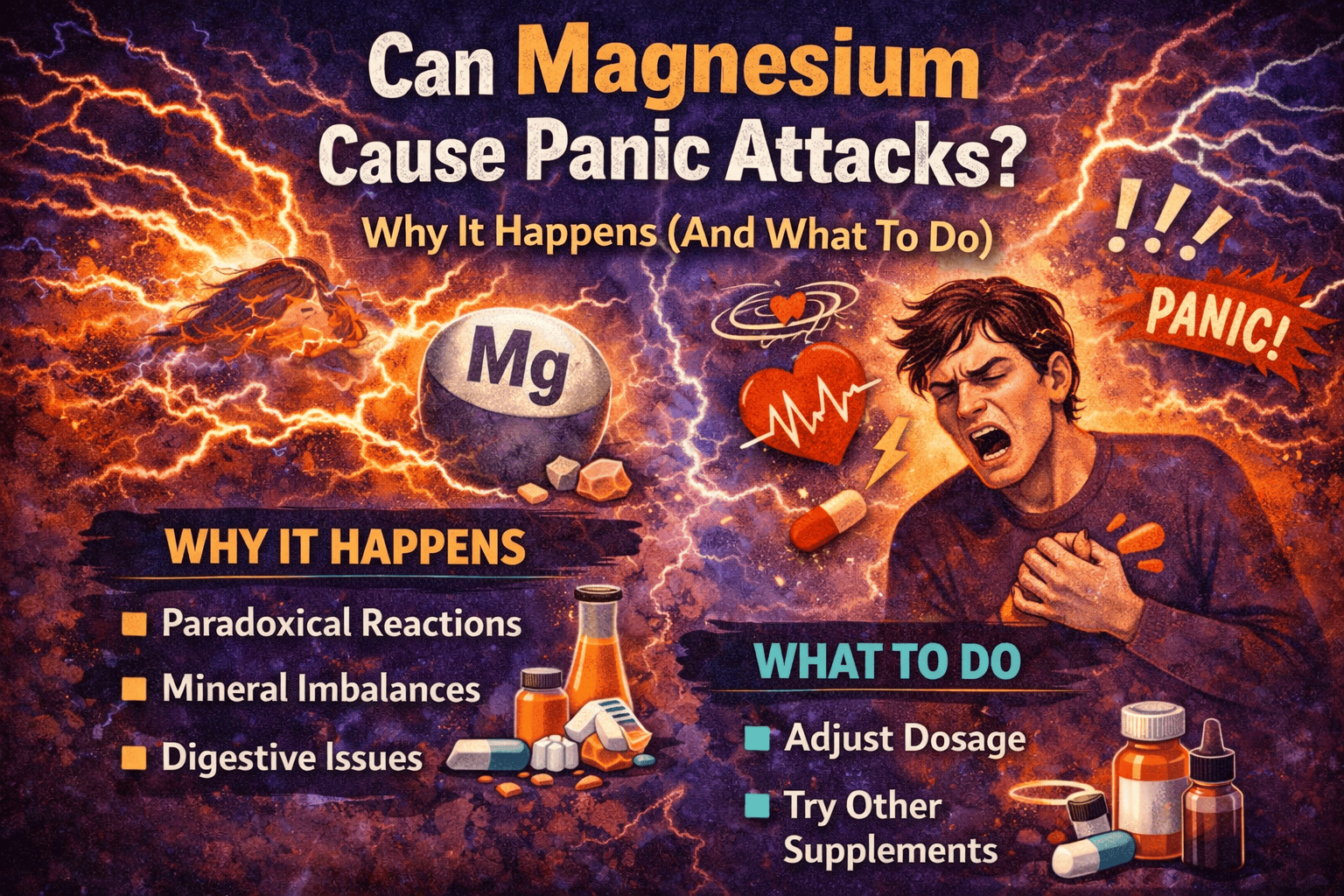
Can magnesium make anxiety worse?
It can in some people—usually due to the wrong form, too high a dose, taking it at the wrong time, or mistaking GI effects or stimulation for “anxiety.” Reduce dose, switch form, and change timing before concluding magnesium is a bad fit.
What’s the best magnesium for panic attacks?
Magnesium is not a reliable acute “panic stop” tool. It’s better for reducing baseline reactivity over time. If panic symptoms are frequent or severe, prioritize medical evaluation and structured treatment.
Should I take magnesium in the morning or at night for anxiety?
Night is usually best if anxiety disrupts sleep. Morning or split dosing can be better for daytime anxiety. Choose one schedule and keep it consistent for a clean test.
Can I take magnesium every day?
Many people do, but daily use should still be appropriate for your health status. If you have kidney disease or take interacting medications, check with a clinician/pharmacist. The most common issue is GI intolerance at higher doses.
What’s the best magnesium dose for anxiety?
A practical range is often 100–300 mg elemental daily, with some people using 200–400 mg elemental depending on tolerance and diet. Track elemental magnesium, not compound weight.
Is magnesium glycinate better than citrate for anxiety?
Often, yes—glycinate tends to be more predictable for calm and less likely to cause diarrhea. Citrate can still work for some people, but it’s more likely to become “digestive first.”
Who should not take magnesium supplements?
People with kidney disease should be cautious and consult a clinician. Also confirm spacing with your pharmacist if you take thyroid medication, certain antibiotics, or osteoporosis medications, since magnesium can interfere with absorption.