Omega-3 · EPA & DHA · Health & Function
Benefits of Omega-3: What It Actually Supports (Science, Simplified)
Omega-3s are woven into almost every major system in the body — from brain cells to skin, eyes, joints, and recovery pathways. But most people only hear buzzwords instead of grounded explanations.
This guide breaks down the real benefits you can expect from consistent EPA + DHA intake — without hype, and without medical claims.
Short version:
Omega-3s support cell membranes, inflammation balance, focus, recovery, skin/eye comfort, and long-term resilience. The effects are gradual — but meaningful when intake is consistent.
Parent Hub: Want the complete omega-3 picture (science, benefits, dosage, timing, forms, safety)? Start here: Omega-3 Complete Guide .
This post is the “benefits” lens — the hub is the full map.
Quick Overview: The Five Core Benefits
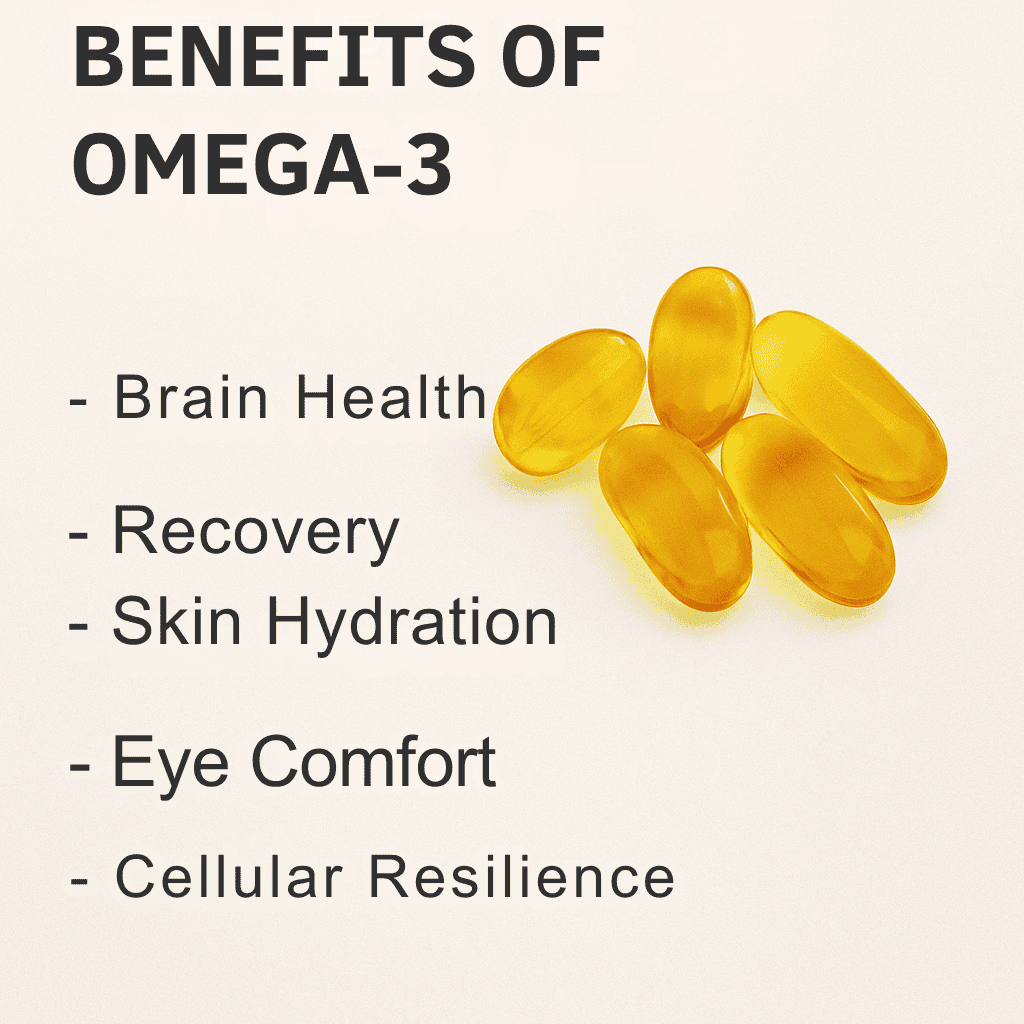
Across higher-quality research, omega-3s most consistently support:
- Brain health & cognitive clarity
- Inflammation balance & recovery
- Skin hydration & barrier function
- Eye comfort & visual function
- Long-term cellular health & membrane stability
If you’re unsure what daily amount most adults aim for, start here: How Much Omega-3 Per Day?
Benefit #1: Brain Health & Cognitive Support
DHA is one of the most abundant fatty acids in the brain. It helps support the fluidity and flexibility of neuronal membranes — which influences how smoothly brain cells communicate.
People often describe:
- clearer thinking on busy or stressful days
- a more balanced, less reactive mood
- a steadier mental baseline over time
Plain-English: omega-3s don’t replace sleep, nutrition, or stress management — they support the underlying structure your brain uses to do its job.
Benefit #2: Inflammation Balance & Recovery
Omega-3s participate in pathways that help regulate how the body responds to everyday stress — including exercise, long workdays, and environmental strain. EPA is especially studied for supporting balanced inflammatory signaling.
People often notice:
- less lingering soreness after training
- more comfortable joints in daily movement
- a smoother return to baseline after heavy efforts
Important: omega-3s are not a treatment for inflammatory conditions — they’re a support tool that helps your body manage normal stress more efficiently.
Benefit #3: Skin Hydration & Barrier Function
EPA and DHA support the lipid matrix that helps keep the skin barrier strong. When intake is low for a long time, dryness and irritation can become more noticeable for some people.
With consistent intake, people sometimes report:
- smoother, more hydrated-looking skin
- less tightness during dry seasons
- a calmer response to harsh climates
Expectation setting: skin changes are usually slow and steady — think weeks to months, not days.
Benefit #4: Eye Comfort & Visual Function
DHA is concentrated in the retina. Omega-3 intake is often discussed in relation to eye comfort, especially during long screen-heavy days.
Omega-3 intake may support:
- more comfortable eyes during digital work
- less dryness after long days
- a steadier “eye fatigue” feeling over time
Note: screens, environment, hydration, and sleep matter too — omega-3s are structural support, not a standalone fix.
Benefit #5: Long-Term Cellular Health & Membrane Stability
Every cell in your body is surrounded by a membrane. EPA + DHA help maintain membrane flexibility and integrity — which supports signaling, nutrient transport, and long-term tissue resilience.
- healthy membrane structure
- efficient cell signaling
- long-term resilience across tissues
These benefits aren’t flashy. Omega-3 is closer to “cellular maintenance” than a quick boost.
Omega-3 benefits often feel subtle day-to-day — but meaningful when you zoom out over months of steady intake.
Who Benefits the Most From Omega-3s?
People tend to notice bigger improvements when they:
- rarely eat fatty fish
- consume high amounts of omega-6-heavy processed foods
- have long screen days or mentally demanding work
- train frequently and need efficient recovery
- live in dry or cold climates
If several of these describe you, building a consistent EPA + DHA routine can be especially useful.
Do Certain Forms Work Better?
Absorption can differ by form. Re-esterified triglyceride (rTG) fish oils often absorb more efficiently than ethyl esters (EE), especially when taken with food.
Takeaway: form matters, but consistency + correct EPA + DHA dose matters more.
How Long Until You Notice Benefits?
Many people notice subtle changes within:
- 2–6 weeks for mood “smoothness,” skin comfort, and eye comfort
- 6–12 weeks for recovery and inflammation balance feel
- 3–6 months for deeper cellular and membrane-level incorporation
Omega-3s are not fast-acting — they build quietly. The “magic” is just consistency.
Gentle Product Examples (Optional)
No pressure — just two calm references if you want a starting point.
🔬 Premium Pick
A quality-focused omega-3 option designed for reliable absorption and strong EPA + DHA per serving.
View at Nootropics Depot🚚 Convenience Pick
A practical everyday omega-3 option that’s easy to reorder and pair with a meal.
Shop on AmazonGo Deeper (VerifiedSupps Guides)
Kept tight (3–5 internal links total). These are the most useful next steps.
Final Takeaway
Omega-3 benefits are steady, not flashy. The real payoff comes from consistency — and choosing a dose you can maintain.
The best omega-3 routine is the one you actually keep for months.
Frequently Asked Questions
Short, calm answers about omega-3 benefits.
How long does it take to notice omega-3 benefits?
Many people notice subtle changes within 2–6 weeks. Deeper membrane-level changes accumulate over months, which is why routine matters.
Do plant-based omega-3s provide the same benefits?
Plant sources provide ALA, which must be converted into EPA and DHA — conversion rates are typically low. Many people benefit from direct EPA + DHA (fish oil or algae oil).
Do I need rTG form to get benefits?
You don’t need it — rTG can be more efficient for absorption, but consistent EPA + DHA intake matters most.
Can omega-3s support mood?
Research suggests omega-3s can support mood regulation and stress resilience. They’re not a treatment — but can be one meaningful layer in a broader routine.
Is it possible to take too much omega-3?
Very high doses aren’t recommended unless supervised by a clinician. Moderate daily EPA + DHA with food is commonly used by healthy adults.