
Magnesium Threonate: What It Does Differently (And Who Actually Notices It)
Magnesium · Cognitive Support · Brain-Focused Form Magnesium Threonate: What It Does Differently (And Who Actually Notices It) Direct answer: magnesium threonate (MgL-threonate) is mainly chosen for brain-focused goals—clarity, mental ease, and cognitive support—because it’s designed around the idea of
Magnesium Taurate: When It Makes Sense (And When It Doesn’t)
VerifiedSupps Guide Magnesium Taurate Magnesium Taurate: When It Makes Sense (And When It Doesn’t) Direct answer: magnesium taurate tends to make the most sense when your goal is physical steadiness—a calmer “body baseline,” cardiovascular/vascular tone support, and stress that shows
Magnesium Glycinate: When It’s the Right Choice (And When It’s Not)
VerifiedSupps Guide Magnesium Glycinate Magnesium Glycinate: When It’s the Right Choice (And When It’s Not) Direct answer: magnesium glycinate is often a strong “first pick” when your goal is calm, sleep support, and tension reduction with a lower chance of
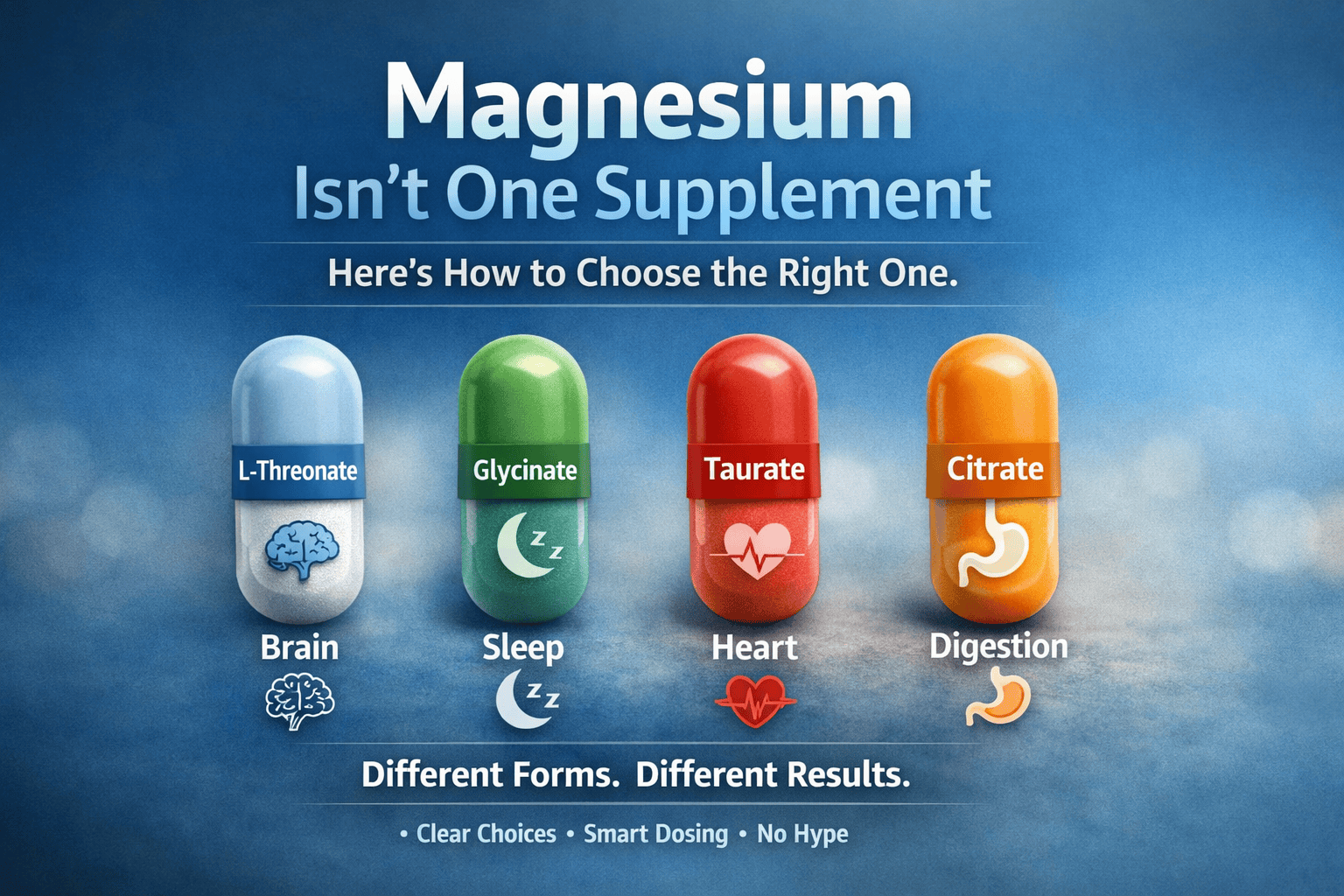
Magnesium Isn’t One Supplement — Here’s How to Choose the Right One
Magnesium · Forms · Sleep · Stress · Digestion · Decision Guide Magnesium Isn’t One Supplement. It’s a Category. Direct answer: if “magnesium” helped one person’s sleep but gave someone else diarrhea, that’s not mysterious—it’s usually a form mismatch. Magnesium
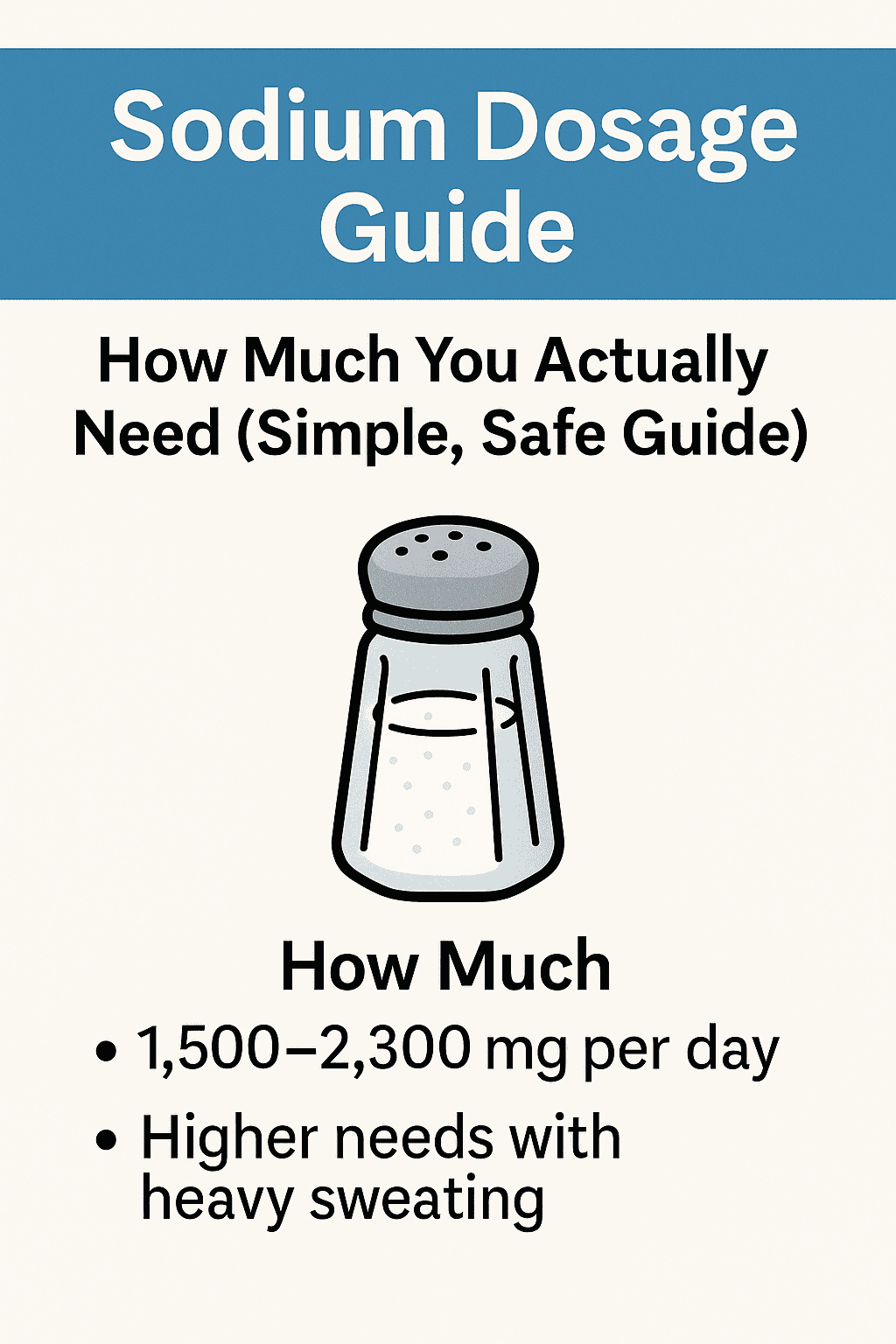
Sodium Dosage Guide — How Much You Actually Need (Simple, Safe Guide)
Sodium • Electrolytes • Hydration • Dosage By VerifiedSupps Editorial Team Sodium Dosage Guide: Simple, Safe, Science-Backed Sodium is not automatically “good” or “bad.” It is context-based. Many adults do fine in general-guidance ranges around 1,500 to 2,300 mg per
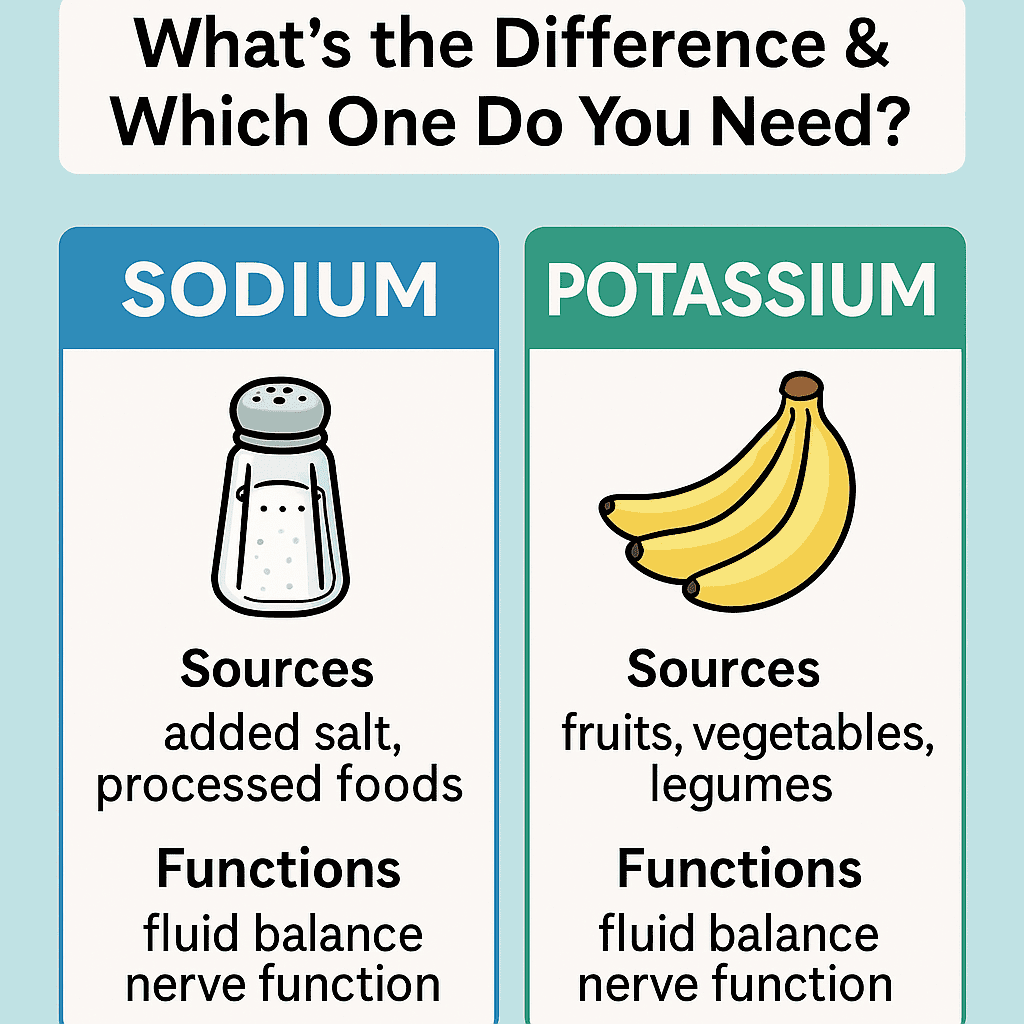
Sodium vs Potassium — What’s the Difference & Which One Do You Need?
Electrolytes · Hydration · Sodium · Potassium Comparison Guide Sodium vs Potassium: What’s the Difference & Which One Do You Need? Direct answer: sodium and potassium do different jobs. Sodium mostly supports fluid volume and hydration stability (water outside cells).
Sodium Foods List — Simple, Science-Based Guide
Sodium · Electrolytes · Hydration · Nutrition Foods List Sodium Foods List: Simple, Science-Based Guide Direct answer: sodium is a core electrolyte that helps water “stick,” supports blood volume, and stabilizes performance in heat/sweat contexts. If you sweat easily, exercise
Sodium Deficiency Signs — Simple, Science-Based Guide
Sodium · Hydration · Electrolytes · Heat Tolerance Deficiency Signs Sodium Deficiency Signs: Simple, Science-Based Guide Direct answer: low sodium usually feels like hydration instability in the right context—heat, sweating, high water intake, low-salt dieting, or low-carb phases. Common patterns
Sodium & Hydration: What It Actually Does (Simple Science Guide)
Sodium · Hydration · Electrolytes · Performance Simple Science Guide Sodium & Hydration: What It Actually Does Direct answer: sodium is the electrolyte that most strongly controls hydration stability. It helps you absorb water in the gut, maintain blood volume,
Potassium Dosage Guide — Simple, Safe, Science-Backed
Potassium · Electrolytes · Hydration · Muscle Function Dosage Guide Potassium Dosage Guide: Simple, Safe, Science-Backed Direct answer: most potassium should come from food. Typical daily targets are roughly 2,600 mg (women) and 3,400 mg (men). Potassium supplements are usually
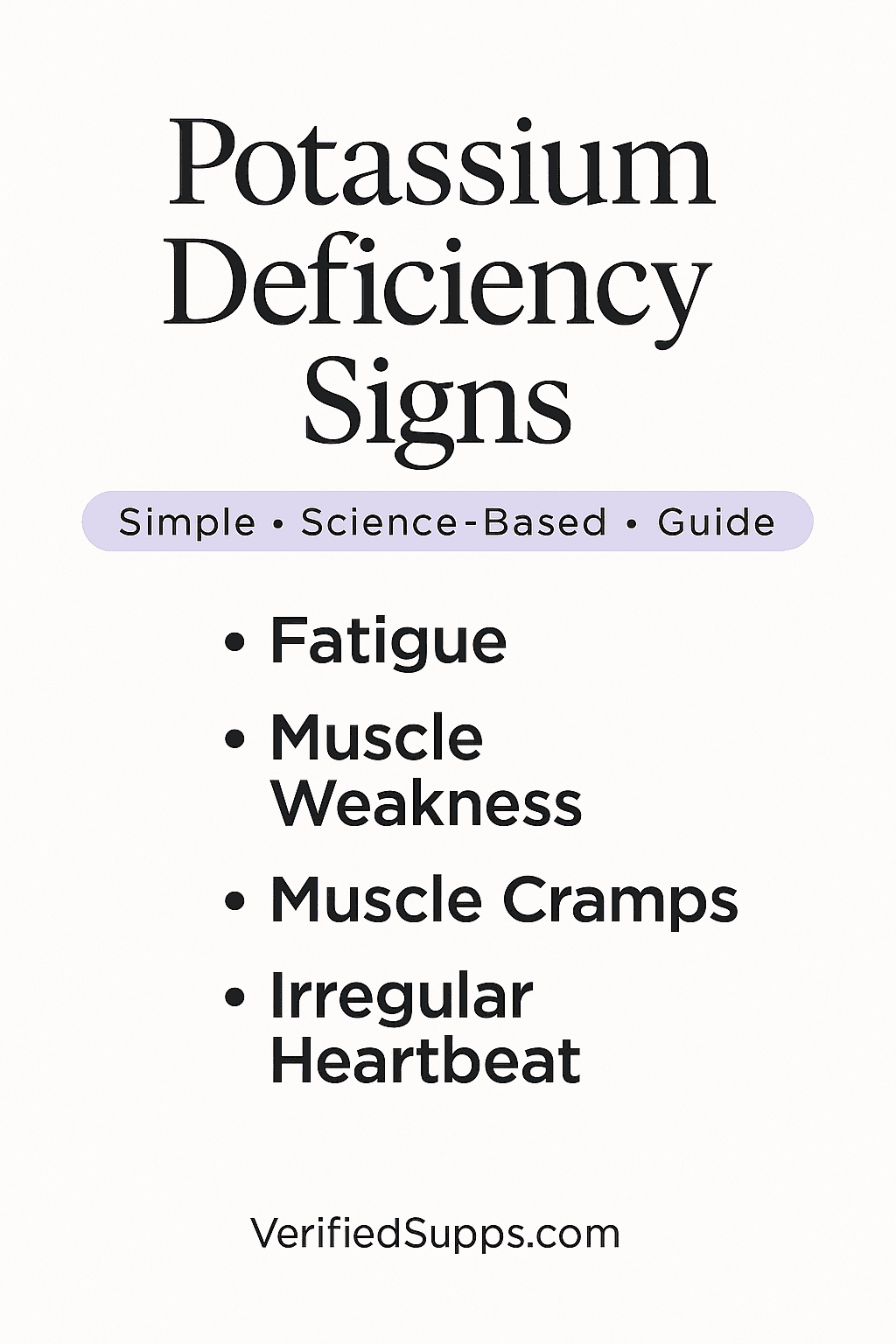
Potassium Deficiency Signs — Simple, Science-Based Guide
Potassium · Electrolytes · Hydration · Muscle Function Deficiency Signs Potassium Deficiency Signs: Simple, Science-Based Guide Direct answer: potassium runs your “inside-the-cell” electrical stability. When it’s low, the most common real-world patterns are heavy legs/weakness, early workout fatigue, cramps in
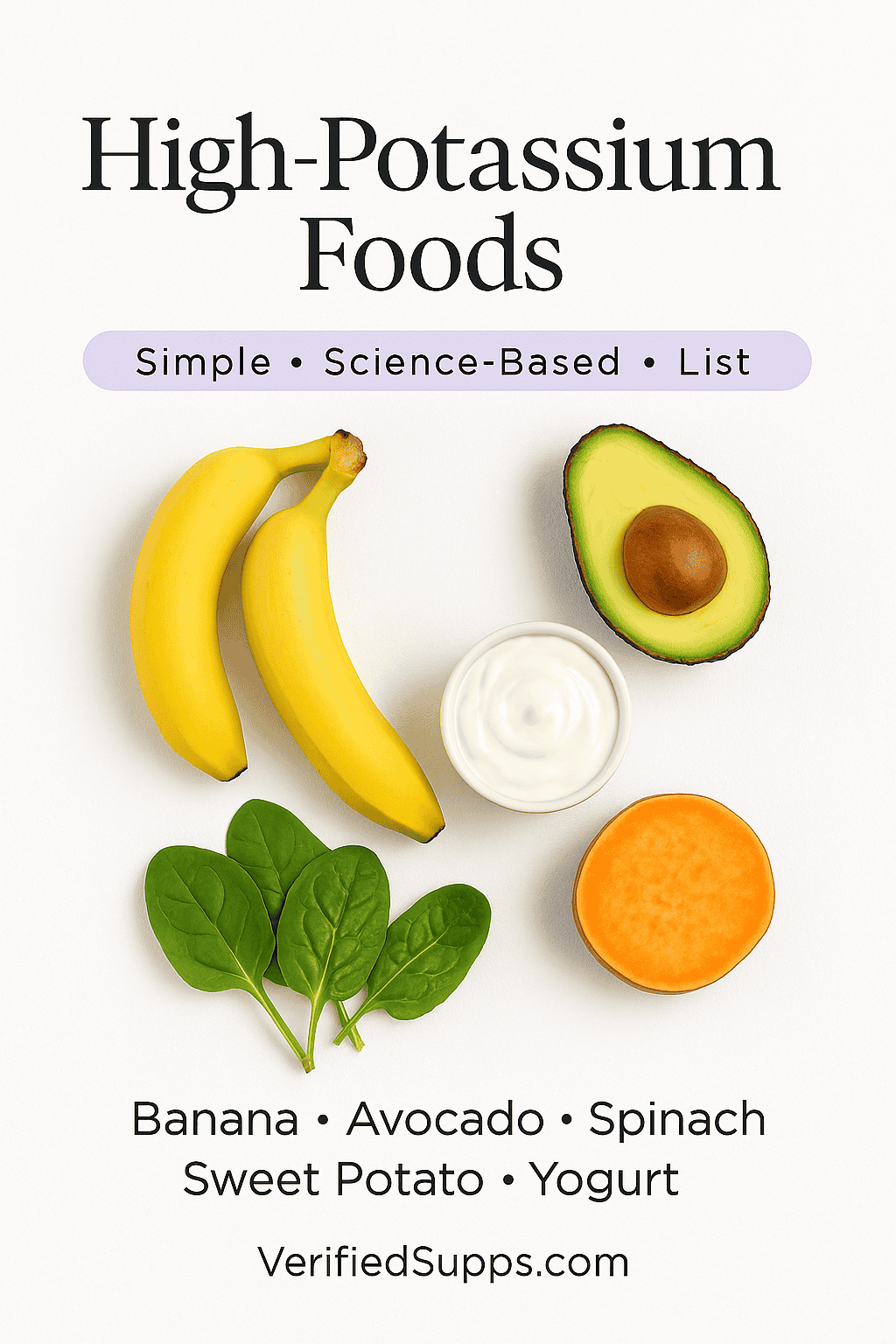
High-Potassium Foods — Simple, Science-Based List
Potassium · Nutrition · Hydration · Recovery Foods List High-Potassium Foods: Simple, Science-Based List Direct answer: the easiest high-potassium wins are potatoes, beans/lentils, leafy greens, tomato products, and yogurt. These foods can improve cellular hydration (“inside-the-cell” water), support muscle contraction,