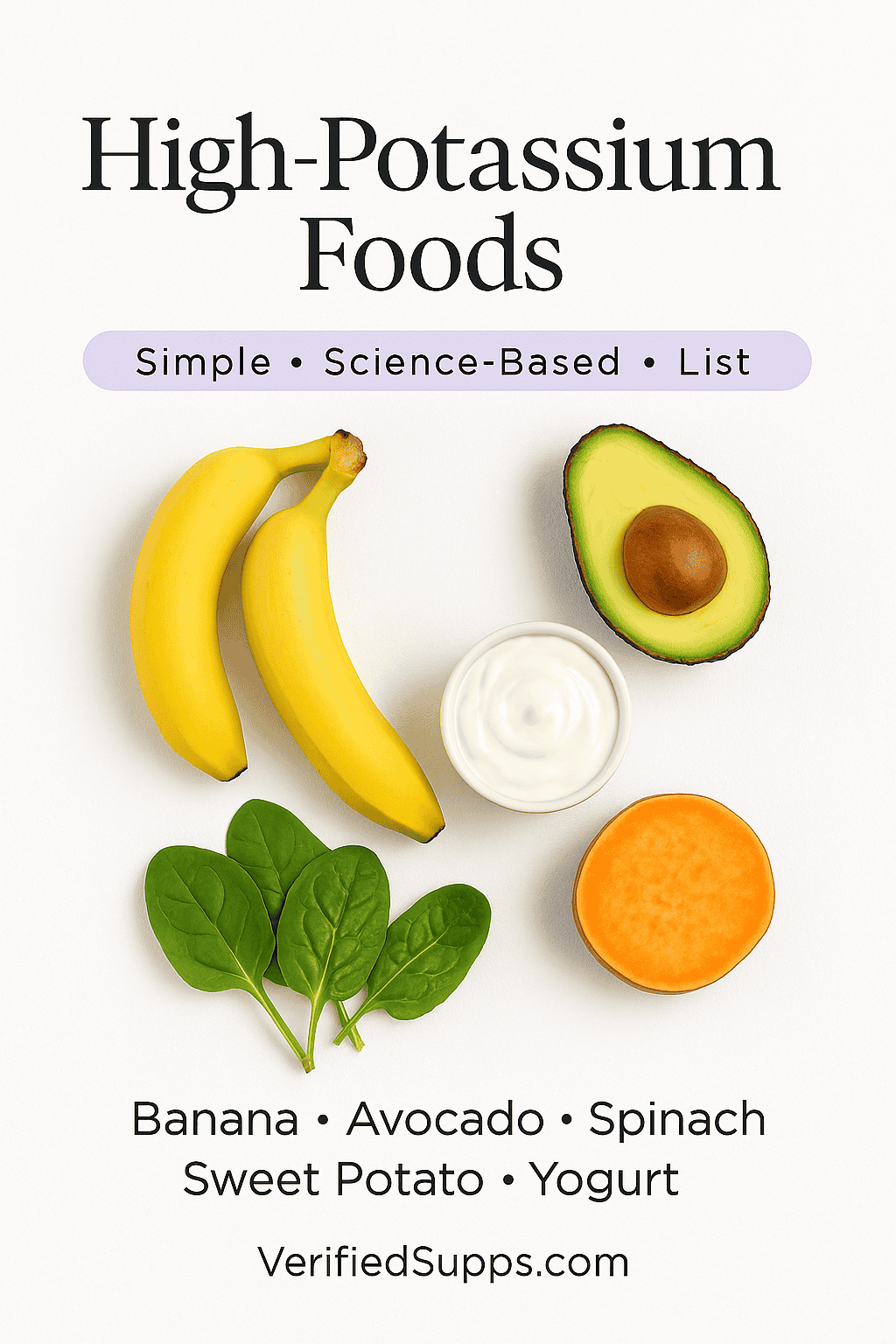
High-Potassium Foods: Simple, Science-Based List
Direct answer: the easiest high-potassium wins are potatoes, beans/lentils, leafy greens, tomato products, and yogurt. These foods can improve cellular hydration (“inside-the-cell” water), support muscle contraction, and reduce the “heavy legs / flat output” feeling that shows up during heat, sweating, or low fruit/veg weeks.
This page owns one intent: give you a repeatable food list + a clean way to test whether potassium is your lever (without guessing or over-supplementing).
What foods are highest in potassium?
The highest-yield potassium foods are usually potatoes and beans/lentils, followed by leafy greens, tomato products, and several dairy and fish options. If you want the fastest improvement, pick 2–3 foods you’ll actually repeat.
Cannibalization guardrail: this page is food list + meal patterns; if you want supplement dosing and safety, use the potassium dosage guide.
- You rarely eat potatoes/beans/greens and you feel heavy-legged or flat
- You sweat a lot and cramps show up in heat weeks
- Hydration feels inconsistent even when water intake is high
| Your intent | Best food pick | Why it works | Best next step (today) |
|---|---|---|---|
| Heavy legs / early fatigue | Potatoes or beans/lentils | High potassium density + repeatable meals | Add one potato-based meal today |
| Heat weeks / sweat cramps | Salted potatoes + greens | Potassium + sodium balance (often the missing combo) | Salt your potato meal and keep water steady |
| “Hydration feels weird” | Tomato products + yogurt + greens | Potassium + fluids, food-first | Add one potassium-rich snack + meal today |
| Easy daily habit | Banana + yogurt | Convenient, repeatable baseline | Do it daily for 7 days |
How much potassium should I eat per day?
Common daily targets (Adequate Intake framing) are around 2,600 mg/day for women and 3,400 mg/day for men—mostly from food. If you’re consistently below that, you can feel it as low output, heavy legs, or heat sensitivity.
Are bananas the best source of potassium?
Bananas are convenient, but they’re not the highest-yield option. Potatoes and beans often deliver more potassium per typical serving. The “best” food is the one you’ll eat consistently.
- Highest yield meals: potatoes, beans/lentils
- High-yield sides: greens, tomato products
- Easy snacks: banana, yogurt, avocado
What does potassium do for hydration and cramps?
Potassium supports cellular hydration by helping water move into cells and supports muscle contraction. For cramps, potassium matters, but cramps often involve sodium loss, magnesium, fueling, and heat stress too—so balanced electrolytes usually beat single-mineral fixes.
Who should be careful with high potassium intake?
Food potassium is generally safe for most people, but supplements can be risky if potassium retention is impaired. If you have kidney disease or take potassium-retaining meds, talk to a clinician before using potassium supplements or salt substitutes that contain potassium chloride.
- Kidney disease / reduced eGFR
- ACE inhibitors / ARBs
- Potassium-sparing diuretics (e.g., spironolactone)
- Known arrhythmias or persistent palpitations
How to tell if potassium foods are working
Potassium foods are “working” when output stabilizes: fewer heavy-leg days, less early fatigue, fewer heat cramps—assuming sodium and magnesium aren’t the bottlenecks. The signal is usually trend-based, not dramatic.
- Adding potassium foods but changing water/salt/caffeine wildly
- Judging after 1–2 days instead of a real window
- Assuming cramps are potassium-only (often multi-factor)
- Not repeating the same heat/workout context
- Inputs held constant: water intake, salt/sodium pattern, caffeine timing, training schedule
- Duration: 7–14 days
- 3 metrics: heavy legs (0–10), cramps count, workout energy/output (0–10)
- Stop conditions: concerning palpitations, severe weakness, chest pain, confusion, fainting/near-fainting
- Within 7–14 days: fewer heavy-leg days and less early fatigue (same training)
- Heat contexts: fewer cramps when sodium is also supported
- What not to expect: a dramatic “feel it now” effect every meal
- If nothing changes: re-check sodium, magnesium, calories, sleep, and heat stress
Selected Professional References
Go Deeper (VerifiedSupps Guides)
Final Takeaway
The “best” high-potassium foods are the ones you’ll repeat: potatoes or beans as your anchor, greens/tomatoes as your side, and fruit/yogurt as your easy habit. Run it for 7–14 days, keep water and salt stable, and judge by output (heavy legs, early fatigue, cramps), not hype.