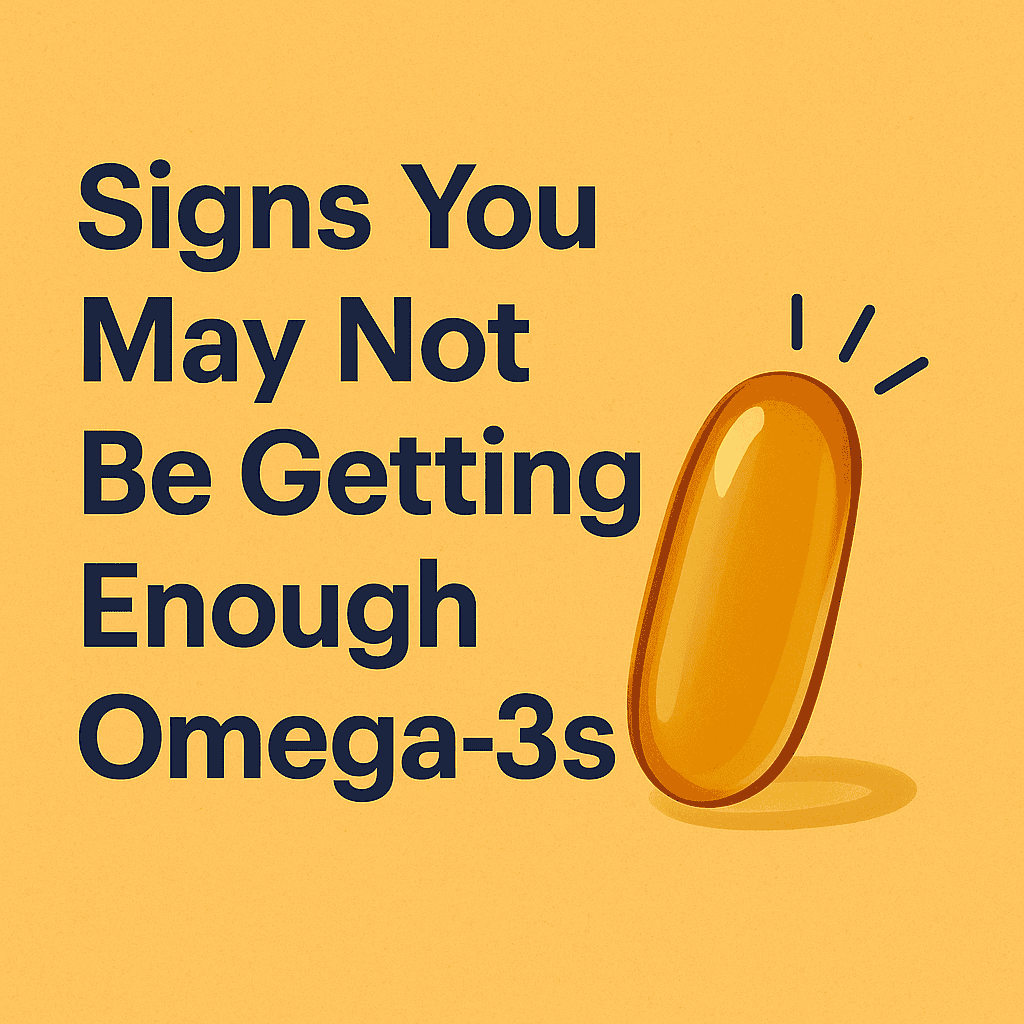
Signs You May Not Be Getting Enough Omega-3s
Low omega-3 intake usually doesn’t show up as one dramatic symptom. It shows up as a pattern: dryness (skin/eyes), slower recovery, more stiffness, and less emotional “smoothness” or focus stability. If you rarely eat fatty fish, those signals are worth taking seriously.
This guide helps you spot the pattern, avoid self-diagnosing, and take the simplest next step: improve your EPA + DHA intake in a way you can actually sustain.
Quick Take
- Most reliable “sign”: you rarely eat fatty fish (and haven’t for a long time).
- Most common signals: dry skin/eyes, stiffness, slower recovery, mood reactivity.
- Most common mistake: buying “fish oil mg” instead of dosing EPA + DHA.
- Calm fix: choose one consistent EPA+DHA source and judge trends over weeks.
Evidence standard: human studies on omega-3 intake/status, guideline-level safety sources, and practical dose ranges.
This is for you if: you want a clear “is my intake low?” check and a simple way to fix it.
Not for you if: you’re dealing with severe or sudden symptoms and want supplements instead of medical evaluation.
Last reviewed: March 2, 2026
Parent Hub: Want the full omega-3 map (benefits, dosing, timing, forms, safety) in one place?
Open: Omega-3 Complete Guide (VerifiedSupps)
Omega-3 intake quick check
This is the “pattern” test: diet + signals + what to do next.
| Your pattern | Low omega-3 likelihood | Best next step | Don’t forget |
|---|---|---|---|
| Fatty fish 0–1x/month | High | Add a consistent EPA+DHA source (food or supplement) | Dose by EPA+DHA, not “fish oil mg” |
| Dry skin/eyes + low fish intake | Moderate–high | Run a 6-week consistency test | Screen time, hydration, environment also matter |
| More stiffness/soreness + recovery feels “slower” | Moderate | Improve omega-3 intake and track recovery trends | Sleep/protein/programming can dominate recovery |
| Mood feels more reactive + diet is low in fish | Possible | Improve intake, track steadiness over weeks | Not a treatment for mood disorders |
If the first row is you, that alone is often enough to justify improving omega-3 intake.
What are the signs you’re not getting enough omega-3?
The most common “sign” is actually your diet pattern (rarely eating fatty fish). Symptom-wise, low omega-3 intake often shows up as a cluster: dryness (skin/eyes), more stiffness, slower recovery, and mood or focus that feels less steady.
- Dry, easily irritated skin
- Dry or tired-feeling eyes (especially with screens)
- More stiffness or “creaky” mornings
- Slower workout recovery or lingering soreness
- Mood that feels more reactive or less smooth
- Brain fog or harder time staying locked in
How do I know if I’m low on omega-3 without a blood test?
You can’t know with certainty without testing, but you can make a strong inference from two things: (1) how often you eat fatty fish and (2) whether multiple “low omega-3” signals show up together over time.
Practical rule: if fatty fish is basically absent for months, assume intake is low and improve the pattern—then judge changes over weeks.
Does dry skin or dry eyes mean omega-3 deficiency?
Not automatically. Dryness can come from environment, hydration, skincare, allergens, medications, and screen habits. But if dryness is persistent and your diet is low in fatty fish, omega-3 intake becomes a reasonable “background lever” to improve.
What would change my recommendation?
- New or severe eye symptoms: consider an eye-care evaluation instead of self-treating.
- Dryness + low fish intake + other signs: improving EPA+DHA becomes more compelling.
- High screen time: fix habits in parallel; supplements won’t override the biggest driver.
Can low omega-3 affect mood, anxiety, or brain fog?
Omega-3s (EPA and DHA) are structural and functional fats in the nervous system, so low intake can be one piece of the “mental energy” picture for some people. This is not a treatment for mood disorders—but improving low intake can support baseline steadiness.
The most honest way to judge this is a consistent intake trial while keeping sleep, alcohol, and caffeine relatively stable.
How long does it take to fix low omega-3 intake?
Omega-3 status changes gradually because these fats become part of cell membranes. Many people judge noticeable changes over 2–8 weeks, with steadier shifts over a few months—especially if intake was low for a long time.
Expectation check: omega-3 usually doesn’t feel like a stimulant. It’s more “less friction” over time.
Why omega-3 isn’t working (common mistakes)
The most common reason is underdosing (counting “fish oil mg” instead of EPA+DHA). The second is inconsistent use. The third is expecting an immediate mood/energy “hit.”
Common mistakes
- Choosing a product with tiny EPA+DHA per serving
- Taking it randomly (then trying to judge results)
- Taking it without meals when tolerance is poor
- Changing five lifestyle variables at the same time
How to tell it’s working
- Skin/eyes: dryness may improve gradually (weeks).
- Recovery: less “drag” after training or fewer creaky mornings (weeks).
- Mood: steadier baseline (fewer dips/reactivity) rather than “happy instantly.”
- Optional confirmation: omega-3 index testing (clinician-guided is ideal).
A clean 6-week test
- Pick one product and set a daily EPA+DHA target you can sustain.
- Take it with a meal at the same time each day.
- Track 2–3 signals: dryness, stiffness/recovery, mood steadiness.
- If nothing changes, reassess dose, adherence, and whether another bottleneck (sleep, stress, diet) is bigger.
Go Deeper (VerifiedSupps Guides)
If you want the next step, these are the cleanest follow-ups.
Final Takeaway
If fatty fish is mostly absent and several signals match, your omega-3 intake is worth improving. Don’t chase a perfect ratio or an immediate feeling—choose a consistent EPA+DHA source, take it with meals, and judge your baseline over weeks.
FAQ
How do I know if I’m omega-3 deficient?
You can’t know for sure without testing, but a low-fish diet plus multiple signals (dryness, stiffness, recovery friction) makes low intake likely.
How long does it take omega-3 to improve skin dryness?
Often weeks. Dryness is influenced by environment and habits too, so track trends rather than expecting a fast change.
Can omega-3 help with dry eyes?
Omega-3s are studied in eye-health contexts, but screens, environment, and hydration matter a lot. If symptoms are significant, get eye-care guidance.
Is plant omega-3 (ALA) enough?
ALA is helpful, but conversion to EPA/DHA can be limited for many people. If you don’t eat fish, algae oil is a common direct option for DHA.
Do I need omega-3 supplements if I eat salmon weekly?
Maybe not. Consistent fatty fish intake can cover a lot. Supplements mainly help when your routine makes fish inconsistent.
Why do some fish oils feel like they do nothing?
Most often it’s underdosing EPA+DHA, inconsistent use, or expecting an immediate effect. Label math and consistency solve most of this.
Can omega-3 interact with medications?
It can, especially at higher intakes and in bleeding-risk contexts. If you take anticoagulants/antiplatelets or have surgery planned, consult a clinician.
What’s the easiest way to start?
Pick one consistent EPA+DHA source, take it with meals, and run a 6-week test while tracking a few clear signals.