Signs You’re Taking the Wrong Magnesium (And How to Fix It)
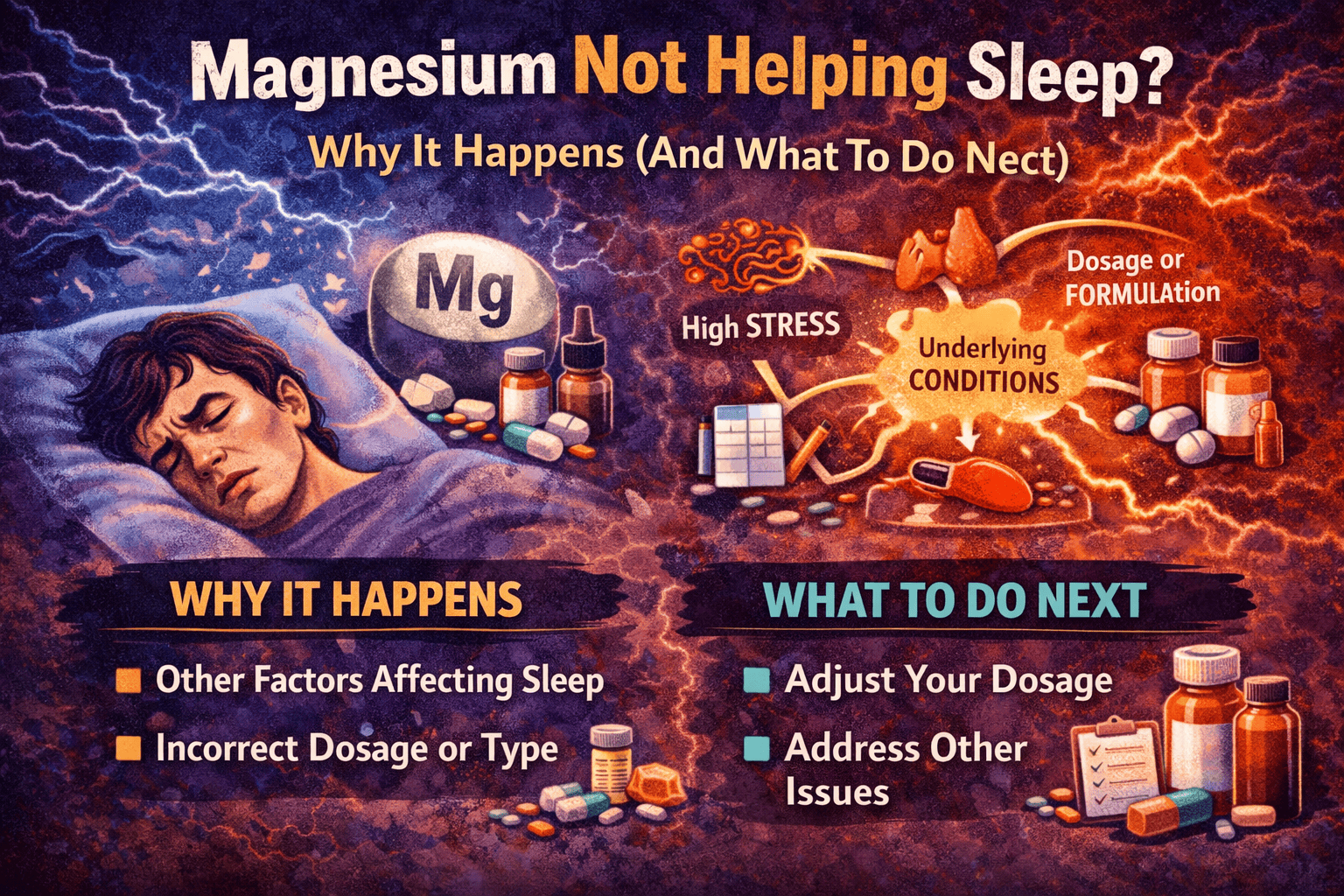
If magnesium “didn’t work” for you, the problem usually isn’t magnesium. It’s the form. This guide helps you recognize the most common mismatch signals — and shows you a simple, calm reset that fixes the issue fast.
Why Magnesium “Doesn’t Work” for So Many People
Magnesium is often treated like a single supplement with a single outcome. In reality, the form you choose changes how it behaves in the body.
When the form doesn’t match the goal, people usually experience one of these:
No noticeable benefit: you keep waiting for “something” to happen.
Unexpected side effects: digestive issues, weird timing effects, or feeling “off.”
Mixed signals: one thing improves while another gets worse.
These aren’t failures. They’re feedback — and they usually point to a mismatch you can fix.
Sign #1: You Feel Nothing — Good or Bad
If magnesium produces no noticeable change after consistent use, the most likely issue is goal mismatch. You picked a form that’s designed for a different bottleneck.
Taking citrate for stress: digestion tool used for calm.
Taking threonate for sleep: brain-focused form used for bedtime downshift.
Taking taurate for mental focus: physical-calm form used for cognition.
How to fix it: match the form to the bottleneck, not the label.
Sign #2: Digestive Issues Appear Quickly
Loose stools, urgency, or bloating are often interpreted as “too much magnesium.” In reality, it’s often a form mismatch.
Magnesium citrate, in particular, pulls water into the intestines. That’s useful for constipation — and disruptive everywhere else.
How to fix it: switch to a gentler form instead of forcing the dose lower and hoping your gut “adjusts.”
Sign #3: You Feel Wired, Foggy, or “Off”
Magnesium should feel supportive and steady — not weird. If you feel overstimulated, foggy, or mentally uncomfortable, something is misaligned.
Form mismatch: using threonate when the bottleneck is physical tension.
Stacking without a plan: multiple forms, no clear roles.
Bad timing: taking a form that feels mentally “on” too late in the day.
How to fix it: simplify first. One form. One goal.
Sign #4: Benefits Fade or Feel Inconsistent
Short-lived benefits are often a sign of:
Poor timing: the dose doesn’t match when you need the effect.
Inconsistent dosing: on-and-off use gives on-and-off results.
Complex stacks: too many variables to know what’s helping.
How to fix it: align timing with the outcome and reduce complexity until results stabilize.
How to Choose the Right Magnesium (Simple Reset)
If you want to reset and start clean, use this framework:
Pick one. Use it consistently. Evaluate after 1–2 weeks. If you don’t know what changed, simplify again.