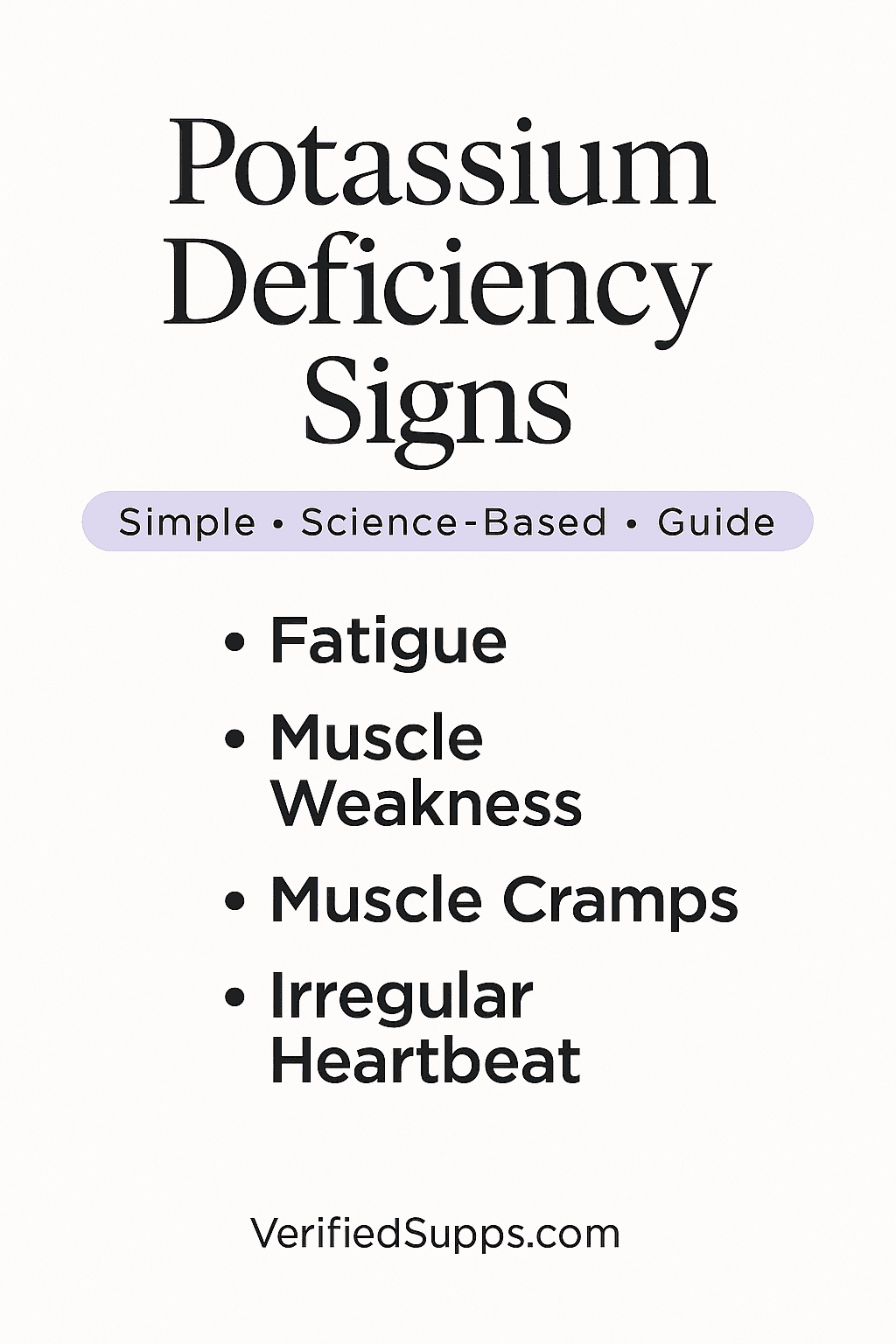
Potassium Deficiency Signs: Simple, Science-Based Guide
Potassium is one of the body’s most essential electrolytes — quietly supporting hydration, energy, muscle contraction, nerve function, and heart rhythm. Many adults fall short without realizing it. Low potassium doesn’t always show up as one dramatic symptom — it often builds gradually: weak legs, early fatigue during workouts, dizziness, or feeling “unhydrated” even when you drink enough water. This guide keeps things clear and calm: the most reliable signs, why they happen, and a simple way to fix it.
1) Why potassium drops (even if you eat well)
Potassium is stored mainly inside muscle cells. Heat, sweating, certain diets, and electrolyte shifts can pull potassium out faster than your diet replaces it. You lose potassium when you sweat — and you also fall short when potassium-rich foods aren’t consistent.
- Heat or sweating (even light sweating adds up)
- Exercise — especially cardio or endurance
- Drinking lots of plain water without minerals
- Low-carb dieting (increases fluid + mineral loss)
- Caffeine or alcohol (mild diuretic effects for some)
- High-stress weeks (shifts mineral balance)
- Not eating enough potassium-rich foods
2) Potassium deficiency signs (simple & reliable)
- Weakness or heavy legs (stairs, cardio, long days)
- Early workout fatigue (endurance drops faster than expected)
- Heat sensitivity (quicker exhaustion in warm weather)
- Muscle cramps during exercise or heat (often alongside sweating)
- Excessive thirst despite drinking water
- Dizziness/lightheadedness (especially with exertion or standing)
- Irregular hydration (hydrated one moment, drained the next)
- Heart “awareness” or mild palpitations* (*seek medical guidance if persistent)
3) How to fix low potassium (simple steps)
Final takeaway
If you’re getting heavy legs, early workout fatigue, heat sensitivity, and thirst that water doesn’t fix, potassium is worth looking at. Start food-first, then use balanced electrolytes strategically during heat/training weeks — and avoid high-dose potassium supplementation unless medically guided.