Potassium Benefits — The Simple, Science-Based Guide

Potassium · Hydration · Muscle Function · Energy
Benefits Guide

Potassium Benefits: The Simple, Science-Based Guide

Potassium is one of the most important electrolytes in the body — yet many adults don’t get enough of it. It supports hydration, energy, muscle function, nerve signaling, and blood pressure balance. When potassium slips even slightly below your personal “sweet spot,” you often feel it quietly: heavy legs, early workout fatigue, weakness, or “water not hydrating you” the way it should. This guide keeps it simple: what potassium does, how it feels when you’re low, and why it matters more than most people think.

Quick Take
Potassium helps move water into your cells, supports steady energy, prevents weakness, and keeps muscles and nerves functioning properly. It works best alongside magnesium and sodium to keep hydration and recovery balanced.
💧
The Complete Electrolytes Guide
Potassium works best as part of the electrolyte “system.” This hub ties sodium, potassium, and magnesium together for hydration, energy, and recovery.
Open the electrolytes hub

1) Why potassium is so important

The main electrolyte inside your cells

Potassium is the main electrolyte stored inside your cells. It helps create the electrical gradients that allow muscles to contract, nerves to fire, and water to move into tissues effectively. Without enough potassium, muscles and your nervous system work harder than they should.

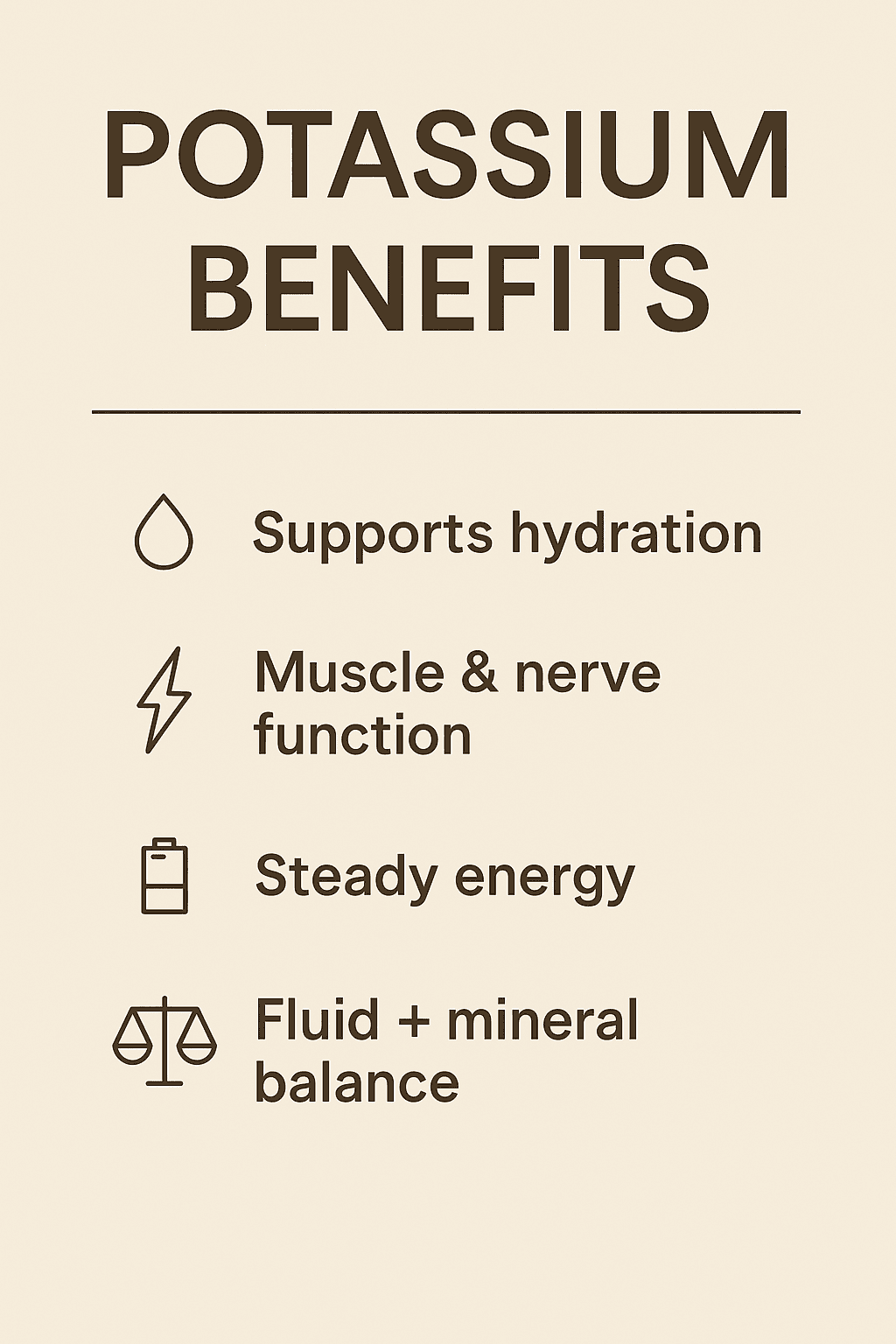
  • Supports hydration (drives water into cells)
  • Helps prevent muscle weakness
  • Supports heart rhythm
  • Maintains steadier energy
  • Regulates fluid + mineral balance
  • Helps balance sodium (blood pressure support)

2) Signs you may need more potassium

Quiet patterns (especially with heat/exercise)
Common low-potassium signs:
  • Weakness or “heavy legs”
  • Fatigue early in workouts
  • Cramps or tightness during heat
  • Difficulty staying hydrated
  • Increased thirst despite drinking water
  • Higher sensitivity to heat/humidity
  • Lightheadedness during exercise

3) Potassium’s role in hydration & energy

Water only “counts” if it enters cells

Water only hydrates you if it enters your cells. Potassium pulls water from the bloodstream into muscles and tissues — making it a critical part of real hydration and stable energy.

Potassium helps by:
  • Driving water into cells → better hydration, less thirst
  • Supporting muscle electrical function → less weakness
  • Balancing sodium → heat tolerance improves
  • Fueling steadier energy → fewer mid-workout crashes

4) Potassium vs magnesium: how they work together

Contraction + relaxation
  • Potassium helps muscles contract
  • Magnesium helps muscles relax
Low magnesium can make it harder for cells to retain potassium — meaning potassium can look “unstable” until magnesium is supported.

5) Best food sources of potassium

Food first — supplements second
  • Avocado
  • Bananas
  • Potatoes (white & sweet)
  • Spinach & leafy greens
  • Beans & lentils
  • Yogurt
  • Coconut water
If you feel weak during workouts or heat, potassium-rich foods + a hydration mix can help quickly.

6) Potassium supplement options (optional)

Most helpful during heat/training demand
🔋 Electrolyte Support
Potassium Electrolyte Support
Supports cellular hydration, muscle contraction, and energy — especially during heat, sweating, or endurance activity.
View on iHerb
💧 Hydration Mix
Balanced sodium + potassium support — ideal for hot weather, workouts, and faster recovery.
View on iHerb

Final takeaway

Potassium works best inside the full electrolyte system

Potassium is a core hydration and performance mineral — especially when you sweat, train, or feel “heavy-legged.” But it works best alongside sodium (fluid balance) and magnesium (recovery and relaxation). Food-first is ideal, with gentle supplementation used strategically during high-demand weeks.
Frequently Asked Questions

What does potassium do for the body?
Potassium supports cellular hydration, muscle contraction, nerve function, energy production, and blood pressure regulation.
How do I know if I need more potassium?
Signs include weakness, heavy legs, early exercise fatigue, difficulty hydrating, heat sensitivity, and increased thirst.
Can I take potassium and magnesium together?
Yes — they work synergistically. Potassium supports contraction; magnesium supports relaxation and retention stability.
Is it safe to supplement potassium?
Small supplemental amounts are generally safe for many people. Those with kidney or heart conditions (or on electrolyte-affecting meds) should consult a clinician first.
VerifiedSupps Medical Disclaimer
This guide is for educational purposes only and not medical advice. People with kidney disease, heart rhythm issues, or those using medications that affect electrolytes should consult a healthcare provider before supplementing with potassium or sodium.

Related Articles

Health

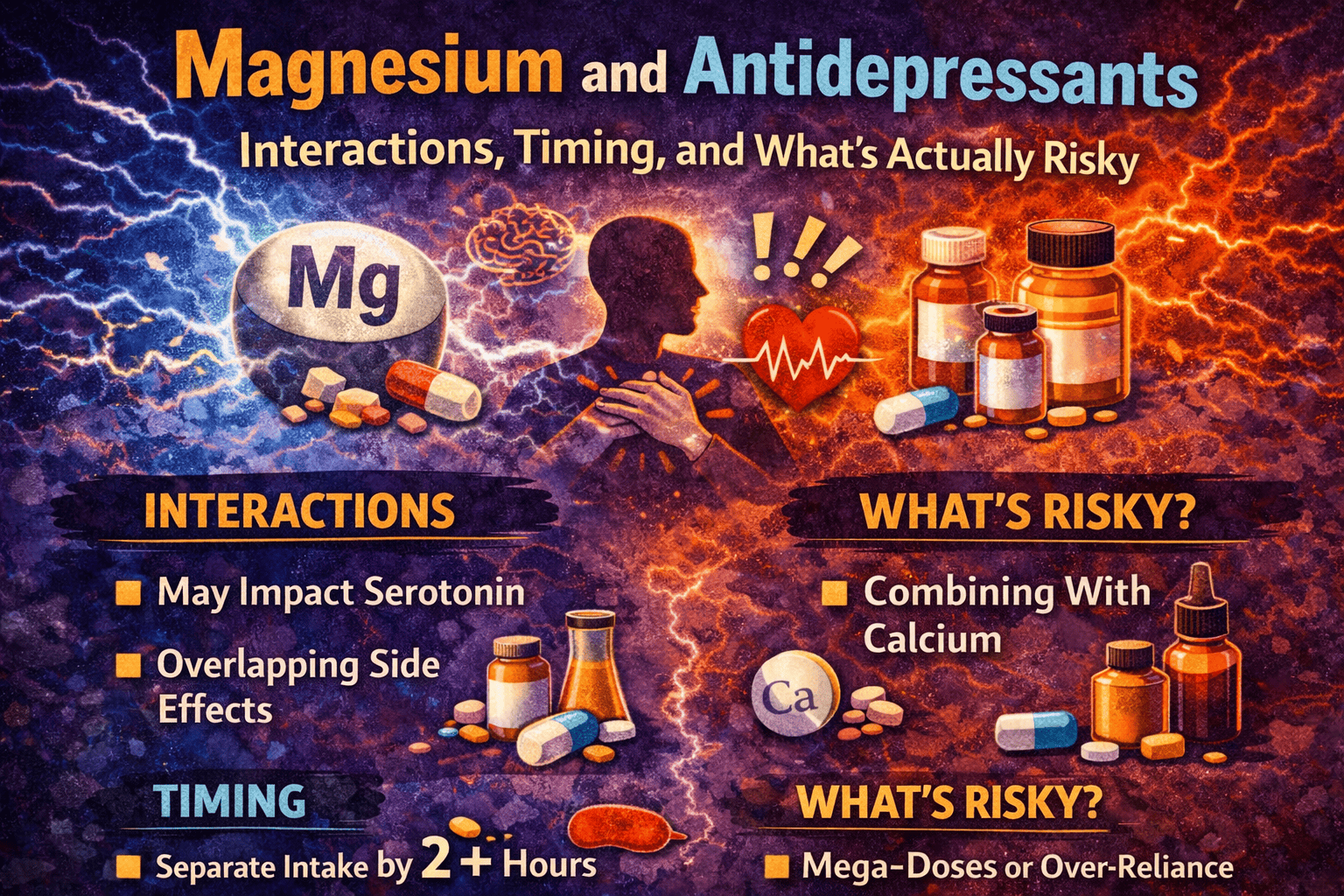
Magnesium and Antidepressants: Interactions, Timing, and Safety

Magnesium · Antidepressants · Timing · Risks Can You Take Magnesium With Antidepressants? Timing, Interactions, and Risks Direct answer: In most people, yes. Magnesium doesn’t usually “interact” directly with SSRIs the way some drugs do. Most concerns are about side effects overlap (sedation, GI effects) and timing/spacing—often because of other medications you take alongside an

Read More »
Health

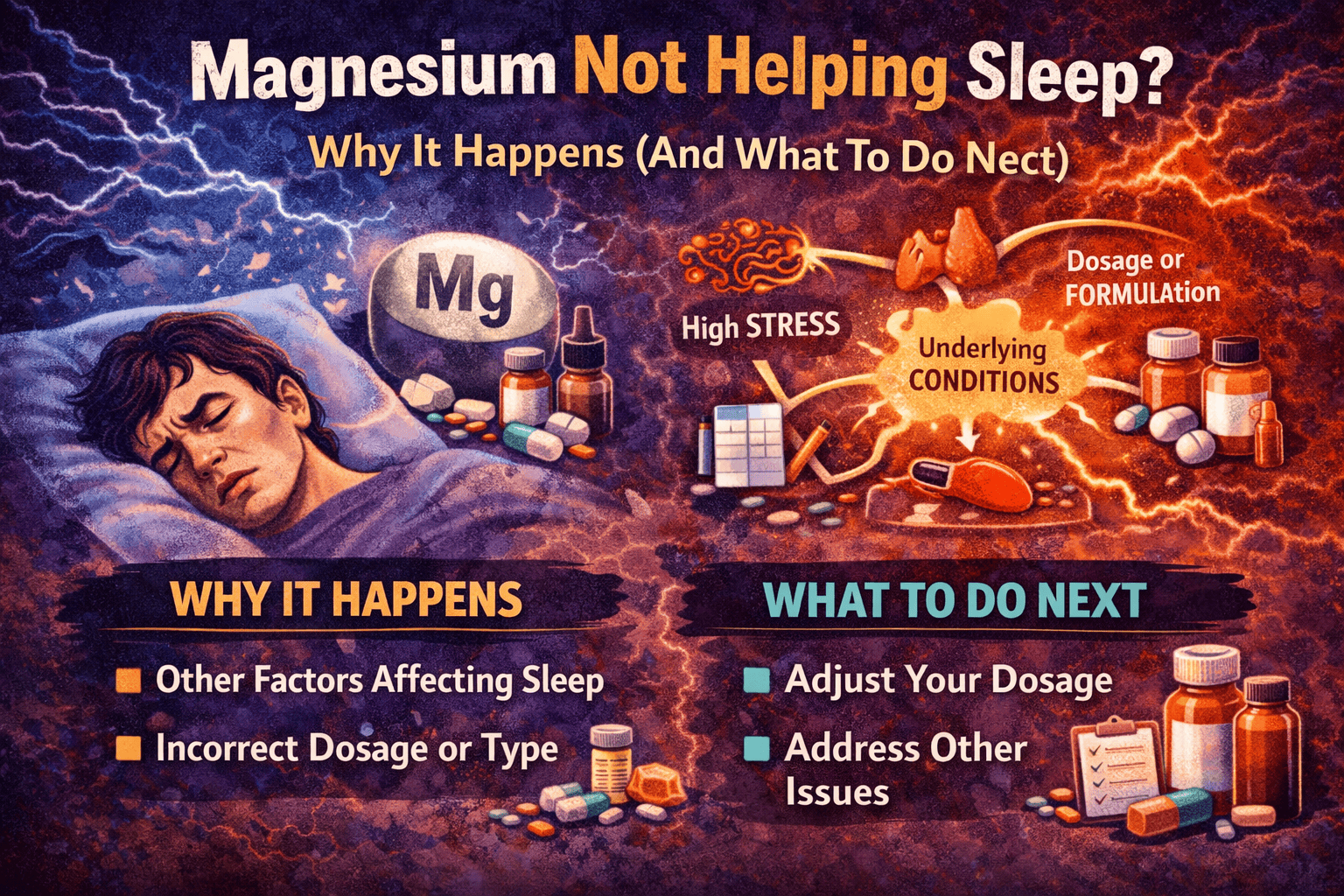
Magnesium Not Helping Sleep? Causes + Fixes (Form, Dose, Timing)

Magnesium · Sleep · Insomnia Logic Magnesium Not Helping Sleep: Why It Happens and What To Do Direct answer: it’s common for magnesium to “do nothing” for sleep. Magnesium helps sleep indirectly by lowering arousal and tension—not like a sedative. If your insomnia is driven by circadian timing, sleep-disordered breathing, stimulants, pain/reflux, or an anxiety

Read More »
Calm & Focus

Can Magnesium Cause Panic Attacks? Causes, Fixes, and When to Stop

Magnesium · Panic Attacks · Anxiety Can Magnesium Cause Panic Attacks? Why It Happens + What to Do Direct answer: It can in some people, usually due to dose, timing, form, or stacking—not toxicity. It can feel like panic even if it’s just a body signal (GI discomfort, lightheadedness, “heart feels loud”) that your brain

Read More »