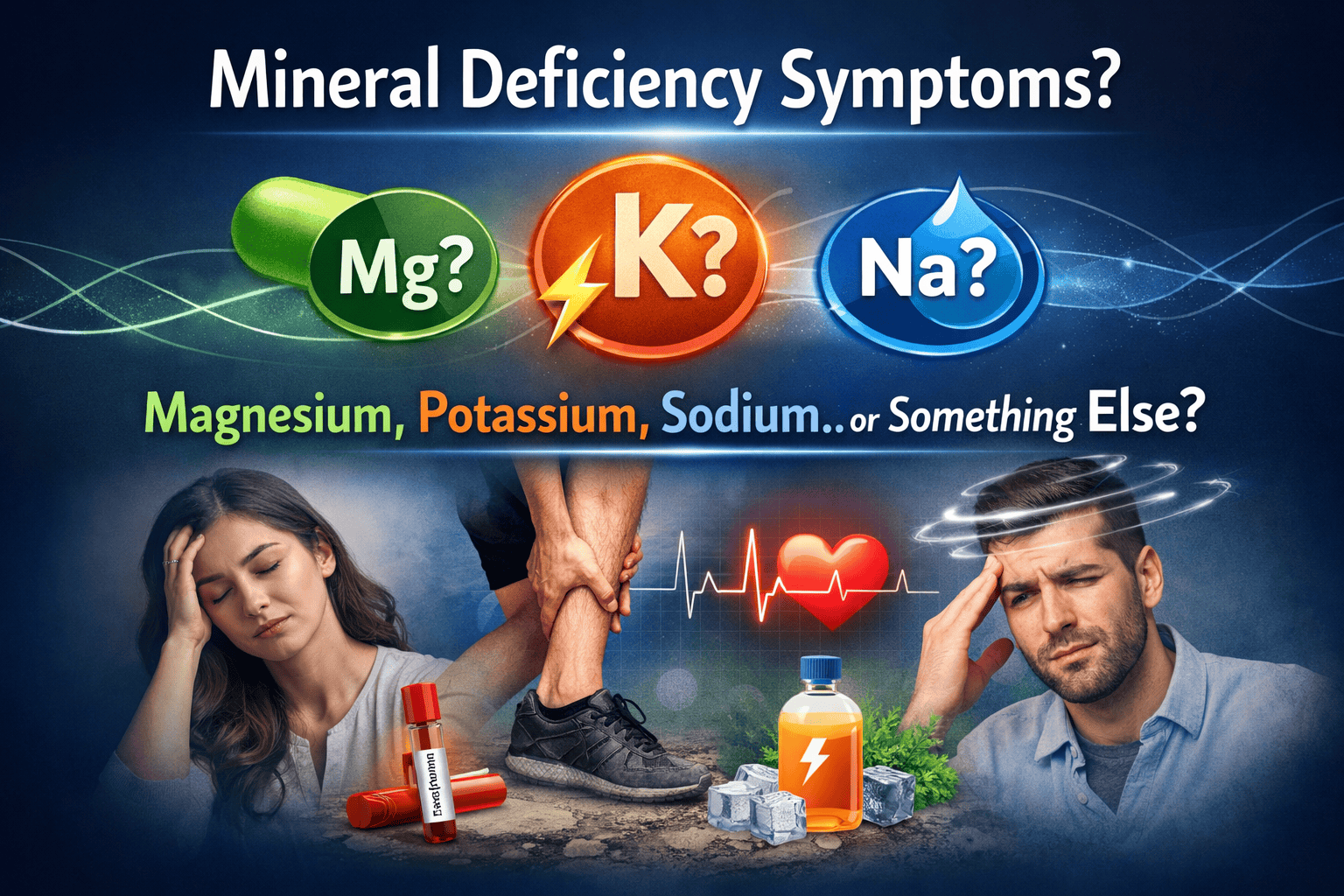
Mineral Deficiency Symptoms: How to Tell If It’s Magnesium, Potassium, Sodium — or Something Else
Fatigue, cramps, dizziness, palpitations — mineral issues can feel the same on the surface. This guide helps you sort signal from noise so you can stop guessing and start choosing intelligently.
Why Mineral Deficiencies Are So Easy to Misread
Minerals regulate fluid balance, nerve signaling, muscle contraction, and heart rhythm — all at the same time. So when something feels “off,” symptoms often overlap.
Muscle cramps or twitching: can involve magnesium, potassium, sodium, hydration, or training load.
Fatigue or weakness: can reflect electrolytes, calories, sleep, illness, or many other factors.
Dizziness or lightheadedness: often points toward sodium/hydration, but not always.
Heart palpitations: can be electrolyte-related, stress-related, or something that deserves medical evaluation.
Brain fog or irritability: can be mineral-related, but also sleep/caffeine/stress.
The mistake is treating these symptoms as interchangeable. They aren’t. The goal is to look for patterns that point more strongly toward one mineral signal than another.
When Symptoms Point More Toward Magnesium
Magnesium issues tend to show up in the nervous system and muscles. People often describe it as “my body can’t fully relax.”
Muscle tightness or cramps at rest: especially when you’re not actively sweating or exercising.
Poor sleep / difficulty winding down: trouble downshifting at night.
Anxiety or nervous tension: “wired but tired” can overlap here.
Eyelid twitching: can be a common “magnesium” association (not a diagnosis).
Stress sensitivity: feeling more reactive than usual.
Next step is usually not “take more magnesium.” It’s “choose the right form and use it consistently.”
When Symptoms Point More Toward Potassium
Potassium issues often relate to cellular electrical balance, which can show up as energy and muscle performance changes.
Muscle weakness more than tightness: legs feel heavy or “flat.”
Fatigue that feels heavy: not just sleepy — more like low drive or low output.
Irregular heartbeat sensations: can overlap with many things, but potassium is part of rhythm regulation.
Exercise intolerance: performance drops faster than expected.
Cramping during activity: especially when you’re sweating and under-fueled.
Potassium is also an area where food-first strategy and medical context matter. Don’t treat symptoms as a diagnosis.
When Symptoms Point More Toward Sodium
Sodium is often misunderstood because of blanket “low-salt” advice. But sodium is essential for fluid balance and performance — especially if you sweat a lot.
Dizziness when standing: especially if you also feel under-hydrated or low blood pressure symptoms.
Headaches during/after sweating: heat, long workouts, sauna use.
Fatigue during heat or exercise: the “I just can’t keep going” feeling.
Cramping + heavy sweating: more likely to involve sodium/electrolyte loss.
Low-carb or very low processed food diets: can reduce sodium intake without people realizing it.
Sodium issues are especially common in physically active people, low-carb diets, and heavy sweaters — but again, symptoms are not a diagnosis.
When It’s an Electrolyte Balance Issue (Not One Mineral)
Sometimes the problem isn’t magnesium, potassium, or sodium alone — it’s the balance between them (and hydration). This is more likely when:
Symptoms fluctuate day to day: you can’t find a consistent pattern.
Hydration doesn’t seem to help: water alone doesn’t stabilize things.
Heat/exercise makes everything worse: sweating shifts electrolyte balance.
You tried single minerals without success: isolated fixes didn’t change the trend.
In these cases, “more of one mineral” can sometimes worsen the imbalance. A broader electrolyte approach is often more rational.
When It Might Not Be a Mineral Issue at All
Not every symptom belongs to a mineral deficiency. Consider other factors if:
Symptoms persist despite adequate intake: you’ve already improved diet/hydration and nothing changes.
You have known medical conditions: minerals may support, but they aren’t the root solution.
Fatigue is constant and unexplained: persistent fatigue deserves proper evaluation.
Symptoms worsen with supplementation: that’s a clue to pause and reassess.
Minerals support systems — they don’t replace medical care.