MAGNESIUM FORMS OVERVIEW: GLYCINATE vs THREONATE vs TAURATE vs CITRATE

Magnesium · Forms · Calm · Sleep · Brain · Recovery
Forms Overview

Magnesium Forms Overview: Glycinate vs Threonate vs Taurate vs Citrate

Walk into any supplement aisle and you’ll see magnesium in more forms than almost any other nutrient: glycinate, threonate, taurate, citrate… each claiming different benefits. The truth is simpler: the form you choose affects how it feels — calm, sleep, brain clarity, digestion, or daytime steadiness.

Quick Take
Glycinate is the best all-around choice for calm and sleep. Threonate is the “brain & memory” specialist. Taurate is the daytime pick for steady calm (often with a clean, non-drowsy feel). Citrate is budget-friendly and most useful for digestion — not relaxation.
Decision-first question: “What do I want magnesium to do for me?” The best form becomes obvious after that.
🧭
The Complete Magnesium Guide
The master hub: benefits, dosage, timing, forms, safety, cramps, sleep, anxiety — tied together in one calm, practical overview.
Open the master guide

1) Why magnesium form matters

Same mineral. Different “feel.”

All magnesium delivers magnesium ions — but the partner molecule (glycine, threonate, taurine, citrate) changes what tends to happen next. In real life, that shows up as:

Absorption
How well your body tends to use it
Digestive comfort
Gentle vs gut-active
Where it acts
Brain, muscles, nervous system, or gut
How it feels
Calming, clarifying, neutral, or “too active”
Best decision lens: choose the form based on your goal — sleep, calm, brain clarity, or digestion.

2) Fast comparison (at a glance)

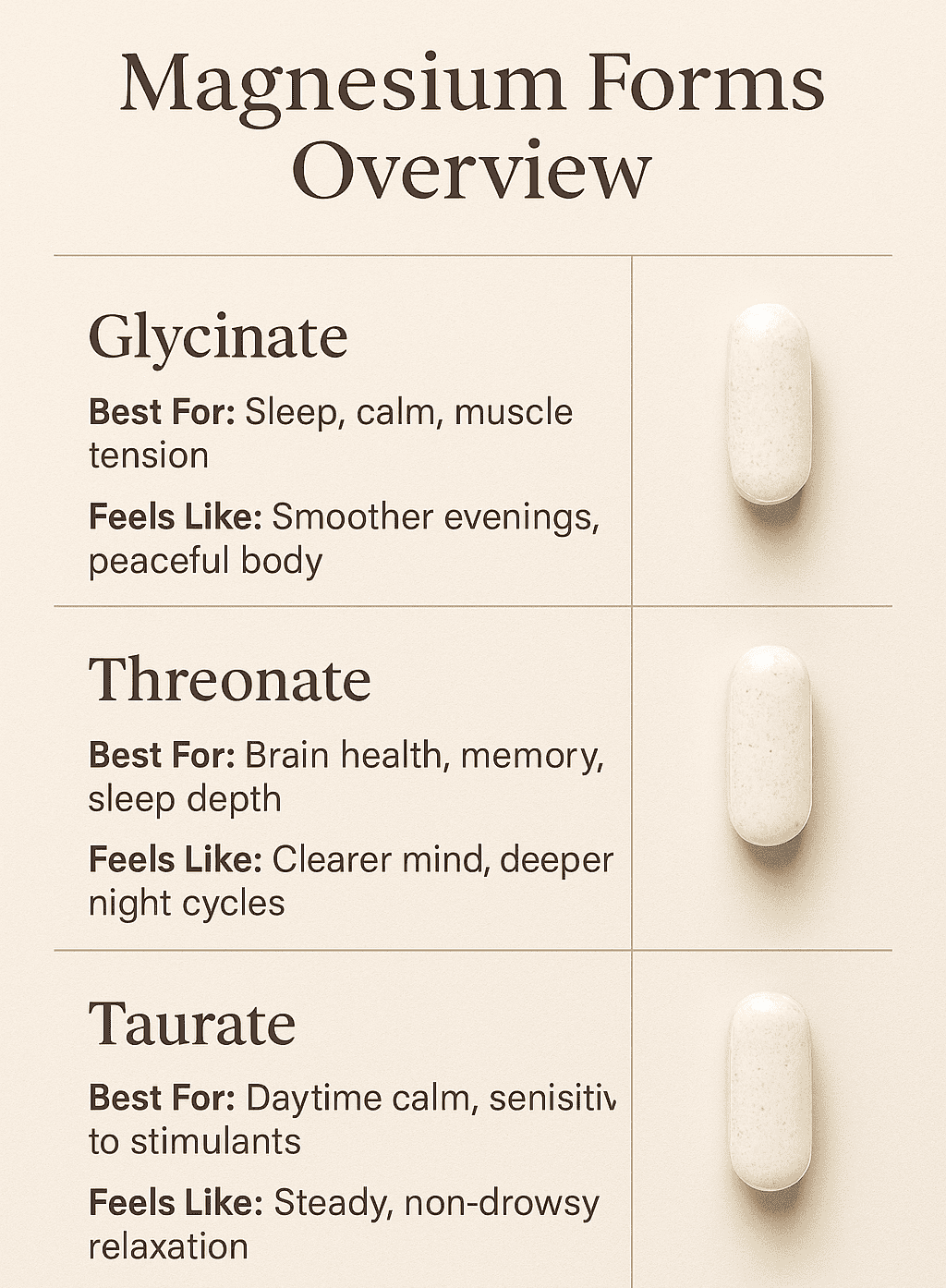
What it’s best for, what it feels like, and digestion
🌙
Glycinate
Best for: sleep, calm, muscle tension
Feels like: smoother evenings, relaxed body
Digestion: very gentle
🧠
L-Threonate
Best for: brain, memory, sleep depth
Feels like: clearer mind, deeper night cycles
Digestion: gentle
☀️
Taurate
Best for: daytime calm, stimulant sensitivity
Feels like: steady, non-drowsy calm
Digestion: gentle
💧
Citrate
Best for: digestion, budget
Feels like: neutral or “active” in the gut
Digestion: can be stimulating
Bottom line: the “best” form is the one that matches your goal and feels easy to take consistently.

3) Magnesium glycinate: the best all-around form

Calm + sleep + digestion-friendly

Glycinate pairs magnesium with glycine, an amino acid involved in calming neurotransmission. It’s one of the most consistently well-tolerated forms, which is why it’s often recommended as a first choice.

Best for
Sleep, anxiety, tension, twitches
Feels like
Smoother evenings, calmer body
Digestion
Very gentle for most people

4) Magnesium L-threonate: brain & cognitive support

Often chosen for mental wind-down + sleep depth

Threonate is unique: it was designed to reach the brain more efficiently. People who choose it are usually aiming for memory support, deeper sleep architecture, and a calmer mental state in the evening.

Best for
Memory, cognitive support, sleep depth
Feels like
Mental quiet; sometimes vivid dreams
Note
Lower elemental magnesium per cap is normal

5) Magnesium taurate: daytime calm & clean focus

Relaxation without sleepiness (for many people)

Taurate pairs magnesium with taurine, an amino acid involved in electrolyte balance and calming signaling. It’s often chosen by people who want steadier days — especially if they’re sensitive to caffeine or feel “wired” under stress.

Best for
Daytime stress, irritability, stimulant sensitivity
Feels like
Steady calm — not foggy, not sedating
Timing
Often fits best in the morning / daytime

6) Magnesium citrate: budget & digestion support

Useful — but usually not the best sleep form

Citrate is widely available and often cost-effective. It can be helpful for people who lean constipated or want a basic magnesium source — but it’s more gut-active, and it’s not usually the first choice for relaxation-focused routines.

Best for
Digestion support, budget, low intake
Feels like
Neutral or gut-active; can loosen stools
Best timing
Usually morning / daytime

7) Which form should you choose?

Pick by goal, not hype
  • Choose glycinate → calm, sleep, tension relief (best first try)
  • Choose threonate → brain support, memory, sleep depth
  • Choose taurate → steady daytime calm without drowsiness
  • Choose citrate → digestion support or budget priorities
If you’re unsure: start with glycinate. It’s the most predictable for most people.

Final takeaway

Choose the form that matches your life

If you want one simple answer: glycinate is the most reliable starting point. If your goal is more brain-focused support, consider threonate. If you want daytime calm without drowsiness, taurate is often a great fit. And if digestion is the priority (or budget is tight), citrate can be useful — just respect that it’s more gut-active.
Practical move: pick one form, use it consistently for 10–14 days, and judge it by sleep quality, calm, and digestion — not label hype.

Frequently Asked Questions

Which magnesium form is best for sleep?
Glycinate is the most common sleep choice because it’s calming and gentle. L-threonate is also popular if you want more brain-focused wind-down and sleep depth.
Which form is best for anxiety or daytime calm?
Taurate is often a clean daytime option (less sedating). Glycinate is also common, especially if stress shows up at night.
Is magnesium citrate good for sleep?
Not usually. Citrate is more gut-active and tends to be better for digestion support than relaxation routines.
Can I stack different forms?
Many people do — for example, taurate in the morning and glycinate or threonate at night — to support both daytime steadiness and nighttime wind-down.
Which form is easiest on digestion?
Glycinate and taurate are often the gentlest. Citrate is more likely to cause loose stools at higher doses.
VerifiedSupps Medical Disclaimer
This content is for educational purposes only and is not intended to diagnose, treat, cure, or prevent any disease. Always speak with a qualified healthcare professional before starting any supplement, especially if you have medical conditions or take prescription medications.

Related Articles

Health

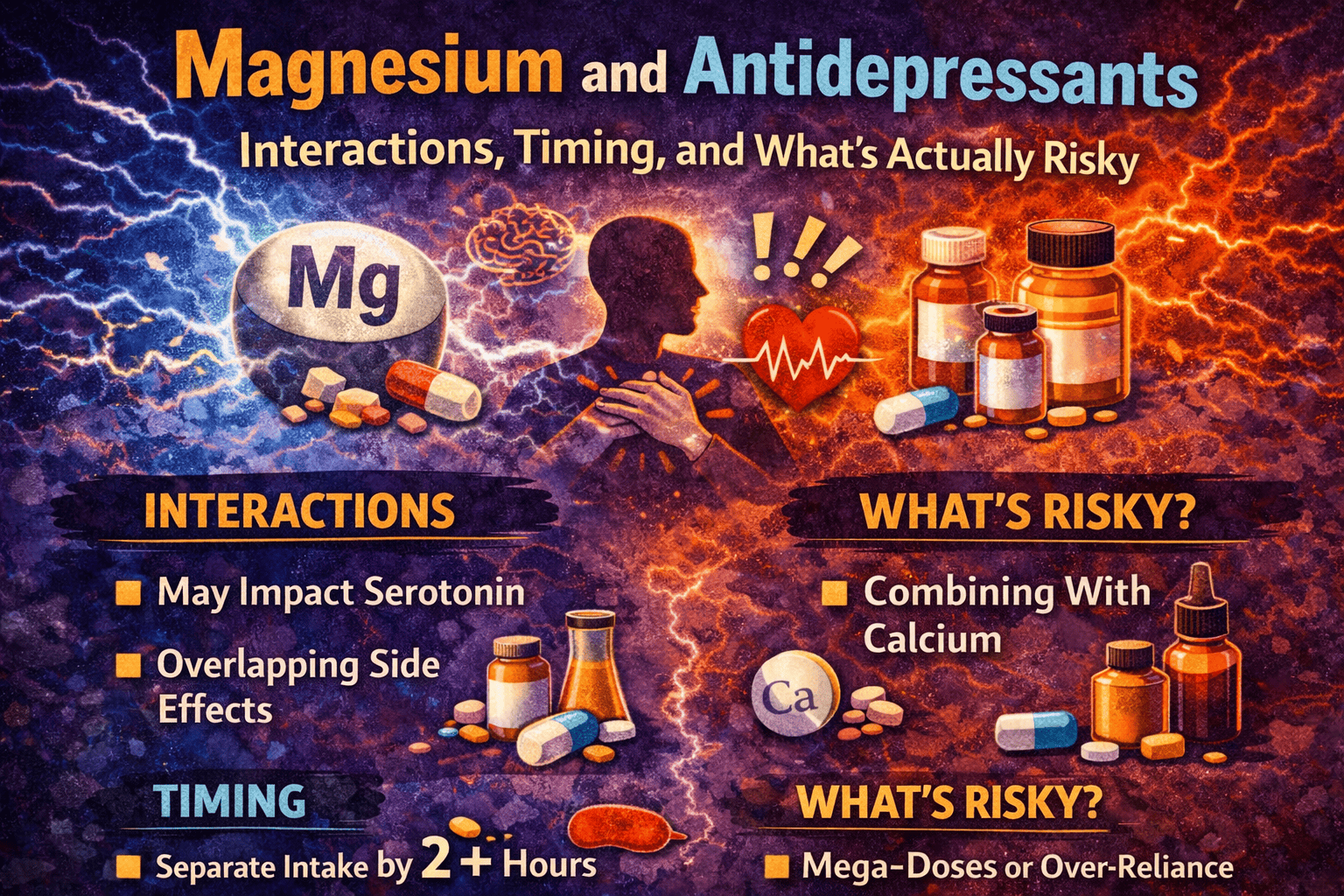
Magnesium and Antidepressants: Interactions, Timing, and Safety

Magnesium · Antidepressants · Timing · Risks Can You Take Magnesium With Antidepressants? Timing, Interactions, and Risks Direct answer: In most people, yes. Magnesium doesn’t usually “interact” directly with SSRIs the way some drugs do. Most concerns are about side effects overlap (sedation, GI effects) and timing/spacing—often because of other medications you take alongside an

Read More »
Health

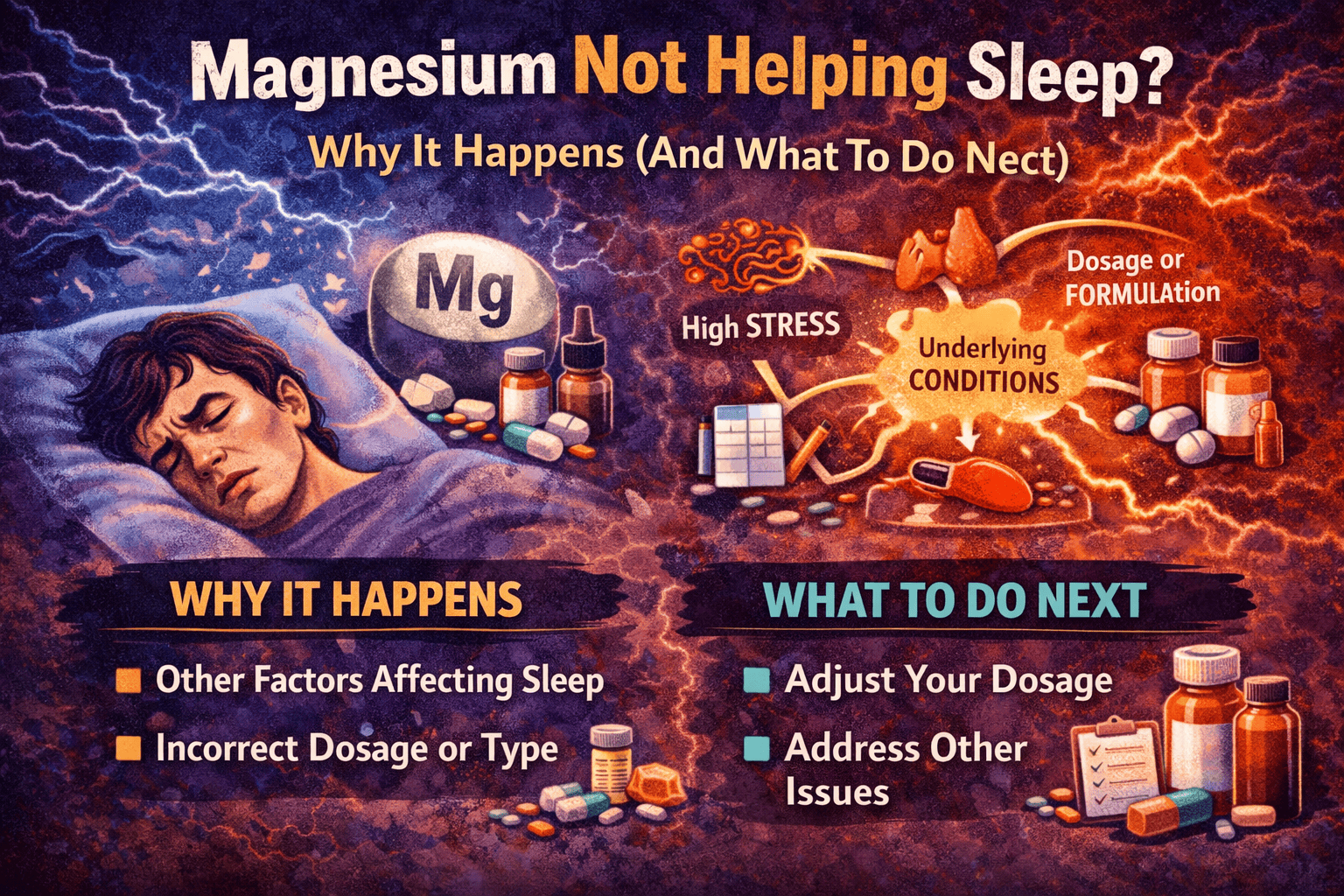
Magnesium Not Helping Sleep? Causes + Fixes (Form, Dose, Timing)

Magnesium · Sleep · Insomnia Logic Magnesium Not Helping Sleep: Why It Happens and What To Do Direct answer: it’s common for magnesium to “do nothing” for sleep. Magnesium helps sleep indirectly by lowering arousal and tension—not like a sedative. If your insomnia is driven by circadian timing, sleep-disordered breathing, stimulants, pain/reflux, or an anxiety

Read More »
Calm & Focus

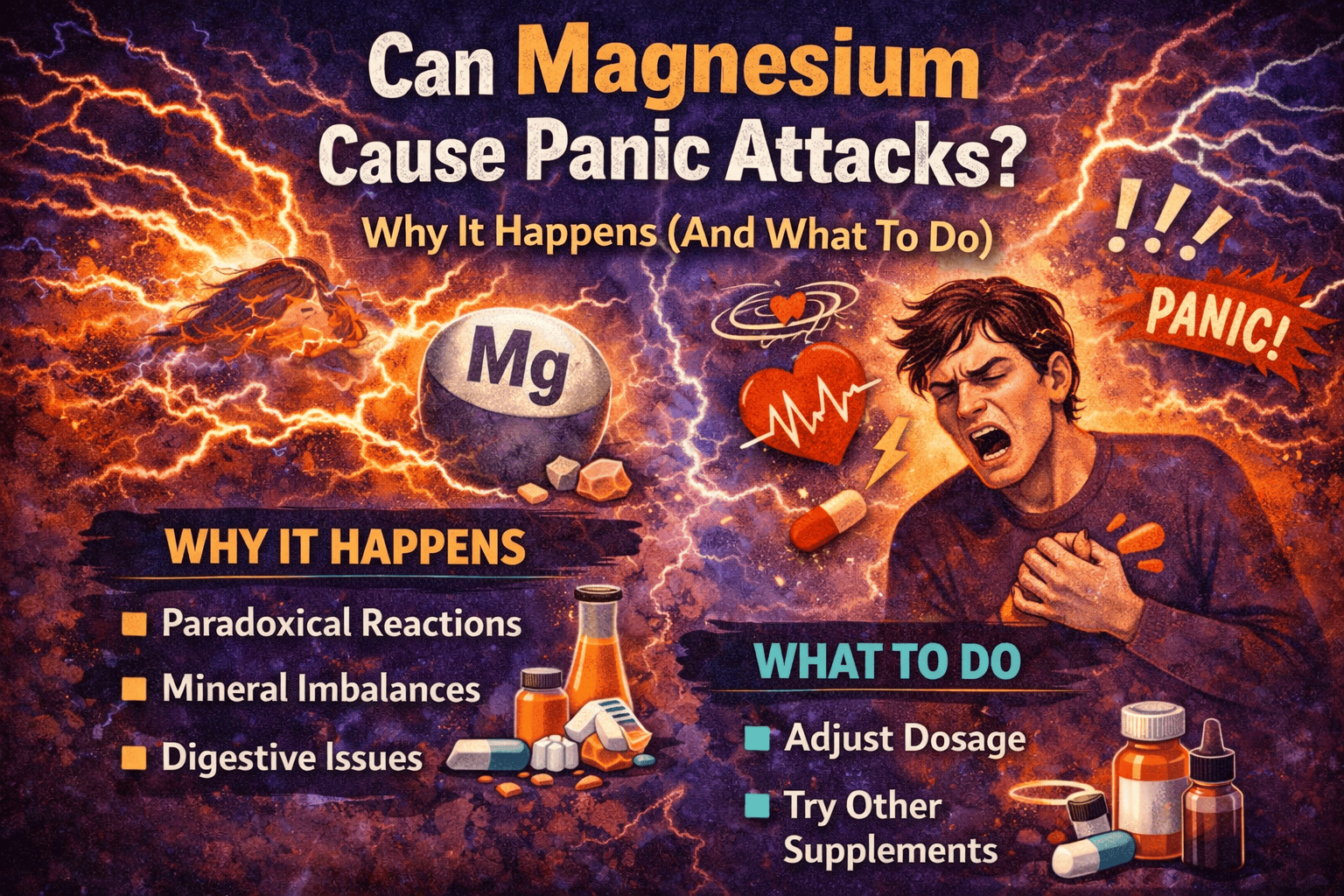
Can Magnesium Cause Panic Attacks? Causes, Fixes, and When to Stop

Magnesium · Panic Attacks · Anxiety Can Magnesium Cause Panic Attacks? Why It Happens + What to Do Direct answer: It can in some people, usually due to dose, timing, form, or stacking—not toxicity. It can feel like panic even if it’s just a body signal (GI discomfort, lightheadedness, “heart feels loud”) that your brain

Read More »