Nitric Oxide • Blood Flow • Pumps • Endurance
L-Citrulline vs Beet Root: Two Nitric Oxide Paths, Two Different “Feels”
Both increase nitric oxide. Both support blood flow. But they work in different ways — and one might fit your goals better than the other.
Think of this as a calm, clean breakdown of what actually changes in your body with each supplement. No hype. No noise. Just clarity.
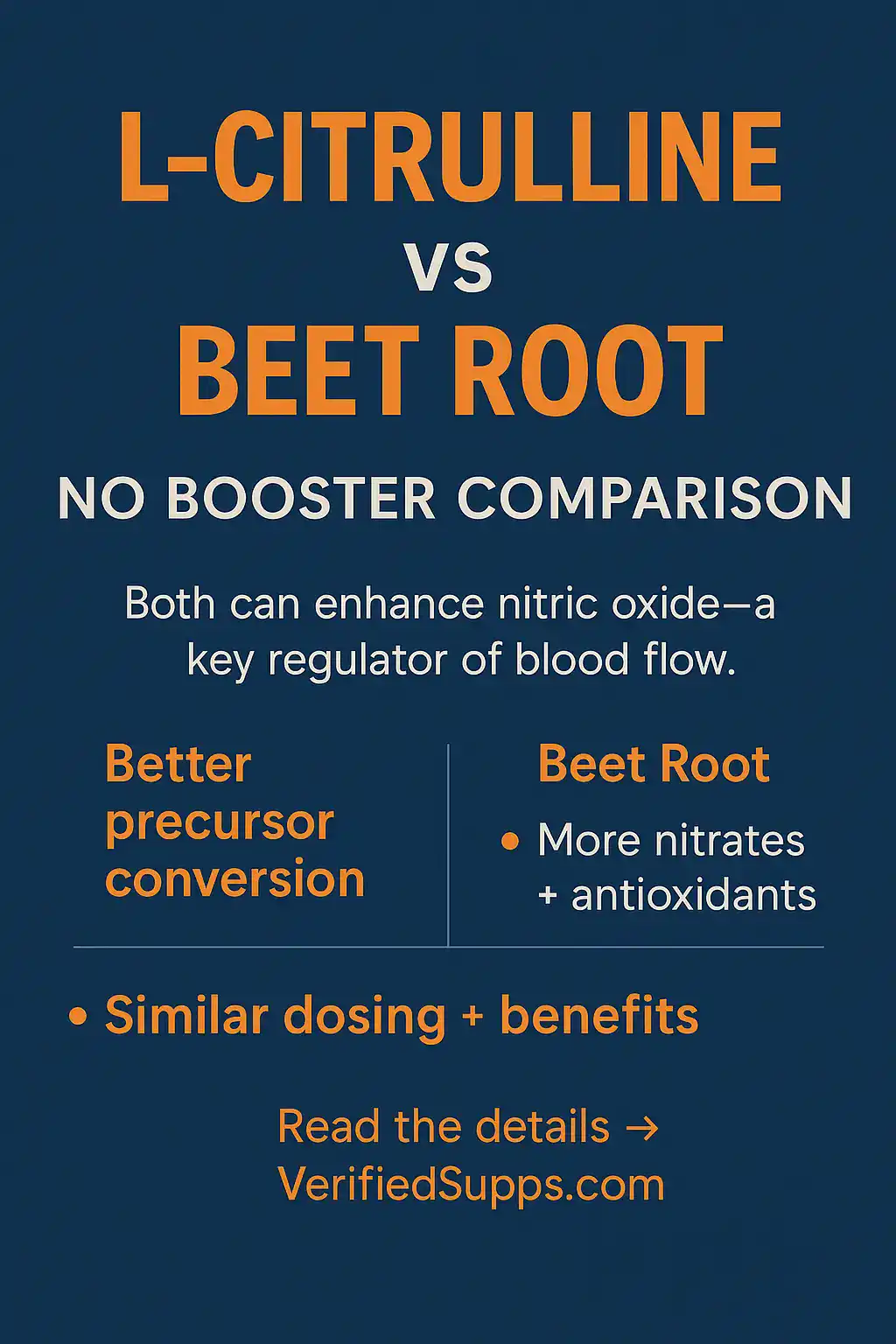
Quick answer: L-Citrulline raises nitric oxide by increasing arginine availability. Beet root raises nitric oxide via dietary nitrates (nitrate → nitrite → NO).
Most common “feel” difference: citrulline = steadier pumps + gym output. Beet root = smoother cardio stamina and lower perceived effort.
Parent Hub: For benefits, dosage, nitric-oxide science, timing, performance effects, and safety: L-Citrulline Complete Guide .
If you want the full citrulline “map,” start there — this page is the head-to-head decision version.
The Core Difference (Fast Overview)
L-Citrulline = boosts NO by increasing arginine internally.
Beet root = boosts NO through dietary nitrates (nitrate → nitrite → NO).
Two different routes. Same destination: better circulation and smoother blood flow.
How L-Citrulline Works
Citrulline → arginine → nitric oxide.
This pathway often feels:
- steady
- reliable
- noticeable in workouts (pumps + endurance)
- helpful for circulation/blood pressure support
- supportive for erectile-function blood flow (circulation pathway)
People usually describe citrulline as more consistent day-to-day.
How Beet Root Works
Beet root increases nitrates → which the body converts into NO, especially under lower-oxygen conditions.
This pathway often feels:
- smooth and gentle
- especially helpful during cardio
- noticeable for stamina, oxygen efficiency, and lower perceived exertion
Many runners and cyclists rely on beet root for a reason.
Citrulline vs Beet Root: Which Is Better?
For blood flow in the gym:
→ L-Citrulline (pumps + training output).
For cardio, running, daily stamina:
→ Beet root (oxygen efficiency during submaximal work).
For erectile-function blood-flow support:
→ L-Citrulline (direct arginine/NO pathway).
For blood pressure support:
→ Beet root (nitrate pathway can be gentle and sustained for some people).
For non-stimulant “pre-workout feel”:
→ often a tie — many people use both.
Can You Take Them Together?
Yes — and this is where it gets interesting.
They use two separate nitric oxide pathways, so stacking can feel like:
- fuller pumps
- smoother endurance
- better circulation “feel”
- more consistent daily energy for some people
Many people take citrulline pre-workout (or morning) and beet root whenever convenient.
Science Snapshot (Simple)
- Citrulline → raises arginine → raises NO
- Beet root → raises nitrates → raises NO
- Both → support vessel relaxation
- Stacked → dual-pathway NO support
This dual-pathway idea is part of why circulation research often explores nitrate + arginine/NO strategies.
Recommended Doses (Practical Starting Points)
L-Citrulline: 3–6 g/day (empty stomach is often preferred, but consistency matters more).
Beet root: commonly described as ~400–600 mg nitrate equivalent (or ~1–2 tsp beet root powder, depending on product concentration).
Quick Summary
- Citrulline boosts NO by raising arginine availability
- Beet root boosts NO via the nitrate → nitrite → NO pathway
- Citrulline often “feels” more gym/pump oriented
- Beet root often “feels” more cardio/stamina oriented
- Many people stack both for dual-pathway support
Go Deeper (VerifiedSupps Guides)
If you want the clean “next steps,” these are the best companions to this comparison.