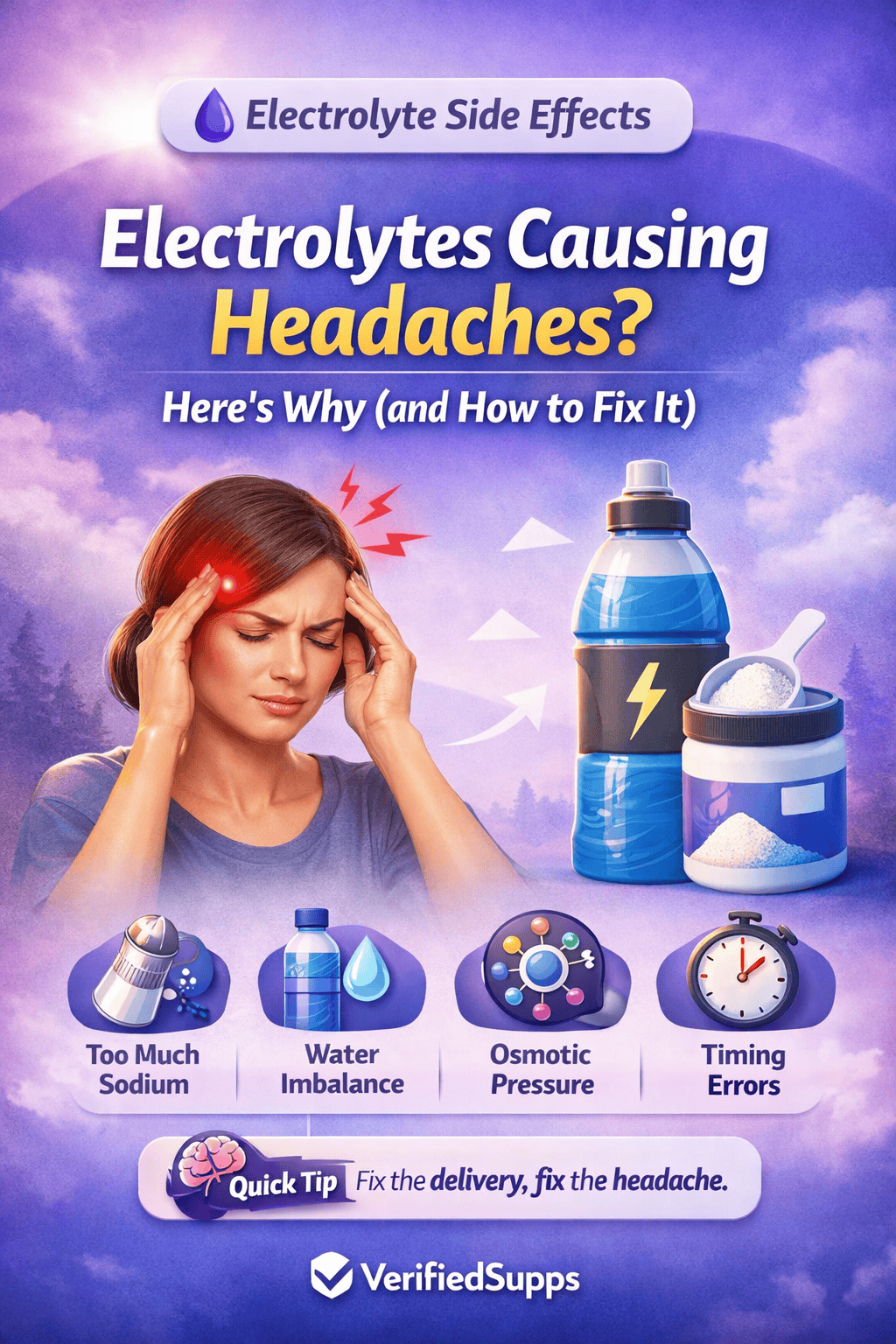
Electrolytes Causing Headaches? Here’s Why and How to Fix It
Electrolytes are often recommended to prevent headaches (exercise, heat, fasting, low-carb). So when a headache shows up after an electrolyte drink, it feels backward. Most of the time, electrolytes aren’t “bad” — the delivery is: the mix is too concentrated, the sodium hits too fast, or water intake doesn’t match the load.
Quick take
- Most common cause: high sodium concentration + not enough water (or drinking it too fast).
- Fastest fix: dilute more, sip slowly, and use food as a buffer.
- If headaches are severe, sudden, or neurological: stop supplement “tuning” and get evaluated.
Evidence standard: human trials, dose ranges, guideline-level sources when available
For: people who get headaches after electrolyte drinks/powders and want a clean fix plan
Not for: thunderclap headache, neurological symptoms, kidney disease, or uncontrolled hypertension without clinician guidance
Last reviewed: March 4, 2026
Parent Hub
Electrolytes Complete Guide: sodium, potassium, magnesium — and how to balance them
This page is the “electrolytes caused headaches” fix path; the hub is the full framework.
Can electrolytes cause headaches?
Yes. Most electrolyte headaches are a concentration and timing problem — not a “you can’t tolerate electrolytes” problem. This page is specifically about headaches that appear after electrolyte drinks/powders (not “headaches from dehydration in general”).
Early decoder: match your headache pattern to the likely fix
| Your pattern | Most likely driver | Best first fix | Time to improve |
|---|---|---|---|
| Headache soon after drinking electrolytes | Sodium hit too concentrated or too fast | Dilute + sip slowly + take with food | Same day |
| Headache + thirst + dry mouth | Water mismatch (not enough water relative to sodium) | Increase water + lower concentration | Hours |
| Headache after workouts/heat | Rehydration too aggressive or too late | Smaller, steadier rehydration over time | Same day |
| Headache + jittery / wired | Stacking with caffeine/stimulants + sodium spike | Separate caffeine + cut dose to 1/4–1/2 | Same day |
Most electrolyte headaches improve fast once delivery becomes gentler.
What would change my recommendation?
- Severe, sudden “worst headache of my life,” neurological symptoms, or fever/neck stiffness (urgent evaluation).
- Kidney disease or medications affecting potassium/sodium balance (diuretics, ACE inhibitors/ARBs, potassium-sparing meds).
- Uncontrolled hypertension using very sodium-heavy mixes.
- Frequent vomiting/diarrhea (electrolyte decisions become medical).
- Headaches that persist despite gentle dosing (treat as a broader headache workup, not a supplement tweak).
Why do electrolytes give me a headache?
Electrolytes regulate fluid movement between blood, tissues, and the brain. When intake is too concentrated or poorly timed, you can get small fluid shifts and changes in vascular tone. In headache-prone people, small shifts can be enough to trigger head pain.
- Osmolality/concentration: a salty drink without enough water can feel like “pressure.”
- Speed: slamming a strong serving creates a fast body response; sipping is smoother.
- Balance: sodium-heavy mixes can feel harsh when potassium intake is low.
- Stacking: caffeine + electrolytes + heat/exercise can push you over your threshold.
Is too much sodium causing my electrolyte headache?
Often, yes — but “too much” is usually “too much too fast.” Many mixes deliver a large sodium load quickly. If you’re sensitive, that can feel like a headache trigger even when the total daily sodium isn’t extreme.
High-yield fixes
- Use 1/4–1/2 serving (or dilute more than the label suggests).
- Sip over 30–90 minutes (don’t chug).
- Take with food (food blunts the “spike”).
Electrolyte headaches on low carb or fasting
Low carb and fasting can shift fluid and sodium handling, which is why electrolytes often help — but it also means your tolerance for fast changes can be narrower. If you go from “almost no electrolytes” to a big sodium-heavy serving, headaches are more likely.
- Better approach: smaller doses, taken steadily, with water.
- Common trap: stacking electrolytes with caffeine during a fast (jitter + headache combo).
- If you’re dizzy or near-fainting: pause and treat hydration/food as priority.
How to fix headaches after electrolyte drinks
The fix is almost always delivery: concentration, speed, and whether water/food matches the mineral load. Don’t change five things at once — you’ll never learn what worked.
Common mistakes
- Mixing too concentrated (strong sodium taste is often your clue).
- Not enough water alongside the electrolyte load.
- Chugging instead of sipping.
- Stacking products (powder + capsules + salty snacks).
- Stacking stimulants (caffeine/pre-workout) while troubleshooting.
Clean test protocol (7–14 days)
- Week 1: 1/4–1/2 serving, diluted, sipped over 30–90 minutes.
- Use food as a buffer: take with a meal or after a small snack.
- Hold caffeine steady: same dose and cutoff time daily.
- Only one change in week 2: increase dose OR change timing (not both).
- If headache returns immediately: reduce dose again or pause and reassess your baseline hydration and sodium intake.
How to tell it’s working
- Track: headache intensity (0–10), timing (minutes/hours after dosing), and whether you took it with food/water.
- Realistic window: spike headaches should improve the same day; stable improvement should show within 3–7 days.
- What not to expect: a perfect “no headaches ever” guarantee if you’re sleep-deprived, over-caffeinated, or in heat stress.
- Success definition: electrolytes help cramps/hydration without triggering headache — not “more sodium always feels better.”
How long do headaches from electrolytes last?
If the headache was caused by a sodium/concentration spike, many people improve within hours once they dilute, slow down, and hydrate. If headaches persist beyond 24–72 hours despite stopping electrolytes, it’s more likely you’re dealing with another driver (sleep debt, illness, dehydration, migraine pattern, medication effects).
Practical rule: repeatable headaches that track tightly with dosing are a “delivery problem.” Non-repeatable headaches are a “baseline problem” until proven otherwise.
When should I stop electrolytes and see a doctor for headaches?
Stop self-experimenting and get evaluated if the headache is severe, sudden, or accompanied by neurological or cardiopulmonary symptoms. Electrolytes can amplify symptoms, but they should never replace medical evaluation when red flags exist.
- Urgent red flags: thunderclap headache, weakness/numbness, confusion, vision changes, fainting, severe shortness of breath.
- Higher-risk contexts: kidney disease, uncontrolled hypertension, diuretics, or known rhythm disorders.
- Persistent headaches: if they continue despite stopping and stabilizing hydration, treat it as a broader headache workup.
Selected Professional References
NIH ODS: Sodium (Health Professional)
Evidence-based sodium context, recommended limits, and safety considerations.
ods.od.nih.gov
NIH ODS: Potassium (Health Professional)
Potassium physiology, intake guidance, and kidney-related cautions.
ods.od.nih.gov
MedlinePlus: Dehydration
How fluid shifts can cause dizziness, palpitations, and headache symptoms.
medlineplus.gov
MedlinePlus: Headache overview
Red flags and common causes to consider if symptoms persist.
medlineplus.gov
National Kidney Foundation: Potassium and kidney disease
Why potassium dosing becomes clinical when kidney function is impaired.
kidney.org
Go Deeper (VerifiedSupps Guides)
Sodium and hydration
Why sodium helps hydration — and when delivery becomes the problem.
Sodium dosage guide
Practical ranges and how to avoid sodium “spikes.”
Sodium vs potassium
Why balance often matters more than totals.
Signs you need more electrolytes
Deficiency signals vs overload signals (and look-alikes).
Final takeaway
Electrolyte headaches aren’t a paradox — they’re feedback. In most cases, the fix is dilution, slower intake, and matching water/food to the sodium load. Fix delivery first before concluding electrolytes “don’t work for you.”
FAQ
Can electrolytes cause headaches?
Yes, especially when the mix is too concentrated, taken too fast, or taken without enough water.
Is sodium usually the cause?
Often it’s the sodium concentration and delivery speed, not sodium in isolation.
Should I drink more water or more electrolytes for a headache?
If the headache started after electrolytes, water (and dilution) is usually the first lever. If the headache started with heat/sweating, you may need a balanced approach.
How long do electrolyte headaches last?
Spike-related headaches often improve within hours once you dilute and slow intake. Persistent headaches need broader evaluation.
Can electrolytes trigger migraines?
They can trigger headaches in migraine-prone people if delivery is abrupt, but they are not a migraine treatment.
Does taking electrolytes on an empty stomach matter?
Yes. Fasted dosing increases the chance of “spike” sensations. Food usually makes dosing smoother.
Should I stop electrolytes if I get headaches?
First, try dilution and slower intake. If headaches are repeatable and immediate, pausing and reassessing is reasonable.
When should I see a doctor?
For severe sudden headache, neurological symptoms, fainting, severe shortness of breath, or headaches that persist despite stopping and stabilizing hydration.
VerifiedSupps Medical Disclaimer
This content is for educational purposes only and is not medical advice. Electrolyte supplements can affect blood pressure, fluid balance, and symptoms like headache and palpitations. Seek urgent medical care for chest pain/pressure, fainting/near-fainting, severe shortness of breath, new neurological symptoms, or a sudden severe headache. Consult a qualified healthcare professional before changing electrolyte intake if you have cardiovascular disease, kidney disease, high blood pressure, or take medications that affect electrolytes or fluid balance.