BEST TIME TO TAKE L-CITRULLINE (FOR PUMPS, PERFORMANCE & BLOOD FLOW)

3c3df01d f21a 442e 80b3 e649cc4b2ef2
Timing · Pumps · Nitric Oxide · Pre-workout Performance · Citrulline Dosing

Best Time to Take L-Citrulline So You Actually Feel It

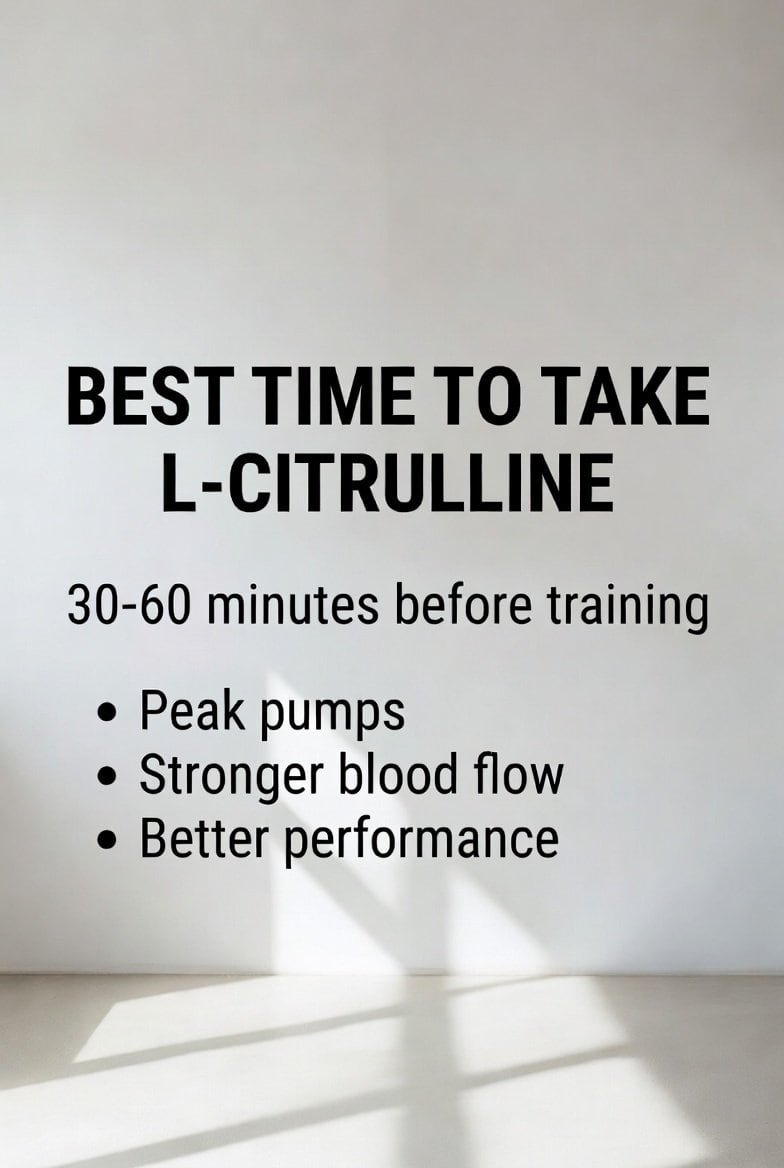
Best answer: take L-citrulline 30–60 minutes before training, with ~45 minutes as the most reliable “feel it in your first working set” window. If your stomach is sensitive or you train fasted, you may prefer the earlier side of that range; if you want the biggest pumps, many people prefer closer to 60 minutes.

This guide turns timing into a simple decision, then shows what to do if you still don’t feel it (dose, hydration, training style, and label traps).

Timing windows Dose Troubleshooting Safety
Quick Take
  • Best timing: 30–60 minutes pre-workout (sweet spot ~45).
  • Common effective dose: 6–8 g L-citrulline.
  • Best pump window: closer to 60 minutes.
  • Most common “no pump” cause: under-dosing + low hydration/sodium.
🧭
Parent hub: L-citrulline core guide
If you want the full nitric-oxide map (benefits, dosing, safety, and comparisons), use the hub. This page stays focused on timing so you can feel it reliably.

Timing cheat sheet: when to take L-citrulline

Use this like a pre-workout timing calculator. Pick the scenario that matches your session.

ScenarioBest timingWhy it fitsExtra tip
Most workouts~45 minutes pre-workoutReliable “feel it early” windowPair with adequate water + sodium
Chasing max pump~60 minutes pre-workoutGives more time to rampShorter rests + higher reps help
Training fasted~30–45 minutes pre-workoutOften feels faster on empty stomachDon’t forget electrolytes
Training after a meal~45–60 minutes pre-workoutFood can slow onset slightlySplit dose if GI is sensitive
Two-a-day sessionsSplit dosing (AM + pre-workout)Keeps levels steadierKeep total intake consistent

Best time to take L-citrulline for pumps

For pumps, the best time is usually 45–60 minutes before training, with ~60 minutes often feeling strongest if you want peak fullness early.

Make the timing pay off
Pumps require fluid and sodium. If hydration is low, citrulline can be “correct” yet still feel flat.

How long does L-citrulline take to work?

Most people who “feel it” notice better blood flow and pump within 30–60 minutes, with a common peak feel in the 40–70 minute range depending on dose and stomach contents.

Practical takeaway
If you take it in the parking lot, you may miss the best part of the curve.

Should you take L-citrulline on an empty stomach?

If you train fasted, taking citrulline on an empty stomach often makes the onset feel quicker. If you get GI discomfort, use a smaller starting dose or split dosing rather than forcing it.

Fasted
Often feels faster (30–45 min window)
With food
Often smoother, may peak a bit later (45–60 min window)

Best dose of L-citrulline for timing to matter

Timing only “hits” when the dose is high enough. A common effective range is 6–8 grams of L-citrulline taken pre-workout. Lower doses can work for some people, but they’re also the most common reason nothing feels different.

Dose sanity check
If a pre-workout gives you “a scoop of pumps” but only 1–2 g of citrulline, timing won’t rescue it.

Can you split dose L-citrulline?

Yes. Split dosing can reduce GI load and help keep blood-flow support steadier on high-volume days. A common approach is half earlier in the day and half pre-workout, keeping the total daily intake consistent.

Who benefits most
People with sensitive stomachs, long sessions, or two-a-days who want steadier output.

Why you don’t feel L-citrulline even when timing is right

If timing is correct and you still feel nothing, it’s usually not “citrulline doesn’t work.” It’s one of these bottlenecks: dose too low, hydration/electrolytes off, or training not pump-friendly.

  • Under-dosed: most common. Increase toward 6–8 g.
  • Low sodium / low fluids: pump needs fluid + sodium availability.
  • Training style: heavy singles with long rests won’t feel like “pump science.”
  • Expectation mismatch: citrulline is blood-flow support, not a stimulant “rush.”
Key decision
If you want the strongest “I can feel this” signal: use a real dose (6–8 g), take it 45–60 minutes pre-workout, and make sure hydration and sodium aren’t the limiting factor.

Simple plan: dial in citrulline timing in one week

  1. Pick dose: start 6 g (move to 8 g if tolerated and needed).
  2. Pick timing: 45 minutes pre-workout for your baseline test.
  3. Run two sessions: one at 45 minutes, one at 60 minutes (same workout style).
  4. Decide: keep the timing that makes pumps and work capacity feel most consistent.

Selected Professional References

External sources for mechanism, pharmacokinetics, and performance outcomes (external links only).

Go Deeper (VerifiedSupps Guides)

Final Takeaway

If you want citrulline to feel real, treat timing like part of the dose: take 6–8 g, 45 minutes pre-workout as your baseline, and adjust toward 60 minutes if you want the strongest pump. If you still don’t feel it, fix hydration/sodium and check whether your pre-workout dose is actually meaningful.
Frequently Asked Questions

When should I take L-citrulline before a workout?
Most people do best 30–60 minutes pre-workout, with ~45 minutes as the most reliable default.
Can I take citrulline right before training?
You can, but many people miss the peak timing window and feel less benefit early in the session.
Does citrulline work better fasted?
Often it feels faster fasted. If GI discomfort happens, start lower or split dosing.
What dose makes citrulline timing matter?
For most people, 6–8 g is where timing becomes meaningful. Lower doses are the most common “I felt nothing” scenario.
Why are my pumps still weak?
Most often: under-dosing, low hydration/sodium, timing too late, or a training style that isn’t pump-focused.
Is it okay to take citrulline daily?
Many healthy adults do. If you take blood pressure medications, nitrates, or PDE5 inhibitors, use clinician guidance.
Can citrulline lower blood pressure?
It may have a mild effect through blood-flow pathways. If you run low or get lightheaded, reduce dose and use clinician guidance.
VerifiedSupps Medical Disclaimer
This content is for informational and educational purposes only and does not constitute medical advice. Supplements can affect individuals differently and may interact with medications and medical conditions. Consult a qualified healthcare professional before starting, stopping, or changing supplementation—especially if you have cardiovascular disease, low blood pressure, take blood pressure medications, nitrates, PDE5 inhibitors, or other prescription medications, or if you are pregnant or breastfeeding. Seek medical attention for severe, rapidly worsening, or concerning symptoms.

Related Articles

Health

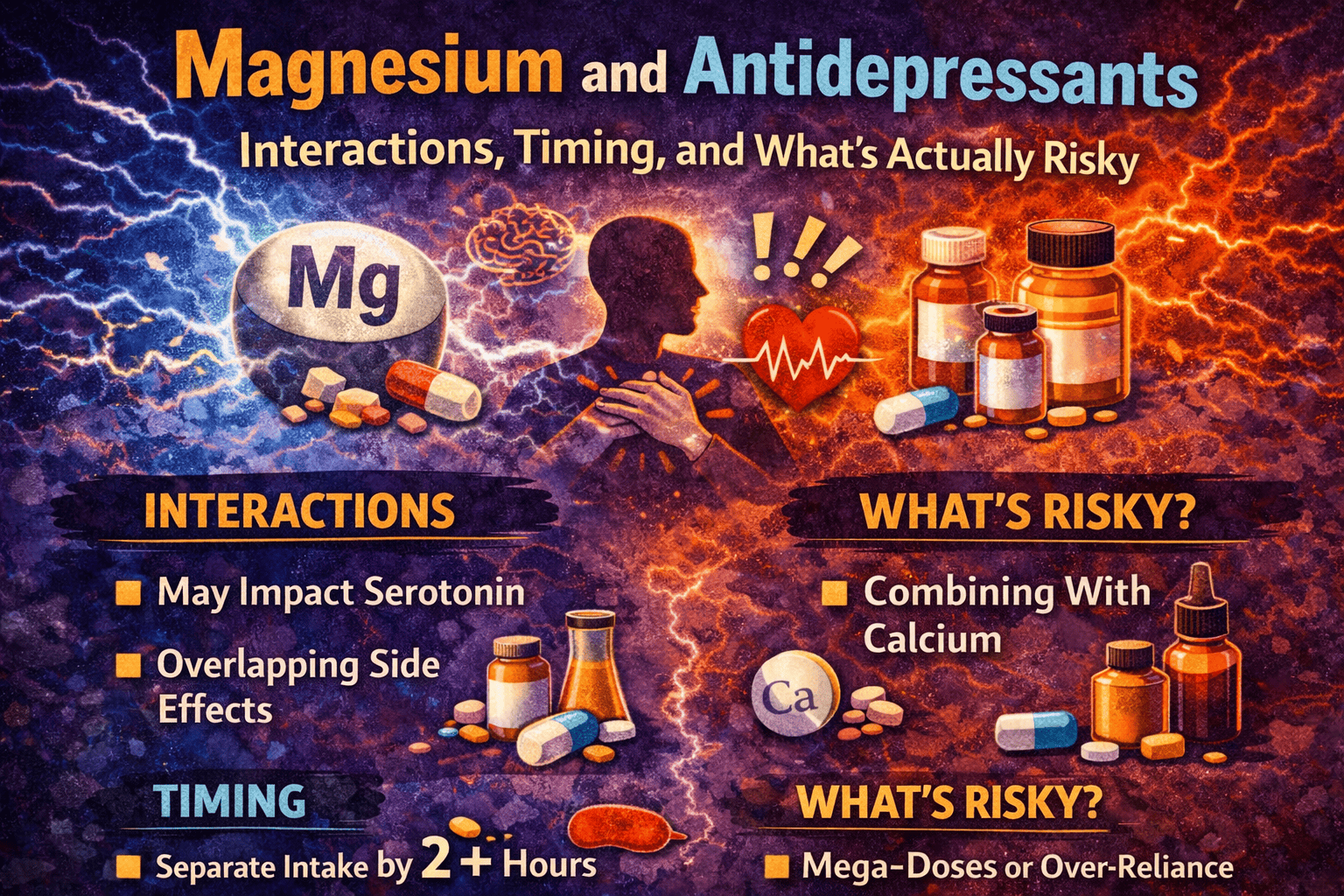
Magnesium and Antidepressants: Interactions, Timing, and Safety

Magnesium · Antidepressants · Timing · Risks Can You Take Magnesium With Antidepressants? Timing, Interactions, and Risks Direct answer: In most people, yes. Magnesium doesn’t usually “interact” directly with SSRIs the way some drugs do. Most concerns are about side effects overlap (sedation, GI effects) and timing/spacing—often because of other medications you take alongside an

Read More »
Health

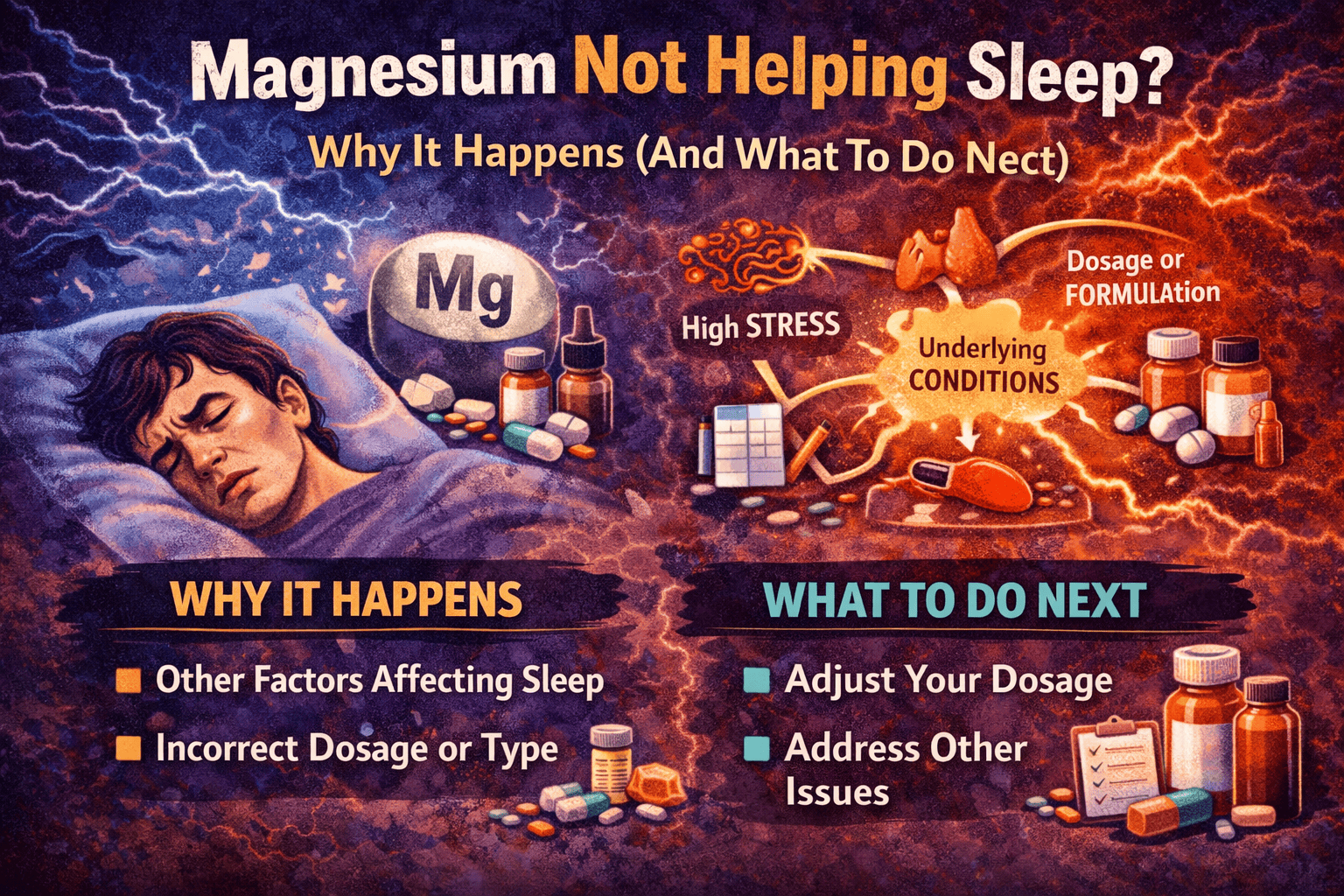
Magnesium Not Helping Sleep? Causes + Fixes (Form, Dose, Timing)

Magnesium · Sleep · Insomnia Logic Magnesium Not Helping Sleep: Why It Happens and What To Do Direct answer: it’s common for magnesium to “do nothing” for sleep. Magnesium helps sleep indirectly by lowering arousal and tension—not like a sedative. If your insomnia is driven by circadian timing, sleep-disordered breathing, stimulants, pain/reflux, or an anxiety

Read More »
Calm & Focus

Can Magnesium Cause Panic Attacks? Causes, Fixes, and When to Stop

Magnesium · Panic Attacks · Anxiety Can Magnesium Cause Panic Attacks? Why It Happens + What to Do Direct answer: It can in some people, usually due to dose, timing, form, or stacking—not toxicity. It can feel like panic even if it’s just a body signal (GI discomfort, lightheadedness, “heart feels loud”) that your brain

Read More »