Best Magnesium for Sleep: What to Take, How Much, and When
Most people looking for sleep do best with magnesium glycinate, because it’s usually well-tolerated and tends to feel calming. If your sleep problem is more “racing thoughts” and a busy brain, magnesium threonate may fit better, and if constipation is part of the problem, magnesium citrate can help (but it’s more likely to loosen stools). Most people start with 100–200 mg elemental magnesium in the evening, then titrate slowly.
Magnesium doesn’t knock you out like a sedative. It helps sleep indirectly by lowering arousal and reducing tension—so the best form depends on what’s keeping you awake.
Magnesium for sleep: glycinate vs threonate vs citrate vs oxide (quick comparison)
| Form | Best for | Downsides | Who should choose it |
|---|---|---|---|
| Glycinate | Default sleep pick; tension; sensitive stomach | Can feel “too relaxing” if dose is high/late | Most people starting magnesium for sleep |
| Threonate | Racing thoughts / “busy brain” patterns | More expensive; lower elemental per cap | Sleep disruption that feels cognition-driven |
| Citrate | Constipation-linked sleep disruption | More likely diarrhea / GI urgency | You want sleep + digestion support (careful timing) |
| Oxide | Cost-first supplementation | Often underperforms for raising magnesium status; GI effects possible | Budget is tight and you accept lower performance |
Best magnesium for sleep (quick answer: which form is best?)
For most people: magnesium glycinate. If your insomnia feels driven by racing thoughts: threonate may be worth testing. If constipation is a driver: citrate can help—but GI effects are the trade-off.
Magnesium glycinate for sleep: who it works best for
- Body tension / restlessness: you feel physically “wired” at bedtime
- Sensitive stomach: other forms caused loose stools or nausea
- Stress-load evenings: you want a smoother downshift
- Daily maintenance: you want consistency without trade-offs
Magnesium threonate for sleep: racing thoughts and “busy brain”
If your biggest issue is mental load—thought loops, 2–4am wake-ups with a “busy brain,” or morning fog—threonate is the common test pick. It’s not required for most sleepers; it’s a niche fit when the pattern is clearly brain-driven.
Magnesium citrate for sleep: when constipation is the real culprit
If constipation disrupts your sleep (bloating, discomfort, waking to “go”), citrate can be the right tool. The trade-off is higher GI activity. Many people do best taking citrate earlier (not right at bedtime) or choosing glycinate for pure sleep support.
How much magnesium for sleep (elemental dose) + how to calculate it
Most sleep trials start at 100–200 mg elemental magnesium in the evening, then titrate slowly if tolerated. Many adults land around 150–300 mg elemental for sleep support.
How to calculate: use the label’s “elemental magnesium” line (often listed as “Magnesium (as glycinate…) — X mg”). Ignore capsule weight. The adult supplemental UL is commonly cited as 350 mg/day mainly due to diarrhea risk. (External: NIH ODS)
When to take magnesium for sleep: timing, food, and stacking
- Best default timing: with dinner or early evening (often smoother than “right before bed”)
- With food: helpful if you’re GI-sensitive
- Don’t stack early: test magnesium alone before adding melatonin, alcohol/THC, antihistamines, or sedating herbs
- If vivid dreams happen: lower dose and take earlier
Sleep problem → best form (fast matching)
| If your issue is… | Start with… | One tweak that helps |
|---|---|---|
| Can’t fall asleep / body tension | Glycinate | Dinner timing + lower dose if groggy |
| Racing mind / bedtime anxiety | Threonate (or glycinate) | Avoid stacking; keep caffeine stable |
| Constipation disrupting sleep | Citrate (careful) | Earlier timing to avoid night GI urgency |
| Vivid dreams / nightmares | Lower dose (form varies) | Take earlier; remove melatonin/alcohol |
| Loose stools at night | Switch away from citrate | Food timing + split dose |
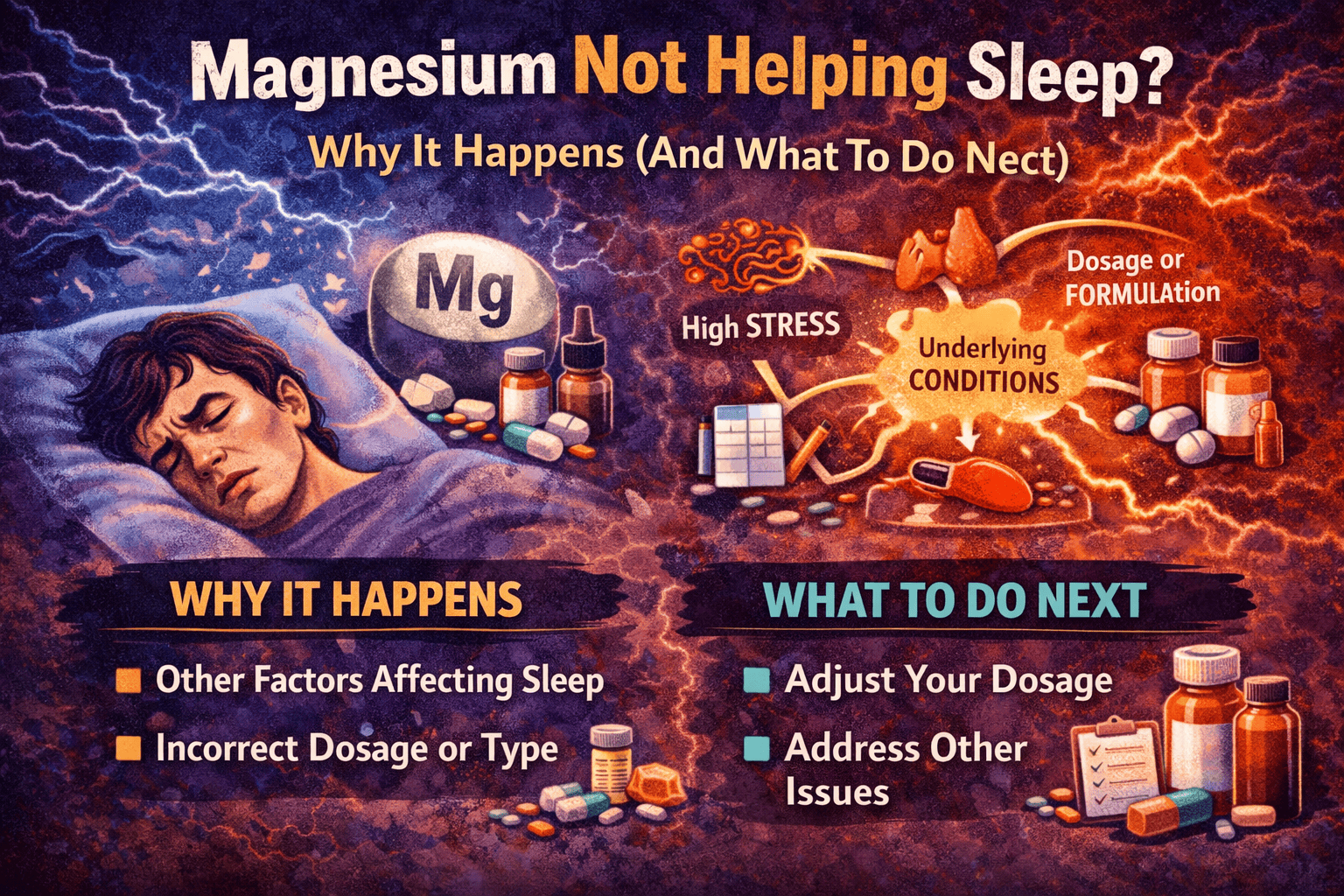
Why magnesium isn’t helping your sleep (common reasons)
- Dose too high or too low: high dose → groggy/dreamy; low dose → nothing noticeable
- Wrong form for the problem: citrate causing GI disruption is a common sleep-killer
- Taking it too late: bedtime-only dosing can backfire for sensitive sleepers
- Caffeine/alcohol timing: magnesium can’t override stimulants or fragmented sleep reliably
- Expecting sedation: magnesium helps by lowering arousal, not by “knocking you out”
Frequently Asked Questions
Go Deeper (VerifiedSupps Guides)
Selected Professional References
Final Takeaway
If you want one simple answer: start with glycinate, use a conservative elemental dose, and take it earlier (dinner/early evening). If your issue is “busy brain,” test threonate. If constipation is the issue, citrate can help—but it’s also the form most likely to disrupt sleep via GI effects.