Electrolytes for Muscle Cramps: Magnesium vs Potassium vs Sodium
Direct answer: most cramps aren’t caused by “one missing electrolyte.” The fastest way to improve them is to match the pattern to the right lever: magnesium is more often the best first lever for night cramps + tension + poor wind-down, while sodium (and often potassium) becomes the priority for heat/sweat cramps and “water doesn’t help” hydration patterns.
This guide gives you a practical decoder, safe starting points, and a clean test protocol so you can stop guessing.
Which electrolyte is best for muscle cramps?
The “best” electrolyte depends on your cramp pattern. Night cramps often lean magnesium/tension. Heat + sweat cramps often lean sodium (and sometimes potassium). The most reliable approach is a pattern-based first lever—then a clean test.
Cannibalization guardrail: this page owns cramps pattern → electrolyte lever. For magnesium forms and side effects, use the magnesium-specific guide.
- Night cramps + tight calves + poor sleep → magnesium first
- Heat cramps + sweating + thirst/headache → sodium + fluids first
- Heavy legs + early fatigue after long sessions → potassium foods (and balance) first
| Cramp pattern | Most likely lever | Best next step (today) | What “success” looks like |
|---|---|---|---|
| Night cramps + tight calves + restless sleep | Magnesium | Start consistent evening magnesium (food + supplement if needed) | Less “grabby” muscles, smoother nights |
| Cramps during heat/sweat + thirst despite water | Sodium + fluids | Use sodium-containing fluids in the same workout/heat context | Hydration feels “effective,” fewer mid-session cramps |
| Heavy legs/weakness after long sessions | Potassium (food-first) | Add potatoes/beans/greens daily for 7 days | Less “dead” feel, steadier contraction |
| Twitches + stress-driven tension days | Magnesium (consistent) | Keep magnesium steady for 10–14 days + fix sleep debt | Fewer twitches, lower baseline tension |
- Kidney disease (potassium and magnesium supplements need clinician guidance)
- ACE inhibitors/ARBs or potassium-sparing diuretics (hyperkalemia risk)
- Heart failure or sodium-restricted medical diets
- New palpitations, chest pain, fainting/near-fainting (medical evaluation first)
- Persistent vomiting/diarrhea or suspected heat illness (higher stakes)
Does magnesium help leg cramps at night?
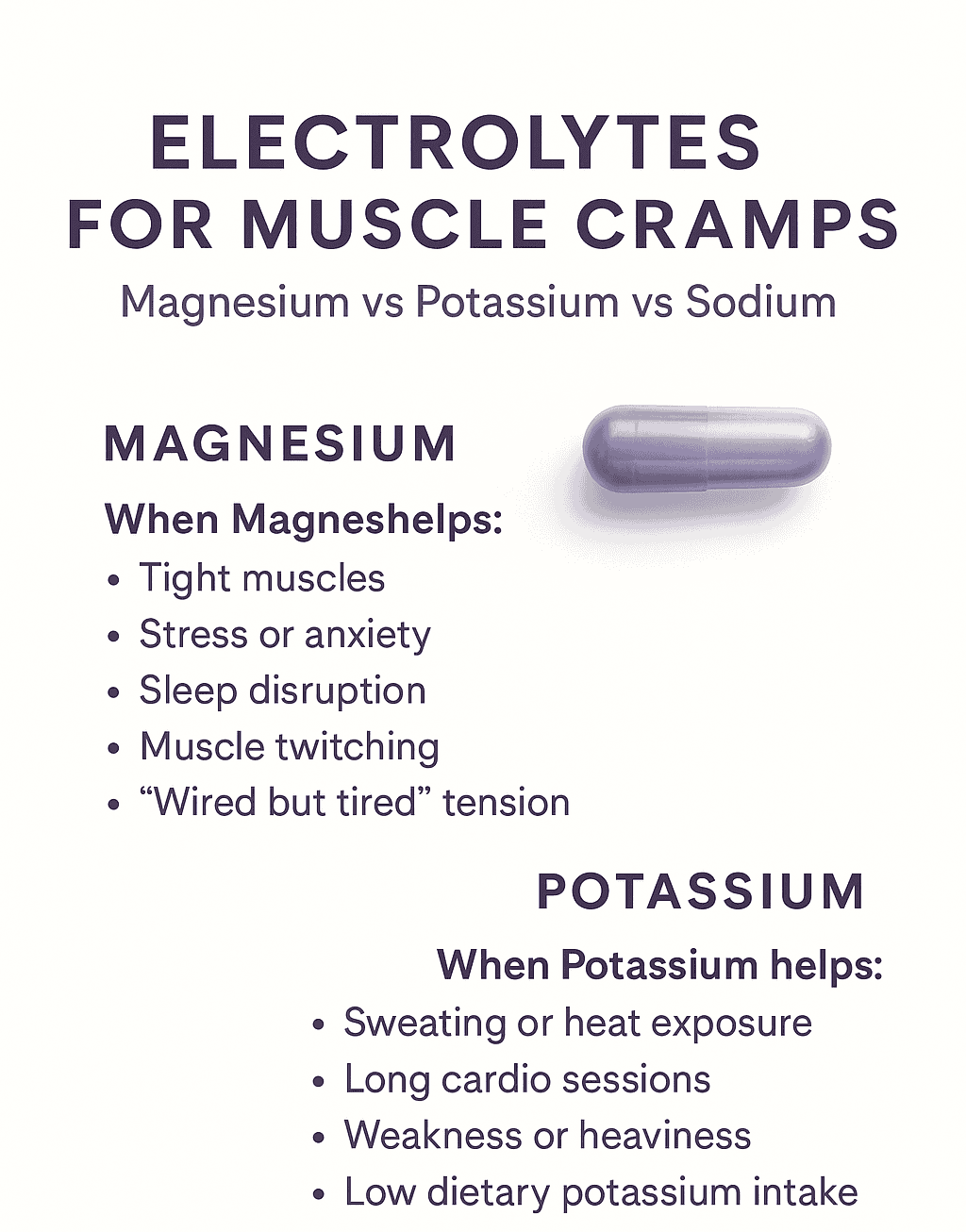
It can—especially when night cramps track with tight muscles, twitching, stress, or light/restless sleep. Magnesium is primarily a “release and stability” tool, not a sweat-loss hydration tool.
- Night cramps + restless wind-down
- Twitching (eyelid/calf), jaw/neck tension
- “Wired but tired” fatigue
How do I know if my cramps are from sodium loss?
If cramps show up with heat, sweating, sauna, or long workouts—and you feel “dehydrated” even after water—sodium is often the missing piece. Sodium loss is a common driver in sweat-heavy contexts.
- Cramps during/after sweating (not only at night)
- Headaches, nausea, or “washed out” fatigue in heat
- Water doesn’t “stick” (still thirsty, frequent urination)
- Salty foods or sodium-containing fluids help more than plain water
Do low potassium levels cause cramps?
Low potassium can contribute—especially with high sweat loss, low-potassium diets, or certain medications. Potassium supports electrical balance inside cells and helps muscles contract efficiently. The “feel” is often weakness/heavy legs more than tightness.
- Heavy legs after cardio or long heat exposure
- Early fatigue despite “good hydration”
- Low potatoes/beans/greens most days
- Note: low magnesium can make potassium harder to retain
How much sodium, potassium, and magnesium should I use for cramps?
Think in starting points, then adjust based on response and context. Magnesium is the most common daily supplement lever. Sodium/potassium are often best increased via food and sodium-containing fluids around sweat/heat patterns.
- Magnesium: often 200–350 mg elemental/day (split if sensitive)
- Potassium: food-first; build consistent potassium-rich meals
- Sodium: adjust around sweat/heat; sodium-containing fluids often beat “more water” during long/hot sessions
Why electrolytes aren’t fixing my cramps
Most “electrolytes didn’t work” cases are: wrong lever, wrong timing, underdosing, or inconsistent use. Cramps can also be driven by training-load spikes, footwear changes, or sleep debt—electrolytes won’t override those.
- Taking magnesium for sweat/heat cramps without fixing sodium/fluid balance
- Chugging water without electrolytes (dilution can worsen symptoms)
- Using a gut-active magnesium form/dose and quitting
- Changing three variables at once (no clean signal)
- Ignoring training spikes, sleep debt, or footwear issues
- Inputs held constant: training schedule, caffeine timing, water intake, meal timing
- Duration: 10–14 days (or 2–4 repeatable “trigger” workouts)
- 3 metrics: cramp episodes (count), cramp severity (0–10), sleep quality or workout output (0–10)
- Stop conditions: chest pain, fainting/near-fainting, confusion, severe weakness, severe palpitations
- Sodium + fluids (heat cramps): fewer mid-session cramps and hydration feels “effective” within days
- Magnesium (night cramps): fewer night cramps and less tight baseline over 10–14 days
- Potassium foods: less heavy-leg fatigue and steadier output over 7–14 days
- What not to expect: a dramatic sensation; look for trend improvements
Selected Professional References
Go Deeper (VerifiedSupps Guides)
Final Takeaway
The fastest way to reduce cramps is not “take more electrolytes.” It’s pattern matching: magnesium for night/tension cramps, sodium + fluids for sweat/heat cramps, potassium foods for heavy-leg/low-output patterns. Run one lever at a time for 10–14 days and judge by cramp frequency and recovery—not hype.