By VerifiedSupps Editorial Team
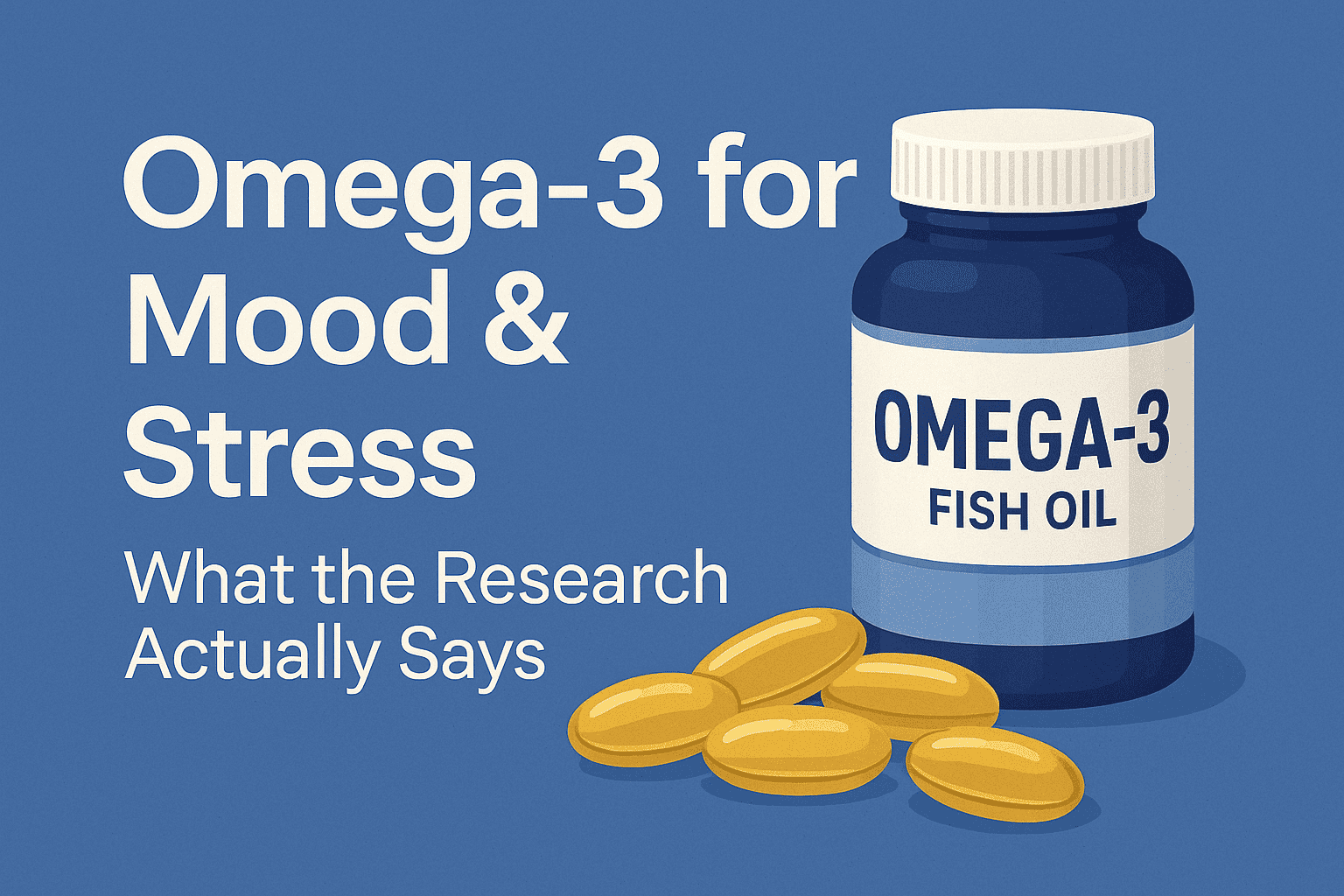
Omega-3 for Mood and Stress: What the Research Actually Suggests
Omega-3 usually does not feel like a sudden mood lift. If it helps, the more realistic pattern is a steadier baseline, less emotional overreaction, and better bounce-back during stressful weeks.
The research conversation tends to focus more heavily on EPA for mood-related use, while DHA still matters as part of the overall brain-structure picture. The most important practical rule is simpler than most people think: dose by EPA plus DHA, take it consistently with meals, and judge trends over weeks rather than days.
This page is focused on omega-3 for mood and stress support specifically, not the broader fish-oil guide covering every possible benefit and use case.
Key terms: omega-3, fish oil, EPA, DHA, mood support, stress resilience, emotional reactivity, daily dose
Quick Take
Omega-3 makes the most sense as baseline support, not as an acute “calm pill.” The people who benefit most are often those with low fish intake, inconsistent omega-3 exposure, or a goal of steadier mood and stress resilience over time.
TL;DR decision
If your diet is low in fatty fish and you want a calmer long-horizon support tool for mood steadiness, omega-3 is a reasonable experiment. Judge it over 4 to 8 weeks, not over a couple of days.
Evidence standard: human trials and systematic reviews when available, dose ranges, and guideline-level safety sources
Who this is for: people with low fish intake who want steadier mood baseline support and less stress reactivity
Who this is not for: anyone needing urgent help for severe depression, mania, suicidal thoughts, or major anxiety symptoms that need direct professional care
Author: VerifiedSupps Editorial Team
Reviewed by: VerifiedSupps Editorial Team
Published: 2026-03-12
Updated: 2026-03-12
Last reviewed: 2026-03-12
Parent Hub
Omega-3 Complete Guide
Use the main hub if you want the full omega-3 picture: benefits, forms, dosing, timing, absorption, and safety. This page stays tightly focused on mood and stress support.
Mood and stress omega-3 checklist
This is the simplest way to run a fair “is this helping me?” test.
| Step | What to do | What to track | Time window |
|---|---|---|---|
| 1 | Choose one product with clearly listed EPA and DHA, then take it daily with a real meal | Consistency and missed days | Week 1 |
| 2 | Keep caffeine, alcohol, and sleep reasonably stable while testing | Reactivity, irritability, baseline “edge” | Weeks 2–4 |
| 3 | Judge trends instead of single days | Steadiness, bounce-back, emotional bandwidth | Weeks 4–8 |
| 4 | If nothing changes, check dose clarity and adherence before you blame the product category | Actual EPA + DHA and missed days | Week 8 |
Best next step (today): Look at your label and count EPA plus DHA, not just total “fish oil mg.”
Does omega-3 help mood and stress?
For some people, yes. The practical pattern is usually less emotional reactivity, steadier baseline mood, and better recovery from stressful days rather than a dramatic lift or a same-day calming effect.
Mechanism
- EPA is often emphasized more heavily in mood-related research summaries.
- DHA still matters as part of broader brain structure and membrane support.
- The realistic outcome is better baseline resilience, not an acute anti-anxiety effect.
Is EPA or DHA better for mood?
If the goal is mood-focused support, EPA usually gets more attention than DHA. That does not make DHA unimportant. It means many mood-oriented formulas lean EPA-forward rather than DHA-only.
Practical rule
For mood support, look for a product with clearly listed EPA and DHA, not a label that hides behind total fish-oil weight.
How much omega-3 should you take for mood and stress support?
The most important step is using a product with clear EPA plus DHA labeling and taking it with food consistently. Many people do best when they stop thinking in terms of “fish oil capsules” and start thinking in terms of actual combined EPA and DHA.
Dose by the actives
Judge the label by EPA plus DHA, not by “1000 mg fish oil.”
Take it with meals
A real meal usually makes absorption and tolerance cleaner.
How long does omega-3 take to work for mood?
Mood-related shifts are usually gradual. Four to eight weeks is a reasonable first judgment window, with eight to twelve weeks often being a cleaner time frame for trend-based changes.
What improvement often looks like
Less edge, fewer reactive moments, and faster emotional recovery after stressful days.
Can omega-3 help anxiety?
It can play a supportive role in stress resilience and mood steadiness, which may matter for some people with anxiety symptoms. But it is not an acute anti-anxiety tool and not a replacement for proper treatment when anxiety is severe or disruptive.
Best mindset
Think of omega-3 as supportive nutrition for steadiness, not as rescue therapy.
Is omega-3 safe to take for mood support?
For many healthy adults, yes, omega-3 is commonly used daily. The most important caution areas are bleeding risk, blood-thinner or antiplatelet use, and surgery planning. If medications or medical conditions are part of your picture, clinician guidance is the better default.
Why omega-3 isn’t helping your mood
The usual reasons are simpler than people expect: the actual EPA plus DHA dose is lower than it looks, the routine is inconsistent, or bigger stressors like bad sleep, heavy alcohol use, or chronic overwork are overwhelming the signal.
Common mistakes
- Counting “fish oil mg” instead of EPA plus DHA.
- Taking it every few days instead of daily.
- Changing caffeine, alcohol, sleep, and supplements all at once.
- Expecting an acute calming effect in the first few days.
Clean test protocol
| Inputs | Choose one clearly labeled EPA plus DHA product and take it with the same meal daily. |
|---|---|
| Duration | Use it consistently for 8 weeks before judging the category itself. |
| 3 metrics | 1) emotional reactivity, 2) baseline steadiness, 3) bounce-back after stressful days. |
| Stop conditions | Stop or get guidance if side effects, bleeding concerns, surgery planning, or medication issues make the routine inappropriate. |
How to tell it’s working
You are usually looking for fewer reactive moments, less internal edge, and better bounce-back after hard days. It is more about trend quality than a dramatic feeling.
Red flags / seek care
Omega-3 is not a substitute for urgent care when depression is severe, suicidal thoughts are present, mania is suspected, or anxiety is significantly impairing daily life.
Selected Professional References
External sources to verify omega-3 basics, EPA-focused mood research, anxiety-related reviews, and safety context.
Omega-3 fatty acids fact sheet
Helpful for general omega-3 background, intake context, and broad safety framing.
Used for: baseline omega-3 context
Fish oil overview
Helpful for safety, side effects, and broad use-case review.
Used for: daily-use safety
EPA and depression meta-analyses
Useful for the EPA-forward mood discussion and research trend summaries.
Used for: EPA mood emphasis
Omega-3 and anxiety-related meta-analyses
Helpful for the “supportive, not acute rescue” anxiety framing.
Used for: anxiety support context
Go Deeper (VerifiedSupps Guides)
If you want the cleanest next step, these four guides usually answer the follow-up question people have right after this one.
EPA vs DHA
Use this if you want a cleaner answer on what to prioritize for mood-oriented goals.
Daily omega-3 dose
Use this if label math and real EPA plus DHA targets are the confusing part.
How to tell if fish oil is working
Use this if you want cleaner tracking signals and a better testing framework.
Daily safety
Use this if medication risk, bleeding concerns, or long-term daily use are the main question.
Final Takeaway
Omega-3 for mood and stress is best understood as background support: steadier mood, less reactivity, and better bounce-back over time. Dose by EPA plus DHA, take it with meals, and judge trends over weeks, not isolated good or bad days.
FAQ
Does omega-3 help with mood?
It can support mood regulation for some people, especially when baseline fish intake is low and the routine is consistent.
Is EPA better than DHA for depression-related goals?
EPA usually gets more attention in mood-focused research discussions, though DHA still matters as part of the broader omega-3 picture.
How long does omega-3 take to work for stress or anxiety support?
A fair window is often 4 to 8 weeks, with clearer trend-based changes sometimes taking longer.
Should I take omega-3 in the morning or at night for mood?
Timing matters less than consistency. Take it with the meal you are least likely to miss.
Can omega-3 replace antidepressants or therapy?
No. Omega-3 is supportive nutrition, not a replacement for proper mental health treatment when symptoms are significant.
What is the biggest reason omega-3 seems not to work?
Usually it is underdosing actual EPA plus DHA, inconsistent use, or judging the experiment too early.
Who should be cautious with omega-3?
People on blood thinners or antiplatelet drugs, people with bleeding disorders, and anyone with surgery coming up should check with a clinician first.
What kind of “mood benefit” do people usually notice?
Usually it is less emotional edge, steadier baseline mood, and better bounce-back after stressful days rather than a dramatic mood lift.
VerifiedSupps Medical Disclaimer
This content is for educational purposes only and does not constitute medical advice. Omega-3 supplements are not a treatment for mood or anxiety disorders. Talk with a qualified healthcare professional before starting omega-3 supplements if you take blood thinners or antiplatelet medication, have a bleeding disorder, have surgery planned, are pregnant or breastfeeding, or have significant medical conditions.