The Calm-Focus Stack

8016e2e5 abe2 4e60 8557 f795b664f2e4
Calm Focus · Mental Clarity · Smooth Caffeine · Nervous System Support · Mood Stability

The Calm-Focus Stack: Clear Thinking Without the Edge

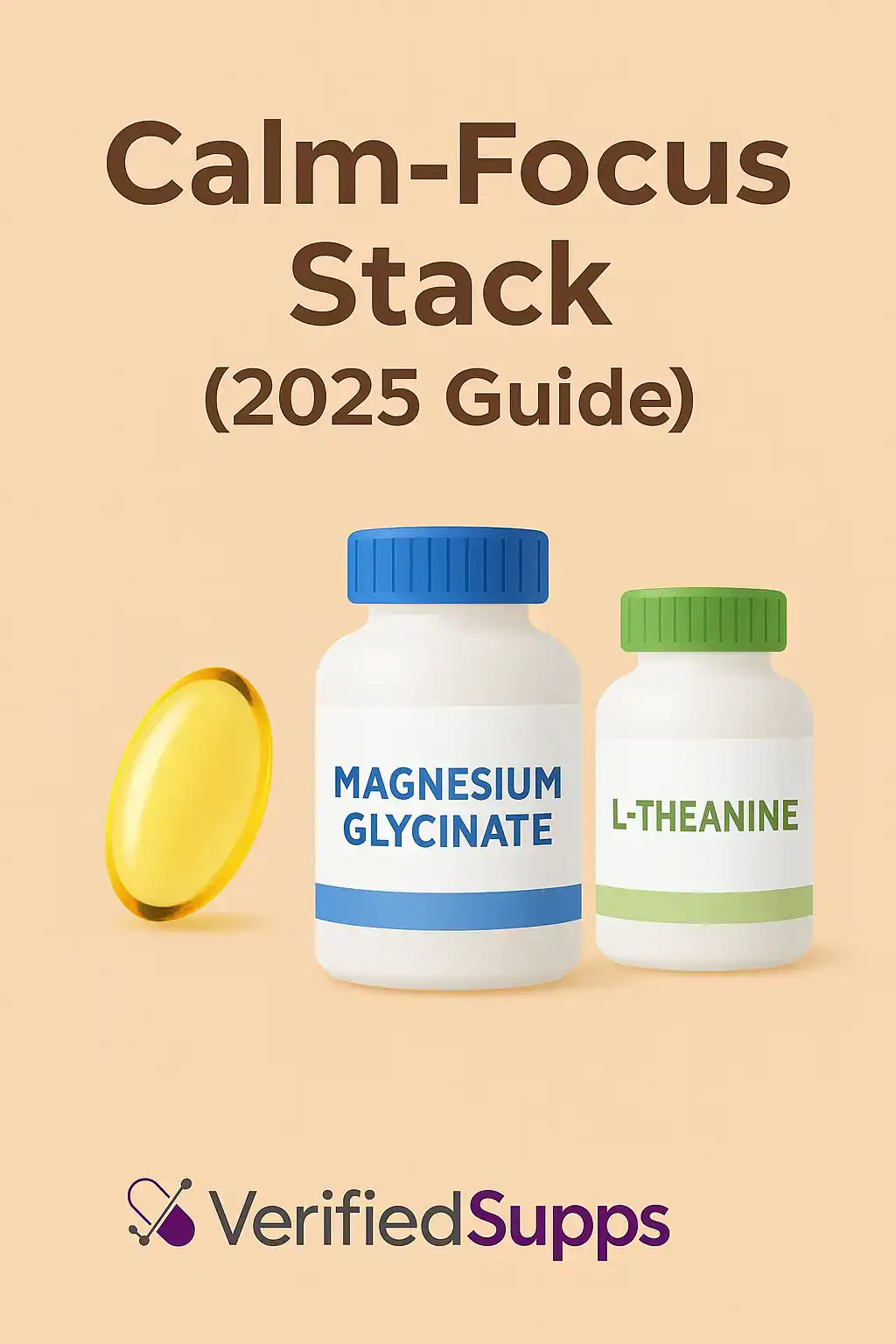
The simplest calm-focus stack is: L-theanine + magnesium glycinate + omega-3. It’s built for people who want clear thinking without jittery stimulation, and a steadier mood without feeling sedated. If your brain bounces between tension and fog, this is a clean place to start.

Why it works (in one sentence): it supports calm focus from three angles—mental noise (theanine), nervous system downshift (magnesium), and brain resilience signaling (omega-3).

Stack overview Dose & timing Troubleshooting Safety
Quick Take
  • Daytime calm focus: L-theanine (100–200 mg) + omega-3 with a meal.
  • Evening downshift: magnesium glycinate (common: 200–400 mg elemental).
  • Caffeine support: L-theanine can smooth the “edge” without dulling you.
  • Timeline: theanine can feel fast; omega-3 is a long-game foundation.
🧭
Parent hub: The Complete Calm Focus Stack
Use the hub if you want the full “system” (templates, timing, and what to avoid). This page is the clean, minimal version built to work for most people.

Calm-focus decoder: which ingredient helps what?

If you pick the wrong tool, the stack feels “meh.” Use your pattern to choose the first lever.

If you feel…Try firstWhy it fitsCommon mistake
Wired, overthinking, “mental static”L-theanineTargets calm focus without sedationUsing more caffeine as the “fix”
Tense body, restless eveningsMagnesium glycinate (night)Supports nervous system downshiftTaking it inconsistently
Mood feels brittle under stressOmega-3 (daily)Long-horizon resilience supportUnder-dosing EPA+DHA or skipping days
Caffeine jitters but you need focusTheanine with caffeineSmooths “edge,” keeps clarityChasing higher caffeine instead of smoothing

What is a calm-focus stack?

A calm-focus stack is a small set of supplements chosen to improve attention and clarity without the anxious “edge” that often comes from stimulants. The goal is steadiness: calmer thoughts, smoother motivation, and better focus under stress.

Core idea
Support the brain’s focus state and the body’s nervous system state at the same time.

Best supplements for calm focus without jitters

For most people, the highest-ROI trio is L-theanine + magnesium glycinate + omega-3. It’s simple, tends to be well tolerated, and covers the most common “why focus feels hard” patterns.

L-theanine
Quieter thoughts, smoother focus.
Magnesium glycinate
Downshift support for a tense system.
Omega-3
Mood resilience that compounds over time.

L-theanine for focus: what dose works best?

Most people start with 100–200 mg. If the goal is “calm focus,” this range is often enough to notice smoother attention and less mental noise.

Calm focus
100–200 mg once or twice daily
With caffeine
100–200 mg with your normal caffeine

Magnesium glycinate for anxiety and focus: does it help?

It can help when “focus problems” are really nervous system problems—tension, restlessness, poor sleep downshift, or stress reactivity. Magnesium glycinate is often used in the evening because it’s commonly described as night-friendly.

Common approach
200–400 mg elemental magnesium, often in the evening. Start lower if you’re sensitive.

How much omega-3 should you take for mood and stress?

A common daily range is 1,000–2,000 mg combined EPA + DHA with food. Omega-3 is a baseline support tool—its value tends to compound with consistent use.

Most important detail
Track EPA + DHA (not “fish oil mg”).

How to build a calm-focus stack for workdays

The simplest routine is: omega-3 with a meal daily, L-theanine on workdays (especially with caffeine), and magnesium glycinate in the evening to protect downshift and sleep.

Simple routine template
  • Morning: omega-3 with breakfast (or lunch if that’s easier)
  • Work block: L-theanine 100–200 mg (optionally with caffeine)
  • Evening: magnesium glycinate for wind-down support

Why the calm-focus stack isn’t working

  • Caffeine is still too high: if you feel edgy, lowering caffeine often beats adding more supplements.
  • Omega-3 is under-dosed: check EPA + DHA, not “fish oil mg.”
  • Magnesium timing is inconsistent: the downshift benefit needs routine.
  • Sleep is the real bottleneck: poor sleep can override any daytime stack.

Selected Professional References

Reputable starting points for mechanisms, outcomes, and safety (external links only).

Final Takeaway

If you want clear thinking without the edge, keep it simple: L-theanine for quiet focus, magnesium glycinate for downshift and nervous system support, and omega-3 as the long-game resilience foundation. The goal is steadiness—not stimulation.
Frequently Asked Questions

What is the best stack for calm focus?
For most people, L-theanine + magnesium glycinate + omega-3 is a strong starting point because it targets mental noise, nervous system tension, and mood resilience.
Does L-theanine actually help focus?
Many people report calmer attention and less mental “static,” especially with caffeine. It’s usually not sedating; it’s a steadier focus feel.
What is the best L-theanine dose for focus?
A common starting range is 100–200 mg. If you’re sensitive, start at 100 mg and adjust based on how you feel.
Can I take L-theanine every day?
Many people do. If you take prescription medications or have low blood pressure concerns, use clinician guidance.
How much omega-3 should I take for mood?
Many people use 1,000–2,000 mg combined EPA + DHA daily with food. The key is consistency and tracking EPA+DHA, not fish oil weight.
Does magnesium glycinate help with anxiety?
It can help when anxiety is tied to tension, poor downshift, or sleep disruption. Many people prefer evening use.
Will this stack make me sleepy?
It shouldn’t feel like a sedative stack for most people. If you feel too relaxed, reduce dose or shift timing earlier.
How long does it take to feel results?
L-theanine can feel fast for some people. Omega-3 tends to be a weeks-long baseline shift. Magnesium often shows up as better evenings and steadier stress response with routine.
Is this stack safe with medications?
Medication context is personal. If you’re on prescription meds (especially for blood pressure, mood/anxiety, or anticoagulants), use clinician guidance before stacking supplements.

Go Deeper (VerifiedSupps Guides)

VerifiedSupps Medical Disclaimer
This content is for informational and educational purposes only and is not medical advice. Supplements can affect individuals differently and may interact with medications and medical conditions. Consult a qualified healthcare professional before starting, stopping, or changing supplementation—especially if you have a medical condition, take prescription medications, are pregnant or breastfeeding, or have concerning symptoms. Seek medical attention for severe, rapidly worsening, or concerning symptoms.

Related Articles

Health

Magnesium and Antidepressants: Interactions, Timing, and Safety

Magnesium · Antidepressants · Timing · Risks Can You Take Magnesium With Antidepressants? Timing, Interactions, and Risks Direct answer: In most people, yes. Magnesium doesn’t usually “interact” directly with SSRIs the way some drugs do. Most concerns are about side effects overlap (sedation, GI effects) and timing/spacing—often because of other medications you take alongside an

Read More »
Health

Magnesium Not Helping Sleep? Causes + Fixes (Form, Dose, Timing)

Magnesium · Sleep · Insomnia Logic Magnesium Not Helping Sleep: Why It Happens and What To Do Direct answer: it’s common for magnesium to “do nothing” for sleep. Magnesium helps sleep indirectly by lowering arousal and tension—not like a sedative. If your insomnia is driven by circadian timing, sleep-disordered breathing, stimulants, pain/reflux, or an anxiety

Read More »
Calm & Focus

Can Magnesium Cause Panic Attacks? Causes, Fixes, and When to Stop

Magnesium · Panic Attacks · Anxiety Can Magnesium Cause Panic Attacks? Why It Happens + What to Do Direct answer: It can in some people, usually due to dose, timing, form, or stacking—not toxicity. It can feel like panic even if it’s just a body signal (GI discomfort, lightheadedness, “heart feels loud”) that your brain

Read More »