Sodium vs Potassium: What’s the Difference & Which One Do You Need?
Sodium and potassium are often mentioned together — and for good reason. They work as a pair to control hydration, muscle function, nerve signaling, and energy. But they don’t do the same job. Many people feel “off” because they focus on one and ignore the other. This guide breaks the difference down clearly, without fear or hype.
1) The core difference between sodium and potassium
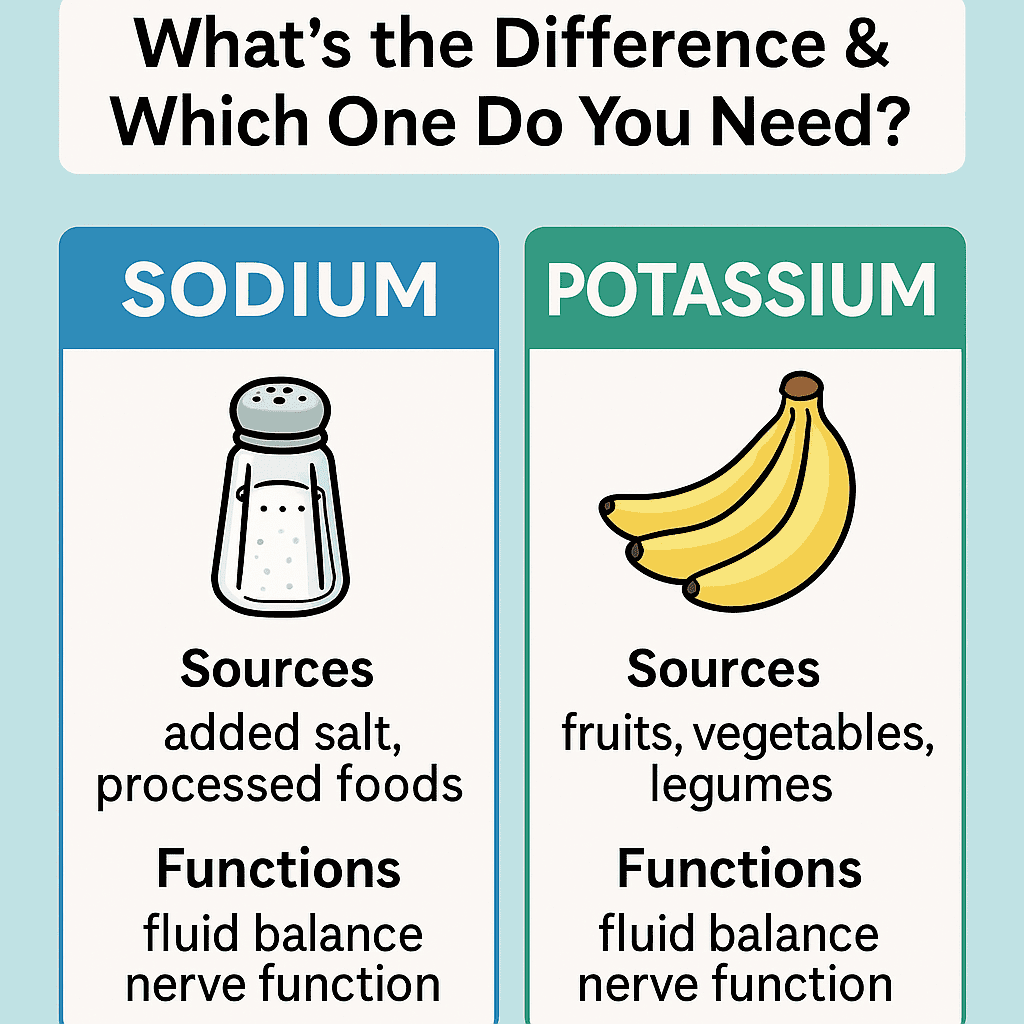
Sodium and potassium sit on opposite sides of your cell membrane and create the electrical gradient that allows nerves to fire and muscles to move. If one is low, the system becomes less efficient — which is why hydration and performance can feel “off” even when you’re trying hard.
- Sodium (Na⁺): fluid outside cells, blood volume, hydration stability
- Potassium (K⁺): fluid inside cells, muscle contraction, energy output
2) What sodium actually does
Sodium is the primary electrolyte lost through sweat. It influences whether water stays in your system or passes straight through. If you drink a lot of water but still feel dehydrated, sodium is often the missing piece.
- Water absorption in the gut
- Blood pressure stability
- Nerve impulse transmission
- Heat tolerance
- Prevention of dizziness and headaches
3) What potassium actually does
Potassium is the main electrolyte inside your cells. It influences how efficiently muscles contract and how well cells stay hydrated. Low potassium often shows up as weakness, heavy legs, or early workout fatigue — especially in heat.
- Muscle contraction and strength
- Cellular hydration
- Energy during exercise
- Normal heart rhythm
- Balancing sodium’s effects
4) Signs you’re low in sodium vs potassium
- Dizziness or lightheadedness
- Headaches, especially in heat
- Frequent urination without hydration relief
- Nausea during workouts
- Feeling worse after drinking lots of water
- Weakness or “heavy legs”
- Early exercise fatigue
- Cramps during heat or cardio
- Difficulty staying hydrated
- Heat intolerance
5) Why you usually need both
Sodium and potassium aren’t interchangeable. They work as a push–pull system that keeps fluid and electrical balance stable. That’s why balanced electrolyte mixes often feel better than water alone.
- Sodium helps you retain water
- Potassium helps water enter cells
- Magnesium helps muscles relax afterward
6) Practical electrolyte support (optional)
Final takeaway
Sodium and potassium are different tools. Sodium helps you retain fluid and stabilize hydration. Potassium supports cellular hydration and muscle output. If you’re sweating, training, low-carb, or drinking lots of water, you often need balanced electrolytes — not “more water.”