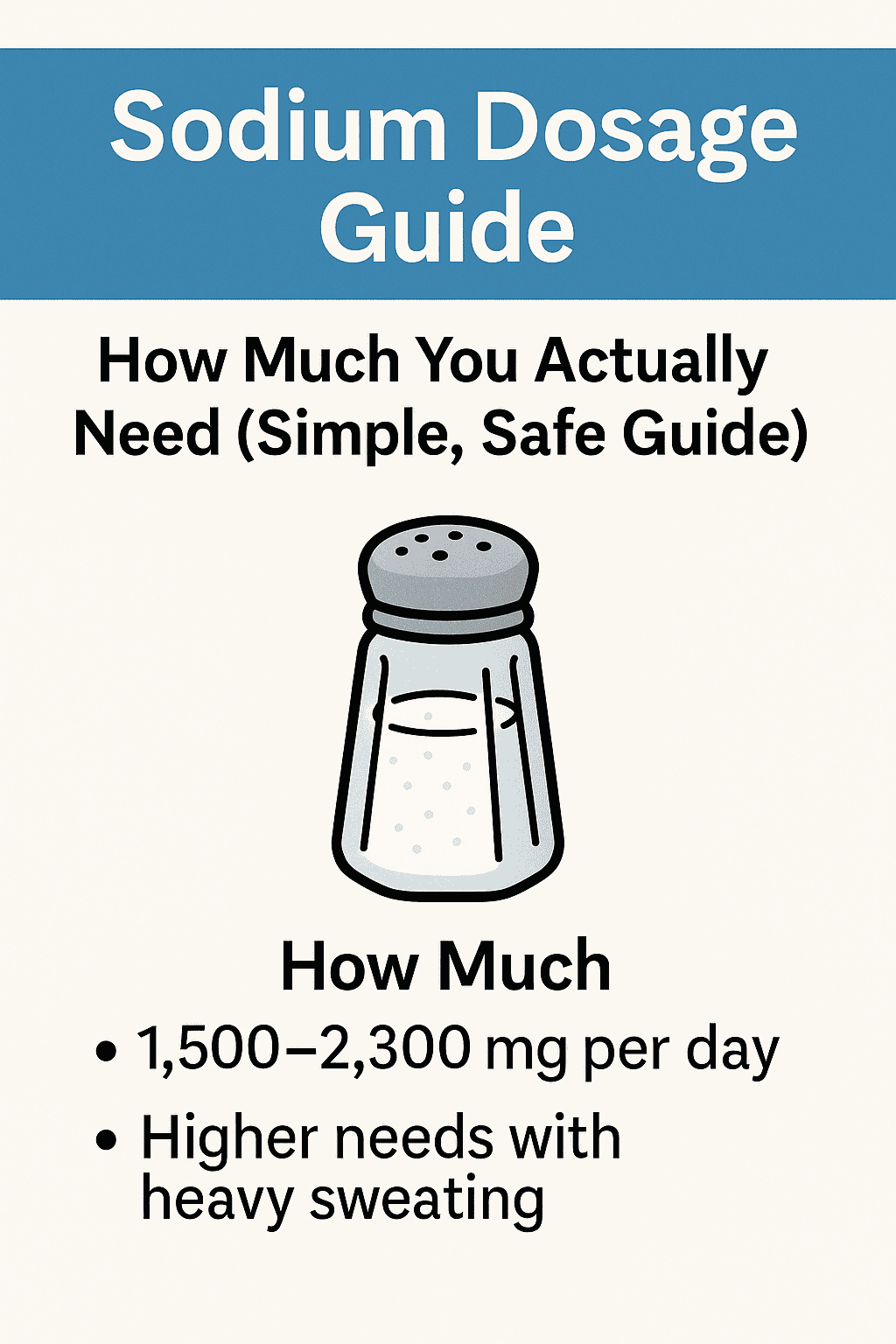
Sodium Dosage Guide — How Much You Actually Need (Simple, Safe Guide)

Sodium · Electrolytes · Hydration · Dosage
Dosage Guide

Sodium Dosage Guide: Simple, Safe, Science-Backed

Sodium is one of the most misunderstood nutrients in nutrition. It’s often framed as something to avoid — yet it’s essential for hydration, nerve signaling, muscle function, and blood pressure stability. The problem isn’t sodium itself. It’s misunderstanding how much you actually need, and when. This guide breaks sodium dosage down simply, safely, and without fear.

Quick Take
Many adults do well around 1,500–2,300 mg sodium/day. If you sweat, exercise, drink a lot of water, live in a hot climate, use saunas, or follow low-carb diets, you may need more. Sodium needs are highly individual — hydration, activity, and climate often matter more than blanket limits.
💧
The Complete Electrolytes Guide
Sodium dosing makes the most sense inside the bigger picture (sodium + potassium + magnesium). This hub ties hydration, cramps, and performance together.
Open the electrolytes hub

1) How much sodium do you need per day?

Lifestyle can change requirements significantly

General guidelines exist, but sodium is one of the few nutrients where sweat rate, water intake, and climate can change needs quickly. These numbers include sodium from all sources — food, salt, and electrolyte drinks.

  • General adult range: 1,500–2,300 mg/day
  • Physically active adults: ~2,500–3,500 mg/day (varies with sweat)
  • Heavy sweaters / hot climates: ~3,000–5,000 mg/day on high-heat days
  • Low-carb or keto diets: often need more sodium + fluids
If you’re unsure where you land: start by matching sodium to heat + sweat + water intake. That’s usually where the answer is.

2) Why sodium needs vary so much

Sweat loss + water dilution are the big drivers

Sodium is lost through sweat and urine. If you drink a lot of water, you dilute sodium unless you replace it. That’s why some people can drink “enough” water and still feel thirsty, weak, or headachy.

You may need more sodium if you:
  • Sweat easily or exercise regularly
  • Drink large amounts of plain water
  • Live in a warm or humid climate
  • Use saunas or hot baths
  • Follow a low-carb or ketogenic diet
  • Experience dizziness, headaches, or weakness

3) Why drinking more water doesn’t fix low sodium

Water follows electrolytes

If sodium is low, water can pass through your system without fully hydrating you. This is why people can drink “enough” water and still feel thirsty, dizzy, or fatigued.

Signs water alone isn’t enough:
  • Frequent urination without relief
  • Headaches after hydration
  • Lightheadedness when standing
  • Fatigue during heat or workouts
Balanced electrolytes make hydration work — especially sodium + potassium together.

4) Sodium from food vs electrolytes

Food is usually enough — until demand spikes

Most sodium comes from food (salted meals, soups, broths, fermented foods). Electrolyte drinks are most useful when sodium needs rise quickly — heat, heavy sweating, long workouts, or “water isn’t hydrating me.”

Food sources work well for:
  • Normal daily hydration
  • Light activity days
  • Meals before/after workouts
Electrolyte drinks help when:
  • Sweating heavily
  • Training in heat
  • Feeling dizzy/weak from hydration issues

5) Sodium works best with potassium & magnesium

Balance matters more than any single number
  • Sodium → holds water outside cells
  • Potassium → pulls water into cells
  • Magnesium → stabilizes nerves & muscle relaxation

6) Who should be careful with sodium intake

A few groups need clinician guidance

For many healthy, active adults, sodium supports hydration. Extra caution is warranted for:

  • People with kidney disease
  • Those with severe or sodium-sensitive hypertension
  • Individuals on sodium-restricted medical diets
  • People taking certain blood pressure medications
If any apply, consult a healthcare provider before intentionally increasing sodium intake.

Final takeaway

Sodium dosing is context-based

Sodium isn’t automatically “too high” or “too low” — it’s contextual. Sweat, heat, water intake, and diet change needs. If you’re active, low-carb, or in the heat, sodium support often improves hydration and performance quickly.
Frequently Asked Questions

Is sodium bad for hydration?
No. Sodium is essential for hydration. Problems usually come from imbalance, not sodium itself.
Can too little sodium cause dizziness?
Yes. Low sodium is a common driver of dizziness, especially with heat, sweating, or high water intake.
Should athletes consume more sodium?
Often yes. Sodium is lost through sweat and needs to be replaced for proper hydration and performance.
VerifiedSupps Medical Disclaimer
This guide is for educational purposes only and not medical advice. Sodium needs vary by activity, climate, diet, medications, and health status. Individuals with kidney disease, cardiovascular conditions, severe hypertension, or sodium-sensitive conditions should consult a healthcare professional before changing sodium intake or using electrolyte supplements. Seek urgent medical care for severe confusion, fainting, seizures, chest pain, or severe heart rhythm symptoms.

Related Articles

Health

Magnesium and Antidepressants: Interactions, Timing, and Safety

Magnesium · Antidepressants · Timing · Risks Can You Take Magnesium With Antidepressants? Timing, Interactions, and Risks Direct answer: In most people, yes. Magnesium doesn’t usually “interact” directly with SSRIs the way some drugs do. Most concerns are about side effects overlap (sedation, GI effects) and timing/spacing—often because of other medications you take alongside an

Read More »
Health

Magnesium Not Helping Sleep? Causes + Fixes (Form, Dose, Timing)

Magnesium · Sleep · Insomnia Logic Magnesium Not Helping Sleep: Why It Happens and What To Do Direct answer: it’s common for magnesium to “do nothing” for sleep. Magnesium helps sleep indirectly by lowering arousal and tension—not like a sedative. If your insomnia is driven by circadian timing, sleep-disordered breathing, stimulants, pain/reflux, or an anxiety

Read More »
Calm & Focus

Can Magnesium Cause Panic Attacks? Causes, Fixes, and When to Stop

Magnesium · Panic Attacks · Anxiety Can Magnesium Cause Panic Attacks? Why It Happens + What to Do Direct answer: It can in some people, usually due to dose, timing, form, or stacking—not toxicity. It can feel like panic even if it’s just a body signal (GI discomfort, lightheadedness, “heart feels loud”) that your brain

Read More »