Potassium Benefits: The Simple, Science-Based Guide
Direct answer: potassium is the main electrolyte inside your cells. It supports muscle contraction, nerve signaling, cellular hydration (“water going deep”), and helps counterbalance sodium for blood pressure and fluid balance. When your intake drops below your personal “sweet spot,” you often feel it as heavy legs, early workout fatigue, heat sensitivity, or hydration that feels inconsistent.
This page owns one intent: explain what potassium does, who tends to notice it, and how to test it calmly (without stacking noise).
What does potassium do in the body?
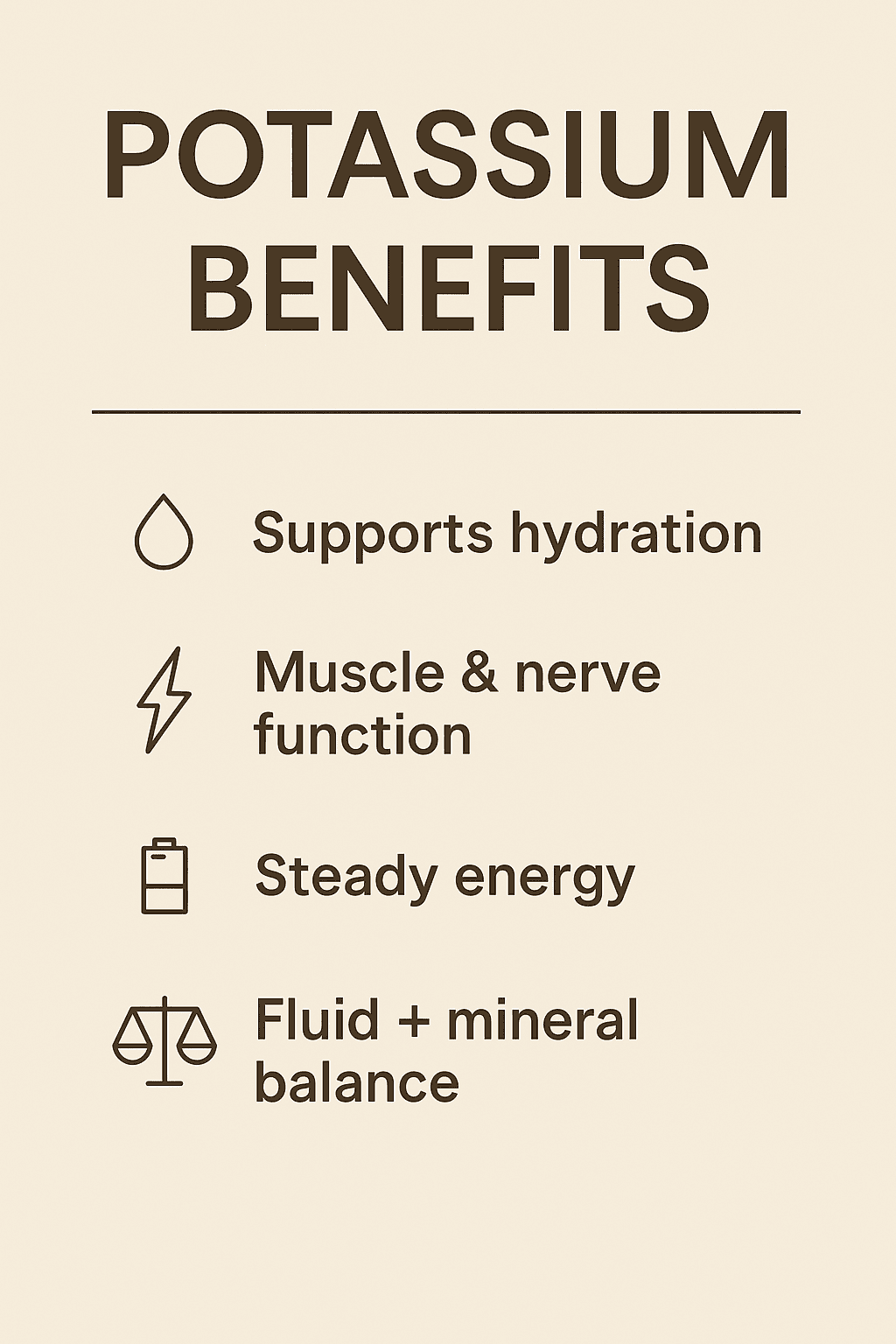
Potassium is the primary positively charged mineral inside cells. It helps maintain electrical gradients that let muscles contract and nerves fire. It also supports cellular fluid balance—one reason potassium is tightly linked to “real hydration.”
Cannibalization guardrail: this page is potassium benefits + signals + clean testing. For exact intake targets and supplement safety details, use the potassium dosage guide.
- You feel heavy legs or flat output during workouts
- Heat makes everything harder (fatigue, cramps, low drive)
- Your diet is light on potatoes/beans/greens most days
- Muscle contraction: helps you generate force and sustain output
- Nerve signaling: supports normal nerve firing and reflexes
- Cellular hydration: helps move fluid into tissues
- Sodium balance: helps counterbalance high sodium patterns for blood pressure
- Heart rhythm support: potassium matters, but heart symptoms deserve caution
- Kidney disease or reduced eGFR (supplement caution)
- ACE inhibitors/ARBs or potassium-sparing diuretics (hyperkalemia risk)
- Persistent palpitations or known arrhythmias (evaluate first)
- Severe weakness, paralysis, confusion (urgent evaluation)
- Vomiting/diarrhea/heat illness (higher stakes; medical guidance if significant)
What are the benefits of potassium for hydration?
Potassium supports hydration by helping water move into cells. That’s why potassium benefits often show up as improved “deep hydration,” steadier energy, and less of the drained feeling after sweating.
| Your intent | Likely lever | Best next step (today) | Common mistake |
|---|---|---|---|
| Water doesn’t “go deep” (still thirsty) | Potassium foods + balance | Add potatoes/beans + keep water steady | More water without electrolytes |
| Dizziness/headaches after water | Often sodium first | Salt a meal + fluids; retest | Assuming potassium-only |
| Heat cramps + sweaty weeks | Balance (sodium + potassium) | Salted potatoes + fluids | Assuming magnesium-only |
Can potassium help with muscle cramps and heavy legs?
Potassium can help with the heavy legs / low output pattern, especially when you’re low on potassium foods. Cramps are more multi-factor: heat cramps often involve sodium loss and overall electrolyte balance.
- Heavy legs, flat output, early fatigue
- Low potato/bean/green intake
- Symptoms worse with heat and long activity
- Dizziness/headaches after lots of water
- Heat cramps after sweating
- Water-only hydration makes you feel worse
How much potassium do you need per day?
Many guidelines use Adequate Intake targets around 2,600 mg/day (women) and 3,400 mg/day (men). The practical reality: most benefits show up when you consistently eat potassium-rich foods, not when you “hit a number once.”
Is it safe to take potassium supplements?
For many people, potassium from food is safe. Supplements require more context because potassium retention depends on kidney function and medications. Many OTC products are low-dose (often 99 mg) specifically to reduce risk.
- Kidney disease / reduced eGFR
- ACE inhibitors / ARBs
- Potassium-sparing diuretics
- Known arrhythmias or persistent palpitations
How to tell if potassium is working
Potassium benefits usually show up as more stable output: fewer heavy-leg days, less early fatigue, and fewer heat-triggered cramps (especially when sodium is also supported). It’s rarely a dramatic “feel it now” effect.
- Changing water intake, sodium, caffeine, and training at the same time
- Expecting low-dose supplements to replace food intake
- Assuming cramps are potassium-only
- Judging day-to-day instead of trend-to-trend
- Inputs held constant: training schedule, caffeine timing, water intake, salt/sodium pattern
- Duration: 7–14 days
- 3 metrics: heavy legs (0–10), cramps count, workout energy/output (0–10)
- Stop conditions: concerning palpitations, severe weakness, chest pain, confusion, fainting/near-fainting
- Within 7–14 days: fewer heavy-leg days and less early fatigue (same training)
- Heat contexts: fewer cramps when sodium is also supported
- What not to expect: a big “rush” or immediate sensation
- If nothing changes: re-check sodium, magnesium, calories, sleep, and heat stress
Selected Professional References
Go Deeper (VerifiedSupps Guides)
Final Takeaway
Potassium benefits are usually “quiet performance”: better cellular hydration, steadier output, fewer heavy-leg days—especially when you’re consistent with potassium foods. Start food-first, keep sodium and water stable, and judge it by trends, not hype.